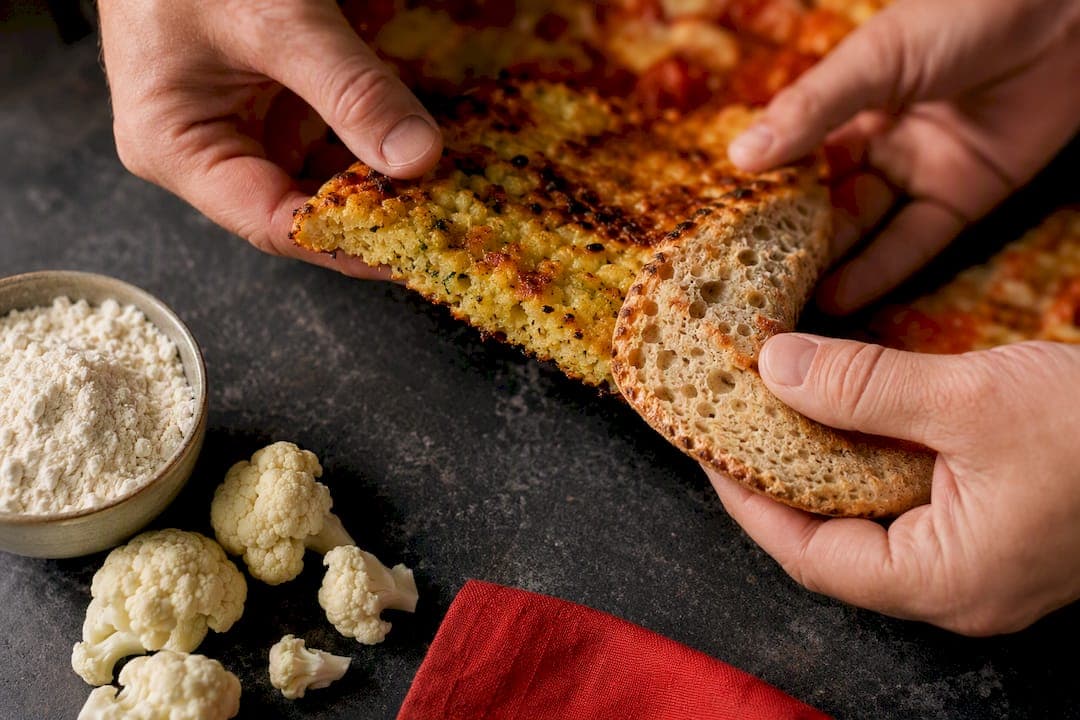
Choose cauliflower crust if your priority is a lower-carbohydrate, vegetable-forward base and you control the ingredients yourself. Choose a certified gluten-free crust when celiac disease or a diagnosed gluten sensitivity means cross-contamination is a genuine medical risk, not just a preference. Cauliflower crust is not automatically gluten-free, and it is not automatically lower in calories either. The right choice depends less on the vegetable in the name and more on what else is mixed in.
TL;DR:
- Commercial cauliflower crusts often add starches like rice flour or tapioca, which can significantly increase carbohydrate and sodium levels, sometimes rivaling grain-based crusts.
- Gluten-free labeling requires strict standards; products may still contain gluten due to shared facilities or wheat-based binders, posing risks for celiac disease if not verified.
- Home-made cauliflower crusts tend to be lighter in carbs when made from simple ingredients, but adding starches for structure quickly increases calories and sodium.
- For those managing gluten intolerance or celiac, a verified gluten-free crust with clear ingredient labeling and dedicated preparation areas is essential to avoid cross-contamination.
- Cauliflower as an ingredient requires more water and agricultural input than processed starches, but environmental impact varies depending on farming and packaging practices.
Table of Contents
- Nutrition and ingredient differences
- Gluten-free labelling, cross-contamination and who can safely eat which crust
- How to choose and make the right crust for your goals
- Practical recipes and finishing tips for best texture and flavour
- Common allergens hiding in gluten-free crust alternatives
- Availability and cost compared across crust options
- Storage and shelf life for cauliflower versus gluten-free crusts
- Environmental considerations behind the crust you choose
- What actually matters when you're deciding
- Where HellCrust Pizza fits into your next pizza night
- Sources
- FAQ
Nutrition and ingredient differences
Here is the thing home cooks often miss: the word "cauliflower" tells you almost nothing about the calorie or carbohydrate count sitting on your plate. What actually shapes the nutrition profile is the binder and the starch added to hold everything together, and that varies enormously from one recipe or package to the next.
A homemade cauliflower crust made simply from riced cauliflower, egg and a modest amount of cheese tends to land lighter in carbohydrates than a traditional wheat crust or a starch-heavy gluten-free one. But once a manufacturer adds tapioca starch, rice flour or potato starch for structure, that gap narrows fast. Some commercial cauliflower-crust pizzas carry sodium levels as high as 770 milligrams per half pizza. This is a meaningful chunk of a day's intake before you have added sauce, cheese or toppings.
When you are comparing crusts, whether cauliflower or gluten-free, check the label for a few specifics rather than trusting the front-of-package name:
- Ingredient order: starches and flours listed before cauliflower mean the crust behaves more like a grain crust than a vegetable one.
- Sodium per serving: cauliflower crusts are not automatically lower in sodium, and some rival traditional dough.
- Added fats: cheese and egg binders raise fat and cholesterol compared with a plain vegetable base.
- Serving size math: "per slice" nutrition can understate what you actually eat if the pizza is cut into fewer, larger pieces.
Cauliflower-crust nutrition can rival gluten-free grain crusts once starches are added. Some commercial cauliflower crusts mimic the caloric and carbohydrate density of gluten-free grain crusts once manufacturers add binding starches for structure, which means the vegetable in the name is doing less nutritional work than the label suggests.
The honest takeaway is that neither crust type is inherently the lighter option. You have to read past the headline ingredient.
Gluten-free labelling, cross-contamination and who can safely eat which crust
A "gluten-free" claim on a Canadian food label is not a marketing flourish, it is a specific legal threshold. Under Health Canada's position on gluten-free claims, a product labelled gluten-free must contain no more than 20 parts per million of gluten, the level Health Canada considers protective for most people living with celiac disease. Manufacturers are also expected to follow good manufacturing practices that minimize gluten entering the product in the first place.
Here is where cauliflower crust can quietly betray a celiac diner: the base vegetable carries no gluten, but many recipes and commercial products add wheat-based binders, seasoned flours or shared production lines that introduce it anyway. A crust can be marketed around cauliflower and still fail the 20 ppm threshold and purity considerations for oats labelled gluten-free standard.
To reduce risk, whether you are cooking at home or eating out:
- Read the full ingredient list on packaged cauliflower crusts rather than trusting the front label.
- Ask restaurants directly about separate prep areas, dedicated equipment and whether frying oil is shared with wheat-based items, guidance Celiac Canada recommends over relying on vague terms like "gluten-friendly."
- In your own kitchen, use dedicated cutting boards, utensils and baking sheets for gluten-free preparation, since cross-contamination through shared tools and appliances is a documented and variable risk depending on the appliance and how thoroughly it is cleaned.
Pro Tip: *Wash shared tools like pizza cutters and baking stones in the dishwasher rather than by hand.
How to choose and make the right crust for your goals
Start with the question that actually matters for you: is this about carbohydrate count, texture preference or medical safety? The answer determines everything else.
- If celiac disease or a confirmed gluten intolerance is involved, prioritize a certified gluten-free product over a homemade cauliflower crust unless you can control every ingredient and surface yourself.
- If your goal is lower carbohydrate intake and you are not managing a medical gluten restriction, a well-made cauliflower crust is a reasonable everyday swap.
- If texture is your main concern, know that cauliflower crust behaves more like a soft flatbread than a crisp traditional base, even when baked well.
For a homemade cauliflower crust, the ratio that works reliably is about two cups of riced, cooked cauliflower to one egg and a half cup of shredded cheese, pressed thin on parchment. The step people skip, and shouldn't, is squeezing out as much moisture as possible using a cheesecloth or clean tea towel before mixing. Pre-bake at a moderate temperature to set the binder, then finish hot to brown the surface.
Shopping for a packaged gluten-free crust instead, look for these markers before it goes in your cart:
- An explicit "gluten-free" claim on the front label, not just a cauliflower or vegetable callout.
- An ingredient list free of wheat, barley, rye or shared-facility warnings that concern you.
- Sodium content checked against the crust you are replacing, since gluten-free does not mean low sodium.
Practical recipes and finishing tips for best texture and flavour
A dependable cauliflower crust blueprint: two cups riced cauliflower (steamed and thoroughly wrung dry), one large egg, half a cup of shredded mozzarella or parmesan, a pinch of salt and oregano. Press into a thin round on parchment, pre-bake around 20 minutes at a moderate oven temperature to firm up the binder, then add toppings sparingly and return to a hotter oven until the edges brown.
A handful of finishing touches separate a soggy disc from something worth savouring:
- Pre-bake before topping: skipping this step is the single most common cause of a soft, wet centre.
- Go easy on the cheese in the base: too much melts out moisture that undermines crispness.
- Use a pizza stone or well-heated baking sheet, never a cold pan, for better bottom crisping.
- Try an air fryer for individual portions: the concentrated heat crisps the edges faster than a standard oven.
- Blind-bake packaged gluten-free crusts for a few minutes before topping, which firms up starch-based bases the same way pre-baking helps cauliflower.
For a quicker gluten-free option, a pre-made certified crust blind-baked briefly before topping saves time without sacrificing much texture, and it sidesteps the moisture-wringing step entirely.
Common allergens hiding in gluten-free crust alternatives
Gluten is not the only ingredient worth watching. Many gluten-free crusts, cauliflower-based or otherwise, lean on egg and dairy as binders, which rules them out for anyone managing an egg or milk allergy. Nut flours such as almond or cashew appear in some grain-free crust recipes and packaged products, a real concern for tree nut allergies. Soy lecithin and soy flour show up as stabilizers in a number of commercial gluten-free doughs. Corn-based starches are common too, and while less frequently flagged as allergenic, they matter for the smaller group of people with corn sensitivity.

The practical habit here is the same one that protects against gluten exposure: read the full ingredient panel every time, even for a brand you have bought before, since formulations do change. If you are cooking for someone else, or for a group, ask directly about egg, dairy, nut and soy content rather than assuming a "gluten-free" label covers every allergen concern. It only covers gluten.
Availability and cost compared across crust options
Cauliflower crust has become common enough that most well-stocked grocery freezers carry at least one packaged version, and making it at home requires only cauliflower, egg and cheese, all easy to find. Traditional gluten-free crusts, whether rice-flour, corn-based or multi-grain blends, are similarly widespread now in the gluten-free aisle of most supermarkets.
Cost is where the two diverge somewhat. Packaged cauliflower crusts frequently carry a premium over standard wheat crusts because of the extra processing involved in ricing, cooking and drying the vegetable before it is formed into dough. Grain-based gluten-free crusts vary more by brand and ingredient quality, some priced close to conventional crusts, others noticeably higher when made with specialty flour blends. Making cauliflower crust from scratch is typically the cheapest route of all, since a head of cauliflower costs less than most specialty flour bags, though it demands more prep time than opening a package.
For a pizza night that skips the shopping and prep altogether, ordering from a place that already builds its dough thoughtfully is worth considering, and that is where a menu with vegan and gluten-free options earns its keep.
Storage and shelf life for cauliflower versus gluten-free crusts
Cauliflower crust, because it starts as a vegetable with naturally higher moisture content even after wringing it dry, tends to have a shorter shelf life than a grain-based gluten-free crust once it is made. A homemade cauliflower crust keeps well in the refrigerator for a couple of days in an airtight container, and freezes reasonably if wrapped tightly, though texture softens somewhat on thawing.
Packaged gluten-free crusts, particularly the shelf-stable or frozen varieties built from rice, corn or multi-grain blends, generally hold up longer in the freezer without the same moisture-related texture loss. If you batch-cook cauliflower crusts for the week, pre-baking and freezing the bases flat, separated by parchment, prevents them from sticking together and helps preserve whatever crispness you worked to achieve. Either way, always check a packaged crust's best-before date and any specific refrigeration instructions on the wrapper rather than assuming freezer storage extends indefinitely.

Environmental considerations behind the crust you choose
Cauliflower as a base ingredient requires more water and agricultural input per usable pound than a bag of rice or corn flour, largely because you are cooking down a whole vegetable with significant water content rather than using an already concentrated starch. That said, cauliflower is a widely grown, low-intensity crop compared with some other vegetables, and buying it whole rather than pre-riced in plastic packaging cuts down on unnecessary packaging waste.
Traditional gluten-free crusts made from rice or corn flour carry their own footprint, tied to the water intensity of rice farming in particular. Multi-grain blends that combine several gluten-free flours can spread that impact across crops with different growing requirements, which may reduce reliance on any single resource-heavy grain. Neither option is clearly the lighter environmental choice across the board, and packaging, transportation distance and how the ingredients were farmed likely matter more than the crust category itself.
What actually matters when you're deciding
If I had to leave you with one honest opinion, it is this: the crust debate gets treated as a health contest when it is really a fit question. Cauliflower crust rewards people who want a vegetable-forward, lower-carb base and are willing to do a bit of kitchen work to get a decent texture. It does nothing special for a celiac diner unless the ingredient list and the kitchen it was made in are both verified clean.
We appreciate that craft matters here too. A dough prepared thoughtfully, using a Biga multigrain, artificial additive-free process, offers a healthier, fibre-rich, and more digestible crust, and that kind of care shows in the eating, not just the label. But for anyone managing celiac disease, the honest note stands regardless of brand or recipe: prefer a certified gluten-free product and verified kitchen controls over a name that merely sounds safe.
— jaskirat Singh
Where HellCrust Pizza fits into your next pizza night
Once you've weighed carbs against safety and texture against convenience, sometimes the simplest answer is letting someone else handle the dough. HellCrust Pizza offers a crust made with a multigrain, artificial additive-free dough prepared in advance, which can provide a crust that is easier on digestion and richer in fibre than one made hastily.

For readers weighing cauliflower against gluten-free, the menu offers another option: vegan pizzas, customizable toppings and mix and match deals that let you build a meal around your own restrictions without doing the ricing, wringing and pre-baking yourself. It will not replace a certified gluten-free product for someone managing celiac disease, and we would never claim otherwise, but for anyone balancing taste, convenience and thoughtful ingredients on a normal weeknight, it is a solid option worth trying. Browse the full HellCrust Pizza menu to see what fits your table tonight.
This article is general information, not a substitute for advice from a qualified doctor. Consult a qualified healthcare professional about your own circumstances before acting on anything here.
Sources
- Is cauliflower pizza healthy? (Healthline)
- Health Canada position on gluten-free claims
- Gluten cross-contamination in kitchens (PMC article)
- Dining out with celiac disease: navigating challenges (Celiac Canada)
FAQ
Is gluten-free or cauliflower crust better for you?
Neither is automatically better since it depends on your goal. Cauliflower crust often runs lower in carbohydrates when made simply at home, but commercial versions can carry sodium as high as 770 milligrams per half pizza once starches are added, and gluten-free grain crusts vary just as widely by brand.
What is the healthiest type of pizza crust?
There is no single healthiest crust, because the answer shifts with your priorities: lower carbohydrate, lower sodium or gluten safety each point to a different choice. The most reliable approach is checking the ingredient list and sodium per serving rather than trusting the crust category alone.
Can celiac people eat cauliflower crust?
Only if it is verified gluten-free through an explicit label claim and safe preparation, since cauliflower itself contains no gluten but many recipes and commercial products add wheat-based flours or risk cross-contamination. Health Canada requires gluten-free products to contain no more than 20 parts per million of gluten, and that standard, not the word "cauliflower," is what protects someone with celiac disease.
Why is caulipower pizza so high in carbs?
Some commercial cauliflower-crust pizzas add rice flour, tapioca starch or similar binders to hold the crust together, which raises the carbohydrate count closer to a traditional or gluten-free grain crust. Checking the full ingredient list rather than the front-of-package name is the only way to know what you are actually eating.