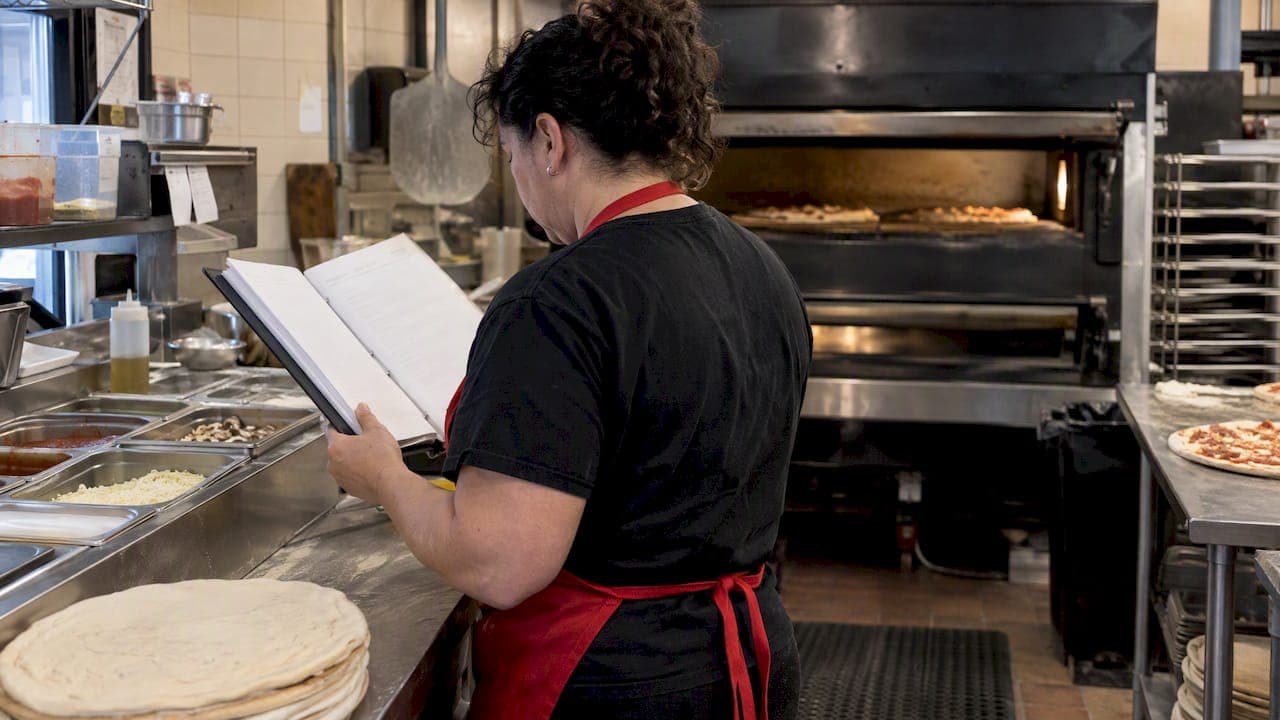
A franchise operations manual is the franchisor's step-by-step system for running every location the same way, every day. It captures the know-how behind the brand, from recipes to reporting, so that a franchisee in one city delivers the same experience as one across the country. Franchisors write it, franchisees live by it, and managers lean on it daily.
TL;DR:
- A comprehensive franchise manual should be regularly reviewed and updated to reflect technological and procedural changes, ideally on an annual cycle.
- The manual must clearly define scope, target audience, and core processes, with task-specific procedures, checklists, and visual references attached to ensure usability.
- Franchise agreements treat the manual as a contractual and confidential document, requiring proper tracking of updates, legal review, and signed acknowledgments from franchisees.
- Training should be directly linked to the manual, with competency checklists, short videos, and scheduled refresher sessions to reinforce procedures and ensure consistency.
- Incorporating franchisee feedback systematically into updates ensures the manual remains accurate, relevant, and reduces operational errors across locations.
Table of Contents
- Key components every robust manual should contain
- How the manual fits into the franchise agreement
- Step-by-step process to write or rebuild your manual
- Training and onboarding built on the manual
- Keeping the manual a living document through governance
- Templates and appendices worth copying
- Why a thorough manual pays off
- Best practices for writing and structuring content
- Common challenges and how to work through them
- What a well-run manual looks like in practice
- Adapting the manual across markets and franchisees
- The manual as the backbone of franchisee support
- Turning franchisee feedback into manual updates
- The manual as the franchise's operating heartbeat
- FAQ
- Sources
- Primary resources worth bookmarking
Key components every robust manual should contain
A manual earns its keep when it reads less like a rulebook and more like a trusted colleague walking a new operator through the business. The Canadian Franchise Association's tutorial on operations manuals outlines the topics that belong in a complete document, and most strong manuals organize around these sections:
- Brand mission, values and visual standards, so every location feels unmistakably part of the same family.
- Franchisor and franchisee roles, with references to the franchise agreement where obligations overlap.
- Pre-opening requirements: site selection criteria, build-out specifications and inspection milestones.
- Day-to-day standard operating procedures covering opening, service, recipes and closing routines.
- Human resources guidance: job descriptions, hiring steps, uniform standards and training expectations.
- Supplier relationships, purchasing rules and inventory procedures, including receiving and rotation.
- Accounting templates, reporting cadences and compliance recordkeeping.
- Local marketing guardrails, public relations guidance and trademark usage rules.
- Appendices holding forms, checklists and sample SOPs that franchisees can put to work immediately.
The CFA tutorial also recommends attaching operational forms and checklists directly to each section, then revisiting the whole document annually to reflect changes in technology and best practice. A manual without that rhythm of review tends to drift out of date within a season or two, which defeats the purpose of writing it in the first place.
How the manual fits into the franchise agreement
Most franchise agreements incorporate the operations manual by reference, which means the manual carries contractual weight even though it lives as a separate document. Franchisees agree to follow it as written, and franchisors reserve the right to update it as the system evolves.
- The manual is commonly treated as confidential, often returned or destroyed at the end of the relationship, because it holds trade secrets the franchisor built the brand on.
- Provincial rules in Canada differ from American franchise law in meaningful ways, so a template borrowed from a U.S. source can carry assumptions that do not hold here.
- When a franchisor changes the manual, franchisees do well to request written notice and keep a dated record of what changed and when.
- Competition and employment law both matter here: franchisors and franchisees remain separate businesses under Competition Bureau guidance, so a manual should set standards without blurring who actually employs, schedules or pays local staff.
Pro Tip: Keep a signed acknowledgment on file every time a franchisee receives a revised manual section, so there is never a dispute about what version was in force on a given date.
Because the stakes touch both contract law and labour law, a lawyer familiar with franchise systems should review any manual before it goes out, particularly the clauses that govern updates and enforcement.
Step-by-step process to write or rebuild your manual
Building a manual from scratch, or rescuing one that has grown stale, goes faster with a defined sequence rather than a blank document and good intentions.
- Define scope and audience. Decide whether you are writing for pre-opening teams, daily operations, marketing partners or HR staff, since each group needs a different depth of detail.
- Map core processes. List every repeatable task in the business and assign a subject matter expert to document each one accurately.
- Write task-level procedures. Add photos, timers and decision trees wherever a step could be done two different ways, because ambiguity is where consistency breaks down.
- Attach standard forms. Build checklists, inventory sheets and incident report templates directly into the relevant chapter rather than as a separate stack of paperwork.
- Pilot at one or two units. Run the draft manual in live locations, collect feedback from the people actually using it, then revise before wider release.
- Plan the rollout. Set a training schedule, choose a distribution method, digital or print, and establish version control so nobody works from an outdated copy.
| Step | Owner | Output |
|---|---|---|
| Scope and audience | Operations lead | Defined chapters and reader groups |
| Process mapping | Subject matter experts | List of documented SOPs |
| Task-level writing | SOP authors | Photos, timers, decision trees |
| Form attachment | Operations team | Checklists and templates per chapter |
| Pilot testing | Selected franchisees | Feedback log and revision notes |
| Rollout planning | Training manager | Schedule, distribution, version log |
A manual produced this way reads as something built with real locations in mind, not a document assembled in a boardroom and handed down.
Training and onboarding built on the manual
New franchisees and their staff learn the business from the manual before they learn it from experience, so every chapter should connect directly to a training module. Build a competency checklist for each major SOP and have trainees demonstrate the task rather than simply reading about it.
- Pair longer chapters with short video demonstrations or microlearning segments for frontline staff who absorb a two-minute clip faster than three pages of text.
- Require manager certification tied to specific manual sections, and schedule refresher sessions whenever those sections change.
- Use operational visits to score compliance against the manual, turning gaps into coaching moments rather than citations.
Pro Tip: Film your best manager running the trickiest opening procedure once, and that single video will outlast a dozen written memos.
CFA guidance notes that franchisors typically provide initial and ongoing training, and the manual sits at the centre of both.
Keeping the manual a living document through governance
A manual that nobody owns goes stale fast. Assign a single operation owner responsible for the document, set an annual review cycle, and keep a change log that records what moved, when and why.
- Route every proposed change through subject matter expert review, a legal check and a final operation sign-off before it reaches franchisees.
- Communicate updates through a short briefing rather than a buried email attachment, so changes get read and understood, not just filed.
- Train on changes in small doses tied to the next shift schedule instead of disrupting a full day of operations.
- Use audits and scored checklists to confirm the updated procedure is actually being followed, not just acknowledged.
Industry panels at events such as FranTalks describe the manual as a living document that needs regular updates to support growth, a framing that holds whether a system has five locations or five hundred.
Templates and appendices worth copying
The appendix section is where a manual earns its reputation as genuinely useful rather than merely thorough. A handful of templates, built once and reused everywhere, save far more time than they cost to create:
- A pre-opening checklist paired with a site handover form that confirms build-out items before keys change hands.
- Opening and closing SOPs that list timing and name who is responsible for each step.
- An inventory receiving form built around first-in, first-out rotation.
- An incident report template paired with a corrective action log.
- A job description template and a simple onboarding plan new hires can follow in their first week.
Why a thorough manual pays off
Consistency is the whole point. A customer ordering the same dish at two locations should get the same result, and a manual that spells out recipes, timing and service steps is what makes that possible without the franchisor standing in every kitchen. The Canadian Franchise Association frames a well-structured operations process as the backbone of a successful franchise system, tying it directly to quality and streamlined performance across locations.
Scalability follows the same logic. A franchisor opening a tenth location, or a hundredth, cannot personally train every new operator, but a manual that already answers the common questions lets new franchisees get up to speed without constant hand-holding from head office. That frees the franchisor's team to focus on growth rather than repeating the same explanations location by location.
Efficiency shows up in smaller, daily ways: less time spent guessing at procedures, fewer calls to a regional manager for basic questions, and faster onboarding for new staff who can reference a clear document instead of relying on whoever happens to be on shift. Taken together, these benefits are why franchisors treat the manual as core infrastructure rather than paperwork, a system document that protects the brand's reputation one location at a time.
Best practices for writing and structuring content
Write for the person standing in the kitchen at 6 a.m., not for a reader with unlimited patience. Short sentences, numbered steps and photos beat dense paragraphs every time a task needs to be performed under pressure.
Structure each chapter the same way: purpose, materials or tools needed, numbered steps, and a quick reference checklist at the end. That repetition means a franchisee learns the manual's logic once and can then navigate any section without relearning the format.

Favour plain language over internal jargon, and define any term a new hire would not already know. Where a process has more than one acceptable path, a decision tree clears up the ambiguity faster than a paragraph of exceptions ever could. Finally, test every written procedure against someone who has never done the task before handing it to franchisees: if they can follow it without a phone call for help, it is ready.
Common challenges and how to work through them
The most frequent problem is scope creep: a manual that starts as a lean reference document balloons into a binder nobody reads cover to cover. Fight this by keeping chapters task-focused and moving background explanation into a separate reference appendix.
Another recurring issue is inconsistent input from subject matter experts who document the same process differently depending on who is asked. Assign one owner per chapter and have a second reviewer check for conflicts before anything goes to print.
Version confusion is just as common, with franchisees working from outdated copies because there was no clear update process. A dated change log and a single source of truth, digital or print, solves this more reliably than any amount of good intentions.
Finally, manuals written entirely by head office without franchisee input tend to miss real-world friction. Piloting new sections at one or two locations before a full rollout catches problems a desk review never would.
What a well-run manual looks like in practice
A strong manual shows up in the details: a pizza chain's dough-handling chapter that specifies proof times and photos of correct texture, a service chain's opening checklist timed to the minute, or a retail franchise's merchandising guide that shows exactly how a shelf should look with reference images rather than written description alone.

What separates these from weaker examples is not length, it is usability. The best manuals we have seen in the food service space pair every procedure with a visual reference and a short rationale explaining why the step matters, which helps new staff retain the standard instead of just copying it mechanically. A manual built this way becomes a tool staff actually reach for during a shift, not a binder that collects dust in a back office.
Adapting the manual across markets and franchisees
A single national manual rarely fits every location without adjustment. Regional ingredient availability, local bylaws and seasonal demand all call for a core manual with clearly marked sections where local variation is permitted.
Build a base manual that covers brand standards nobody can change, then add a shorter regional supplement for items like local supplier substitutions, seasonal menu adjustments or jurisdiction-specific signage rules. That structure keeps the brand consistent where it matters most while giving franchisees room to operate sensibly where local conditions demand it.
Smaller or newer franchisees may also need a simplified onboarding path through the manual, with the full reference document available but not required reading on day one. Layering the manual this way, core standards first, detail on demand, keeps it usable for operators at very different stages of experience.
The manual as the backbone of franchisee support
A franchisee calling head office with a question is often really asking "what does the manual say, and why." Treating the manual as the first line of support, rather than a document franchisees are simply handed and left to interpret, changes how franchisors communicate day to day.
Build a habit of pointing support calls back to the relevant manual section, then updating that section if the question reveals a gap. Over time, this turns the manual into a genuine communication channel between franchisor and franchisee rather than a static reference nobody revisits after onboarding. Regular check-ins tied to manual chapters, rather than general catch-up calls, also give field support staff a consistent structure for every visit.
Turning franchisee feedback into manual updates
Franchisees on the ground spot problems head office never sees, from a timing step that never quite works in a smaller kitchen to a form that asks for information nobody actually uses. Building a simple feedback channel, a shared form or a recurring agenda item at franchisee meetings, turns that frontline knowledge into better documentation.
Log every suggestion against the specific manual section it affects, then route it through the same approval steps as any other change: subject matter expert review, a legal check where needed, and operations sign-off before it goes out. Franchisees who see their feedback reflected in the next update are far more likely to keep submitting it, which is how a manual stays accurate instead of becoming a document written once and never revisited.
The manual as the franchise's operating heartbeat
A good manual quietly prevents a hundred small fires: the training question that never gets asked twice, the supplier mix-up that never happens because the form already exists. The common failure is over-written prose with no checklists, or a governance process too weak to keep pace with real changes on the ground. Treat the manual as infrastructure, not paperwork, and growth gets a lot less stressful.
— jaskirat Singh
FAQ
What are the four P's of franchising?
The four P's commonly cited in franchising are product, price, place and promotion, the same marketing framework used across retail, adapted to describe how a franchise brand presents itself consistently. Definitions vary by source, so treat this as a general marketing lens rather than a formal franchise law term.
What should an operations manual include?
A complete manual covers brand standards, day-to-day SOPs, training materials, supplier and purchasing rules, accounting templates and appendices full of forms and checklists, as outlined in CFA guidance on operations manuals. The exact mix depends on the business, but consistency across locations is always the goal.
What is the FOCO and COCO model?
FOCO stands for franchise-owned, company-operated, and COCO stands for company-owned, company-operated, two models describing who holds the business licence versus who runs daily operations. A manual matters in both cases, though reporting lines and accountability differ depending on which model a system uses.
Can you provide an example of an operations manual?
A well-built manual typically includes a dough-handling or recipe chapter with step photos, a timed opening and closing checklist, and a supplier receiving form built around proper rotation, the kind of structure recommended in CFA tutorials on operations manuals. The strongest examples pair every written step with a visual reference so new staff can follow along without guesswork.
Sources
Primary resources worth bookmarking
For readers building or auditing a manual, the Canadian Franchise Association's tutorial series remains the clearest starting point, alongside CFA's broader guidance on franchising your business. The Competition Bureau's consultation materials are worth a read for anyone drafting employment-adjacent sections. For a look at how product lines and operational offerings translate into customer-facing menus, our own HellCrust Pizza menu page offers a working example, and operators managing kitchen hygiene procedures may find value in professional commercial kitchen cleaning guidance when writing supplier and sanitation sections.
If you are craving a slice while you sort through franchise paperwork, our menu of signature and vegan pizzas, baked pasta and sides is a click away, built on a dough made from a specially prepared multigrain recipe, the kind of consistency-first approach we believe every franchise manual should aim for.