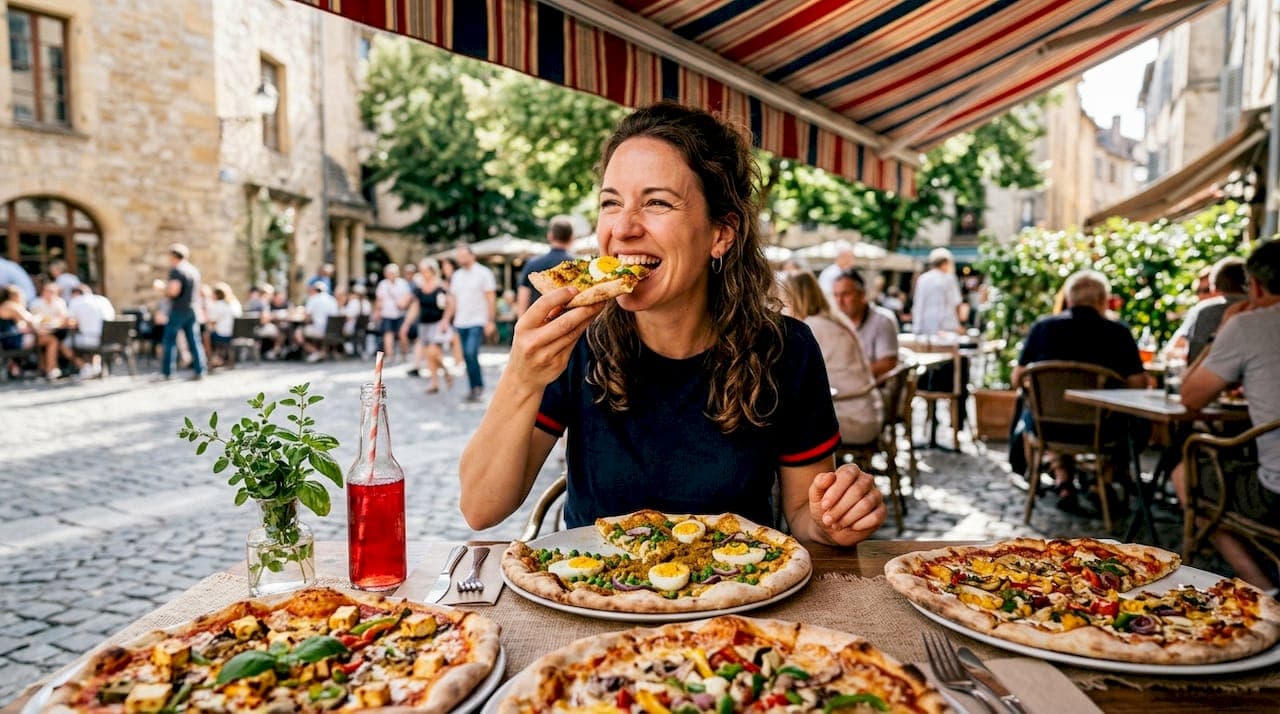
Pizza is defined by its toppings, and regional pizza topping styles worldwide prove that no two cultures slice it the same way. From Brazilian green peas and hard-boiled eggs to Swedish banana and curry powder, every region maps its own comfort foods onto a shared canvas. Japanese mayonnaise-based pies, Turkish lahmacun, and Levantine manakish each follow their own culinary logic, shaped by local ingredients and generations of tradition. Pizza's blank-canvas nature is precisely what makes it the world's most adaptable dish. This guide walks you through the most distinctive topping traditions on the planet, with enough detail to inspire your next homemade creation.
1. What are some distinctive pizza toppings from the Americas?
The Americas produce some of the boldest pizza topping choices on earth. Brazil leads with combinations that would surprise most North American foodies: green peas and hard-boiled eggs are standard toppings, and stroganoff pizza is a genuine menu staple. These choices reflect Brazil's broader comfort food culture, where creamy, protein-rich dishes are everyday favourites.
In the United States, regional identity runs deep. Chicago thin-crust pizza places all toppings under the cheese, producing a cracker-like crust with even bake and a clean bite. This is the opposite of what most people expect from Chicago, which is better known for its deep-dish style. St. Louis takes a different path entirely, using Provel cheese, a processed blend of cheddar, Swiss, and provolone created in 1947, applied edge to edge across the pie.
Meat-forward toppings like Italian sausage and pepperoni dominate across much of North America. Canada adds its own character through regional favourites like back bacon on the classic "Canadian" pizza, a topping combination that rarely appears outside the country. Mexico brings dried chillies, chorizo, and black beans into the mix, grounding pizza firmly in its own culinary tradition.
- Brazilian pizzas regularly feature stroganoff, cheeseburger variants, and Catupiry cream cheese as toppings.
- Chicago thin-crust uses a topping-under-cheese method to protect crust texture during baking.
- St. Louis Provel cheese melts differently from mozzarella, creating a distinct stretch and coverage.
- Canadian-style pizza typically includes back bacon and mild cheddar alongside tomato sauce.
- Mexican regional styles incorporate chorizo, jalapeños, and black beans as base toppings.
Pro Tip: When recreating a Brazilian-style pizza at home, layer your toppings before the cheese rather than after. This keeps moisture locked in and prevents the crust from going soggy.
2. How do European regional pizza topping styles differ?
European pizza diversity extends well beyond Italy's Neapolitan tradition. Italy itself offers contrasting styles: Neapolitan pizza uses San Marzano tomatoes, fresh fior di latte, and basil in a deliberately restrained combination, while Southern New Jersey's Tomato Pie places the sauce on top of the cheese, reversing the standard order entirely. That inversion changes the flavour balance and crust texture in ways that are immediately noticeable.
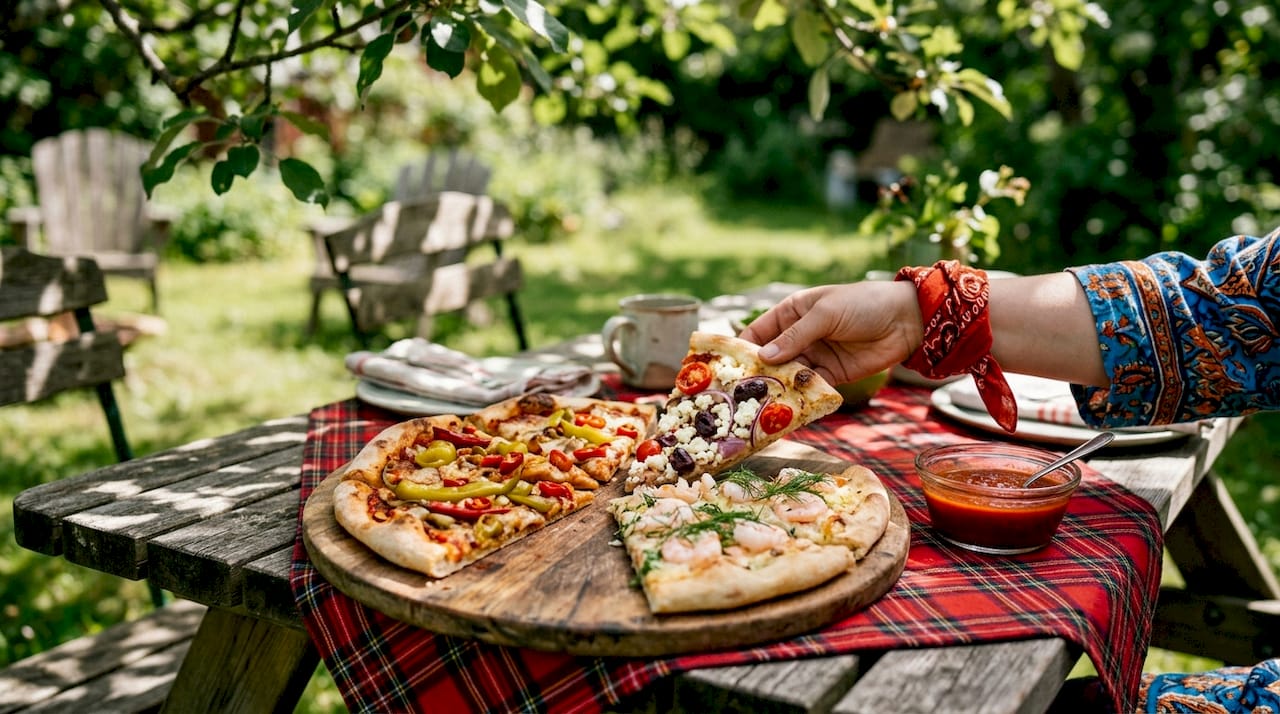
France contributes the pissaladière, a Provençal flatbread topped with caramelised onions, anchovies, and olives, with no cheese at all. It predates the modern pizza by centuries and demonstrates that the tomato-and-cheese formula is a convention, not a rule. Hungary adds kolbász sausage and hot peppers to its regional pies, producing a smoky, spiced result that reflects Central European charcuterie traditions.
Sweden's approach is the most surprising in Europe. Swedish pizzas combine curry powder, bananas, and ham, a combination that sounds improbable but has been a mainstream menu item in Swedish pizzerias since the 1970s. The sweet-savoury logic mirrors the broader Scandinavian comfort with fruit in savoury cooking.
- Neapolitan pizza: San Marzano tomatoes, fior di latte, fresh basil, minimal toppings.
- Southern New Jersey Tomato Pie: sauce applied over the cheese, not under it.
- French pissaladière: caramelised onions, anchovies, olives, no cheese.
- Hungarian style: kolbász sausage, hot peppers, paprika-forward flavour.
- Swedish style: curry powder, banana, ham, often with a mild tomato base.
Pro Tip: For a French pissaladière at home, caramelise your onions low and slow for at least 45 minutes. Rushing this step produces a sharp, bitter result instead of the sweet, jammy base the dish requires.
3. What are notable Asian and Middle Eastern regional pizza topping styles?
Asian and Middle Eastern pizza traditions follow their own culinary logic, often reinterpreting local dishes onto a pizza base rather than copying Western conventions. Japanese pies with mayonnaise, corn, potato, and tuna are signature items at Japanese pizza chains. The okonomiyaki influence is clear: that savoury pancake's flavour profile, rich with umami and finished with Japanese mayonnaise, maps directly onto a pizza base.
The Levant offers manakish, a flatbread topped with za'atar (a blend of dried thyme, sumac, and sesame seeds) and olive oil. It is baked fresh each morning and eaten for breakfast across Lebanon, Syria, and Palestine. Za'atar belongs to the "flavour-profile" category of toppings, where a spice blend carries the entire dish rather than individual ingredients.
Turkey's lahmacun uses spiced minced lamb spread thin across an unleavened base, then finished after baking with fresh parsley, tomato, and a squeeze of lemon. That post-oven finishing step is critical. Regional pizzas often apply toppings or sauces after baking to preserve texture and freshness, and lahmacun is a perfect example of why this matters.
- Japanese mayonnaise is piped in a lattice pattern after baking, not before, to preserve its texture.
- Manakish za'atar topping is mixed with olive oil into a paste before spreading, not sprinkled dry.
- Lahmacun lamb is seasoned with cumin, paprika, and fresh tomato before spreading onto the base.
- Southeast Asian durian pizza gained popularity at regional Pizza Hut locations, pairing the pungent fruit with mild cheese.
- Chinese bing flatbreads use sesame paste and spring onion as their primary topping layer.
4. How do topping order and cheese type influence regional pizza styles?
Authenticity in regional pizza hinges on topping ratio and layering sequence more than strict ingredient lists. This is the insight most home cooks miss. Getting the right cheese in the right position changes the entire eating experience, not just the flavour.
Chicago thin-crust places toppings under the cheese to protect the cracker-like crust from moisture damage during baking. St. Louis Provel cheese, a blend created specifically for that city's pizza culture, melts to full coverage and holds its structure in a way that standard mozzarella cannot replicate. Switching to local processed cheeses like Provel or Catupiry changes melt behaviour and texture fundamentally, and replication with mozzarella often falls short.
Brazil's Catupiry, a soft cream cheese with a mild tang, adds moisture and richness that defines the Brazilian pizza experience. Layering high-moisture toppings under cheese or using a denser crust helps prevent soggy bottoms in styles like Brazilian and Japanese pizzas. Cheese functions as a structural element in these styles, not merely a flavour addition.
| Regional Style | Cheese Used | Layering Order | Key Texture Outcome |
|---|---|---|---|
| St. Louis | Provel (cheddar, Swiss, provolone blend) | Cheese on top, edge to edge | Full-coverage melt, clean slice |
| Chicago thin-crust | Mozzarella | Toppings under cheese | Cracker crust, even bake |
| Brazilian | Catupiry cream cheese | Cheese as top layer | Creamy, moist, rich finish |
| Neapolitan | Fior di latte | Cheese under basil, minimal | Soft, wet centre, charred edge |
| New Jersey Tomato Pie | Low-moisture mozzarella | Sauce over cheese | Bright tomato flavour, firm base |
Pro Tip: If you cannot source Catupiry for a Brazilian-style pizza, blend cream cheese with a small amount of sour cream and a pinch of salt. It replicates the tang and spreadability well enough for home use.
5. What are the most unusual and surprising regional pizza toppings worldwide?
The most unexpected pizza toppings worldwide are not accidents. Each one reflects a sweet-savoury balance that makes cultural sense in its home region, even when it puzzles outsiders. Understanding the logic behind these combinations is what separates a curious foodie from a genuinely informed one.
Sweden's banana and curry powder combination draws on Scandinavian comfort with fruit in savoury dishes. Finland goes further with reindeer meat, a topping that reflects the country's northern geography and indigenous food traditions. Scotland has produced haggis pizza, placing the spiced offal mixture onto a tomato base, a combination that sounds confrontational but works because haggis is already heavily seasoned.
- Sweden: Curry powder, banana, and ham. A mainstream menu item since the 1970s, not a novelty.
- Finland: Reindeer meat topping, reflecting subarctic ingredient availability and Sámi food culture.
- Scotland: Haggis pizza, using the spiced sheep offal as a primary topping on a standard base.
- Costa Rica: Coconut, shrimp, and pineapple, combining tropical ingredients in a single sweet-savoury pie.
- China: Durian topping, popularised at Pizza Hut locations, pairing the pungent fruit with mild dairy cheese.
Regional pizzas reinterpret local comfort foods onto pizza bases through flavour profile mapping rather than direct ingredient copying. That principle explains every topping on this list. The functional categories of pizza toppings, whether meat-forward, spice-driven, or fruit-accented, drive menu diversification across every culture that has adopted pizza as its own.
Key takeaways
Regional pizza topping styles worldwide are defined by local ingredient logic, topping layering sequence, and cheese selection, not by proximity to Italy.
| Point | Details |
|---|---|
| Layering order matters most | Placing toppings under or over cheese changes crust texture and flavour balance fundamentally. |
| Cheese is structural, not just flavour | Regional cheeses like Catupiry and Provel produce melt and moisture outcomes mozzarella cannot replicate. |
| Post-oven finishing is often essential | Styles like Japanese mayonnaise pizza and Turkish lahmacun require toppings applied after baking for authenticity. |
| Sweet-savoury blends are culturally valid | Swedish banana curry and Costa Rican coconut shrimp reflect longstanding local taste logic, not novelty. |
| Comfort food drives topping choice | Brazilian stroganoff pizza and Japanese okonomiyaki-style pies map familiar local dishes onto a pizza base. |
Jaskirat's take on exploring global pizza toppings
The most common mistake I see foodies make when exploring global pizza styles is treating unusual toppings as a joke. Sweden's banana and curry pizza gets laughed at constantly, yet it has been a beloved staple in Swedish pizzerias for over 50 years. That longevity is not an accident. It reflects a genuine, deeply held local preference, and dismissing it says more about the dismisser than the dish.
What I find genuinely fascinating is how flavour variety in culinary enjoyment shapes the way entire cultures approach pizza. The technical insight that changed my own pizza-making was understanding that layering sequence matters more than ingredient lists. Once I started placing high-moisture toppings under the cheese rather than on top, my home pizzas improved dramatically.
My honest advice: pick one regional style you have never tried, source the correct cheese if at all possible, and follow the layering method specific to that style. Do not substitute mozzarella for Catupiry and expect a Brazilian result. The cultural logic behind taste diversity is worth respecting, and the reward is a pizza that actually tastes like somewhere.
— jaskirat
Hellcrustpizza and the world of inspired toppings
Hellcrustpizza was built for foodies who take their toppings seriously. Every pizza at Hellcrustpizza starts with a Biga multigrain dough, a slow-fermented preferment base that is free of artificial additives and crafted to carry bold, globally inspired toppings without losing its structure. That foundation matters when you are layering anything from za'atar-spiced blends to creamy, moisture-rich toppings.

You can explore Hellcrustpizza's full range of globally inspired pizzas through the app, where Mix & Match options let you combine toppings across styles in a single order. Whether you are drawn to meat-forward classics or curious about something more unexpected, Hellcrustpizza's fresh ingredients and customisable options give you the canvas to make it your own. Every order is crafted with the same unwavering commitment to quality that makes each bite worth savouring.
FAQ
What are the most unique pizza toppings by region?
Brazil uses green peas, hard-boiled eggs, and stroganoff. Sweden combines banana, curry powder, and ham. Japan features mayonnaise, corn, and tuna as signature toppings.
How does topping order affect regional pizza styles?
Layering sequence changes crust texture and flavour balance. Chicago thin-crust places toppings under cheese for a cracker-like result, while New Jersey Tomato Pie applies sauce over cheese for a brighter tomato flavour.
What cheese is used in St. Louis-style pizza?
St. Louis pizza uses Provel, a processed blend of cheddar, Swiss, and provolone created in 1947. It melts edge to edge and behaves differently from standard mozzarella.
Why do some regional pizzas add toppings after baking?
Post-oven finishing preserves texture and freshness. Japanese mayonnaise is piped after baking to maintain its consistency, and Turkish lahmacun is finished with fresh herbs and lemon once out of the oven.
Are sweet toppings on pizza a legitimate regional tradition?
Sweet-savoury pizza toppings are a longstanding tradition in multiple cultures. Swedish banana and curry pizza has been a mainstream menu item since the 1970s, and Costa Rican coconut and shrimp pizza reflects genuine local taste preferences.