Yes, many venues still add an extra fee for vegan cheese, though the practice is losing ground. Surcharges typically run from a few cents on a drink to several dollars on a pizza, and a 2023 study confirms plant-based alternatives often cost more at the wholesale level. However, recent legal scrutiny and a wave of chains dropping these fees suggest the tide is turning toward transparency.
TL;DR:
- A 2023 Canadian retail analysis found vegan cheese and yogurt alternatives cost more than dairy equivalents; meltable varieties can also cost more wholesale.
- A Quebec class action over plant milk fees focuses on whether customer charges match actual procurement costs, a standard that could also apply to cheese.
- Ask for a fee breakdown before paying, and keep a dated receipt plus the venue and amount if the charge seems unclear or excessive.
- Check that menus show the vegan cheese charge before checkout; delivery apps can add service fees, so request a breakdown when charges are bundled.
Table of Contents
- How common are vegan cheese surcharges and what do they typically cost?
- Why venues charge extra: ingredient costs, supply, and prep logistics
- What Canadian legal cases and reporting reveal about these fees
- What to do when you're hit with a vegan-cheese surcharge
- Our approach: vegan pizzas without the pricing guesswork
- Vegan cheese fees versus other specialty ingredient charges
- How a surcharge changes the math on your whole order
- Spotting a transparent surcharge versus a hidden one
- Why surcharge policies vary so much by venue type
- Where this is heading: fairness and transparency
- Order vegan pizza from HellCrust without the pricing surprises
- FAQ
- Sources
How common are vegan cheese surcharges and what do they typically cost?
If you've ordered a vegan pizza lately, you've probably noticed the line item. Surcharges are still widespread, but the amount varies enormously depending on what you're ordering and where.
- Plant-milk swaps in coffee or tea often add $0.50 to $1.00 to a single drink.
- Vegan cheese on a pizza or sandwich tends to carry a variable surcharge depending on portion size and the venue.
- Some casual spots waive the fee entirely on combo deals or app-exclusive offers.
The gap between a beverage swap and a full pizza topping isn't just about volume. Cheese requires a meltable, stretchy substitute that behaves like dairy under heat, and that's a harder, costlier thing to formulate than a splash of oat milk in a latte.
A 2023 analysis of thousands of grocery products found that plant-based cheese and yogurt analogues were consistently priced higher than their animal-derived counterparts on Canadian retail shelves. That retail pattern helps explain, though doesn't fully justify, why many venues pass a similar premium on to customers at the counter.
Why venues charge extra: ingredient costs, supply, and prep logistics
Restaurants point to a handful of recurring reasons when asked why vegan cheese costs more. Some of these hold up under scrutiny. Others are worth a second look.
- Wholesale vegan cheese, especially the meltable kind, often costs more per kilogram than mozzarella or cheddar.
- Specialized vegan cheese is frequently a special-order foodservice item with longer lead times and smaller batch sizes.
- Portioning and inventory risk go up when a kitchen stocks a slower-moving product alongside its dairy staples.
A food-science review published in 2024 found that commercial plant-based cheeses often rely on starches, plant proteins, and oils rather than dairy proteins, and that many have different melting and stretching behaviour than traditional cheese. That's a real formulation challenge, and it explains why a cheese that melts and pulls like mozzarella tends to cost foodservice buyers more than a basic block-style vegan cheese meant for cold applications.
Where the explanation gets shakier is scale. A kitchen that's been serving vegan pizza for a few years has presumably built that ingredient into its regular ordering rhythm, which should shrink the "special order" premium over time. When a surcharge never comes down even as volume grows, that's less about supply chain reality and more about margin.
Pro Tip: Ask whether the vegan cheese surcharge reflects the ingredient cost or a flat kitchen fee. The answer tells you whether it's likely to shrink as the item becomes more popular.
What Canadian legal cases and reporting reveal about these fees
Consumer-protection law doesn't care much about retail shelf prices. It cares about what a business actually paid, and whether what it charged you was proportionate to that cost.
- A Quebec judge authorized a class action alleging that major chains charged disproportionate premiums for plant-milk substitutions.
- Several national chains have quietly dropped plant-based surcharges in recent years, a trend consumer advocates expect to spread to cheese toppings.
- A successful legal challenge could force clearer cost disclosures and, in some cases, refunds tied to past markups.
In reporting from June 2026, court documents cited one chain paying a low procurement cost for a plant-milk swap while charging customers a much higher surcharge at the till, a gap the court found significant enough to let the class action proceed. Additional coverage noted that procurement markups varied widely by franchise region, with some reporting plant-based costs moderately to substantially higher than dairy. That variability matters: it means the "it costs us more" defence has to be backed by real numbers, not assumed as a blanket truth across every location of a chain.
While this case centres on milk, the same reasoning would apply to a vegan cheese surcharge challenged on similar grounds. If procurement cost doesn't line up with what you're charged, that gap becomes a legal and reputational liability, not just a pricing quirk.
What to do when you're hit with a vegan-cheese surcharge
You don't need to accept a confusing fee quietly, and you don't need to make a scene either. A few calm, specific steps usually get you an answer.
- Ask your server or the order screen for a breakdown of what the surcharge covers before you pay.
- If the explanation is vague or the fee seems disproportionate to the portion size, note it down with the date, amount, and venue.
- Decide whether the fee is reasonable for what you're getting, and if not, choose a venue that's transparent about vegan pricing instead.
- For a pattern of unclear or inflated charges, file a complaint with your provincial consumer protection office.
Smaller workarounds help too: ask about bundle deals, check app-exclusive offers that sometimes waive add-on fees, or swap a smaller portion of cheese rather than a full topping.
Pro Tip: Keep your receipt when a surcharge seems off. A dated record is what turns a one-off complaint into evidence, should a pattern emerge across multiple visits.
Our approach: vegan pizzas without the pricing guesswork
We built our menu so a plant-based craving doesn't come with a confusing bill. Our Vegan Pizzas sit alongside our Signature Pizzas and Create Your Own options, all made on the same Biga multigrain, artificial additive-free dough we use across the board.
- Vegan toppings are included in the menu price, without being added as separate charges.
- Mix & Match deals let you combine pizzas with sides or other items at a combined price.
- Family-sized specials allow larger orders suitable for multiple people.
- Our app provides access to offers so you can see pricing before placing an order.
We'd rather earn your repeat order with a clear menu than win a single sale on a fee you didn't expect.
Vegan cheese fees versus other specialty ingredient charges
Vegan cheese isn't the only topping that sometimes carries a premium. Gluten-free crusts, organic vegetables, and imported specialty meats often show up as add-ons too, and comparing them puts the vegan cheese surcharge in context.
Gluten-free crusts usually command a flat fee, often in a similar range to a vegan cheese upcharge, because the ingredients require separate preparation to avoid cross-contact and typically come from dedicated suppliers. Organic produce toppings tend to carry a smaller premium, since the ingredient itself costs more at wholesale but doesn't require a formulation workaround the way meltable vegan cheese does.
What sets vegan cheese apart is the combination of both pressures at once: a pricier wholesale ingredient and a product that has to perform a specific function, melting and stretching, that dairy cheese does without effort. That's a harder bar to clear than simply sourcing a pricier version of an ingredient that behaves the same way regardless of origin.
The practical takeaway is that not every "specialty" surcharge is created equal. A flat $1.00 gluten-free crust fee and a $1.00 vegan cheese fee might look identical on a receipt, but one reflects a straightforward ingredient swap while the other reflects a harder ingredient challenge. Knowing the difference helps you judge which fees are closer to reasonable and which deserve a question.

How a surcharge changes the math on your whole order
A single surcharge rarely breaks a budget, but it does shift how a meal feels relative to its price. When a $16 pizza becomes $19 after a vegan cheese fee and a delivery charge, the jump from base price to final total can feel steeper than the dollar amount alone suggests, especially if the fee wasn't obvious up front.
Value perception is about more than math. A customer who sees the surcharge listed clearly on the menu, with a reason attached, tends to accept it as a fair cost of doing business. A customer who only discovers it at checkout tends to remember the venue as the place that nickel-and-dimed them, even if the total difference was small.
That's why the way a fee is presented often matters as much as the fee itself. Bundling a vegan cheese cost into a slightly higher base price for a vegan pizza, rather than listing it as a separate line, can soften the psychological hit without changing what you actually pay. For multi-item orders, like a family dinner with one vegan pizza among several dairy ones, a single small surcharge is easier to absorb into the overall bill than it would be on a solo order, where it reads as a bigger share of the total.
Spotting a transparent surcharge versus a hidden one
A transparent surcharge shows up before you commit to the order, with a reason you can actually evaluate. A hidden one surfaces only at checkout or on the final receipt, after you've already decided what you want.
Look for a menu that lists the vegan cheese price alongside the topping name, rather than a generic "add-ons may apply" disclaimer buried in fine print. A venue confident in its pricing will usually state the fee plainly next to the item, whether on a physical menu, a website, or an ordering app.
Delivery apps complicate this further, since some platforms add their own service fees on top of a restaurant's menu price, making it hard to tell which charge came from which source. If your receipt shows a combined "fees and charges" total with no breakdown, that's worth asking about directly, either through the app's support channel or the restaurant itself.
The clearest sign of a well-run pricing policy is consistency: the same vegan cheese fee shows up every time, on every order, rather than fluctuating based on who's working the register or how busy the kitchen is that night. Inconsistent fees are a red flag worth raising with management.
Why surcharge policies vary so much by venue type
A corner pizzeria, a national chain, and a delivery-only kitchen all approach vegan cheese pricing differently, and the differences come down to scale, supply contracts, and how much flexibility each has to absorb cost.
Independent restaurants often set a flat surcharge to cover the unpredictability of ordering a lower-volume specialty ingredient, since they can't always negotiate the bulk pricing a larger chain can. National chains, by contrast, have the purchasing power to negotiate better rates with suppliers, which is part of why court filings in the Quebec case showed meaningful variation in procurement costs across different regions and franchise operators.
Delivery-only platforms add another layer, since the app itself may apply service fees independent of what the restaurant charges for the topping. That makes it harder for you to tell whether a surcharge originated with the kitchen or the platform, and it's part of why a menu's own pricing transparency matters more, not less, when you're ordering through a third party.
Catering and event orders follow their own logic entirely, since bulk vegan requests are often negotiated directly rather than priced per item. If you're planning an event, exploring options like vegan catering ahead of time can clarify pricing before you commit, since group orders tend to get custom quotes rather than standard menu surcharges.

Where this is heading: fairness and transparency
The honest answer is that a vegan cheese surcharge isn't inherently unfair, but an unexplained one is hard to defend. Procurement data is getting easier for customers and courts to access, and that scrutiny is pushing menus toward clearer labelling.
We'd like to see more venues treat a small vegan cheese cost the way they'd treat any other ingredient choice: priced into the dish, explained if asked, and absorbed where the margin allows. Loyalty tends to follow the kitchens that make pricing easy to trust.
— jaskirat Singh
Order vegan pizza from HellCrust without the pricing surprises
We'd rather you spend your energy picking toppings than decoding a receipt. Our HellCrust menu lists Vegan Pizzas alongside Signature Pizzas, Create Your Own options, Baked Pasta, and sides, with vegan pricing built into the dish rather than bolted on at checkout.
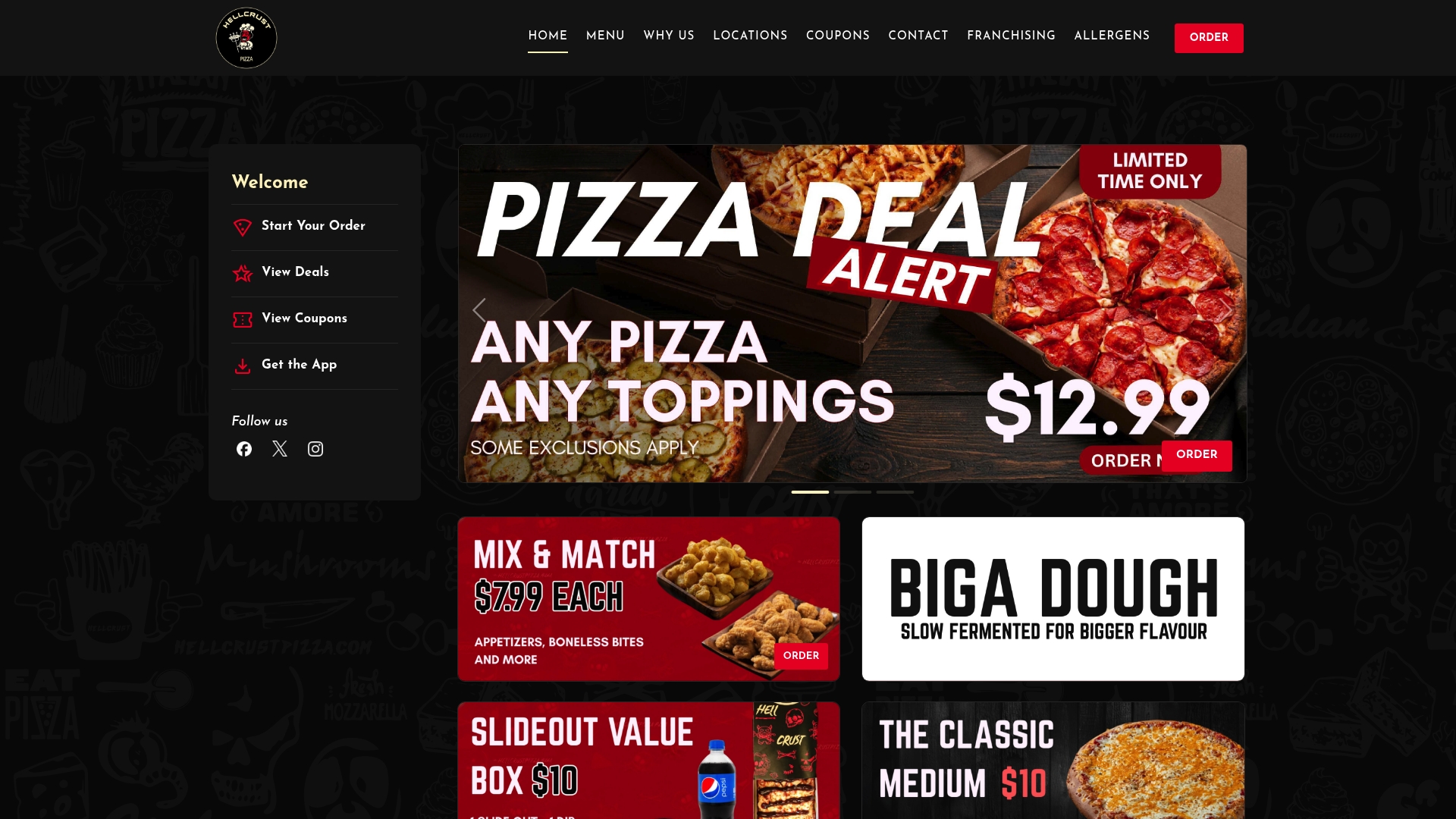
- Mix & Match deals pair a vegan pizza with another pie or side at a combined price.
- Family-sized specials make vegan ordering practical for a full table, not just one person.
- Our app surfaces current offers so you see the total before you order.
Take a look at the menu and place an order when a vegan craving hits.
FAQ
Is vegan cheese heavily processed?
Many commercial vegan cheeses rely on starches, plant proteins, and oils rather than whole-food ingredients, and a 2024 food-science review found these formulations are often more processed than dairy cheese. Processing levels vary by brand, so checking the ingredient list is the most reliable way to judge a specific product.
What is the best vegan cheese in Canada?
There's no single definitive ranking, since "best" depends on whether you're prioritizing melt quality, nutrition, or ingredient simplicity. Checking labels for protein content and additive levels, and comparing how a product performs in cooking versus cold applications, is a more reliable guide than any one brand claim.
How much does vegan cheese cost?
Surcharges for vegan cheese as a topping vary widely depending on the venue and portion, while plant-milk swaps in drinks tend to add $0.50 to $1.00. A 2023 Canadian product analysis also found plant-based cheese and yogurt analogues priced higher than dairy counterparts at retail.
What is the least processed vegan cheese brand?
No single brand is established as the least processed across the board, since formulations and ingredient lists vary widely even within one company's product line. Looking for shorter ingredient lists and fewer starch or stabilizer additives on the label is a practical way to compare options yourself.