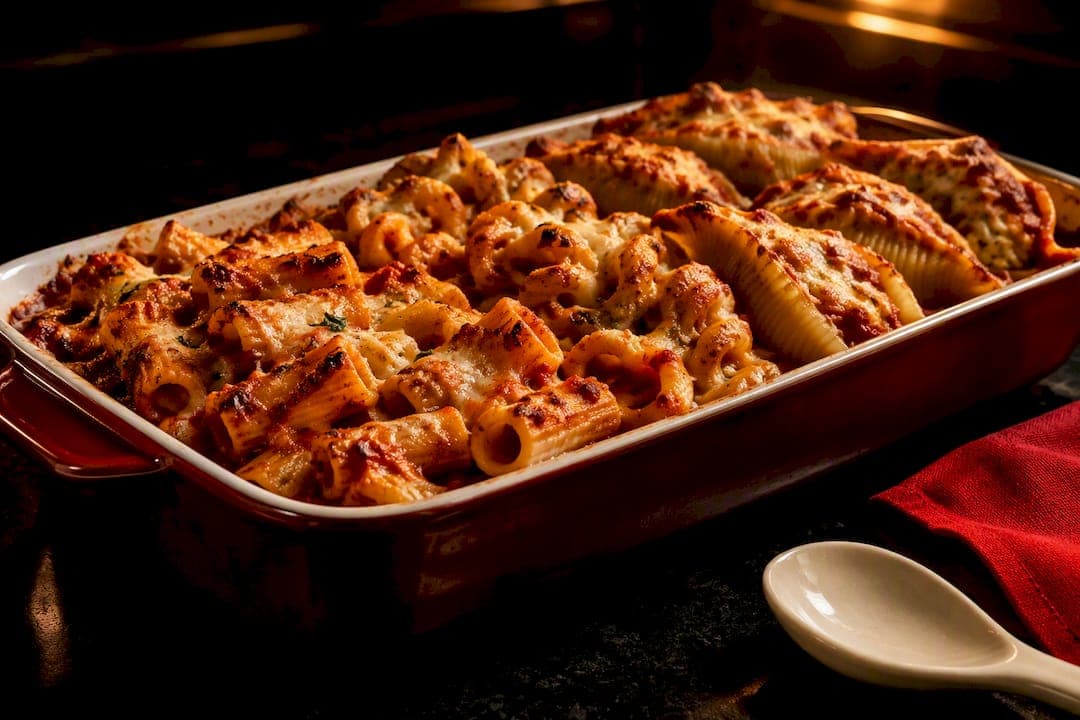
The most popular baked pasta styles are baked ziti, lasagna, stuffed shells, mac and cheese, and baked gnocchi, and nearly all of them share one rule: short, tubular, ridged shapes like rigatoni, penne rigate, and fusilli hold up best in the oven. Undercook your pasta by a minute or two before it goes into the dish, since it keeps cooking under that cheese.
TL;DR:
- Ridged, tubular pasta shapes like rigatoni and penne rigate are the best choice because they trap sauce and cheese effectively during baking.
- Undercooking pasta by one to two minutes before baking prevents it from turning mushy and ensures it finishes cooking properly in the oven.
- Moisture-rich cheeses like mozzarella and ricotta should be drained well, and watery vegetables blanched to avoid excess liquid in the final dish.
- Baking at a moderate temperature with a brief broil at the end yields even cooking and desirable browning without burning the top.
- Gluten-free and vegan baked pastas can be successful when using appropriate shapes and substitutions, but bake times should be carefully adjusted.
Table of Contents
- Popular baked pasta types and the shapes that make them work
- How to choose the right pasta shape for a bake
- Cheese and filling choices for baked pasta
- Oven technique, timing and texture control
- Special and regional baked-pasta forms worth trying
- What kitchen testing actually teaches you about baked pasta
- Nutritional considerations and dietary adaptations
- Why baked pasta earns a permanent spot in your rotation
- Craving baked pasta without the cleanup?
- Sources
- FAQ
Popular baked pasta types and the shapes that make them work
Baked pasta, or pasta al forno, covers a wide family of dishes built around a hearty sauce, a layer of cheese, and a crisped, bubbling top. Some trace back generations in Italian kitchens. Others grew into comfort-food staples on this side of the Atlantic. Here's a shortlist worth knowing before you decide what to cook this week.
Classic Italian al forno dishes
- Baked ziti — Tomato sauce, ricotta, and mozzarella baked until the top turns golden. Ziti or penne rigate both work, since their tube shape traps sauce inside and out.
- Lasagna — Flat sheets layered with béchamel or ragù, cheese, and sometimes vegetables. This is one dish where a specialty shape (the lasagna sheet itself) beats any substitute.
- Timballo — A drum-shaped, molded pasta pie often lined with pastry or eggplant, packed with pasta, meat, and cheese, then unmoulded for a dramatic table presentation.
- Gnocchi alla sorrentina — Potato gnocchi baked in tomato sauce with fresh mozzarella and basil, a Neapolitan classic that's lighter than most bakes on this list.
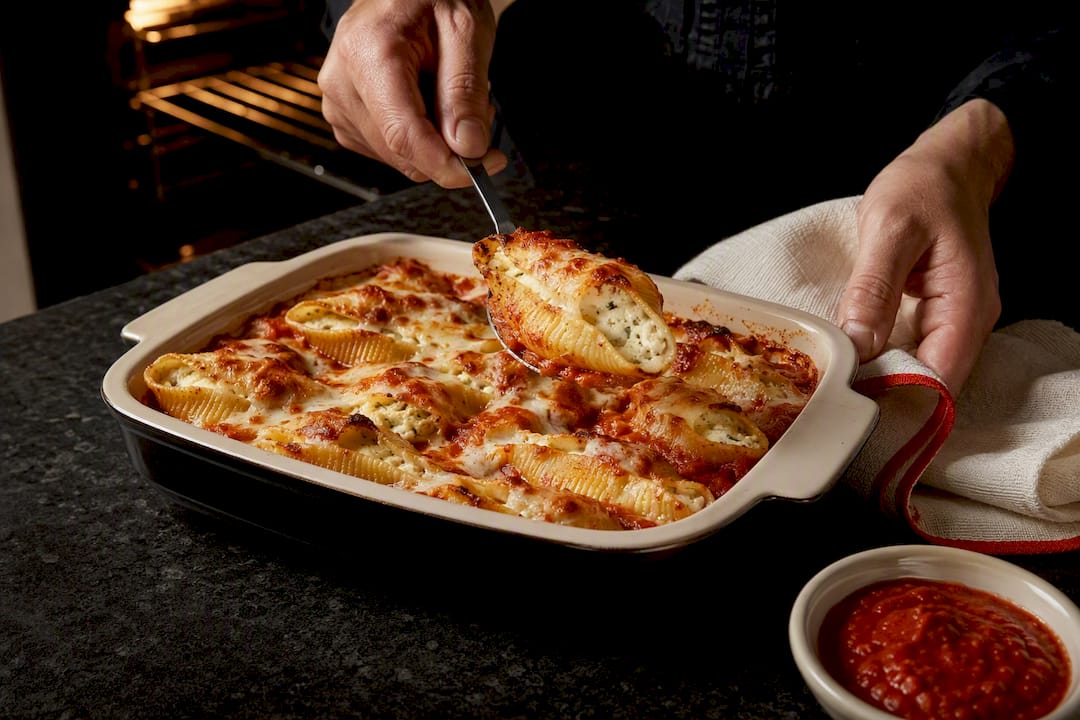
- Conchiglioni al forno — Large stuffed shells filled with ricotta or meat, then baked under tomato sauce and cheese.
American casseroles and comfort food
- Baked mac and cheese — Elbow macaroni or cavatappi in a cheese sauce, topped with breadcrumbs or extra cheese for a crunchy finish.
- Baked penne casserole — A weeknight staple: penne, ground meat or vegetables, tomato sauce, and a heavy blanket of mozzarella.
- Tuna noodle bake — Egg noodles or shells with tuna, a creamy sauce, and often peas, finished with a crisp topping.
Stuffed and layered formats
- Stuffed shells — Conchiglioni filled individually with ricotta and herbs, arranged in a single layer, and baked in sauce.
- Manicotti — Tube-shaped pasta stuffed with cheese or meat filling, similar in spirit to stuffed shells but rolled rather than shell-shaped.
Regional specialties
- Anelletti al forno — A Sicilian dish built around tiny pasta rings, meat sauce, peas, and caciocavallo cheese, often moulded and sliced like a cake.
- Paccheri gratin — Large, smooth tubes baked in a lighter sauce, popular in southern Italy for their satisfying bite without excess starchiness.
Portion size and presentation vary a lot across this list. Timballo and anelletti al forno are built for slicing at the table and impressing a crowd, while baked ziti and mac and cheese are practical, scoopable weeknight dinners. Pick based on how much drama you want on the table, not just what's in the fridge.
How to choose the right pasta shape for a bake
Matching shape to sauce comes down to four things: size, ridges, hollows, and how much surface area the pasta offers for cheese to cling to. Ridged tubes like rigatoni and penne rigate are the safest all-purpose choice because their grooves grab sauce the way a smooth noodle simply can't, and chefs consistently name them the top pick for casseroles.
Use this as your starting flow:
- Thick, chunky sauces (meat ragù, thick tomato) pair well with rigatoni, ziti, or large shells that can hold texture without disappearing into the sauce.
- Thin, creamy, or cheese-based sauces suit fusilli or cavatappi, since their curls and spirals grab liquid that would otherwise pool at the bottom of the dish.
- Stuffed formats (conchiglioni, manicotti) need a shape with a real cavity, so nothing ridged-but-solid will do the job.
- Small formats (anelletti, ditalini) work for moulded or sliced presentations where you want a dense, cohesive bake rather than distinct pieces.
Rigate, or ridged, pasta surfaces genuinely change the outcome. That texture improves sauce adhesion and helps prevent a bake from turning soupy or drying out, which matters more than most home cooks realize when they're standing at the pasta aisle.
It holds its shape through a full boil and a full bake, where softer flours turn to mush the second they hit the oven.*
Cheese and filling choices for baked pasta
Cheese does two jobs in a bake: it melts into the sauce, and it browns on top. Low-moisture mozzarella is the standard for a reason. It browns evenly without turning greasy, and it stretches the way people expect from a good baked pasta.
- Low-moisture mozzarella: melts smoothly, browns well, the default choice for most bakes.
- Fontina and Gruyère: melt into a silkier, nuttier sauce, best under a béchamel-based dish like lasagna.
- Cheddar: sharper flavour and firmer browning, common in mac and cheese.
- Feta or grated halloumi: added on top for salty contrast rather than as the main melting cheese.
- Use béchamel with milder cheeses, and tomato-based sauces with mozzarella or provolone for a more classic profile.
Ricotta and vegetables both carry excess water. Drain ricotta well and squeeze out any watery vegetables before folding them in, or you'll end up with a bake that pools liquid at the bottom of the dish.
Oven technique, timing and texture control
Getting a bake right has less to do with the recipe and more to do with a handful of small, repeatable steps.
- Undercook the pasta by one to two minutes before it hits the oven. It finishes cooking in the sauce and won't turn mushy by the time the cheese browns.
- Choose your finish: a quick blast under the broiler gives fast, deep browning on top, while a longer bake at a moderate oven temperature cooks the interior more evenly. Broiling risks a burnt top before the centre heats through, so keep watch.
- Blanch hardy vegetables like broccoli or kale before adding them, since raw vegetables release moisture during baking that a finished dish can't absorb.
- Rest the bake for about 10 minutes after it comes out. That short pause lets the cheese and sauce settle so slices hold their shape instead of sliding apart on the plate.
Special and regional baked-pasta forms worth trying
Once you've got the basics down, a few less common shapes reward the extra effort. Special shapes like paccheri and anelletti bring texture and presentation that standard penne bakes can't match.
- Timballo: a moulded pasta pie, sometimes lined with eggplant or pastry, unmoulded and sliced tableside. Best for a dinner party where you want a showpiece.
- Paccheri bakes: large, smooth tubes that hold a lighter sauce beautifully without turning gummy.
- Anelletti al forno: tiny pasta rings baked into a dense, sliceable loaf, a Sicilian favourite for feeding a crowd.
- Baked gnocchi: pillowy and delicate, best in a shallow dish with a short bake time so the gnocchi doesn't dry out.
- Layered lasagne variants: swap the meat ragù for mushroom, squash, or spinach and ricotta for a lighter take on the classic.
Special forms like timballo take more setup, including lining a mould and sometimes binding slices with egg, so they're worth attempting once you're comfortable with a standard bake first. Reheat leftovers covered, at a lower oven temperature, to avoid drying out the top layer a second time.
What kitchen testing actually teaches you about baked pasta
Home cooks who bake pasta regularly land on the same handful of rules: undercook the pasta, blanch anything watery, and let the dish rest before cutting into it. Our own kitchen testing backs this up. Swapping a portion of ricotta for béchamel in a stuffed shell recipe kept the filling from weeping. For more on pairing sauces with pasta, our guide to marinara versus Alfredo breaks down which sauce style suits which dish.
Nutritional considerations and dietary adaptations
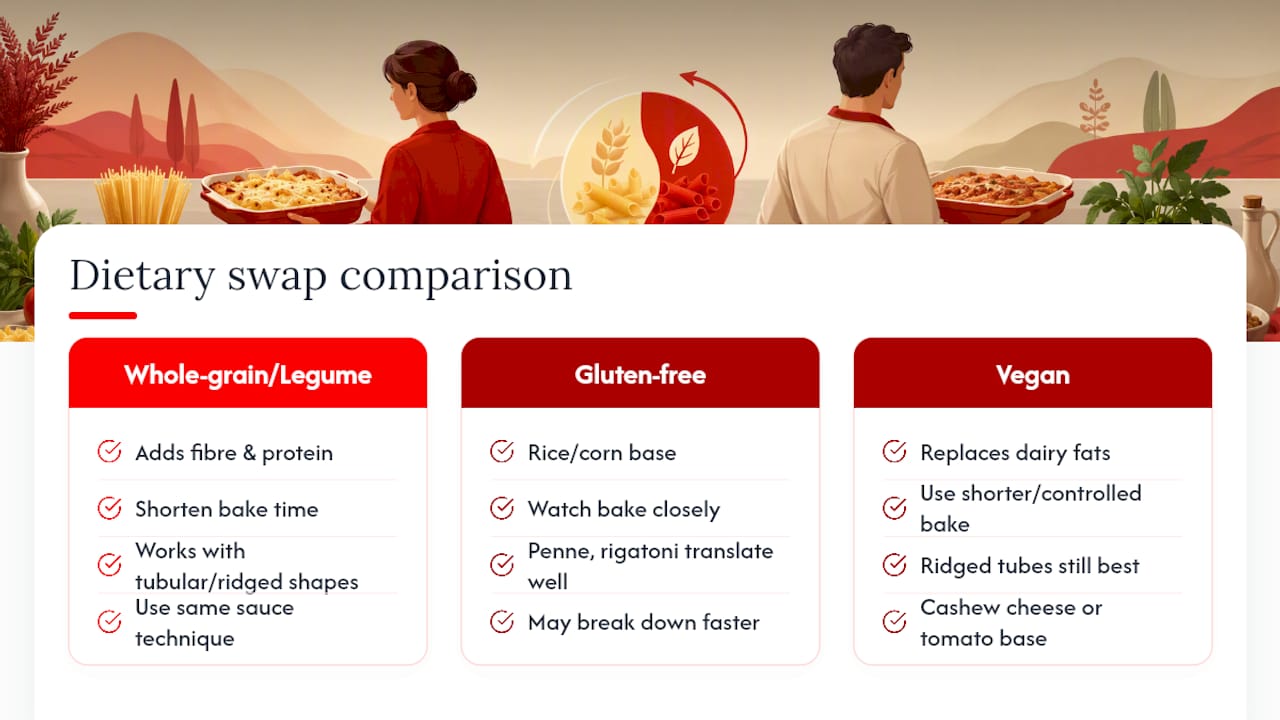
A standard baked pasta leans heavy on refined carbohydrates, saturated fat from cheese, and sodium from cured meats or salty toppings, so portion size matters more than people expect for a dish that looks modest on the plate. Swapping in whole wheat or legume-based pasta adds fibre and protein without changing the technique, though these shapes can turn softer under a long bake, so lean toward the shorter end of your cook time.
Gluten-free bakes work well with rice or corn-based penne and rigatoni, since the ridged, tubular shapes that work for wheat pasta translate directly. Just watch your bake time closely, as gluten-free pasta tends to break down faster under prolonged heat.
For a vegan version, cashew-based cheese sauces or a well-seasoned tomato and roasted vegetable base can replace the traditional mozzarella and ricotta combination. Nutritional yeast adds a savoury, cheese-like note to a béchamel substitute made with plant milk and olive oil. None of these swaps ask you to abandon the shape rules from earlier; a good gluten-free or vegan bake still depends on a ridged, tubular pasta holding onto sauce the same way a traditional one does.
Why baked pasta earns a permanent spot in your rotation
Baked pasta solves a real problem: feeding a hungry household without babysitting a stove. You assemble it once, it holds in the fridge or freezer, and it reheats without losing much of what made it good the first time. At Hellcrustpizza, a little more care upfront means a lot less compromise on the plate later.
— jaskirat Singh
Craving baked pasta without the cleanup?
If you'd rather skip the blanching, the shell-stuffing, and the dishes piled in the sink, there are baked pasta options that provide the same comfort without the oven mitts. Made with care and fresh ingredients, these meals are built for the nights you want a hot, cheesy dinner on the table fast.

Browse the full baked pasta and menu lineup to see what's available for delivery or pickup near you, and order through the app to find current deals that can make feeding a family more affordable. It takes less time than parboiling a pot of rigatoni.
Sources
- I Asked 5 Chefs To Name the Best Pasta Shape for Casseroles—They All Said the Same Thing
- How to Make the Best Baked Pasta - NYT Cooking
- Best pasta for baked dishes
- What Types of Pasta Are Best For Making Baked Pasta?
FAQ
What is the most popular pasta bake?
Baked ziti and lasagna are generally considered the most popular baked pasta dishes in North American kitchens, thanks to their simple assembly and crowd-pleasing combination of sauce, cheese, and a browned top. Mac and cheese runs a close second, especially for family meals.
What are 10 different types of pasta bakes?
Common baked pasta dishes include baked ziti, lasagna, stuffed shells, mac and cheese, timballo, gnocchi alla sorrentina, manicotti, anelletti al forno, paccheri gratin, and tuna noodle bake. Each pairs a specific pasta shape with a sauce and cheese style suited to it.
What type of pasta is best for baking?
Short, ridged, tubular shapes like rigatoni, penne rigate, and fusilli work best because their hollows and ridges trap sauce and cheese while holding their structure in the oven. Large shells and ziti are also strong choices for stuffed or chunky bakes.
What are 7 types of pasta good for baking?
Rigatoni, penne rigate, ziti, fusilli, cavatappi, conchiglie, and large shells are all commonly recommended for baked dishes because they hold sauce and keep their bite. Smooth, delicate shapes like angel hair generally don't hold up as well under a long bake.
Does Hellcrustpizza offer baked pasta?
Yes, Hellcrustpizza's menu includes a Baked Pasta line alongside its pizzas, sides, and desserts, available for delivery or pickup through the app.