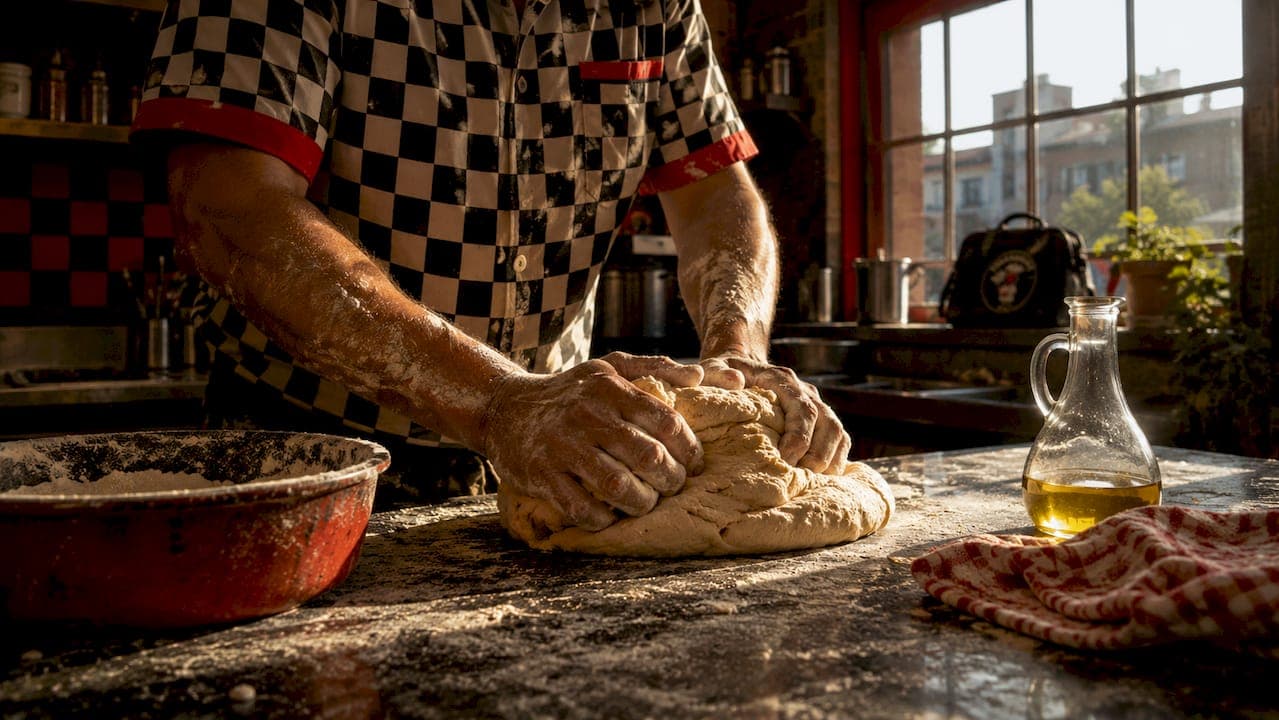
Biga is a stiff Italian preferment defined by its low hydration of 50–60%, and it is the single most effective method for producing a deeply flavoured, chewy pizza crust at home. Unlike a standard dough mixed and baked the same day, biga undergoes a slow, concentrated fermentation that builds complex, tangy flavour compounds no quick-mix dough can replicate. The result is a crust with real presence: sharper aroma, better chew, and an oven spring that lifts the crumb beautifully. At Hellcrustpizza, this preferment method sits at the heart of every multigrain, additive-free dough we craft. Understanding why biga dough elevates pizza experience starts with what happens inside that stiff, fermenting mass long before it ever sees a hot oven.
Why does biga fermentation produce superior flavour and structure?
Biga's flavour advantage comes directly from its stiff dough environment. Because the hydration is low, acetic acid production is prioritised over lactic acid, producing a sharper, more complex flavour profile than you get from wetter preferments. That sharpness is not sourness for its own sake. It is a mature, layered taste that makes every bite feel crafted rather than plain.
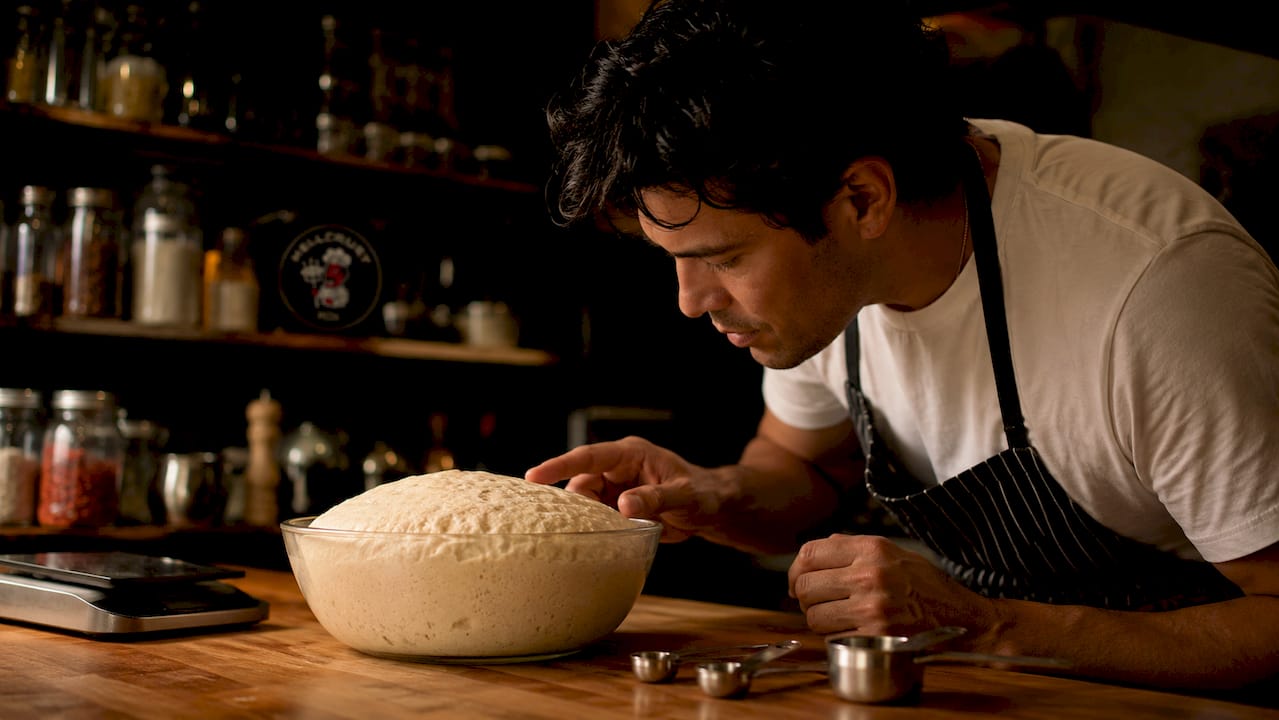
The structural benefits are equally significant. Stiff fermentation slows protease activity, which means the enzymes that normally break down gluten are kept in check. The result is a stronger gluten network, better gas retention, and a more pronounced oven spring. Your crust rises with purpose and holds its shape rather than spreading flat.
Lower hydration also concentrates fermentation byproducts. Acids, alcohols, and CO2 build up in a tighter environment, which deepens taste without tipping into an overpowering sourness. Think of it the way a slow-simmered stock tastes richer than a quick broth. The principle is the same: time and restraint produce depth.
Key conditions that shape biga's results:
- Yeast dosage: Use approximately 0.2–0.5% yeast relative to flour weight. A lower dose forces a longer, more flavourful fermentation.
- Fermentation time: 12–24 hours at room or cooler temperatures gives the best balance of flavour and gluten preservation.
- Temperature: Cooler fermentation (around 16–18°C) favours acetic acid and a more complex flavour. Warmer temperatures speed things up but reduce complexity.
- Hydration: Keep biga at 50–60% hydration. Going wetter shifts the microbial activity and reduces the flavour advantage.
Pro Tip: If your kitchen runs warm, mix your biga just before bed and move it to the fridge overnight. You will wake up to a beautifully matured preferment without any risk of over-fermentation.
How does biga compare to poolish and other preferments?
The most useful comparison for home pizza cooks is biga versus poolish, the other widely used Italian preferment. Poolish is a liquid preferment at 100% hydration, meaning equal parts flour and water by weight. That wet environment shifts microbial activity toward lactic acid, producing a milder, slightly sweet flavour and a more open, airy crumb.
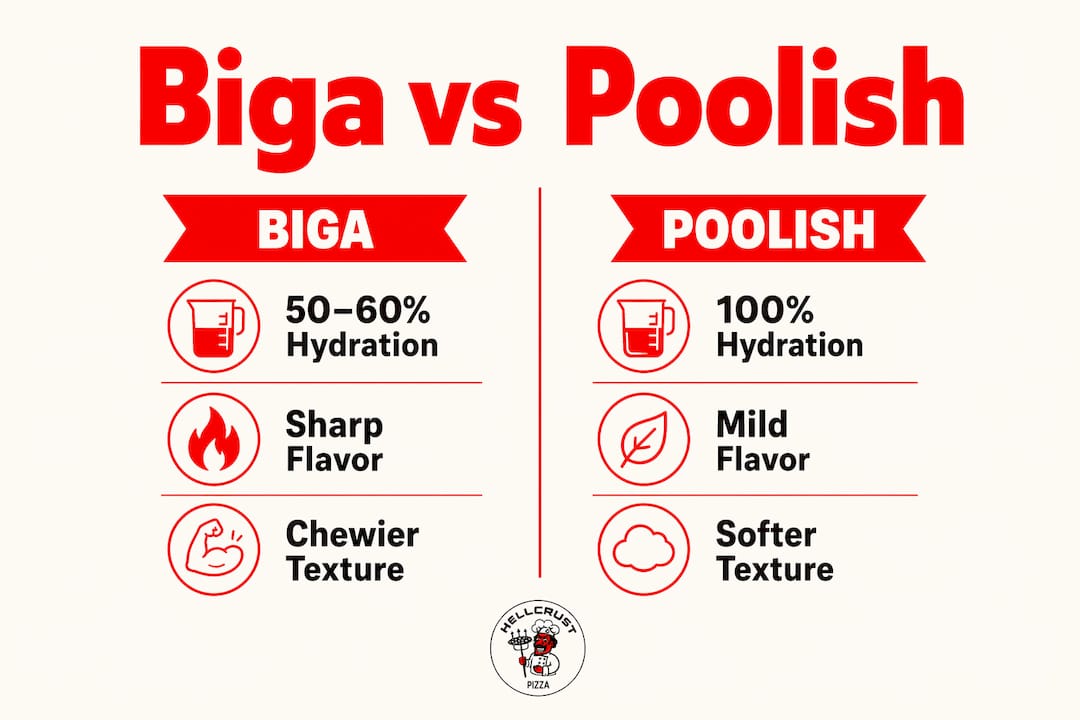
Biga, by contrast, produces a chewier, firmer dough with a sharper acidity. The hydration-driven microbial difference between the two is not subtle. It fundamentally changes the eating experience of the finished crust.
| Feature | Biga | Poolish |
|---|---|---|
| Hydration | 50–60% | 100% |
| Flavour profile | Sharp, complex, tangy | Mild, slightly sweet |
| Crumb texture | Chewy, structured | Open, airy |
| Handling difficulty | Stiff, requires effort | Easy, batter-like |
| Best pizza styles | Neapolitan, Roman, NY, Detroit | Focaccia, lighter crusts |
Handling is where biga demands more from you. Poolish stirs together in seconds. Biga requires real mixing effort to bring the stiff mass together, and incorporating it into your final dough takes patience. You will need to break it apart by hand or use a stand mixer on low speed for several minutes. That extra effort is the trade-off for the flavour and structure you gain.
For pizza styles that need foldability and presence, such as a New York slice or a Roman al taglio, biga is the clear choice. For a lighter, more delicate focaccia-style base, poolish may suit you better. Knowing which preferment fits your intended style is half the battle.
Pro Tip: When switching from poolish to biga for the first time, reduce your final dough water by the amount of water already in the biga. Forgetting this step is the most common reason home cooks end up with slack, sticky dough.
Practical tips for using biga dough at home
Success with biga comes down to four things: hydration accounting, timing, incorporation technique, and knowing when your biga is ready. Get these right and the results will genuinely surprise you.
-
Account for biga's water in your final dough. Biga already contains flour and water. Precise hydration accounting is non-negotiable. Subtract the biga's flour and water from your total recipe quantities before mixing the final dough. Skipping this step produces dough that is either too dry or too wet.
-
Choose your fermentation schedule deliberately. Room temperature fermentation (12–18 hours) works well when your kitchen sits around 18–20°C. Cooler or fridge fermentation (12–24 hours at 4–8°C) extends your usable window without over-sharpening the flavour. Fridge fermentation is the better choice for busy home cooks who need flexibility.
-
Break up the biga properly before mixing. Tear the biga into small pieces before adding it to your final dough. If you add it as one lump, it will not incorporate evenly. Use your hands or a dough scraper to pull it apart, then mix on low speed until the pieces are fully absorbed.
-
Read the biga before you use it. A ready biga smells yeasty and slightly tangy, not sharp or alcoholic. It should have small bubbles throughout and feel slightly tacky but not wet. If it smells strongly of alcohol, it has over-fermented and will produce a harsh, unpleasant crust.
-
Handle the final dough gently. Once your biga is incorporated, avoid aggressive kneading. The gluten network is already strong. Overworking it degrades the gas bubbles you have spent hours building. Fold the dough gently two or three times during bulk fermentation instead.
-
Avoid these common mistakes. Using too much yeast shortens fermentation and flattens flavour. Fermenting at too high a temperature pushes lactic acid production and reduces complexity. Skipping the rest period after incorporating biga gives you a tight, unresponsive dough that tears when you shape it.
Pro Tip: For a step-by-step approach to working with fresh, hand-crafted doughs at home, the fresh tortilla guide from Burrito Splendido offers excellent practical technique for building confidence with stiff, low-hydration doughs.
Which pizza styles benefit most from biga dough?
Biga is not a universal solution, but it is the best solution for several beloved pizza styles. The key is matching the preferment's strengths to what the style demands.
- Neapolitan pizza relies on a thin, blistered crust with a pronounced chew at the cornicione (the raised edge). Biga's stronger crumb and oven spring produce exactly that lift and chew without requiring a wood-fired oven to compensate.
- Roman pizza al taglio is baked in trays and sold by the slice. It needs a crust that holds its structure under generous toppings. Biga's firm gluten network makes it the ideal base for this style.
- New York style demands foldability. A slice should fold cleanly in half without cracking. Biga's chewy, structured crumb gives you that fold while still delivering flavour that stands up to a heavy tomato sauce.
- Detroit style is thick and focaccia-adjacent, but it still benefits from biga's flavour depth. The preferment adds complexity that a same-day dough simply cannot match, even at greater thickness.
Biga also pairs beautifully with multigrain flours, which is precisely why Hellcrustpizza uses it as the foundation for our multigrain, additive-free dough. The preferment's acidity complements the nuttier, earthier notes of whole grains in a way that a standard dough never achieves. If you are curious about how toppings interact with a multigrain base, the Hellcrustpizza guide on pairing toppings with multigrain pizza is worth reading alongside this.
Milder preferments suit lighter, more delicate recipes where you want the toppings to carry the flavour. Biga shines when the crust itself is meant to be part of the experience.
Key takeaways
Biga dough produces superior pizza because its low hydration and long fermentation build flavour, strengthen gluten, and improve oven spring in ways no same-day dough can match.
| Point | Details |
|---|---|
| Biga hydration | Keep biga at 50–60% hydration to prioritise acetic acid and complex flavour. |
| Fermentation timing | Ferment for 12–24 hours at room or cooler temperatures for best flavour and structure. |
| Gluten strength | Stiff fermentation slows protease activity, preserving gluten and improving gas retention. |
| Style matching | Biga suits Neapolitan, Roman, New York, and Detroit styles that need chew and foldability. |
| Hydration accounting | Always subtract biga's flour and water from your final dough formula to avoid texture problems. |
What I have learned from years of biga pizza making
The first time I made a biga-based pizza at home, I was not prepared for how different the crust tasted. It was not just better. It tasted like it had been made by someone who genuinely cared about the process. That experience changed how I think about pizza dough entirely.
The lesson I keep coming back to is patience. Biga rewards you for slowing down. Every time I have rushed the fermentation, cut the time short, or used too much yeast, the crust told on me. The flavour was flat. The chew was wrong. You really do get what you pay for with fermentation time.
Fridge fermentation was the practical breakthrough for me. Once I stopped trying to fit biga into a single-day schedule and started mixing it the night before, the whole process became manageable. The fridge holds the fermentation steady, and I can bake on my own timeline without sacrificing any of the flavour complexity.
My honest advice to home cooks is this: do not let the stiffness of biga intimidate you. Yes, it takes more effort to mix and incorporate than a liquid preferment. But that effort is finite, and the payoff is a crust that genuinely stands on its own. Start with a small batch, pay attention to how the biga smells and feels before you use it, and trust the process. Artisan-quality pizza at home is not a fantasy. It is a matter of method.
— jaskirat
Hellcrustpizza and the craft behind every crust
At Hellcrustpizza, our unwavering commitment to quality starts with the dough. Every pizza we make is built on a multigrain, additive-free biga base that reflects the same preferment principles covered in this article. We believe wholesome ingredients and thoughtful fermentation are not optional extras. They are the standard.

Whether you are perfecting your own biga at home or craving a crafted pizza without the wait, Hellcrustpizza has you covered. Browse our full range of fresh, biga-based pizzas and take advantage of our Mix & Match deals and family-sized specials. For date-night inspiration, our guide on couple pizza choices pairs beautifully with everything you have learned about biga flavour. Good pizza starts with good dough. We have done that part for you.
FAQ
What is biga dough in pizza making?
Biga is a stiff Italian preferment made with flour, water, and a small amount of yeast at 50–60% hydration. It ferments slowly over 12–24 hours to develop complex flavour and strengthen dough structure before being incorporated into the final pizza dough.
How does biga improve pizza crust compared to regular dough?
Biga's slow fermentation builds acetic acid and strengthens gluten, producing a chewier crust with deeper flavour and better oven spring than same-day dough mixed without a preferment.
How long should biga ferment for pizza?
Biga ferments best over 12–24 hours using a low yeast dose of approximately 0.2–0.5%. Room temperature fermentation suits a 12–18 hour window, while fridge fermentation extends usability without over-sharpening the flavour.
Is biga better than poolish for pizza?
Biga produces a chewier, more structured crust with sharper flavour, making it the better choice for Neapolitan, New York, and Roman styles. Poolish yields a milder, airier crumb and suits lighter pizza styles where a delicate flavour is preferred.
Can home cooks use biga dough successfully?
Yes. Home cooks achieve excellent results by accounting for biga's hydration in the final dough formula, breaking the stiff preferment into small pieces before mixing, and fermenting at cooler temperatures for consistent, flavourful results.