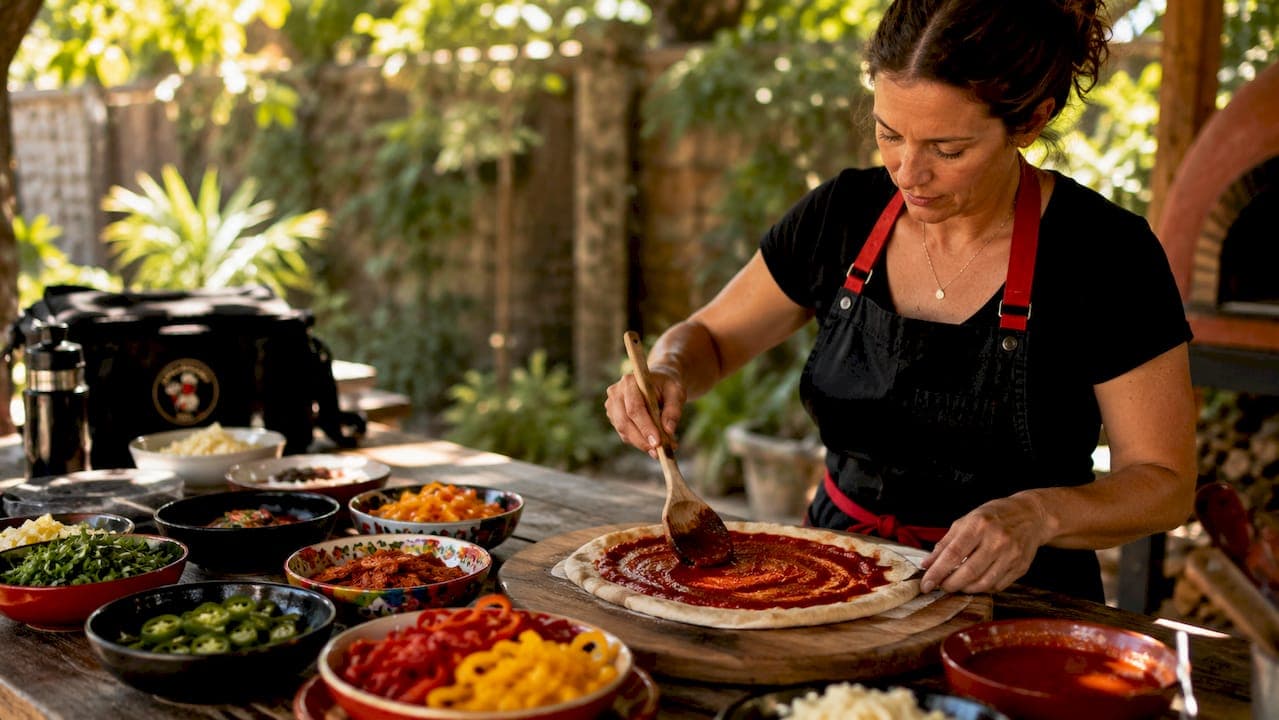
The crust is the foundation of every great pizza, and the toppings you choose must match it. To customize crust toppings for a perfect pizza, you need to treat crust selection and topping preparation as one connected decision, not two separate steps. King Arthur Baking confirms that every topping requires careful pre-preparation to enhance rather than damage the final bake. Hellcrustpizza builds its entire philosophy around this truth: wholesome ingredients, crafted with care, on a Biga multigrain dough that gives every topping the foundation it deserves. Get the pairing right, and every bite earns its place.
How to select the ideal pizza crust for your customised toppings
The crust you choose determines which toppings will actually work. A thin crust cannot support a heavy load of sausage and roasted vegetables. A deep dish, on the other hand, is built for exactly that kind of generosity.
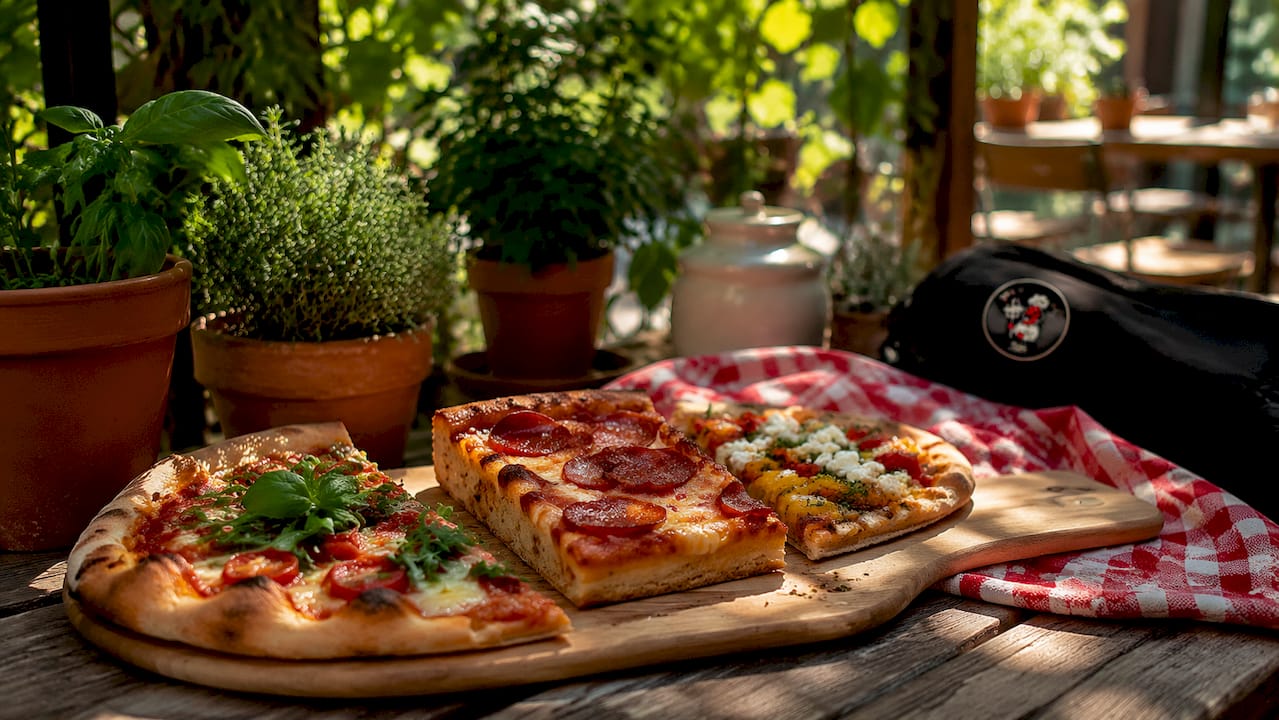
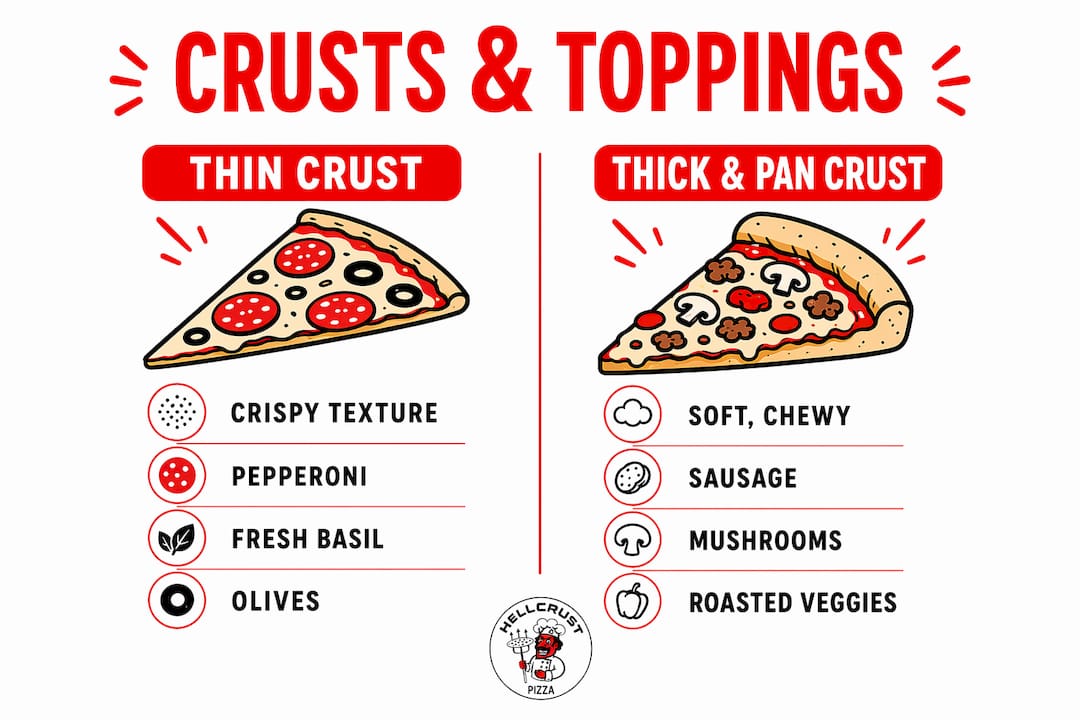
Thin crust suits lighter toppings like pepperoni, fresh basil, and olives. Thick and pan crusts handle sausage, mushrooms, and caramelised onions without buckling. This is not just about weight. Moisture matters just as much. A wet topping on a thin crust produces a soggy centre before the edges even brown.
| Crust type | Key characteristic | Ideal toppings | Watch out for |
|---|---|---|---|
| Thin crust | Crispy, light, quick bake | Pepperoni, basil, olives, light cheese | Heavy or wet toppings |
| Thick/pan crust | Chewy, sturdy, holds moisture | Sausage, mushrooms, onions, peppers | Undercooked centre if overloaded |
| Deep dish | Dense, bread-like, long bake | Chunky vegetables, multiple cheeses, meats | Excess sauce causing sogginess |
| Multigrain/Biga | Flavourful, complex, structured | Roasted vegetables, cured meats, fresh herbs | Overpowering delicate flavours |
Hellcrustpizza's Biga multigrain dough is worth understanding here. Biga is a preferment dough technique where a portion of flour, water, and yeast ferments slowly before the main mix. That slow fermentation builds a rich, mature flavour and a structure strong enough to carry generous, creative toppings without losing its integrity.
Pro Tip: If you are baking at home in a standard oven under 500°F, choose a flour with roughly 12.5% protein for better stretch and chew. Higher protein flours are better suited to wood-fired or gas ovens running above 700°F.
For more inspiration on pairing toppings with a multigrain base, the multigrain pizza pairing guide on the Hellcrustpizza blog is a genuinely useful read.
Why topping preparation makes or breaks your pizza
Raw toppings ruin pizza. That is the single most important rule in topping preparation, and it is one most home cooks ignore. Vegetables need pre-cooking because they will not cook fully in a standard pizza bake time, and the moisture they release soaks straight into your crust.
Mushrooms are the clearest example. Slice them raw onto a pizza and they release a flood of water during baking. Sauté them first in a dry pan until golden, and they shrink, concentrate in flavour, and add a savoury depth that raw mushrooms simply cannot deliver. The same logic applies to onions, spinach, and zucchini.
Here is how to handle the most common toppings before they go anywhere near your pizza:
- Mushrooms: Sauté in a dry pan over medium heat until all moisture evaporates and edges turn golden.
- Onions: Caramelise slowly in a little olive oil for 15–20 minutes. Raw onions stay sharp and harsh in a short bake.
- Spinach and leafy greens: Wilt briefly in a pan, then squeeze out excess water firmly before using.
- Bell peppers: Roast or sauté until softened. Raw peppers can stay crunchy and release liquid.
- Sausage and ground meat: Cook fully before adding. Partially cooked meat on a pizza is both a safety concern and a texture problem.
- Cured meats (pepperoni, salami): These are ready as-is, but blotting with a paper towel reduces excess grease.
Pre-cooking toppings like mushrooms and onions caramelises their natural sugars, which enhances flavour and prevents undercooked results in shorter bakes. That caramelisation is what separates a flat-tasting pizza from one with real depth.
Pro Tip: Season your toppings before pre-cooking them, not after. A pinch of salt and a crack of pepper before they hit the pan draws out moisture early and concentrates flavour far more effectively.
How do you build a topping combination that actually works?
The most common mistake in building personalized pizza toppings is trying to use everything you love at once. More toppings do not mean more flavour. They mean a heavier, wetter, harder-to-bake pizza that tastes muddled.
The "Headline" strategy solves this. Choose one dominant topping that carries the pizza's identity, one supporting topping that adds depth, and one contrast element that cuts through richness. A classic example: spicy Italian sausage (dominant), caramelised onion (supporting), and fresh kill flakes with a drizzle of honey (contrast). The contrast element is what makes a pizza memorable rather than merely satisfying.
Flavour pairing follows the same logic you find in wine or coffee. A rich, fatty topping needs something acidic or bright to balance it. If you enjoy thinking about flavour balance beyond the plate, wine pairing principles apply surprisingly well to pizza topping combinations.
Do's and don'ts for topping combinations:
- Do limit yourself to three or four toppings maximum per pizza.
- Do pair one bold flavour with one mild, complementary topping.
- Do add fresh herbs like basil or rocket after baking, not before.
- Don't use more than one very wet topping on the same pizza.
- Don't skip the contrast element. It is what lifts the whole pizza.
- Don't pile toppings to the edge on thin crust. Leave a 2 cm border for structural integrity.
Using roughly half the toppings you think you want produces a better result. Excess toppings and too much sauce weigh down the crust and prevent proper baking. Restraint is a skill, and it shows in every slice.
For a deeper look at gourmet topping choices, the Hellcrustpizza blog covers creative combinations worth exploring.
Step-by-step guide to assembling and baking your pizza
Assembly order matters more than most home cooks realise. The sequence in which you layer sauce, cheese, and toppings directly affects how each element cooks and how the final pizza holds together.
- Stretch your dough to your chosen thickness on a lightly floured surface. Let it rest for five minutes if it springs back too much.
- Apply sauce sparingly. A thin, even layer is enough. Spread it to within 2 cm of the edge. Too much sauce is the leading cause of a soggy base.
- Add cheese first on most pizza styles. Cheese acts as a barrier between the sauce and toppings, preventing the toppings from steaming the base.
- Layer your pre-cooked toppings evenly. Do not pile them in the centre. Even distribution means even cooking.
- For pan or deep-dish pizzas, push the cheese all the way to the pan walls. Cheese touching the pan walls creates a frico crust, a caramelised, crispy cheese edge that adds both texture and flavour contrast.
- Bake immediately after assembly. A dressed pizza sitting on the bench for ten minutes starts releasing moisture before it even enters the oven.
Baking times vary significantly by crust style, and getting this right is non-negotiable:
| Crust style | Oven temperature | Baking time |
|---|---|---|
| Thin crust | 230–260°C | 6–8 minutes |
| Thick/pan crust | 220–230°C | 10–15 minutes |
| Deep dish | 190–200°C | 20–30 minutes |
Pro Tip: Preheat your baking stone or steel for at least 45 minutes before baking. A cold surface is the single biggest reason home pizzas come out pale and soft on the bottom instead of crispy and golden.
What causes a soggy crust, and how do you fix it?
A soggy crust has one of three causes: too much sauce, wet toppings that were not pre-cooked, or a baking surface that was not hot enough. Identifying which one applies to your pizza tells you exactly what to change.
Simplifying toppings and avoiding overload improves both structure and flavour clarity. If your pizza consistently comes out wet in the middle, the fix is almost always fewer toppings or better topping preparation, not a longer bake time.
Here are the most common issues and their direct fixes:
- Soggy centre: Reduce sauce volume, pre-cook all vegetables, and confirm your oven is fully preheated before the pizza goes in.
- Pale, soft bottom: Use a preheated baking stone or steel. Bake on the lowest oven rack.
- Burnt edges, raw centre: Your oven is too hot for the crust thickness. Lower the temperature by 10–15°C and extend the bake time slightly.
- Toppings sliding off: You used too much sauce. A thin layer holds toppings in place. A thick layer acts like a lubricant.
- Bland flavour: You skipped seasoning during topping preparation. Season toppings before pre-cooking, and finish the baked pizza with flaky salt and fresh herbs.
The underlying principle is that TLC applied to toppings is the expert standard for elevating homemade pizza quality. Treat each topping as an ingredient that deserves individual attention, and the assembled pizza will reflect that care.
Key takeaways
The most effective way to make your own pizza is to match your crust type to your toppings, pre-cook moisture-heavy ingredients, and apply the Headline strategy to keep flavour balanced and structure intact.
| Point | Details |
|---|---|
| Match crust to toppings | Thin crust suits light toppings; thick and pan crusts support heavier, wetter combinations. |
| Pre-cook vegetables and meats | Raw toppings release moisture during baking, causing soggy crust and uneven cooking. |
| Use the Headline strategy | Choose one dominant, one supporting, and one contrast topping for flavour depth without overload. |
| Season toppings before pre-cooking | Seasoning before the pan concentrates flavour and draws out excess moisture early. |
| Preheat your baking surface | A hot stone or steel is the most reliable way to achieve a crispy, golden base at home. |
What I have learned from years of customising pizza at home
The advice I wish someone had given me early is this: the pizza you imagine and the pizza you bake are two different things until you learn restraint. My instinct was always to add more. More cheese, more toppings, more sauce. Every time, the result was a heavy, wet pizza that tasted less like any one thing and more like everything at once.
The shift happened when I started treating each pizza like a composed dish rather than a vehicle for ingredients. I picked one topping I genuinely wanted to taste, built around it, and stopped there. A simple combination of caramelised onion, good mozzarella, and a scattering of fresh thyme on a thick, well-fermented crust produced something I would order in a restaurant without hesitation.
Pre-cooking toppings felt like extra effort until I understood what it was actually doing. Sautéing mushrooms before they go on the pizza is not a fussy chef's habit. It is the difference between a topping that adds flavour and one that adds water. Once you see it that way, you never skip the step.
The Biga dough that Hellcrustpizza uses changed how I think about crust as a flavour element in its own right. A well-fermented, multigrain crust is not just a base. It is part of the taste. That realisation made me more selective about toppings, not less, because I did not want to cover up something that good.
If you are exploring regional topping styles for fresh ideas, that resource is worth your time. The best pizza I have made recently drew from a combination of Italian technique and a topping I discovered in a completely different culinary tradition.
— jaskirat
Hellcrustpizza: crafted crusts for your custom creations
Hellcrustpizza was built for pizza enthusiasts who take their toppings seriously. Every pizza starts with an additive-free Biga multigrain dough, slow-fermented for a rich, mature flavour that holds up to bold, creative topping combinations without losing its character.

Whether you are building a light, herb-forward thin crust pizza or loading up a pan pizza with roasted vegetables and cured meats, Hellcrustpizza's authentic crust options give you the foundation to make it work. Fresh ingredients, no artificial additives, and a dough crafted with genuine care. Check the current pizza deals and coupons to find a Mix & Match or family-sized special that fits your next pizza night.
FAQ
What toppings work best on a thin crust pizza?
Thin crust suits lighter toppings like pepperoni, fresh basil, olives, and light cheese. Heavy or moisture-rich toppings cause the base to soften before it crisps.
Do I need to pre-cook vegetables before putting them on pizza?
Yes. Raw, moisture-heavy vegetables release water during baking, which soaks into the crust and causes sogginess. Sauté or roast them first for better texture and flavour.
How many toppings should I put on a pizza?
Three to four toppings is the practical limit for most pizza styles. Using roughly half the toppings you think you want produces a better-structured, more flavourful result.
What is the Headline strategy for pizza toppings?
The Headline strategy means choosing one dominant topping, one supporting topping, and one contrast element. This combination creates flavour depth without overloading the crust.
How do I get a crispy pizza base at home?
Preheat a baking stone or steel for at least 45 minutes before baking, and place it on the lowest oven rack. A hot surface is the most reliable way to achieve a crispy, golden base in a home oven.