
Shareable pizza options are pizza sizes and styles designed to feed multiple people from a single order, making them the most practical choice for gatherings, celebrations, and casual group meals. A standard 14-inch large pizza yields 8 slices and feeds 2–4 adults comfortably, while an Extra Large at 16–18 inches suits groups of 5–7 people. Hellcrustpizza builds its entire menu around this communal format, offering family-sized specials and Mix & Match combos that let groups eat well without overspending. Understanding what sharing pizza means, in practical terms, is the first step to ordering confidently for any occasion.
What are shareable pizza options for groups?
Shareable pizza, in industry terms, refers to any pizza sized or portioned to serve more than one person from a single pie. The concept goes beyond size alone. It includes how the pizza is cut, how toppings are distributed, and whether the format supports informal, communal eating without strict plating or serving rituals.
Pizza's informal format supports varied appetite levels, making it the most practical communal food in group settings. You do not need equal portions or matching preferences. One person takes two slices of pepperoni, another grabs the veggie corner, and everyone is satisfied. That flexibility is exactly what makes pizza the go-to choice for dorm nights, birthday parties, office lunches, and family dinners alike.
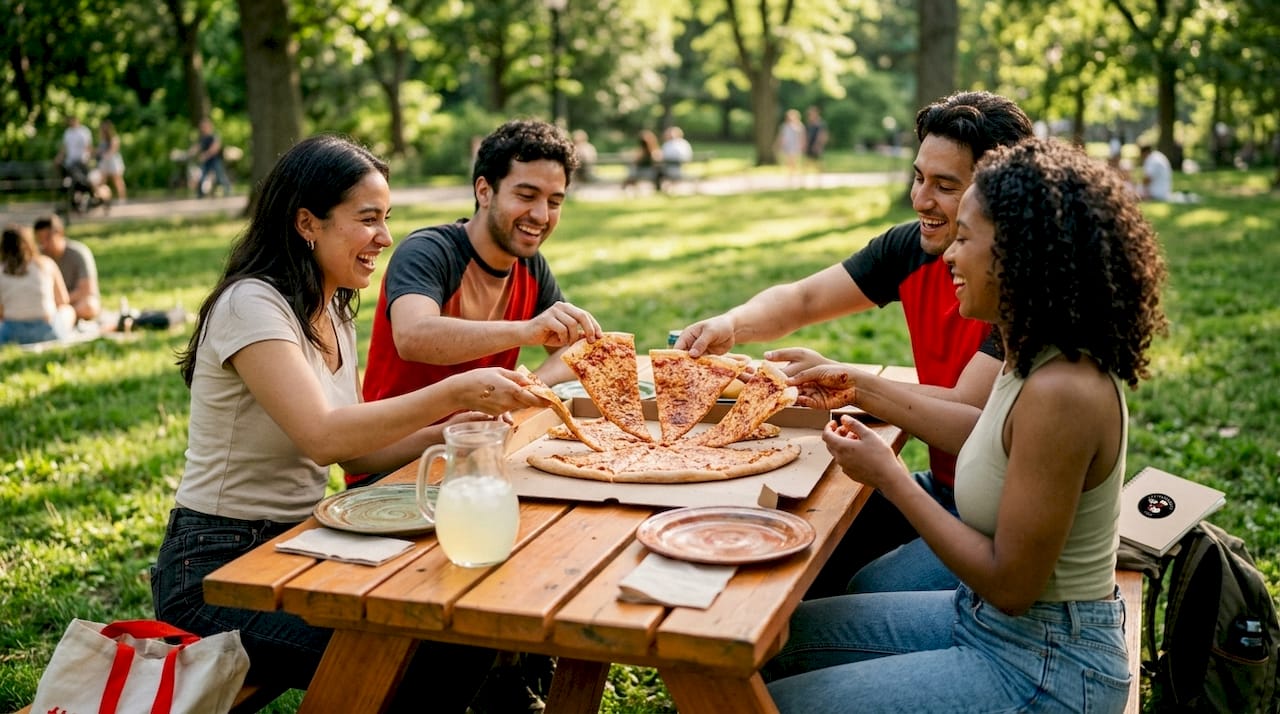
Family-sized pizza portions, specifically Large and Extra Large pies, are the industry standard for group orders. Medium pizzas, typically 12 inches with 6 slices, work for two people sharing a meal. Large and Extra Large formats are where the real value and variety open up for groups of three or more.
How to estimate pizza quantities for group sharing
Getting the quantity right is the most common challenge in group pizza ordering. The planning rule used across the industry is three slices per adult for a pizza-only meal. For 10 adults eating pizza as the main dish, that means 30 slices, or roughly 4 large pizzas at 8 slices each. Add side dishes to the order and 3 large pizzas will usually suffice for the same group.
Appetite varies more than most people expect. Average intake runs at 2 slices for light eaters, 3 for moderate appetites, and 5 or more for heavy eaters. Children typically need only 1–2 slices. Knowing your crowd matters as much as knowing the headcount.
A practical way to plan your order:
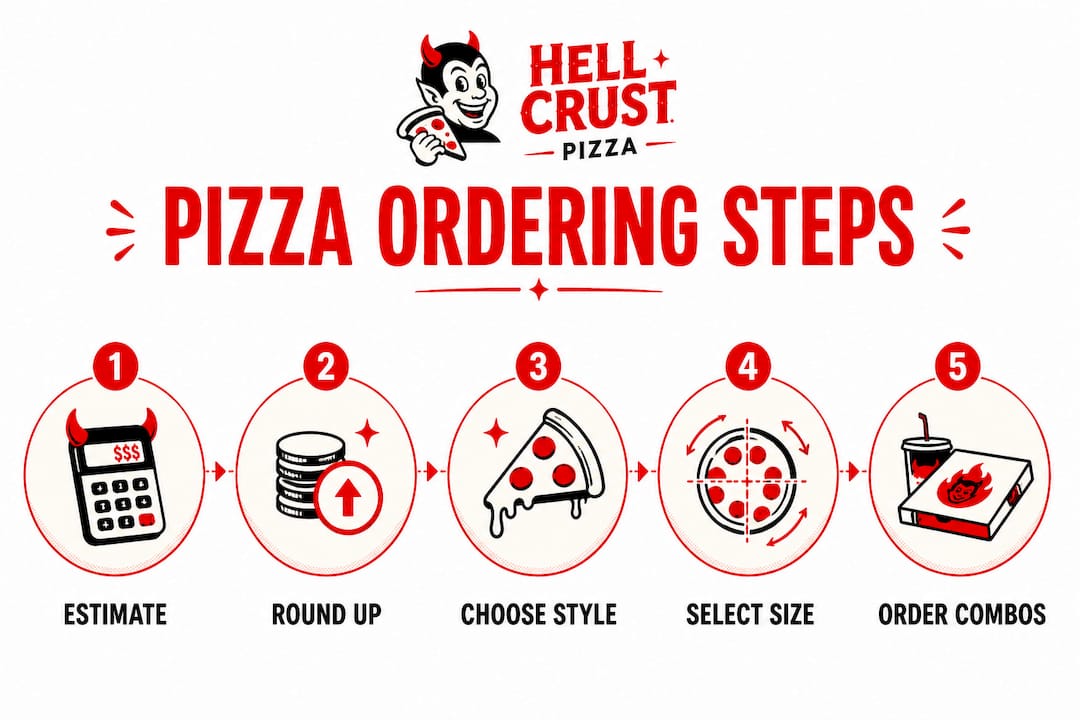
- Count the adults and multiply by 3 to get your target slice count.
- Divide that number by the slice count of your chosen pizza size (6 for medium, 8 for large, 10 for extra large).
- Round up to the nearest whole pizza. Never round down.
- Subtract one pizza if you are ordering substantial sides like pasta, garlic bread, or salads.
- Add one pizza back if the group includes heavy eaters or teenagers.
Pro Tip: Underestimating group appetite is the most common ordering mistake. Always round up by at least one pizza. Leftover pizza reheats beautifully, and running short mid-meal is far more disruptive than having a few extra slices.
For students splitting a pizza order in a dorm, the same rule applies. Three people ordering one large pizza will likely leave someone short. Two large pizzas, split three ways, gives everyone enough and usually leaves a slice or two for later. That is how sharing pizza saves students money: the per-slice cost drops as the pizza size increases, and leftovers extend the value across two meals.
Which pizza styles work best for sharing?
Not every pizza cuts equally well for a group. The style, crust type, and cutting pattern all affect how fairly and easily a pizza can be shared.
Party cut vs. traditional triangular slices
Party-cut pizzas, also called square-cut or tavern-cut, divide the pizza into small rectangular pieces rather than traditional triangles. This produces more total pieces from the same pie, which means more flexibility in how much each person takes. Square pieces are also easier to hold at standing events or parties where plates are not always available. Traditional triangular slices work well for sit-down meals where everyone gets an equal share of the pie from crust to centre.
Typical round pizzas come in 6, 8, or 10 slices depending on size and the pizzeria's standard cut. Sheet-style pizzas cut into small squares can yield many more pieces, making them particularly well suited to large gatherings.
Crust styles and their impact on sharing
| Crust style | Best for sharing | Why it works |
|---|---|---|
| Thin crust | Large groups, casual events | Lighter per slice, people eat more variety |
| Pan or deep dish | Smaller groups, hearty appetites | Filling per slice, fewer pieces needed |
| Sicilian or Detroit style | Parties and celebrations | Rectangular shape, naturally square-cut |
| Multigrain (e.g., Biga dough) | Health-conscious groups | Satisfying and flavourful without heaviness |
Hellcrustpizza's Biga multigrain dough deserves a mention here. Biga is a preferment dough technique where a portion of the flour, water, and yeast ferments for an extended period before the final dough is mixed. The result is a crust with a rich, mature flavour and a satisfying chew that holds up well under generous toppings. For groups sharing multiple slices, a well-structured crust makes a real difference in how enjoyable the experience is.
Pro Tip: For parties with mixed dietary needs, ask about half-and-half topping options. A single large pizza with two topping profiles on each half gives your group twice the variety without doubling the order.
Strategies for fair and enjoyable pizza sharing
Fair sharing is harder than it looks. A standard 8-slice pizza does not automatically produce equal pieces. The largest slice can be 15–20% bigger than the smallest in a typical 8-slice cut. That gap feels small on paper but creates real friction at the table.
The most practical strategies for fair group sharing:
- Use the "I-cut-you-choose" method. The person who cuts the pizza does not pick first. This creates a strong incentive to cut evenly, since the cutter knows they will receive whatever slice is left after others choose.
- Order multiple topping profiles. Rather than one pizza everyone tolerates, order two or three pizzas with distinct topping combinations. Groups with varied tastes are far happier with genuine variety.
- Designate a "specialty" pizza. One pizza with premium or unusual toppings, one classic crowd-pleaser. This satisfies adventurous eaters without alienating those who prefer the familiar.
- Split costs by pizza, not by slice. Divide the bill by the number of pizzas ordered, then split each pizza's cost among those who ate from it. This avoids the awkward accounting of counting individual slices.
- Account for dietary restrictions upfront. Mixing standard and specialty pies, or ordering half-and-half options, improves satisfaction across the whole group. Ask before you order, not after.
"The 'I-cut-you-choose' method is mathematically optimal for two people and works remarkably well for groups. It promotes even cuts and gives everyone a fair first choice. The cutter's self-interest does the work that goodwill alone cannot always guarantee."
Sharing etiquette matters as much as the math. Communicate preferences before the order is placed, not while the pizza is sitting on the table getting cold. A quick group chat or a two-minute conversation saves more frustration than any cutting technique.
How shareable pizza combos save money and increase variety
Ordering larger pizzas is more economical per square inch. One large pizza generally offers better value than multiple smaller pies for groups of three or more. The cost per slice drops as the pizza size increases, which is why family-sized pizza portions consistently outperform individual orders on a per-person basis.
The comparison between shareable combos and individual restaurant dining is stark. A sit-down restaurant meal for four people typically involves separate entrées, individual sides, and service charges. A group pizza order covers the same four people at a fraction of the cost, with more food variety and no tipping pressure.
For students and budget-conscious groups, pizza combos that pair a large pizza with sides represent the best value pizza combos under budget. Adding a pasta or a side of garlic bread to a large pizza order reduces the number of pizzas needed while increasing the overall variety of the meal. That combination, pizza plus one or two sides, is how pizza combos maximise student budgets most effectively.
Pro Tip: Check for group order deals and coupons before placing your order. Many pizza services offer discounts on multi-pizza orders or combo packages that are not advertised on the main menu. A few seconds of searching can save a meaningful amount on a large group order.
A useful reference for family-sized pizza ordering covers how to match pizza quantities to group size and appetite in detail. For groups who want to go deeper on topping selection, a customisable toppings guide walks through how to balance variety and crowd-pleasing choices within a single order.
Key takeaways
Shareable pizza options deliver the best value and satisfaction when you plan quantities deliberately, choose the right cut style, and order variety across multiple pies rather than defaulting to one safe choice.
| Point | Details |
|---|---|
| Use the three-slice rule | Plan 3 slices per adult for pizza-only meals, then round up by one pizza. |
| Choose the right cut | Party-cut square slices give more pieces and suit standing events better than triangular cuts. |
| Apply "I-cut-you-choose" | This method incentivises even cutting and reduces slice-size disputes in any group. |
| Order larger for better value | One large pizza costs less per square inch than multiple small pies for groups of three or more. |
| Mix topping profiles | Two or three distinct topping combinations satisfy more guests than one compromise pizza. |
My honest take on group pizza ordering
I have ordered pizza for groups ranging from three friends in a dorm room to thirty people at a work event. The single biggest mistake I see, every time, is under-ordering out of politeness or budget anxiety. People hesitate to suggest a fourth pizza when three seem "enough," and then everyone quietly goes home a little hungry. Leftover pizza is never a problem. Running out always is.
Hellcrustpizza's Mix & Match options genuinely change how group ordering feels. Instead of one person deciding for everyone, each person in the group can advocate for their preferred topping combination and the order accommodates all of them. That flexibility removes the social friction that makes group ordering feel like a negotiation.
My other strong opinion: do not overthink the crust. A well-made Biga dough, like the multigrain base Hellcrustpizza uses, carries almost any topping combination with grace. The fermentation process builds flavour that cheap, fast doughs simply cannot replicate. When the crust is good, you need fewer toppings to make a great pizza. That matters when you are ordering for a group with mixed preferences.
Communicate before you order. Ask who is vegetarian, who has allergies, and who genuinely does not care. Most people fall into that last category, and knowing that frees you to make bolder choices for the rest of the order.
— jaskirat Singh
Hellcrustpizza: shareable pizzas crafted for every gathering
Hellcrustpizza was built around the idea that great pizza should be accessible to everyone at the table, not just the person who ordered it.
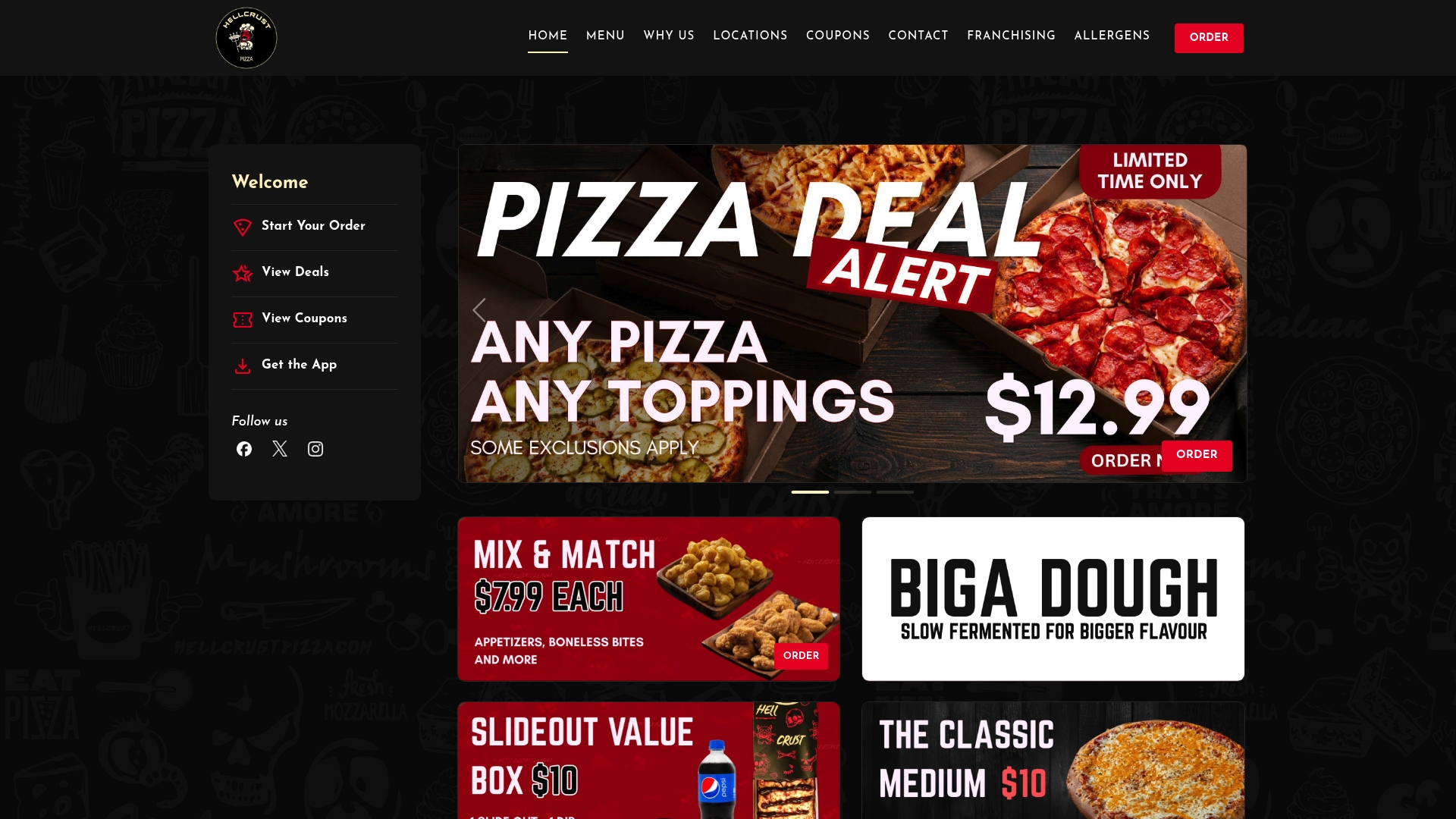
Every pizza on the Hellcrustpizza menu is available in family-sized portions, with Mix & Match combos that let your group choose different topping profiles across a single order. The Biga multigrain dough, free from artificial additives, means every slice holds up to sharing without going limp or losing flavour. Whether you are feeding a dorm room or a birthday crowd, Hellcrustpizza's group deals make it straightforward to order well and spend wisely. Check the current offers before you place your next group order.
FAQ
What does a sharing pizza mean?
A sharing pizza is any pizza sized or portioned to feed more than one person from a single pie. Large and Extra Large formats are the most common sharing sizes, designed for groups of 2–7 people.
How many slices does a large pizza have?
A standard large pizza is 14 inches and yields 8 slices. Extra Large pizzas at 16–18 inches typically have 10 slices and suit groups of 5–7 people.
How many pizzas do I need for a group of 10?
Plan for 3 slices per adult. Ten adults need 30 slices, which equals roughly 4 large pizzas for a pizza-only meal, or 3 large pizzas if substantial sides are included.
Is a large pizza better value than two mediums?
A large pizza delivers more food per dollar than two medium pizzas of equivalent total area. One large pizza is the better choice for groups of three or more on a shared budget.
What is the fairest way to cut a shared pizza?
The "I-cut-you-choose" method produces the most even slices. The person who cuts the pizza does not pick first, which creates a direct incentive to cut as evenly as possible.