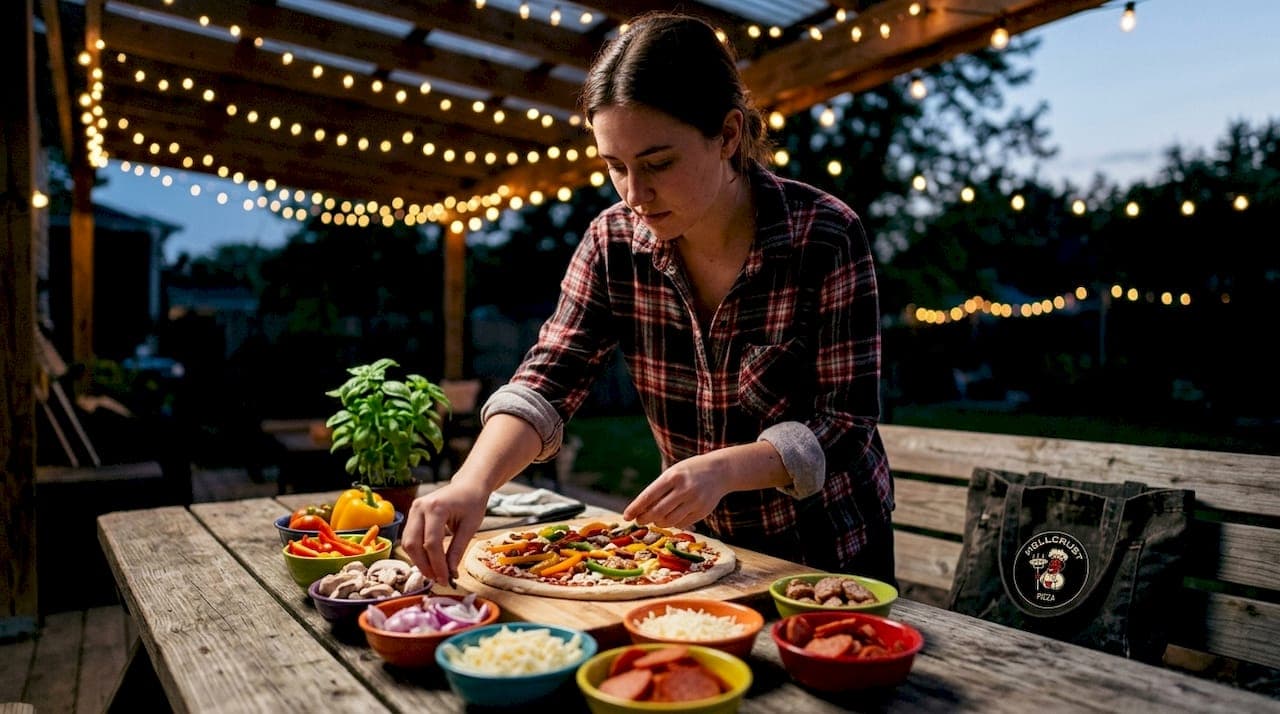
Customizable pizza toppings are defined as the individual ingredients you select to build a pizza that matches your exact taste, texture, and dietary preferences. The concept covers every layer of the pizza, from crust type and sauce through to cheese, protein, vegetables, and finishing touches. Industry guidance confirms that 2–5 toppings produce the best cooking results, keeping the crust crisp and the flavours clear. Hellcrustpizza has built its entire ordering experience around this principle, offering a curated range of fresh, additive-free ingredients so you can craft a pizza that genuinely reflects what you want.
What types of toppings can you choose when customizing a pizza?
Custom pizza topping options fall into six clear categories. Understanding each one helps you build a balanced pizza quickly, whether you are ordering solo or feeding a group with very different tastes.
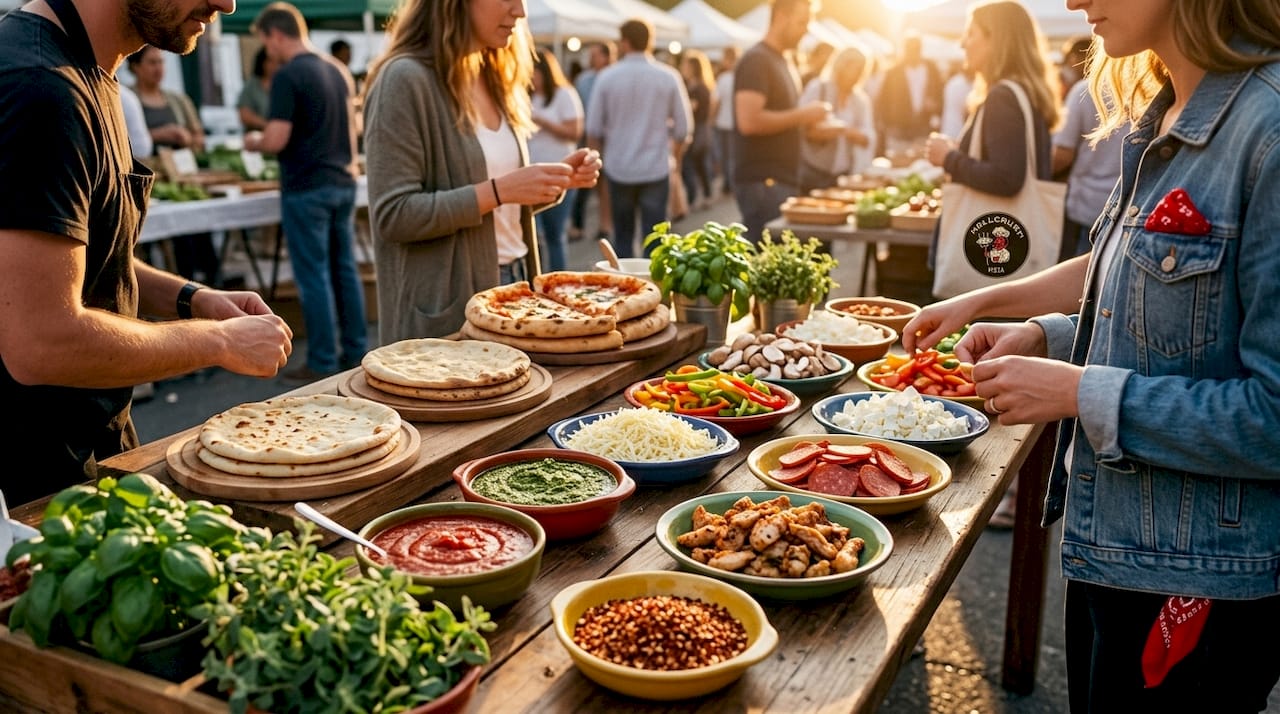
Crusts set the foundation. Common choices include hand-tossed, thin and crispy, stuffed, and gluten-free bases. Hellcrustpizza uses a Biga multigrain preferment dough that is free of artificial additives, giving the crust a rich, mature flavour that holds toppings without going soggy.
Sauces define the flavour base. Tomato is the classic, but pesto, white garlic, and BBQ sauce each create a completely different eating experience. Choosing your sauce first anchors every topping decision that follows.
Cheeses add richness and texture. Mozzarella remains the most popular choice, but gourmet cheese varieties like goat cheese, smoked provolone, and vegan alternatives open the pizza up to a much wider range of diners. Premium cheeses typically add $1.00–$2.00 per topping to the final price, which reflects their quality.
Proteins are where personal preference shows most clearly. The options below represent the most popular choices across fast casual pizza formats:
- Pepperoni (the most ordered protein in North America)
- Grilled chicken
- Italian sausage
- Prosciutto
- Tofu or plant-based crumble (for vegan builds)
- Anchovies
Vegetables add colour, freshness, and nutritional balance. Bell peppers, mushrooms, red onion, olives, sun-dried tomatoes, and spinach are all common picks. Grouping vegetables by moisture content matters. High-moisture vegetables like zucchini release water during baking and can soften the crust if overloaded.
Finishing extras are the detail that separates a good pizza from a great one. Fresh basil, chilli flakes, truffle oil, arugula, and lemon zest all belong in this category. These finishing touches are best added after baking to preserve their freshness and avoid burning.
| Category | Examples | Typical add-on cost |
|---|---|---|
| Crust | Hand-tossed, gluten-free, stuffed | Included or $1.00–$2.00 |
| Sauce | Tomato, pesto, BBQ, white garlic | Usually included |
| Cheese | Mozzarella, goat, vegan | $0.00–$2.00 |
| Protein | Pepperoni, chicken, tofu | $1.00–$2.00 |
| Vegetables | Bell peppers, mushrooms, olives | $0.50–$1.50 |
| Finishing extras | Fresh herbs, oils, chilli flakes | $0.50–$1.00 |
How does effective choice architecture improve topping selection?
Choice architecture is the practice of organising options so customers make satisfying decisions quickly. Guided customization reduces decision fatigue and shortens the time between ordering and eating, which benefits both the customer and the kitchen.
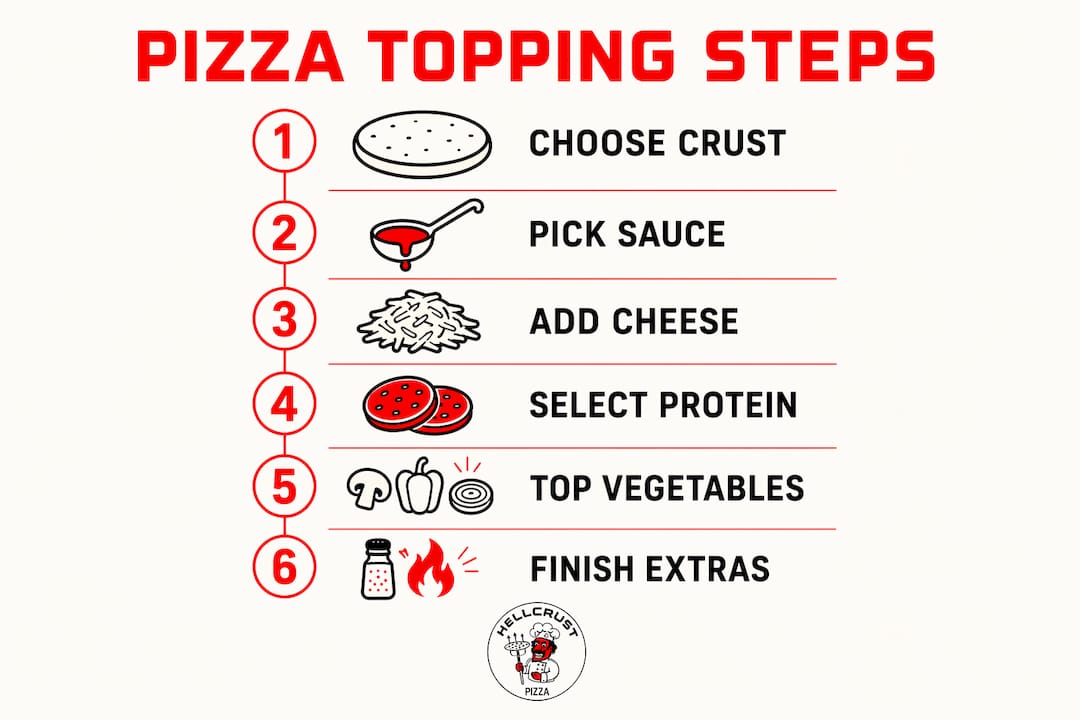
The most effective approach follows a decision-tree ordering flow:
- Choose your crust. This sets the structural and flavour foundation of the pizza.
- Select your sauce. The sauce determines whether the pizza reads as classic, bold, or light.
- Pick your cheese. One or two cheeses melt together well. Three or more can create a greasy, muddled result.
- Add your protein. One or two proteins keep the flavour focused and the cooking even.
- Layer your vegetables. Choose vegetables that complement your protein rather than compete with it.
- Finish with extras. Add fresh herbs, oils, or spices after baking for the cleanest flavour.
Themed build paths make this process even faster. A "classic" path might default to tomato sauce, mozzarella, and pepperoni. A "vegetarian" path could suggest pesto, goat cheese, roasted red peppers, and spinach. A "premium" path might feature white garlic sauce, smoked provolone, prosciutto, and truffle oil. These curated combinations guide customers without removing their freedom to adjust.
Topping overload is the most common mistake in custom pizza ordering. Piling on eight or nine toppings does not create a richer pizza. It creates an unevenly cooked one. The crust softens, the flavours blur, and the cheese never quite sets properly. Keeping the total count at five or fewer protects both the texture and the taste.
Pro Tip: If you are ordering for a group with mixed preferences, ask each person to choose one protein and one vegetable. Build the rest of the pizza around a shared sauce and cheese. This approach satisfies everyone without overloading the crust.
What are the benefits of choosing customizable pizza toppings wisely?
The clearest benefit of thoughtful topping selection is flavour contrast. Balancing sweet, salty, and acidic ingredients produces a more satisfying pizza than simply stacking your favourite things. Sweet figs paired with salty prosciutto is a classic example. The contrast makes both ingredients taste more vivid.
Texture is equally important. A pizza that combines crispy crust, creamy cheese, tender protein, and fresh greens gives you something interesting in every bite. A pizza with only soft toppings feels flat, regardless of how good the individual ingredients are.
Dietary needs are easier to meet when you understand the topping categories. Consider these practical guidelines:
- For gluten-free diners: Start with a certified gluten-free crust and confirm that sauces and proteins contain no hidden gluten.
- For vegan diners: Choose plant-based proteins, vegan cheese, and load up on roasted vegetables and finishing oils.
- For low-sodium diners: Skip cured meats like pepperoni and prosciutto. Opt for grilled chicken, fresh vegetables, and a light drizzle of olive oil.
- For adventurous eaters: Explore premium topping options like truffle oil, burrata, or pickled jalapeños for a genuinely elevated experience.
Cooking quality also improves with restraint. Limiting toppings to 3–5 maintains crust integrity and allows heat to distribute evenly across the pizza. Excessive moisture from too many vegetables or proteins is the leading cause of a soggy base.
Seasonal and leftover ingredients work beautifully as custom toppings. Roasted butternut squash in autumn, fresh corn in summer, or leftover roasted garlic from last night's dinner all make for genuinely exciting pizzas. Using what is fresh and available reduces waste and produces better flavour than out-of-season produce.
Pro Tip: Add delicate toppings like fresh arugula, basil, or a drizzle of finishing oil after the pizza comes out of the oven. Heat destroys their flavour and texture within seconds.
How has fast casual pizza dining shaped topping customization?
Fast casual pizza is defined by three qualities: speed, visible preparation, and customer control over every ingredient. Diners choose crust, sauce, cheese, and toppings in real time, watching their pizza assembled in front of them with transparent pricing at each step. This model has fundamentally changed what customers expect from any pizza ordering experience.
The scale of possibility within this format is striking. Some fast casual pizza concepts offer over 16 million topping combinations, yet still manage to deliver consistent results. That consistency comes from standardised ingredient quality and clear ordering logic, not from limiting choice.
"Fast casual pizza transforms ordering from a transaction into self-expression. Visible preparation increases satisfaction and trust, because customers see exactly what goes into their meal."
Ingredient transparency is the engine behind this trust. When you can see the fresh mozzarella being placed on your crust, or watch the chef scatter hand-torn basil over your pizza, you feel confident in what you are eating. That confidence drives repeat orders. Hellcrustpizza applies this same philosophy through its commitment to fresh, additive-free ingredients and its clear, honest menu.
| Fast casual feature | Customer benefit |
|---|---|
| Visible kitchen preparation | Builds trust in ingredient quality |
| Modular topping selection | Accommodates diverse dietary needs |
| Transparent per-topping pricing | Allows budget control |
| Curated build paths | Speeds up decision-making |
| Fresh ingredients daily | Delivers consistent flavour |
Technology has extended this model further. Digital ordering apps allow customers to pair toppings on a multigrain base or any other crust type with the same precision as an in-person build. The result is a pizza experience that feels personal, even when ordered from a phone.
Key takeaways
The most effective approach to customizable pizza toppings is limiting your selection to 2–5 ingredients, balancing flavour contrasts, and adding delicate finishes after baking.
| Point | Details |
|---|---|
| Limit topping count | Keep to 2–5 toppings to maintain crust crispness and clear flavour. |
| Follow decision-tree order | Build from crust and sauce first, then proteins, vegetables, and finishing extras. |
| Balance flavour contrasts | Pair salty, sweet, and acidic ingredients for a more satisfying result. |
| Add delicate toppings post-bake | Fresh herbs and oils lose flavour quickly in the oven; add them after. |
| Use choice architecture | Themed build paths speed up ordering and reduce poorly balanced combinations. |
Why quality always wins over quantity on a custom pizza
I have eaten a lot of pizza. I have also watched a lot of people order pizza, and the pattern is consistent. The customers who pile on eight toppings almost always end up disappointed. The crust is soft, the flavours cancel each other out, and the whole thing feels heavy rather than satisfying.
The pizzas I remember are the ones where someone made a deliberate choice. A simple white garlic base with smoked provolone, thinly sliced pear, and a handful of walnuts. A classic tomato with fresh mozzarella, a few leaves of basil, and a thread of good olive oil. These combinations work because every ingredient has room to express itself.
What I find genuinely exciting right now is the finishing oil and post-bake fresh topping trend. Chefs have known for years that arugula wilts and basil burns in a hot oven. The practice of adding these ingredients after baking is finally reaching everyday pizza ordering, and it makes a real difference. Hellcrustpizza's approach to fresh ingredients aligns with this thinking completely.
My honest advice: treat your pizza like a composed dish, not a collection of everything you enjoy. Choose one bold flavour, one creamy element, one fresh finish, and let the crust do the rest. You will savour every bite rather than just eating through it.
— jaskirat
Hellcrustpizza: where your custom pizza comes to life
Hellcrustpizza was built for exactly this kind of thoughtful customization. Every pizza starts with a Biga multigrain dough that is free of artificial additives, giving you a crust with genuine flavour and structure before a single topping is added.
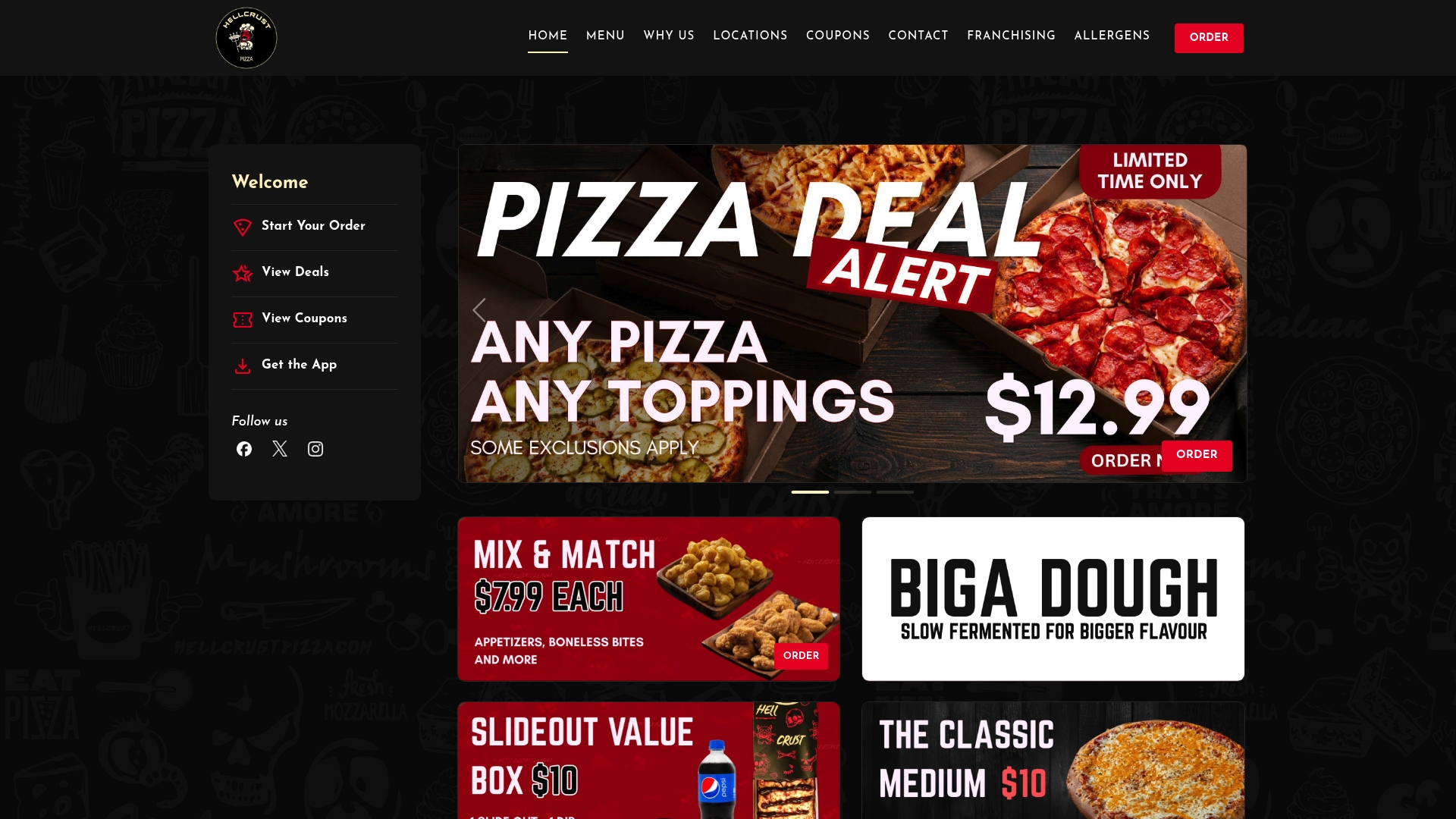
From there, you choose your sauce, cheese, proteins, and vegetables from a curated selection of fresh, quality ingredients. The ordering process is clear, the pricing is honest, and the results are consistent. Whether you are building a classic pepperoni for the kids or a premium prosciutto and truffle oil creation for yourself, Hellcrustpizza makes it straightforward. Check the current pizza deals and coupons before you order and you may find your next custom pizza costs less than you expected.
FAQ
What are customizable pizza toppings?
Customizable pizza toppings are the individual ingredients you choose to build your pizza, covering categories like crust, sauce, cheese, protein, vegetables, and finishing extras. The goal is to create a pizza that matches your personal taste and dietary needs.
How many toppings should I put on a pizza?
Industry guidance recommends 2–5 toppings for the best cooking results. More than five toppings adds excess moisture and prevents the crust from cooking evenly.
What is the best order for choosing pizza toppings?
Start with your crust, then select your sauce, followed by cheese, protein, and vegetables. Add delicate finishing ingredients like fresh herbs or oils after baking to preserve their flavour and texture.
Can I customize a pizza for dietary restrictions?
Yes. Gluten-free crusts, vegan cheeses, and plant-based proteins make it straightforward to build a pizza that meets most dietary needs. Grouping toppings by category helps you spot substitutions quickly.
What makes fast casual pizza customization different?
Fast casual pizza lets you watch your pizza being assembled with fresh ingredients and transparent pricing at every step. Some concepts offer over 16 million combinations, yet maintain consistency through clear ordering logic and standardised ingredient quality.