The most practical way to split pizza toppings for a family is to anchor your order with one universally accepted pizza, then use half-and-half or quartered sections to handle the remaining preferences. Keep the splits clean and simple. A half-and-half pizza works best when each side is dedicated to one specific preference, not several competing ones. Here is a quick framework before you order:
- Start with one safe, crowd-pleasing pizza: plain cheese, pepperoni, or half cheese, half pepperoni
- Add a second pizza with split toppings to resolve the one clearest preference conflict
- Use quarter divisions only when four distinct tastes genuinely cannot share a half
- Avoid stacking too many modifications on a single pizza; complex splits increase kitchen errors and uneven cooking
- Agree on toppings with everyone before you place the order, not while you are hungry and impatient
A balanced family order often follows a simple formula: roughly one-third cheese, one-third pepperoni, and one-third specialty or veggie, so there is always something familiar alongside something a little more adventurous.
Table of Contents
- How to set up a pizza toppings bar your family will love
- What are the best strategies for dividing toppings by family size?
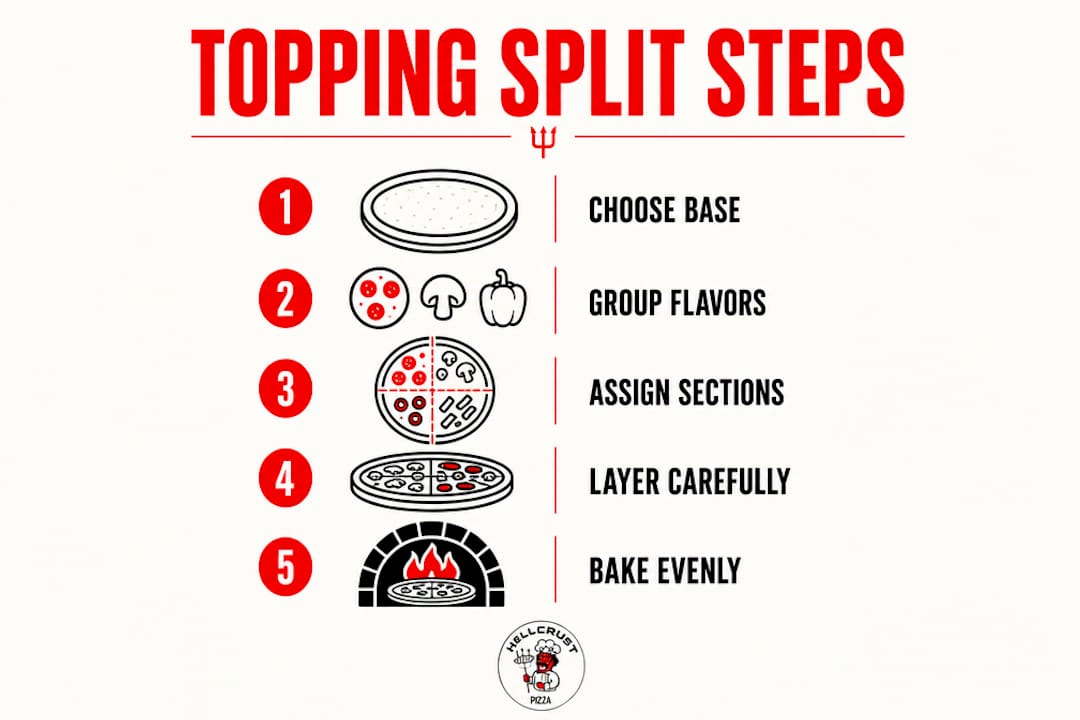
- How should you layer pizza toppings for the best result?
- Hellcrustpizza's expert tips for a great family pizza night
- Key takeaways
How to set up a pizza toppings bar your family will love
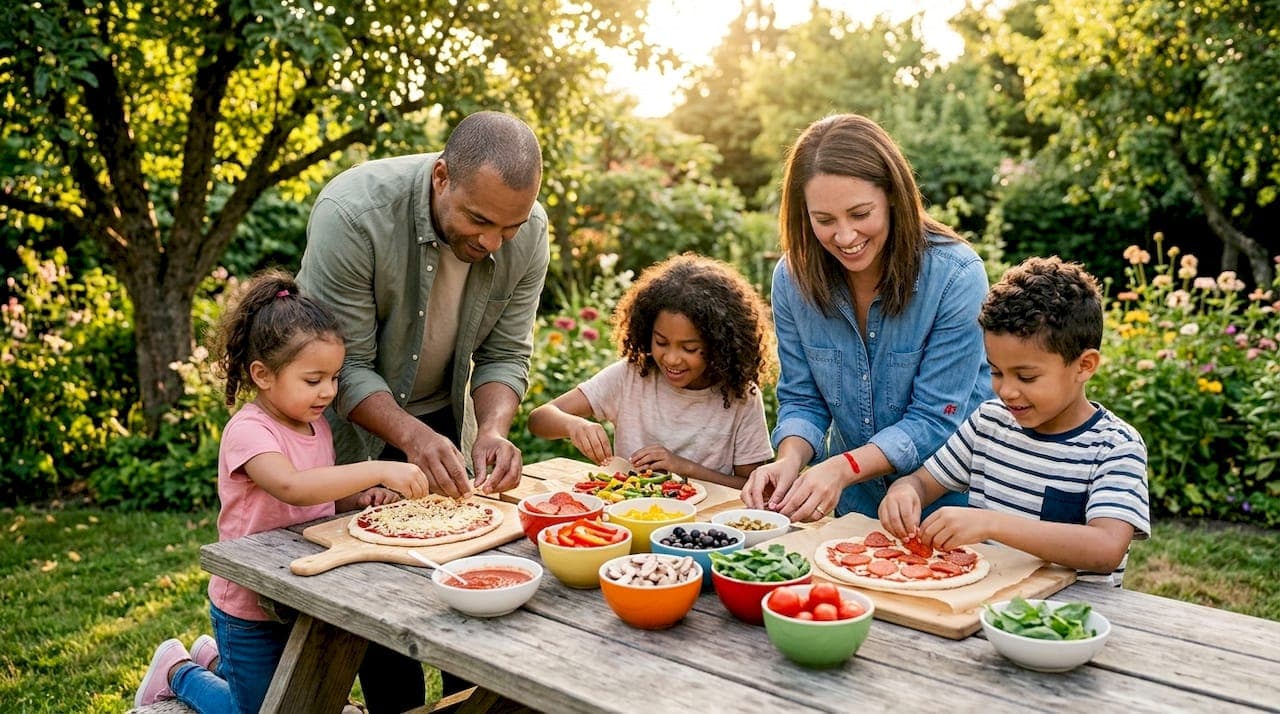
A pizza toppings bar turns a weeknight dinner into something the whole table looks forward to. The idea is straightforward: lay out ingredients in separate sections so each family member can build their preferred combination without stepping on anyone else's choices. It works especially well for homemade pizza nights or when you order plain bases and add toppings at home.
Organise your toppings bar with these principles in mind:
- Separate proteins (pepperoni, cooked chicken, crumbled sausage) from vegetables (peppers, mushrooms, olives, spinach) so cross-contamination is easy to avoid
- Keep mozzarella and other cheeses in their own container, since cheese goes on before most toppings
- Provide a small spoon or tong for each ingredient so hands stay out of shared bowls
- Label anything that contains a common allergen: dairy, gluten, tree nuts
- Set out three or four safe, familiar options for younger kids, then a separate "adventurous" section for adults and older children
The social value of a toppings bar is real. Children who help choose and assemble their own slice are far less likely to push the plate away at the table. For picky eaters, visual control over what goes on their food makes a genuine difference.
Pro Tip: Arrange toppings by flavour profile rather than ingredient type. Group mild and sweet options (corn, pineapple, mild chicken) together, and keep bold or salty toppings (olives, anchovies, jalapeños) at the opposite end. Families naturally gravitate toward the section that suits their palate, which reduces indecision and mess.
What are the best strategies for dividing toppings by family size?
The right division strategy depends on how many people you are feeding and how different their preferences actually are. For most families, one or two clear splits cover everything without overcomplicating the order.
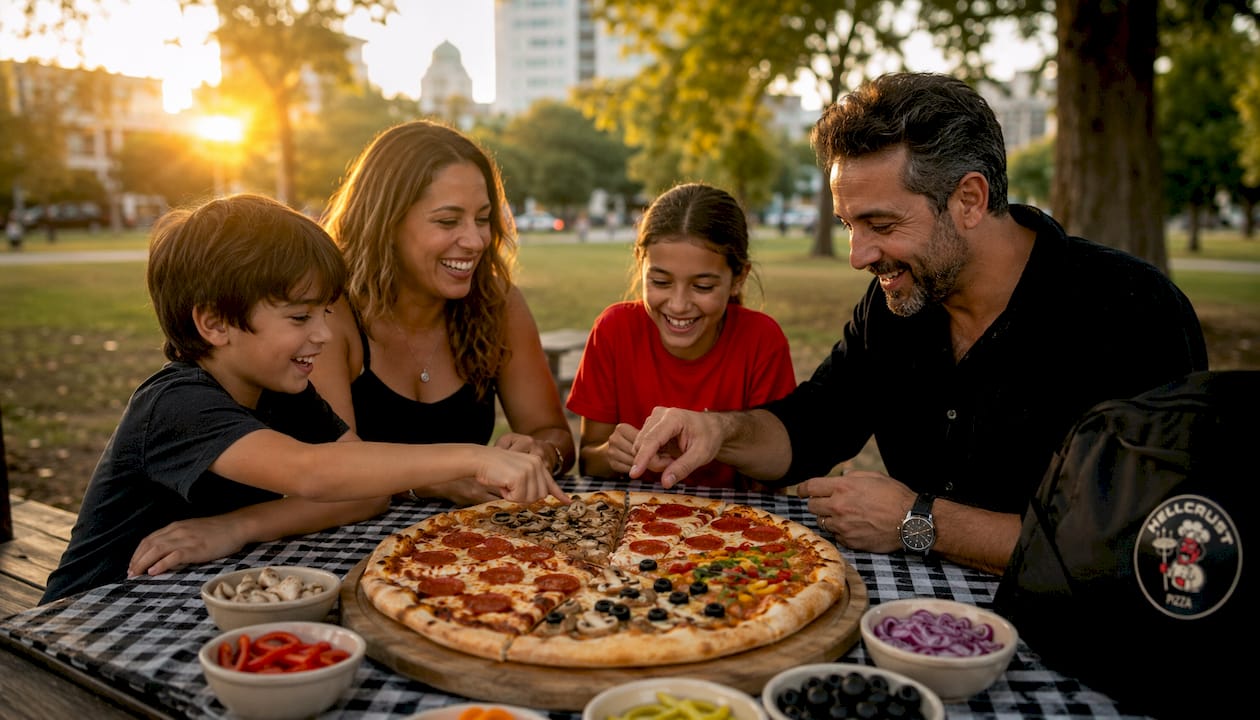
- Two preferences: A classic half-and-half pizza solves this cleanly. Half mushroom, half pineapple; half veggie, half sausage. Each person eats from their side.
- Four preferences: The "four seasons" style pizza quarters each section with a distinct topping. One quarter pineapple, one mushrooms, one chicken, one plain. It bakes as a single pizza but serves four different tastes.
- Three or five preferences: Order two pizzas and divide proportionally by slice count. If three people want different toppings and you order two large pizzas, assign slices by preference rather than splitting each pizza into thirds, which creates awkward cuts and uneven cooking.
- Large families: Combine whole pizzas rather than splitting every one. One plain cheese pizza acts as the guaranteed fallback while a second specialty pizza covers adventurous tastes. That is often cheaper and less wasteful than ordering a separate pizza for every preference.
Split toppings work best when they solve one clear conflict per pizza. Once you start doing quarters, double modifications, and multiple sauce swaps on the same pie, the order becomes harder to verify and easier for the kitchen to misread. For group ordering guidance that goes deeper on proportional sharing, Hellcrustpizza's complete guide covers the full range of scenarios.
How should you layer pizza toppings for the best result?
Layering matters more than most families realise. The order in which toppings go onto a pizza affects how evenly everything cooks, how well toppings adhere, and whether the crust stays crisp or turns soggy.
- Sauce first: Spread tomato sauce directly onto the dough as a protective base layer. It keeps the crust from drying out and gives everything above it something to bind to.
- Cheese second: An even layer of mozzarella acts as an adhesive for the toppings that follow. It also creates a barrier that prevents moisture from vegetables soaking straight into the dough.
- Meats third: Pepperoni, sausage, and chicken go on top of the cheese so they render and crisp during baking rather than steaming underneath.
- Vegetables fourth: Mushrooms, peppers, onions, and spinach release moisture as they cook. Placing them above the meat layer lets that moisture evaporate upward rather than pooling under the cheese.
- Finishing toppings last: Fresh herbs, olives, mild peppers, and anything delicate go on in the final two minutes of baking or immediately after the pizza comes out of the oven.
Avoid crowding. A pizza piled with too many toppings traps steam, softens the crust, and prevents the cheese from browning properly. Two or three toppings per section is almost always enough, especially when you are working with split or quartered sections where the boundary slices need to cook evenly on both sides. For more on customising crust and toppings to get the texture right, Hellcrustpizza's guide walks through the specifics.
Hellcrustpizza's expert tips for a great family pizza night
We have seen what works and what does not across countless family pizza orders. A few principles consistently make the difference between a smooth, satisfying night and one that ends with someone picking toppings off their slice.
- Anchor with a safe pizza first. A mild, trusted pizza creates a safety net that makes everyone more comfortable trying something bolder on a second pie. Plain cheese or pepperoni is almost always the right starting point.
- Solve one conflict per pizza. Use split toppings to address the single clearest preference disagreement, not every small variation. Each pizza should have a clear role in the order.
- Order one extra pizza. Running out mid-meal is far harder to recover from than having leftovers. Leftover pizza keeps well and solves tomorrow's lunch. Adding one extra pizza is almost always the right call.
- Settle topping boundaries and costs upfront. Clear agreements before ordering prevent the social friction that comes from figuring out who owes what after the meal. If one half of a pizza carries premium toppings, the person eating that half covers the difference.
- Time the meal around your family's activity level. Pizza served after active play tends to disappear faster than pizza served before it. Adjust your quantities accordingly.
Hellcrustpizza's Mix & Match options and family-sized specials are built around exactly this kind of thinking. Our Biga multigrain dough, crafted without artificial additives, gives every topping combination a wholesome foundation worth savouring. Use the app to customise your order slice by slice, lock in your family's preferences, and access exclusive deals before you check out.
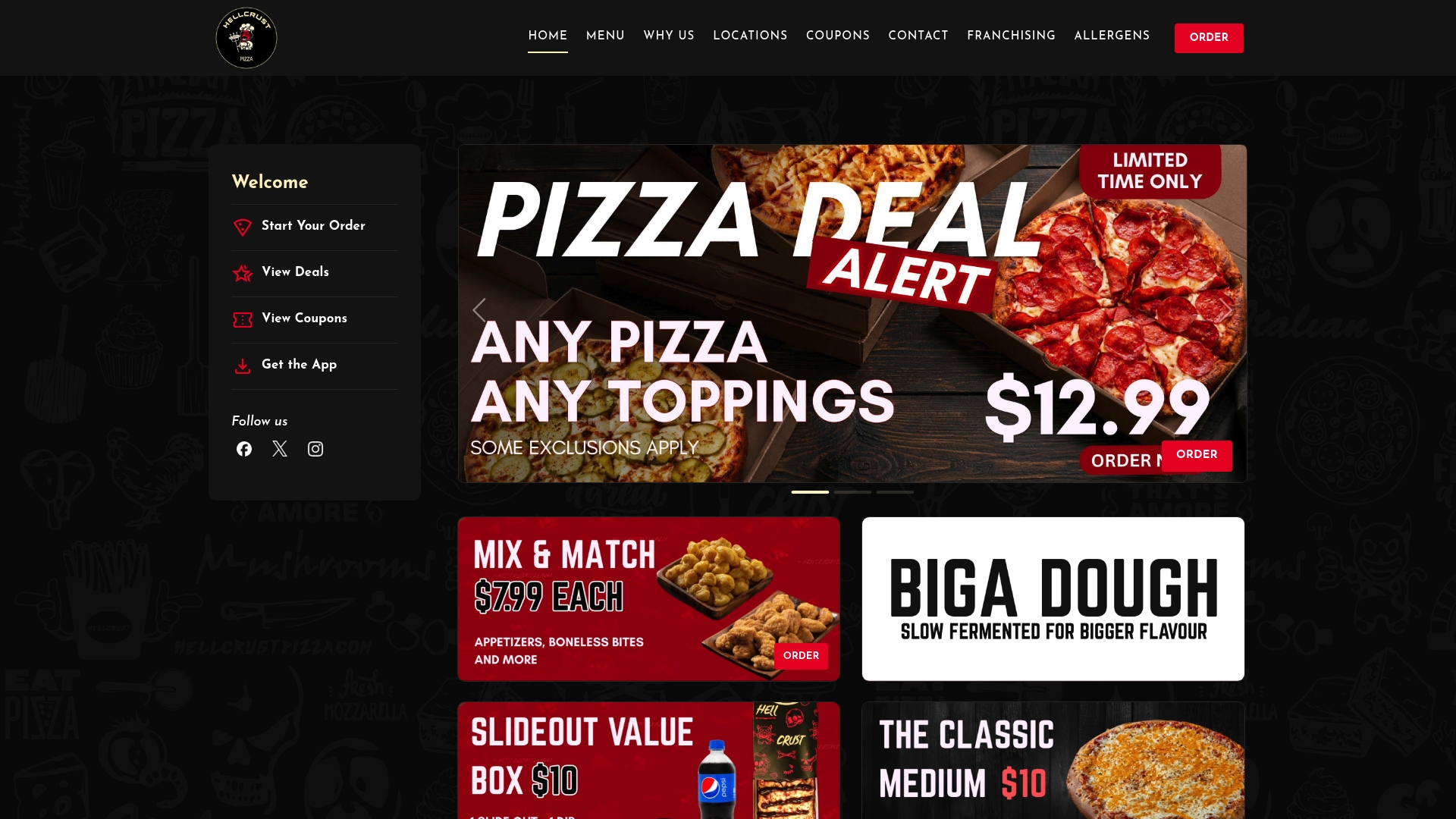
Ready to put this into practice? Browse current family deals and build your perfect split order tonight.
Key takeaways
The most effective way to split pizza toppings for a family is to anchor the order with one safe pizza, then use clean half-and-half or quarter divisions to resolve specific preference conflicts without overcomplicating the kitchen's job.
| Point | Details |
|---|---|
| Anchor with a safe pizza | Start every order with one plain or pepperoni pizza that everyone will eat without hesitation. |
| One conflict per split | Dedicate each half or quarter to a single preference; multiple modifications on one pizza cause errors. |
| Layer toppings correctly | Sauce, then cheese, then meats, then vegetables, then finishing toppings for even cooking and a crisp crust. |
| Order one extra pizza | Adding one more pizza than calculated prevents running out mid-meal and provides easy leftovers. |
| Agree on costs upfront | Settle topping boundaries and payment before ordering to avoid social friction at the table. |