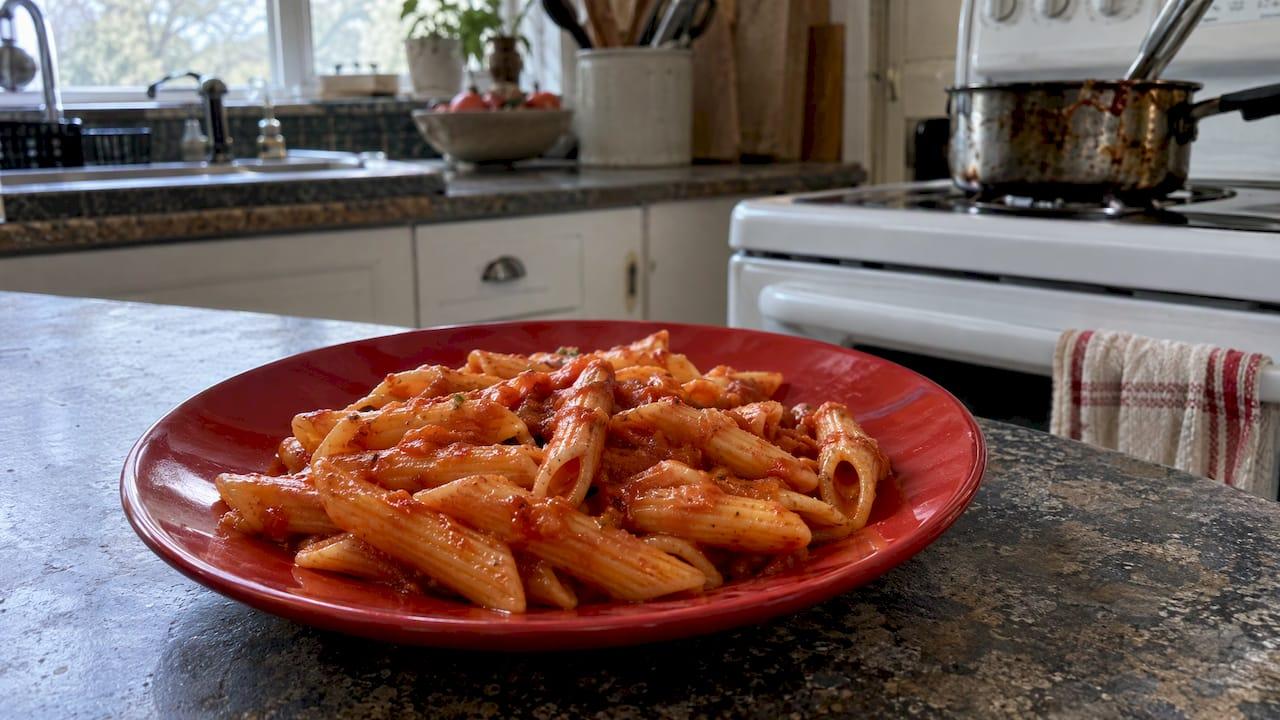
Have you ever put a bowl of pasta in front of a child and watched them inspect every single bit of it? You are not alone. Pasta is one of the most accepted foods for fussy children, and it works best when the child has some say: a familiar shape, a smooth sauce they know, vegetables on the side or blended in, and the freedom to build their own bowl. That is also how we think about baked pasta at HellCrust: a comforting, familiar base that the whole family can customize, whether you cook it at home or add it to a delivery order.
TL;DR
- Soft, well-cooked pasta is one of the foods picky eaters accept most readily, because it is soft and predictable in texture.
- Pick shapes your child can handle: penne, spirals, bow ties and shells for small hands, shorter cuts for toddlers.
- Keep the sauce smooth and the extras on the side, so nothing surprising turns up on the fork.
- Offer choices instead of pressure: a build-your-own plate gives kids control over what they eat.
- On busy nights, a baked pasta from our menu gives the family one familiar dish with options for everyone.
Table of Contents
- Why pasta works so well for picky eaters
- Choosing pasta shapes and textures kids can manage
- Sauces that win suspicious eaters over
- Vegetables without the dinner-table standoff
- Adding protein and fibre without changing the food they accept
- A weeknight plan that does not wear you out
- Let them build the plate
- A worked example: one family, one Friday
- Order a baked pasta from HellCrust
- Our perspective
- FAQ
- Sources
Why pasta works so well for picky eaters
Picky eating is common, and parents feel it. BC Dietitians reports that 25 to 50% of parents have concerns about picky eating, with vegetables the top worry. Against that background, pasta is a gift. A registered dietitian who works with selective eaters notes that well-cooked pasta, soft rice, oatmeal and mashed potatoes sit among the most accepted foods because they are soft, predictable and easy to eat.
Predictability is the key word. A child who is wary of new foods wants to know what the next bite will taste and feel like. Pasta is the same from the first forkful to the last, and that makes it a safe place to introduce small changes: a new sauce, a sprinkle of cheese, a few peas on the side.
The approach matters as much as the recipe. The same BC Dietitians article recommends the Division of Responsibility, a no-pressure style of feeding. In plain terms, the parent decides what is served, when and where, and the child decides whether to eat it and how much. No bribes, no bargaining, no "three more bites". A pasta night is an easy way to practise this, because there is always something on the table your child will eat.
Choosing pasta shapes and textures kids can manage
Shape is not a small detail. Children eat with their hands and with forks of varying skill, and a pasta they cannot pick up is a pasta that becomes a battle.
For babies and toddlers, Solid Starts gives a clear progression:
- Large flat noodles or whole penne, rigatoni or ziti from 6 months.
- Halved tubular pasta, macaroni or quartered ravioli from around 9 months, once the pincer grasp (picking up small pieces between thumb and finger) develops.
- Spaghetti or ramen from 12 months, cut with kitchen shears as needed.
Solid Starts also suggests serving pasta with sauce or a little oil to make it easier to swallow. The Raising Children Network in Australia suggests wholegrain pasta pieces easy to hold, like penne, spirals, bow ties or shells, served plain or with a sauce such as bolognese and grated cheese.
For older kids, the rules are looser, but a few habits help:
- Cook it soft. Many picky eaters reject al dente pasta. Cook it a minute or two longer than you would for yourself.
- Match the shape to the sauce. Short, ridged shapes hold sauce and are easy to spear. Long noodles suit smooth sauces.
- Keep one shape on rotation, then change it. If your child loves penne, serve penne for a few weeks, then swap in rotini once in a while with the same sauce. Changing one thing at a time is gentler than changing everything.
Baked pasta is a natural fit here too. Because the pieces are short and coated in sauce and cheese, they are easy to scoop and eat. If you want to understand which shapes suit baking, our guide to baked pasta types pairs shapes with sauces.
Sauces that win suspicious eaters over
Most food refusals come down to surprises: a green fleck, a chunk of onion, a texture that was not expected. The easiest fix is a sauce that is smooth and consistent.
One home cook's method for kids' spaghetti uses smooth tomato passata, with shallot and garlic cooked in large pieces and then removed, so the sauce has no rogue bits. It takes five minutes of prep and 45 to 60 minutes of simmering and makes six kid-sized servings, so it suits a weekend batch.
A few other ideas that come from dietitians and food writers:
- Swap the pesto. Canadian dietitian Sarah Remmer suggests that for kids suspicious of green foods, sun-dried tomato pesto can replace basil pesto, with peas or vegetables served on the side and chicken kept separate.
- Go lemony and light. PureWow's 15-minute one-pot pasta limone uses reserved pasta water to make the sauce silkier before the cheese goes in, and it skips the basil if your kids hate green things.
- Keep butter and cheese in the toolkit. Plain buttered noodles are a perfectly good dinner on a hard night. Serve them next to something else on the plate and let the child choose.
The point is not to trick anyone. It is to remove the reasons to say no, and then to keep offering.
Vegetables without the dinner-table standoff
Vegetables are the biggest worry for most parents, and pasta is a good way to put them in front of a child regularly. There are two honest approaches, and you can use both.
Blend them into the sauce. BC Dietitians' Veggies-Packed Pasta Sauce roasts tomatoes, cabbage and garlic, then blends them with red lentils and crushed tomatoes. It takes 10 minutes of prep and 40 minutes of cooking. The dietitian behind it is clear that the aim is not to hide vegetables but to let kids explore them, including through helping to cook. CBC Life's sweet potato macaroni and cheese purees sweet potato with cream cheese for a creamy sauce that sneaks vegetables in, with the carrot swappable for cauliflower or left out.
Serve them visibly, on the side. Sarah Remmer's family-style idea, with ingredients laid out separately so kids build their own plate, does something sauces cannot: it lets the child see the vegetable and choose it. She adds that your child does not have to eat every part of the meal for it to be worthwhile, which is a useful thing to remember when a plate comes back half full.
Colourful vegetable pastas can help too. EcoParent magazine suggests alphabet pastas coloured with beets, spinach and carrot, and says that talking about where the colour comes from can encourage kids to try the whole vegetables. It also notes that whole-grain pasta is a good source of fibre and of nutrients such as iron, zinc and magnesium.
Adding protein and fibre without changing the food they accept
If your child eats only a narrow range of foods, you may worry that a bowl of pasta is not enough. Legume-based pastas are one simple answer. Solid Starts notes that legume-flour pastas are generally more nutrient-dense than rice and wheat pastas: per quarter-cup child-sized serving, chickpea pasta has 3.0 g of protein and 2.0 g of fibre, compared with 2.0 g of protein and 0.6 g of fibre for enriched wheat pasta. The ARFID dietitian Jenny Friedman says chickpea, lentil and black bean pastas deliver two to three times the protein of regular pasta without changing the food kids already accept.

A gentle way to try them: cook half regular pasta and half chickpea pasta, toss both in the same sauce, and see what happens. If the sauce and the shape stay the same, many children will not notice.
One safety note for the youngest eaters: Solid Starts advises introducing wheat and egg allergens separately before serving pasta. If your baby or toddler has a known or suspected allergy, or if you are unsure, speak with your doctor or a registered dietitian before adding pasta.
A weeknight plan that does not wear you out
A picky-eater dinner has to survive a Tuesday. These approaches keep the effort low:
- One pan, 20 minutes. The Globe and Mail shared Desiree Nielsen's one-pot orzo with spinach and peas, on the table in under 20 minutes with one pan to wash. It is described as easy to customize for picky palates, works with gluten-free pasta or rice, and the leftovers reheat with a splash of water.
- Cook once, serve two ways. Make a big pot of plain pasta. Give the kids theirs with butter or sauce, and dress the adult bowls with chilli, lemon or greens.
- Batch the sauce. A smooth tomato sauce freezes well, so you only face the simmering once.
- Let someone else do the cooking. Some nights the best dinner is the one you did not cook. A baked pasta from a delivery order, plus a simple side, is a legitimate weeknight plan and takes no pressure off the table.
If you like the idea of turning pasta into a bigger family night, our pasta with pizza night plans are written for Canadian families and include a checklist. And if you want to know why pasta earns its place on the weekly menu, we cover it in why pasta is a smart, healthy dinner alternative.
Let them build the plate
The most reliable trick for a picky eater is control. A child who chooses the pasta, the sauce, the protein and the vegetables has little left to object to. You can set this up at home with a few bowls: plain pasta in the middle, two sauces, grated cheese, peas, cooked chicken, cucumber sticks. Everyone assembles their own.

The same idea works away from home. Some resort kitchens, for example, offer customizable meals where children choose the pasta, sauce, protein and vegetables at the table, which shows how well the format suits young diners.
At HellCrust, the same thinking runs through our menu. Our Create Your Own Pizza lets each family member pick toppings, and our approach to feeding a mixed table is covered in how to order pizza to feed picky eaters and how to split pizza toppings for your family. If one child needs vegan or gluten-free food, our guides to vegan pasta options and gluten-free pasta options walk through sauces and builds.
For a kids' party, the same rule applies. Our kids pizza party ideas cover games, menus and make-your-own, and pizza party menu ideas show how to add two or three sides for kids and adults. Kids who make their own food are far more likely to eat it, which is why we also run kids' pizza-making events in store.
A worked example: one family, one Friday
Picture a family of four. One child eats only plain noodles, one will eat anything with cheese, and the adults want something with flavour. Here is a plan that avoids a fight.
- Decide what is served. Baked pasta, a simple green salad, and a bowl of peas or cucumber sticks on the side.
- Serve it family-style. Put the dishes in the middle and let everyone serve themselves. The plain-noodle child can take pasta and peas without a lecture.
- Keep the talk about anything except food. The Division of Responsibility only works if the parent stays out of the child's side of the job.
- Repeat it next week. Familiarity is built over many calm exposures, not one perfect dinner.
The result is not a clean plate. It is a calm table and one more positive experience with a food your child already likes, and that is how the range of foods grows.
Order a baked pasta from HellCrust
When you want the comfort of pasta without the cooking, our menu includes Baked Pasta alongside Create Your Own Pizza, Signature Pizzas, Vegan Pizzas, Appetizers, Wings & Bites, Desserts, Dips and Beverages. Our pizzas are built on a Biga multigrain dough that is free of artificial additives and prepared in advance, so a family night can include a pasta for the picky one and a pizza the rest of you can load with toppings. You can order for delivery or pickup in North Vancouver, Vancouver and West Vancouver, and our app carries exclusive offers.

See everything on the HellCrust menu, or start at hellcrustpizza.com.
Our perspective
We make our dough the slow way. Our Biga is a preferment, which means we prepare it in advance so the dough has time to mature, and we use multigrain and no artificial additives. That patience is what we believe in, and it is the same attitude we bring to feeding children.
A picky eater is not a problem to be solved. A child who is careful about food is telling you what feels safe, and the kindest thing a family can do is offer something familiar and let them choose. That is why we love customizable food: toppings on the side, a vegan option for one, a baked pasta for another, and a table where nobody is told what to finish.
Good food should not cost a fortune, either. You get what you pay for, and we work to make family deals, Mix & Match options and app offers that let a whole table eat well. When a child takes a first happy bite of something they chose, that is the best testament to a meal we know.
jaskirat Singh
FAQ
What is the best pasta shape for a picky eater?
Short shapes that are easy to hold and spear, such as penne, spirals, bow ties and shells, are the usual choice, and they suit the finger-food advice from the Raising Children Network. Cook them soft, since many selective eaters prefer a gentle texture. Keep to one familiar shape for a while before introducing another.
How do I get my picky eater to eat vegetables with pasta?
Use two routes together: a smooth sauce with vegetables blended in, and a plain portion of vegetables on the side that the child can choose. Dietitians recommend a no-pressure approach in which you decide what is served and your child decides what to eat. Serving family-style so kids build their own plate makes the choice theirs.
Is it okay if my child only eats plain pasta?
Plain pasta is a common comfort food for children and a fine part of a meal when other foods are on the table too. Keep offering other foods next to it without pressure, and try legume pastas for extra protein and fibre. If your child eats a very limited range of foods, loses weight or seems distressed at meals, see your doctor or a registered dietitian.
What can I do on a night when I have no energy to cook?
Order something the whole family can customize. A baked pasta from our menu, with a pizza built with each person's toppings and a vegetable side, gives everyone a choice. Our app also carries exclusive offers for delivery or pickup.
Sources
- Recipe: Veggies-Packed Pasta Sauce, BC Dietitians
- Pasta for Babies, Solid Starts
- Finger foods for babies and kids, Raising Children Network
- Easy-to-Chew Proteins for Picky Eaters, Jenny Friedman
- Easy Spaghetti for Kids, Happy Veggie Kitchen
- 30-Minute Chicken Pesto Pasta, Sarah Remmer
- 14 Kid-Friendly Pasta Recipes, PureWow
- 5 fast pasta recipes, CBC Life
- A Healthy Diet Includes Pasta, EcoParent magazine
- One-pot pastas are quick, easy and family-friendly, The Globe and Mail