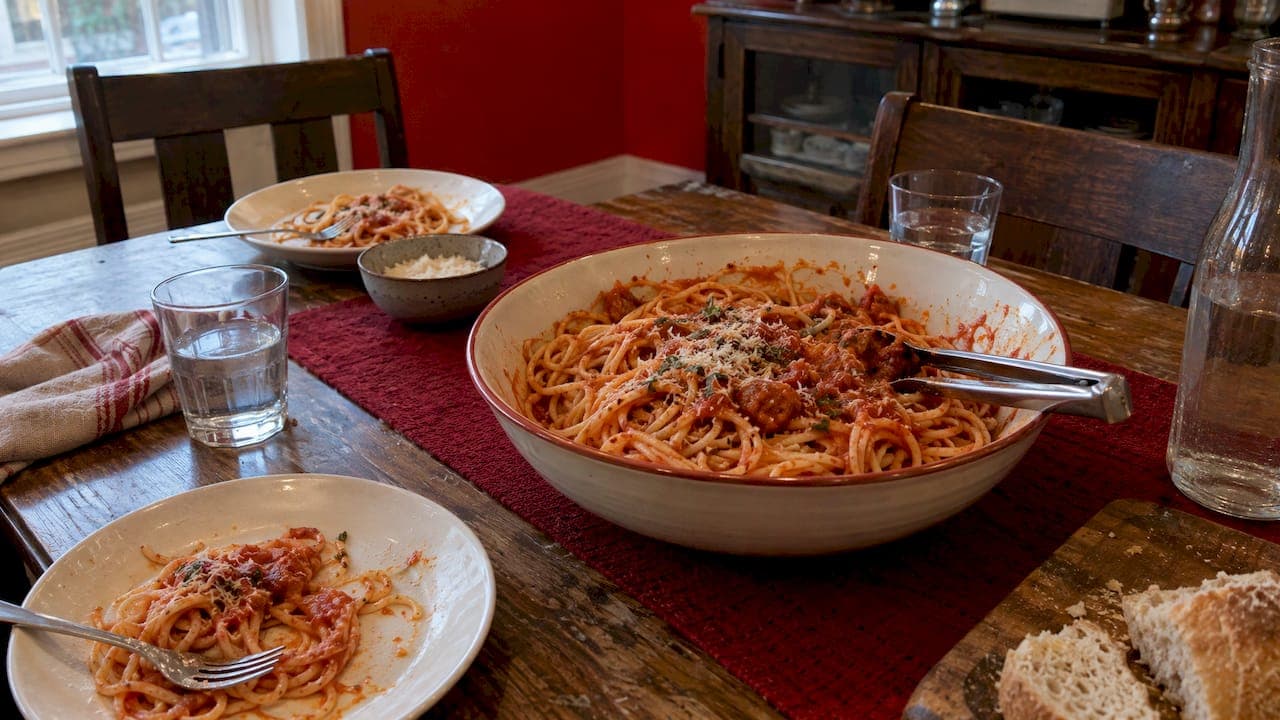
Which gluten-free pasta should you actually put in the pot? The short answer: rice and corn pastas are the mildest and most familiar, legume pastas such as chickpea and lentil bring more protein and fibre with a stronger flavour, and blends or ancient-grain pastas sit in between. Pick by the dish you are making and the people at the table, then keep the cooking simple and the kitchen clean. Below we walk through each type, the sauces that suit them, how to cook them well, and how to build a gluten-free menu for a kids' party.
TL;DR
- Rice and corn pastas taste neutral and suit kids and creamy or tomato sauces. Chickpea and lentil pastas taste stronger and carry more protein and fibre.
- Gluten-free pasta is not automatically healthier. A Canadian study of packaged foods found less protein and fibre in gluten-free pastas, so read the label.
- Taste early, use plenty of water and keep the pasta saucy to avoid mushy or sticky noodles.
- For a party, serve gluten-free to everyone and prepare it first, so no child gets a "special" plate.
- Always check sauce labels for gluten ingredients and cross-contamination statements.
Table of Contents
- The main types of gluten-free pasta
- Is gluten-free pasta healthier?
- Gluten-free pasta sauces that work
- How to cook gluten-free pasta so it stays firm
- What we think about pasta and good dough
- Planning a gluten-free kids' party menu
- Order with us
- FAQ
- Sources
The main types of gluten-free pasta
Walk down the pasta aisle today and you will find far more than the single brown-rice box of years past. According to a professional gluten-free education body, the options fall into three broad families: grain-based (rice, corn, quinoa), legume-based (chickpea, lentil) and others such as buckwheat or nut-based pasta. The differences matter more than the label suggests.
| Type | Flavour and texture | Best for |
|---|---|---|
| Rice | Neutral, soft, can go sticky if overcooked | Cream sauces, baked pasta, kids |
| Corn | Neutral, slightly firmer bite | Tomato sauces, weeknight spaghetti |
| Corn and rice blend | Mild, holds shape better than rice alone | All-purpose, mac and cheese |
| Quinoa or ancient grain | Earthy, a little nutty | Pestos, roasted vegetables |
| Chickpea | Pronounced bean flavour, firm | Hearty sauces, cold pasta salads |
| Lentil | Strong, earthy, dense | Robust tomato or meat sauces |
| Buckwheat | Nutty, distinctive | Light sauces, stir-fry style dishes |
The flavour split is the one to remember. The same source notes that rice and corn pastas are relatively neutral, while legume pastas have stronger flavours and contain significant protein and fibre. If you are feeding a fussy eight-year-old, start with a corn and rice blend. If you want a pasta that doubles as a protein, a legume version suits a bold sauce that can stand up to it.
Rice and corn: the everyday choice
These are the pastas most people picture. They behave closest to wheat pasta in a bowl of spaghetti with tomato sauce, and they are the easiest to get past a skeptical child. The trade-off is a narrower window between perfectly cooked and soft, so they reward attention at the stove.
Legume pastas: more protein, more personality
Chickpea and lentil pastas have a flavour you will notice. Used well, that is a feature: a garlicky tomato sauce with olive oil and herbs plays nicely with them. Used with a delicate butter sauce, the bean taste can dominate. Treat them like a hearty dish, not a blank canvas.

Quinoa, buckwheat and other grains
Ancient-grain pastas add variety and often come as blends. They are a good way to bring whole grains into a gluten-free diet. Canada's Food Guide-based sample menus from a dietitian-led group suggest including gluten-free whole grains such as brown rice, quinoa, buckwheat, teff and pure oatmeal for fibre and nutrients.
Is gluten-free pasta healthier?
Not by default. A Canadian study of packaged gluten-free foods found that gluten-free pastas had less protein and fibre and more fat than their gluten-containing equivalents. The same research points out that processed gluten-free staples often fall short on protein, iron and folate. Separately, an Australian supermarket evaluation concluded that gluten-free products are unlikely to bring health benefits unless there is clear evidence of celiac disease, gluten intolerance or an allergy to gluten-containing grains.
What that means in practice: choose gluten-free pasta because you or your guest needs it, then shop smartly.
- Compare protein and fibre per serving. Legume and whole-grain blends often come out ahead of plain white rice or corn pasta.
- Look at the ingredient list. Shorter is usually simpler to judge.
- Round out the plate. Add vegetables, beans, cheese or lean protein so the meal does not rest on the pasta alone.
- Confirm the gluten-free claim. Look for a clear gluten-free statement on the package, and ask a dietitian if you manage celiac disease and want to go deeper on labels.
If you need the safety side of gluten-free eating with pizza too, our guide to celiac-safe orders explains what to look for, and 20 ppm explained covers the Canadian threshold behind a gluten-free claim.
Gluten-free pasta sauces that work
Pasta sauce is where hidden gluten can sneak in, and it is the question people type most. Plain tomato sauces are often naturally gluten-free, but thickeners, flavourings, meatballs and some cream or cheese sauces may not be. Read the label every time, because recipes change.
Here are sauce families that pair well with each pasta type:
- Simple tomato or marinara. Works with nearly everything. One Canadian example, Fody's low FODMAP marinara, is listed as gluten-free, which is handy if you are also avoiding onion and garlic.
- Olive oil, garlic and herbs. Light and quick. It suits corn, rice and quinoa pastas, and the oil helps keep strands apart.
- Pesto. Check for added flavourings and cross-contamination notes. It clings well to short shapes such as fusilli or penne.
- Creamy sauces. Make them at home with butter, cream, cheese and a splash of pasta water instead of flour-thickened versions. Rice pasta likes these.
- Meat sauces. Brown the meat with vegetables and tomato, and keep seasoning blends label-checked.
- Vegetable-forward sauces. Roasted red pepper, pumpkin or spinach and ricotta suit lentil and chickpea pastas.
When you read a label, look at the ingredient list for wheat, barley, rye and anything derived from them, and for any statement about shared equipment. If the product does not say, treat it as unknown rather than safe. For people planning plant-based dinners as well, our vegan pasta ideas show sauce and topping builds that also avoid dairy.
How to cook gluten-free pasta so it stays firm
Gluten-free pasta has a narrow sweet spot, and most disappointing bowls come from overcooking. These habits make the biggest difference:
- Use a big pot with plenty of well-salted water. Gluten-free pasta releases plenty of starch and can clump if crowded.
- Stir right away and again during the first minute. That stops noodles welding to each other or the bottom of the pot.
- Start tasting a minute or two before the package time. Pull the pasta when it still has a slight bite.
- Save a cup of starchy cooking water. A splash loosens the sauce and helps it cling.
- Skip the oil in the water. It floats on top and does little. If the pasta must wait, toss it with a little olive oil or butter.
- Sauce it promptly. Gluten-free pasta firms up and dries as it cools, so serve it soon after draining.
- Do not leave it sitting in hot liquid. In soups or bakes, it keeps absorbing and softens.
Baked pasta is a forgiving way to serve it, since the sauce, cheese and oven heat bring everything together. Slightly undercook the pasta before it goes in and the finished dish stays tender, not mushy.
What we think about pasta and good dough
We believe a good meal starts with honest ingredients and patience. That is why our pizza crust is a Biga multigrain, artificial additive-free dough, prepared in advance so it matures into a rich, wholesome flavour. We come back to the same idea with everything else we make: you get what you pay for, and care shows in every bite.
For us, pasta is no afterthought. Our menu includes baked pasta alongside pizzas, vegan options, sides and desserts, because families rarely agree on one thing. Some want a cheesy bake, some want something plant-based, and some need gluten-free choices. We want everyone at the table to savour the same evening.
Our advice for anyone cooking gluten-free at home is the same as our approach in the kitchen: respect the ingredient, keep it simple, and never rush it. Taste early, sauce generously and clean carefully. If you are ordering with a gluten-free guest in mind, look over our menu and our gluten-free pizza guidance so you can choose with confidence.
jaskirat Singh
Planning a gluten-free kids' party menu
A birthday party is where a gluten-free guest can feel either included or singled out. One party-food guide recommends offering gluten-free options for everyone instead of a separate "special" meal, which avoids the stigma of a different plate and lowers the cross-contamination risk. We think that is the kindest approach.
Build the menu around naturally gluten-free foods
You do not need to buy specialty products for every item. The Canadian sample menus point out that rice, potatoes or sweet potatoes, corn, beans, peas, lentils, nuts and seeds can be low-cost substitutes for pricier gluten-free products. For a party that might look like:
- A pasta bar with corn and rice pasta, a plain tomato sauce, a butter and cheese option and steamed vegetables
- Baked potato or sweet potato wedges with toppings
- Rice or corn-based snacks, fruit platters, cheese cubes and vegetable sticks
- Fruit and chocolate dessert kebabs, which the same party guide suggests as an activity as well as a treat
A simple trick from that guide: schedule the party outside lunch and dinner hours and serve "heavy nibbles" so you do not need a full sit-down meal. For more make-ahead party food ideas, look at this piece on make-ahead party food, which covers one-hand snacks and a single main dish.
Prevent cross-contact in your kitchen
For a child with celiac disease, crumbs matter. Celiac Canada's guidance is practical:
- Store gluten-free foods separately.
- Wash hands and surfaces before handling them.
- Clean utensils and cutting boards thoroughly.
- If you cook both types of pasta, prepare the gluten-free one first.
- Use a separate dedicated colander for gluten-free pasta if yours cannot be cleaned thoroughly.
Alberta Health Services adds that a child with celiac disease can use the same pots, pans, utensils, dishes and cups as everyone else if they are washed with soap and water between uses. Parents sometimes set up a separate gluten-free cupboard so the child can eat freely at home.
Also watch the activities. The same Alberta Health Services guidance notes that playdough, modelling clay, paint and papier-mâché craft supplies may contain gluten. A child can play with them but should wash hands well afterward so none is swallowed. Before the party, talk to the parents of your gluten-free guest. They know the child's needs better than any checklist.

Pick activities that are inclusive too
Decorating gluten-free cookies with frosting is an easy hands-on idea. Pizza making is another favourite. We cover the planning side in our guides to kids' pizza-making parties, kids' pizza party ideas and kids cooking party menus and safety tips. If you want to make dough at home with allergies in mind, see our allergy-friendly pizza doughs.
Order with us
When the week gets away from you, we are here. HellCrust Pizza offers specialty pizzas on our Biga multigrain, artificial additive-free dough, plus baked pasta, vegan pizzas, sides, wings and bites, desserts and dips, with delivery or pickup across North Vancouver, Vancouver and West Vancouver. Our app also carries exclusive offers. If you are ordering for someone with celiac disease, read our guide to gluten-free pizza safety first, then browse the full menu and choose what suits your table.
We also host in-store kids' pizza-making events, which can be a lively option for a birthday. Ask us about current availability on our website.
FAQ
Which gluten-free pasta is best?
It depends on the dish. Corn and rice blends are the most neutral and the easiest for kids, while chickpea and lentil pastas offer more protein and fibre with a stronger flavour. Try a small box of two types and see which your household prefers.
Is gluten-free pasta healthier than regular pasta?
Not necessarily. A Canadian study found gluten-free pastas had less protein and fibre and more fat than gluten-containing ones. Choose it if you need to avoid gluten, and compare nutrition labels for protein and fibre.
How do I stop gluten-free pasta from going mushy?
Use a large pot of well-salted water, stir early, and start tasting a minute or two before the package time. Drain it when it still has a little bite and sauce it promptly. Saving some cooking water helps the sauce cling without overcooking.
Are jarred pasta sauces gluten-free?
Many plain tomato sauces are, but not all. Check the ingredient list for wheat, barley, rye or their derivatives, and look for any cross-contamination statement. If a label is unclear, treat the sauce as unconfirmed.
How do I serve a gluten-free child safely at a party?
Serve gluten-free food to everyone so no one gets a different plate, store it separately, and cook the gluten-free pasta first. Wash hands, surfaces and utensils well, and talk with the child's parents about their specific needs.
Sources
- Gluten-Free Pasta: Fun New Alternatives
- Canadian packaged gluten-free foods are less nutritious
- Are gluten-free foods healthier than non-gluten-free foods?
- Sample menus for gluten-free eating
- Low FODMAP Marinara Sauce
- Assembling a Gluten-Free Menu for a Birthday Party
- Cross Contamination, Celiac Canada
- Helping Your Child with the Gluten-Free Diet, Alberta Health Services