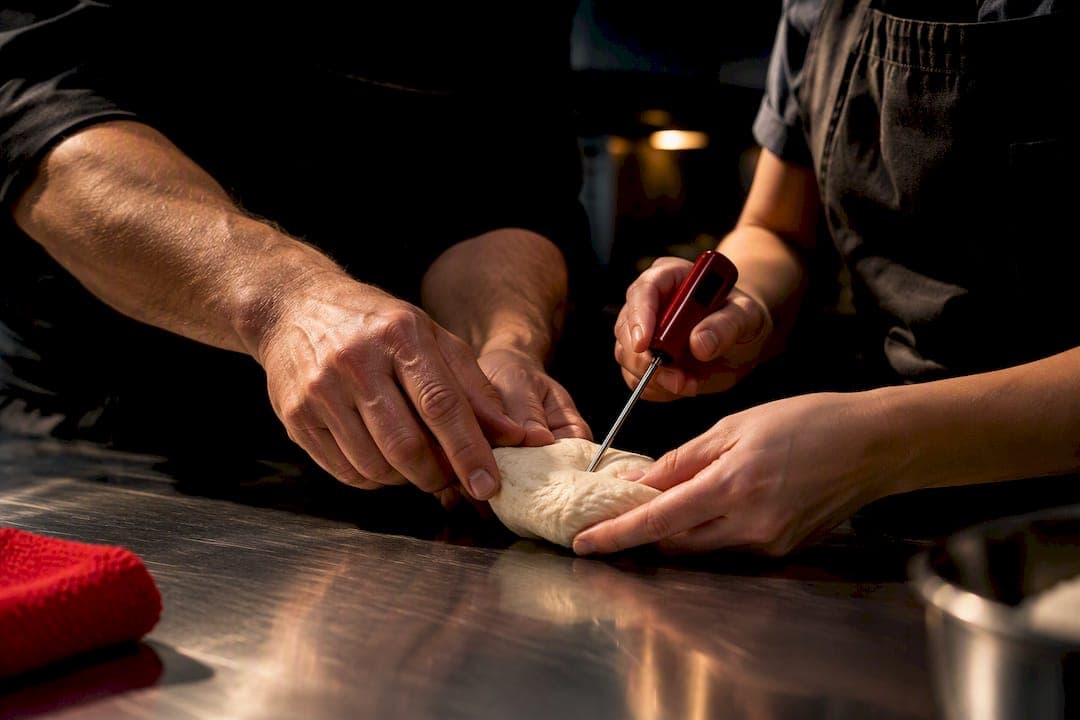
A solid pizza franchise training program blends online modules, classroom sessions, hands-on restaurant shifts, and field coaching that continues after you open your doors. Before you commit, check the scope of that training in the franchisor's disclosure document, confirm the details with several current franchisees, and see how it aligns with Canadian Franchise Association due-diligence guidance. That single verification step tells you more than any glossy brochure ever will.
TL;DR:
- Franchisors typically use a blended training approach that includes online modules, classroom sessions, hands-on restaurant shifts, and ongoing field coaching, lasting from three to ten weeks.
- Training should cover kitchen workflow, recipe systems, POS operation, hiring, customer service, and local marketing, with separate focus on food safety and documentation requirements.
- Costs beyond tuition include travel, lodging, wages, replacement staffing, and potential repeat training, requiring a dedicated cash buffer of six to twelve months.
- Post-opening support involving scheduled field visits, help desk access, and performance coaching is crucial for long-term success and must be clearly outlined.
- Trainers with operational experience and consistent follow-through improve learning outcomes, so inquire about their backgrounds, ongoing training, and continuity during your development period.
Table of Contents
- What a complete curriculum should teach you
- How training is delivered and how long it runs
- The food-safety standards your training must satisfy
- Building a due-diligence checklist before Discovery Day
- Budgeting for training costs beyond the tuition line
- What support looks like after you open your doors
- Who actually delivers the training you are paying for
- Getting ready before your first training session starts
- Measuring whether training actually worked
- Why coaching after training matters more than the classroom
- Where HellCrust Pizza fits if you are exploring franchising
- Sources
- FAQ
What a complete curriculum should teach you
Training that prepares you for daily operations, not just for opening week, tends to cover the same ground regardless of the brand behind it. We have seen enough franchise systems, our own included, to know that the difference between a program that sets you up and one that leaves you scrambling comes down to breadth and follow-through.
A curriculum worth paying for typically includes:
- Kitchen workflow, dough handling, and portion control so every pizza leaves the line consistent
- Recipe systems and inventory ordering that keep food cost predictable
- Point-of-sale operation and the technology that runs your delivery and pickup channels
- Hiring, onboarding, and basic HR practices for building a reliable crew
- Customer service standards that protect your reputation, order after order
- Introductory profit-and-loss reading and labour scheduling
- Local marketing groundwork and grand-opening preparation
Recipe training and food-safety competency are not the same thing, and a program that treats them as interchangeable is cutting corners. Recipe training teaches you how to make the food; food-safety competency proves you can handle it safely, with documentation to back that up. The stronger franchisor pages in this space also mention recurring elements worth watching for, blended delivery, periodic recertification, and performance scorecards that measure whether the training actually took.
How training is delivered and how long it runs
Franchisors rarely rely on one format alone, and for good reason. A blended approach tends to work through these stages:
- Self-paced e-learning modules covering systems, recipes, and company standards
- Classroom or theory sessions that walk through the reasoning behind procedures
- Hands-on shifts inside a certified, operating restaurant
- Field coaching that starts before opening and continues once the doors are open
Timelines vary across the industry, but examples reported in the pizza-franchise space include three-week intensives focused on operations, four to five week blocks combining classroom and floor time, and multi-phase blended programs stretching eight to ten weeks with regional managers overseeing ongoing evaluations. Owners, managers, and key staff usually attend together, since a training gap in any one role tends to surface fast once real customers show up. Whatever the length, the schedule should be locked in early: it drives your opening date, your staffing plan, and how much payroll you carry before a single pizza sells.
The food-safety standards your training must satisfy
Food safety training responsibility in Canada sits with provincial and territorial authorities, though federal preventive-control requirements under the Safe Food for Canadians Regulations apply to personnel competency, hygiene, and sanitation where the SFCR governs your operation. A franchisor's training should map clearly onto both layers rather than assume one covers the other.
Health Canada's national guidance confirms that food-safety training is a provincial and territorial responsibility, while SFCR preventive-control provisions cover competency, hygiene, sanitation, storage, complaints, and recall procedures where they apply. (Health Canada) That distinction matters when you are comparing what one franchisor calls "certification" against what another calls the same thing.
Look for training that includes:
- Hygiene and sanitation procedures specific to pizza production and delivery
- Documented critical control points and how staff are expected to monitor them
- Recordkeeping practices for storage, complaints, and recall situations
- Scheduled competency checks and recertification, not a one-time sign-off
Ask directly how the franchisor's program aligns with your local public-health authority's requirements. A program built for one province will not automatically satisfy another.
Building a due-diligence checklist before Discovery Day
Walking into a Discovery Day without a checklist puts you at a disadvantage. Before you sign anything, work through these steps:
- Confirm training length, number of phases, and which modules are mandatory versus optional
- Ask who is required to attend, owner, manager, or both
- Request access to training materials and documentation before you commit
- Ask about field coaching cadence once the restaurant opens
- Ask what help-desk or technical support looks like day to day
- Confirm how often recertification happens and what triggers it
- Ask what metrics or scorecards the franchisor uses to track training outcomes
- Speak with current franchisees about how effective the training felt in practice and how quickly support responded when they needed it
The Canadian Franchise Association's due-diligence guidance recommends speaking with eight to ten franchisees operating at different performance levels, reviewing the disclosure document with franchise counsel, and building multi-year cash-flow projections before signing anything.
Pro Tip: Ask a franchisee not "was training good" but "what did you not learn in training that you had to figure out on your own."
Budgeting for training costs beyond the tuition line
Tuition is rarely the whole bill. Franchisees consistently underestimate travel, lodging, meals, and wages for managers who are attending training instead of working the floor, along with the cost of replacement staffing back home and any repeat training a role might need later.
Costs worth building into your opening budget:
- Training tuition or program fees
- Travel and lodging for the duration of the program
- Meals and incidental expenses during training
- Wages for attending staff, plus replacement coverage at home
- Additional manager or repeat-training costs if turnover hits early
B.C.'s Franchises Act requires the disclosure document to state whether franchisor-provided training is mandatory or optional, where it takes place, and who pays for it, delivered at least 14 days before you sign or pay anything. Confirm every cost line against that document rather than a verbal promise. A six to twelve month cash buffer covering these gaps, alongside slower early sales, tends to separate franchisees who stabilize from those who scramble.
What support looks like after you open your doors
Training that stops at ribbon-cutting rarely produces owners who thrive. The stronger systems assign a business development manager or regional operations manager who visits your location on a set schedule, backed by a help desk for day-to-day questions and hands-on support around your grand opening and early local marketing.
That ongoing structure includes:
- Scheduled field visits from a BDM or ROM during your first months of operation
- A help desk or support line for operational questions as they come up
- Marketing support and grand-opening coordination in your local market
- Follow-up coaching tied to performance, not just a one-time check-in
A single training event rarely changes behaviour on its own. Field coaching, repeated visits, and honest accountability conversations do far more to move the needle than a binder ever will. In your first 90 days, expect frequent contact and hands-on troubleshooting; over your first year, that cadence should shift toward performance review and growth planning rather than basic hand-holding.
Who actually delivers the training you are paying for
The people running your training matter as much as the curriculum itself. Ask directly whether sessions are led by corporate trainers with operational experience inside the brand's own restaurants, by regional managers who also handle field coaching, or by a mix of both depending on the module.
A trainer who has run a location themselves teaches differently than one reciting a manual. They can explain why a dough-proofing window matters, not just what the window is, and that context tends to stick with new franchisees longer than a checklist ever does. Training that explains the reasoning behind a standard, rather than only the mechanics, helps franchisees adopt changes with less resistance and fewer repeated mistakes down the line, a point echoed in legal commentary on franchise training practices.
It is worth asking how trainers themselves are trained and how often that training gets refreshed. A brand that treats its trainers as a fixed roster with no ongoing development is signalling something about how seriously it takes the whole program. Ask, too, whether field coaches receive any preparation in trust-building and accountability conversations alongside operational knowledge, since industry commentary on franchise coaching suggests that interpersonal skill on the coaching side often predicts compliance and sales performance better than technical knowledge alone.
Finally, confirm whether the same trainer follows you from classroom to restaurant floor to post-opening visits, or whether you are handed off between strangers at each stage. Continuity tends to catch problems earlier, since a trainer who watched you struggle with dough temperature in week one will recognize the same issue resurfacing on a field visit in month three.

Getting ready before your first training session starts
Training does not begin the day you walk into a classroom. The weeks before that, often called onboarding, set the foundation for how much you get out of the formal program.
A reasonable onboarding sequence usually includes signing your franchise agreement, working through site selection or lease review if your location is not yet finalized, and receiving preliminary materials, brand standards, equipment specifications, and initial reading, well ahead of your scheduled training dates. Some systems also ask you to complete introductory e-learning modules before you ever see a classroom, so that in-person time focuses on hands-on practice rather than basic orientation.
This period is also when you should be lining up staff. If your training format requires a manager or key employees to attend alongside you, hiring and scheduling for those roles needs to happen early enough that training dates do not slip. A franchisor with a well-run onboarding process will give you a clear sequence and timeline for all of this rather than leaving you to guess.
Use this window to gather your own questions, too. Ask for a copy of the training curriculum or a syllabus if one exists, so you know what to expect before you arrive. Confirm which documents you are responsible for reviewing beforehand, including your disclosure document, and give yourself enough time to review it with franchise counsel rather than skimming it the week before your session starts.

Measuring whether training actually worked
Completing a training program and being ready to run a restaurant are two different things, and the gap between them shows up fast once real customers walk in. Ask franchisors directly how they measure whether training goals were met, not just whether a course was completed.
Look for concrete signals: written or practical competency assessments at the end of each phase, scorecards tracking specific operational benchmarks during your first weeks open, and documented food-safety competency checks tied to the standards your local health authority expects. A franchisor that can show you an actual scorecard, rather than describing one in general terms, is further ahead than one that cannot.
Post-opening metrics matter just as much. Order accuracy, speed of service, and staff retention in your first 90 days tell you more about training effectiveness than a certificate on the wall. Ask how the franchisor tracks these figures across its system and whether that data feeds back into refining the training itself. A program that never changes despite consistent early struggles across multiple locations is a program that is not measuring the right things, or is measuring them and ignoring the results.
Why coaching after training matters more than the classroom
The classroom gets you ready to open. What happens after, the field visits, the direct conversations about what is and is not working, is what actually changes behaviour and lifts results over time. A training program that lives in a static binder, never updated, rarely searchable, tends to age poorly compared to one that stays current.
Before you sign, ask specifically how often coaching happens after opening and how the franchisor tracks whether it is working.
— jaskirat Singh
Where HellCrust Pizza fits if you are exploring franchising
If you are weighing a pizza franchise partly on the strength of its food, some brands build their offering around a unique multigrain, additive-free dough, alongside vegan options, mix and match deals, and a menu built for everyday repeat orders. Franchising conversations start from that same foundation, matching product quality with the operational training a new owner needs to run it well.
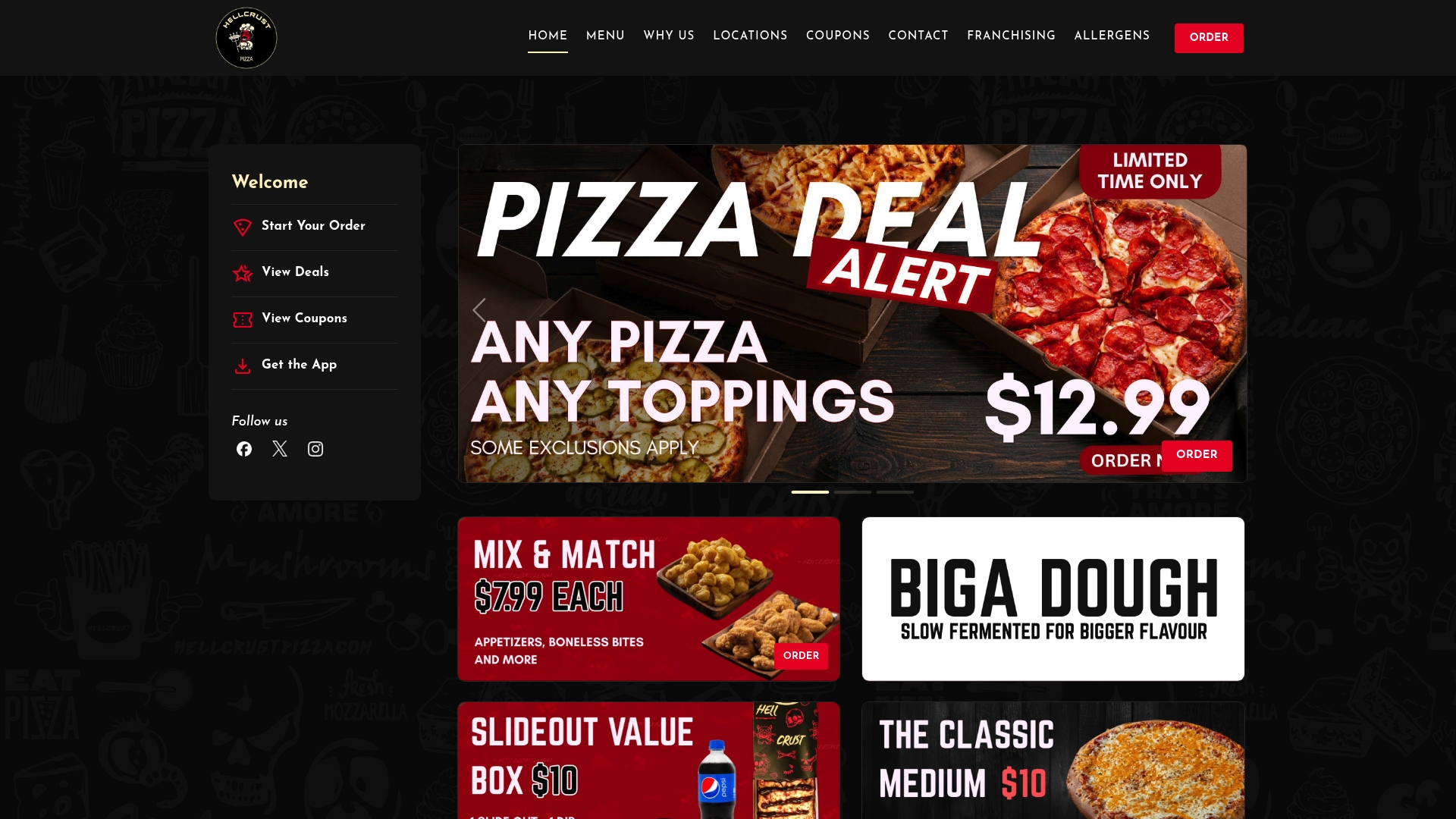
Worth checking before you decide:
- Review our menu lineup to see the product range you would be operating
- Read about franchise requirements to understand what due diligence looks like in practice
- Visit HellCrust Pizza directly for franchising contact details and next steps
Sources
- Franchises regulation (B.C.)
- Canadian Franchise Association — Interested in buying a franchise?
- National guidelines for food-safety training programs (Health Canada)
- Preventive control plan regulatory requirements (CFIA / Inspection Canada)
FAQ
How much does a pizza franchise typically make?
Earnings vary widely by brand, location, and local demand, and figures are not publicly standardized across the industry. Ask any franchisor for its financial performance representation, if one exists, rather than relying on informal estimates.
Which pizza franchise is best for someone just starting out?
The best fit depends on your budget, local market, and how much hands-on training and ongoing support you need as a first-time operator. Use the Canadian Franchise Association's due-diligence checklist to compare training length, support cadence, and disclosure terms across the brands you are considering.
What are the four P's of franchising?
Definitions vary across sources, but a common version refers to product, presentation, performance, and process consistency across every location in a system. Franchise training exists largely to keep those four elements consistent from one restaurant to the next.
How much does it cost to open a pizza franchise?
Total costs depend on the brand, location, and build-out requirements, and figures should come from that franchisor's own disclosure document rather than industry averages. Beyond the franchise fee itself, budget for training-related costs, travel, lodging, wages during attendance, and a cash buffer for the months after opening.
What should I ask a franchisor about its training program?
Ask about training length and phases, whether specific modules are mandatory, who covers travel and lodging costs, and how often recertification happens. The Canadian Franchise Association recommends also asking about ongoing mentoring and reviewing the disclosure document with franchise counsel before you sign.