
Three things determine whether you're franchise ready: enough capital to cover the fee, build-out and a genuine cushion of working cash; a clean legal path through provincial disclosure rules; and the personal willingness to run the store yourself, not just fund it. Here's what that looks like in practice.
- Capital: franchise fee, build-out costs, and several months of working capital held in reserve
- Legal: the Franchise Disclosure Document and the mandatory 14 day disclosure window before you sign anything
- Readiness: hands on ownership, staffing know how, and the temperament to run a kitchen through its first rough winter
The next move is simple: request the franchisor's FDD and book a consultation with a franchise lawyer before you put down a dollar. Hellcrustpizza offers this same transparency to anyone exploring its own franchise option, disclosure documents included.
Key Takeaways
Owning a pizza franchise successfully requires sufficient liquid capital, full legal compliance with provincial disclosure rules, and hands-on owner involvement through year one.
| Point | Details |
|---|---|
| Budget beyond the fee | Set aside build-out, equipment, inventory, and 6 to 12 months of working capital, not just the franchise fee. |
| Respect the 14-day rule | Franchisors must deliver the FDD at least 14 days before signing or payment in disclosure provinces. |
| Get a lawyer before signing | Have a franchise lawyer review the FDD and agreement before any non-refundable payment. |
| Plan to work in the store | Franchisors generally expect active owner-operators, not passive investors, especially in year one. |
| Consider HellCrust Pizza | Hellcrustpizza offers a franchise option built on transparent disclosure and hands-on operational training. |
Table of Contents
- What is the pizza franchise application process step by step?
- What does it cost to start a pizza franchise?
- What legal disclosure rules apply before signing a franchise agreement?
- What qualifications do franchisors look for in an applicant?
- How do you finance a pizza franchise purchase?
- What training and staffing does opening a location require?
- How long does site selection and build-out usually take?
- How does HellCrust Pizza's operational model prepare franchisees?
- What actually decides whether year one succeeds?
- How can you learn more about franchising with HellCrust Pizza?
- Sources
What is the pizza franchise application process step by step?
Every franchise, pizza or otherwise, tends to follow a similar path from handshake to grand opening. Knowing the order helps you spot which stage you're actually in and what's coming next.
- Initial contact and application. You'll fill out a questionnaire covering finances, work history and target territory, followed by an introductory interview.
- Qualification. Expect a site visit, a deeper assessment of your operating experience, and sometimes a working trial shift or second interview.
- Due diligence. This is where you request the FDD, review audited or reviewed financial statements, and call existing franchisees. The full sequence runs through readiness evaluation, contact, qualification and financing before anyone signs.
- Signing and deposits. Some deposits are refundable if you walk away during the disclosure window; others aren't. Read the fine print before you wire anything.
- Training and build-out. Once signed, you move into operational training, site build-out, and pre-opening prep.
What does it cost to start a pizza franchise?
Money is where most applicants underestimate the job. Pizza franchise costs typically bundle the franchise fee with build-out, equipment, initial inventory, a POS system, launch marketing, and a working capital reserve you'll need whether the phones ring on day one or not.
- Franchise fee, paid up front to license the brand and system
- Build-out and equipment, from ovens to walk-in coolers to signage
- Initial inventory, including dough, toppings, and packaging
- POS and software licensing
- Launch marketing spend for the opening month
- Working capital covering 6 to 12 months of operating expenses
Statistic callout: Initial investments across Canadian franchising can range from under $50,000 to more than $500,000 depending on the brand and format, and lenders commonly expect a chunk of that, often illustrated at roughly a quarter to a third, held as unencumbered cash rather than borrowed funds.
Beyond the entry cost, ongoing royalties and advertising or co-op fees chip away at monthly revenue. Factor both into your cash flow model, not just your opening budget. Experienced operators warn that professional fees and non-refundable deposits get overlooked more often than the franchise fee itself.

What legal disclosure rules apply before signing a franchise agreement?
Several provinces require franchisors to hand over a complete FDD at least 14 days before you sign the agreement or pay any money. This isn't a courtesy. It's a legal deadline, and franchisors who miss it expose themselves to rescission claims and, in some cases, personal liability for their directors.
In British Columbia, the Franchises Act sets out exactly what the disclosure document must contain and gives franchisees clear remedies if it falls short. Canadian franchise law is entirely provincial. There's no federal registration system checking these documents before they land on your desk, which means the burden of scrutiny sits with you and your lawyer.
Before signing anything, verify:
- Audited or reviewed financial statements, not just projections
- Material facts, including pending litigation involving the franchisor
- Territory boundaries and renewal terms spelled out in plain language
- Whether the 14-day clock has actually started, in writing
Pro Tip: Deficient disclosure can trigger a rescission window of up to two years, and Fasken's franchising analysis notes it can carry personal liability for franchisor directors. Never make a non-refundable payment before a franchise lawyer has reviewed the FDD line by line.
What qualifications do franchisors look for in an applicant?
Most pizza franchisors want operators, not passive investors. Industry advisors note that brands expect real owner presence in year one, because high staff turnover and thin margins punish absentee ownership fast.
What strengthens an application:
- Prior food service or retail management experience, even outside pizza specifically
- Demonstrated cash management or small-business bookkeeping skills
- Willingness to work hands-on shifts, not just oversee from a spreadsheet
- Clean credit history and a realistic personal financial statement
Franchisors also run behavioural assessments, and some ask candidates to work a trial shift before finalizing an offer. Red flags include unrealistic expectations about passive income or an unwillingness to commit full-time hours; both get addressed honestly, and early, rather than glossed over in an interview.
How do you finance a pizza franchise purchase?
Financing usually blends personal savings with a bank loan, a BDC-backed loan, equipment financing, or occasionally an investor partner. Lenders typically finance a portion of the total project and want proof of liquid assets, a personal guarantee, and realistic financial projections.
- Personal savings and unencumbered cash
- Bank term loans or a BDC franchise loan
- Equipment financing for kitchen hardware
- Investor partners, where ownership structure allows it
Bring your FDD and the franchisor's financial disclosures to any lender conversation. It speeds up underwriting and shows you've done the legal homework first.
What training and staffing does opening a location require?
Franchisors typically run several weeks of training covering kitchen operations, food safety certification, POS systems and local marketing execution. Staffing for opening week usually means a full crew plus a manager on-site through the first month, not a skeleton team learning on the fly.
- Core training modules: operations, food safety, POS, marketing
- Opening week staffing: full crew, dedicated shift lead, manager presence
- Ongoing obligations tied to the franchise manual's performance standards
Pro Tip: Ask to shadow an existing location's opening week before you sign. Watching real order volume, prep timing, and the app and tracking systems in action tells you more than any training binder.
How long does site selection and build-out usually take?
Build-out timelines commonly run three to six months from signing to opening, stretched by permitting delays, lease holdbacks or equipment shipping.
- Finalize lease and confirm zoning and permits
- Order equipment and schedule installation
- Complete build-out and pass health and safety inspections
- Install POS, signage and staff scheduling systems
- Run a soft opening before the public launch
Build a contingency fund into your budget. Construction delays and unexpected costs are the norm, not the exception, in food service build-outs.
How does HellCrust Pizza's operational model prepare franchisees?
Hellcrustpizza's own systems double as a preview of what training actually covers: a Biga multigrain, additive-free dough process, app-based ordering, and menu deals like family-sized specials and group orders that franchisees learn to execute at scale.
- Walk through the app's ordering flow and customizable toppings system before applying
- Work a trial shift to see dough handling and prep timing firsthand
- Review the menu deal structure to understand pricing and volume expectations
What actually decides whether year one succeeds?
Owner presence isn't optional in year one, whatever the sales pitch implies. Cash buffers get underestimated constantly, so plan conservatively. And talk to real franchisees before you talk to anyone selling you the dream.
— jaskirat Singh
How can you learn more about franchising with HellCrust Pizza?
Hellcrustpizza runs its franchise program the way it runs its kitchens: no shortcuts, full disclosure, real training behind every location. That means an actual FDD you can hand to a lawyer, financial statements you can hand to an accountant, and an operational system built around a dough process that took real craft to perfect, not a shortcut recipe handed down in a binder.
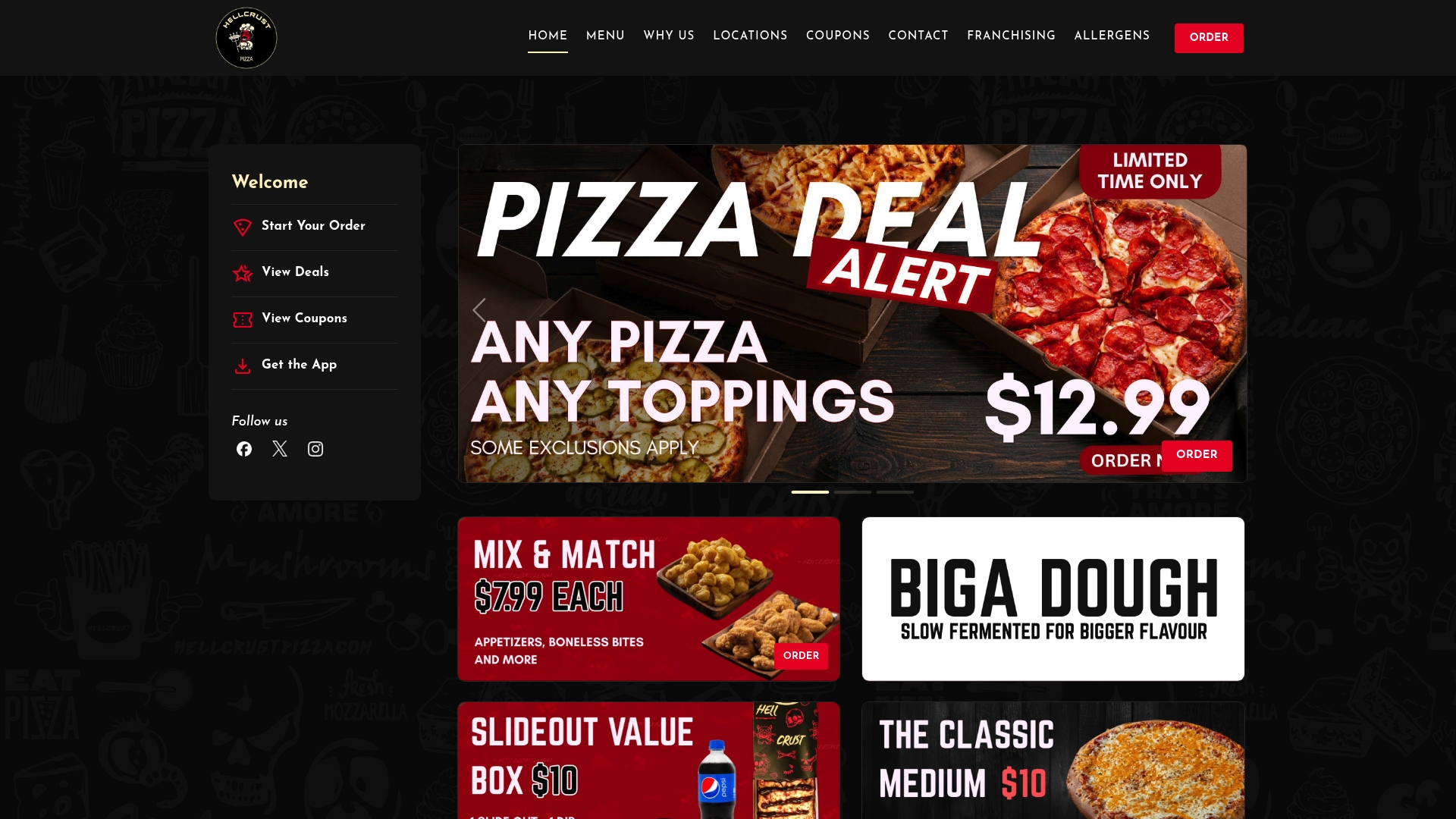
If you're weighing whether a pizza franchise fits your next chapter, start by requesting Hellcrustpizza's franchise disclosure materials and speaking directly with the franchising team. Visit the HellCrust Pizza franchise page to request the FDD and book a conversation about territory availability.
Sources
- Franchise disclosure document delivery in Canada | Siskinds
- Consultation paper — Business Development Bank of Canada legislative review (franchising) | ISED
- Franchising in Canada: a path to entrepreneurship | BDC
- Starting a franchise in BC | Province of British Columbia
- Franchising | Fasken