
A multi-unit franchise makes sense for the owner who already has a profitable single location, a trained manager who can run it without them, and a conservative reinvestment plan rather than a growth fantasy. That's the profile lenders and franchisors both look for, and it's a narrower group than most first-time buyers assume.
Three signals tell you whether you're ready:
- Unit-level profitability: your existing location shows healthy EBITDA, not just decent top-line sales.
- A management bench: at least one general manager who has run the store solo, without you, for months.
- A conservative capital plan: you can fund a downturn scenario without touching your existing unit's cash flow.
Before you sign anything, build a real unit-level profit and loss statement and stress-test it against a bad quarter.
Key Takeaways
Multi-unit franchise success depends on proving unit-level EBITDA, building a trained management bench, and reinvesting in existing units before chasing new ones.
| Point | Details |
|---|---|
| Verify unit-level profitability first | Build a real EBITDA-per-unit picture before signing any development agreement. |
| Read the FDD and Item 19 closely | Financial performance data reveals whether a brand's unit economics are actually strong. |
| Expect lenders to reward reinvestment | Tech upgrades and interior refreshes now matter more to funding than growth projections. |
| Watch for per-unit margin decline | Academic research shows profits per unit can fall past a certain mini-chain size. |
| Adapt operations to local markets | Keep core SOPs fixed while adjusting staffing and promotions by location. |
| HellCrust supports multi-unit owners | Its app, family deals, and training systems are built into the franchise offering. |
Table of Contents
- What is a multi-unit franchise and how do development agreements work?
- What are the advantages and disadvantages of owning multiple units?
- How do you know if you're ready to add another unit?
- What do lenders expect from multi-unit franchisees in 2026?
- Which systems let you scale without losing control?
- What contract terms and territory issues should you check before signing?
- What does a phased roadmap for scaling look like?
- How does HellCrust's operating model support unit-level economics?
- How do you choose the right franchise brand for multi-unit ownership?
- What legal issues go beyond the development agreement itself?
- How should you adapt operations across different markets?
- A final word on pacing growth
- Ready to talk about franchising with HellCrust?
- Sources
What is a multi-unit franchise and how do development agreements work?
A single-unit franchise gives one person the right to run one location. A multi-unit franchise lets one owner operate several locations under one brand, usually under a single development agreement. An area developer commits to opening a set number of units in a defined territory on a fixed schedule, while a master franchise grants the right to sub-franchise to others within a region, as Franchise.
Development agreements attach real penalties to missed timelines, including loss of exclusive territory rights. Every one of these terms lives in the Franchise Disclosure Document, and the FTC's buyer's guide recommends reading Item 19 financial performance data before you commit capital.
What are the advantages and disadvantages of owning multiple units?
Owning several locations changes your buying power almost overnight. Bulk purchasing knocks down your food and packaging costs, marketing dollars stretch further across a shared radius, and a franchisor tends to listen more closely to an owner running five units than one running a single storefront.
But the math isn't purely additive. Academic research on multi-unit franchising found that per-unit sales and profits can actually decline once an owner passes a certain "mini-chain" size, largely because manager salaries and added overhead eat into the margin gains from scale. A few other trade-offs to weigh:
- Cannibalization between units placed too close together.
- Inconsistent manager quality dragging down otherwise strong locations.
- Underinvestment in any single unit when attention gets spread thin.
Pro Tip: Track EBITDA per unit separately from portfolio-wide revenue. A growing top line can mask two or three units quietly losing money underneath it.
The upside that rarely gets discussed: franchisors negotiate better vendor terms and give more operational flexibility to owners with proven multi-unit track records.
How do you know if you're ready to add another unit?
Score your readiness against four categories before you talk to a lender or a franchisor about your next unit.
- Financials: know your Average Unit Volume, gross margin, EBITDA per unit, and labour percentage cold, not from memory.
- People: identify or develop a general manager, an operations director if you're past three units, and a franchise-savvy accountant.
- Systems: confirm your SOPs are written down, your reporting cadence is weekly, and your POS and scheduling tools talk to each other.
- Financial modelling: build base, downside, and upside scenarios, and calculate the working capital each one requires.
If any single category comes up short, fix it before you sign a development agreement. SmallBizTrends' industry summary makes the same case: conservative modelling and strong systems matter more than ambition when you're scaling food service units.
What do lenders expect from multi-unit franchisees in 2026?
Lenders in 2026 care far less about your growth story than they used to. Restaurant Finance Advisors' current playbook on strategic stabilization notes that lenders now prioritize evidence of reinvestment in existing units, tech upgrades, refreshed interiors, updated SOPs, ahead of raw unit-count projections.
A tech upgrade or interior refresh often does more for your funding odds than an aggressive five-year expansion plan. That's a real shift from how franchise lending worked a decade ago.
To prepare a stronger application:
- Present consolidated financials by entity, not blended across your whole portfolio.
- Show unit-level EBITDA trends over at least two years, not just the trailing twelve months.
- Document recent reinvestment: equipment, technology, or facility upgrades.
- Separate stabilised units from newly opened ones in your reporting.
Common funding sources for food-service multi-unit growth include SBA-backed loans, franchisor-preferred lender programs, and traditional bank term loans, though rising interest and insurance costs are reshaping restaurant investment risk across the sector in ways every applicant should factor into their model.
Which systems let you scale without losing control?
The owners who scale well build systems that run without them in the room. That starts with a tech stack: point-of-sale, payroll, staff scheduling, inventory tracking, and a dashboard that rolls every unit's numbers up into one view.
Standard operating procedures need to cover quality control, opening and closing checklists, and incident handling, written down clearly enough that a new manager can follow them without a phone call to you. Clustering units geographically cuts down on windshield time and makes manager rotation and cross-unit staffing float far more practical.
Watch these numbers weekly and monthly across your portfolio:
- Labour cost as a percentage of sales, by unit
- Food and packaging cost percentage
- Average order value, especially on app and delivery channels
- Manager retention and time-to-competency for new hires
- EBITDA per unit, tracked separately from total portfolio revenue
Features that drive repeat orders, like group ordering tools that simplify split payments, also feed directly into these KPIs by lifting average order value without adding labour cost.
What contract terms and territory issues should you check before signing?
Read the development schedule line by line before you sign, since missed milestones can trigger penalties or the loss of exclusive rights to your territory. Pay close attention to transfer and resale restrictions too. Some agreements make it surprisingly hard to sell a unit later without franchisor approval.
Territory language deserves particular scrutiny in 2026. Delivery radii and third-party apps have quietly eroded what "exclusive territory" used to mean, since a competing unit outside your zone can still deliver into it. Ask specifically how your agreement handles that.
Hire a franchise lawyer before you sign anything, and request the full FDD, prior development agreements, and any amendment history as part of due diligence. The FTC's consumer guide is a solid starting point for understanding what buyer protections exist and where they fall short.
What does a phased roadmap for scaling look like?
Growth works best in deliberate phases rather than one big leap.
- Stabilise: document every system in your first unit and close operational gaps before you think about unit two.
- Prepare: hire and train your management bench, lock in financing, and map out territory before signing a development agreement.
- Expand: open clustered units where possible, replicate your SOPs exactly, and monitor each new location's ramp-up curve closely.
- Optimise: centralise purchasing across the portfolio, measure returns unit by unit, and consider acquisition or resale opportunities as your footprint matures.
Each phase should have a clear exit criterion. Don't move to "expand" until "prepare" has produced an actual trained manager, not just a job posting.
How does HellCrust's operating model support unit-level economics?
HellCrust's Biga multigrain, additive-free dough isn't just a menu differentiator. Consistent product quality drives the repeat orders that push Average Unit Volume up without added marketing spend, since customers who trust the product come back on their own.

The HellCrust app and its Mix & Match and family-sized deals raise average order value directly, a lever every multi-unit owner should watch closely. Group-ordering features that simplify split payments for larger orders turn one-off customers into regulars, which matters more to unit economics than almost any single marketing campaign.

How do you choose the right franchise brand for multi-unit ownership?
Not every brand is built for multi-unit success, and the difference usually shows up long before you sign a development agreement. Start with the Item 19 financial performance data in the FDD. If it doesn't break out per-unit EBITDA, or if the sample size behind the averages is small, ask why. A brand confident in its unit economics usually shows its work.
Look closely at how standardised the operations already are. A brand with clear SOPs, a mature POS integration, and a documented training program hands you a system you can replicate across five units with far less friction than a brand still figuring out its own playbook. Ask current multi-unit franchisees, not single-unit ones, how the franchisor supports them specifically: dedicated area representatives, volume purchasing programs, and marketing co-ops built for owners with several locations.
Territory density matters as much as brand recognition. A brand that's already saturated in your target market limits your runway before you even start, while a brand entering a region with room to grow gives your development agreement real value. Weigh the franchisor's own growth pace too. A brand adding hundreds of units a year across the continent may not have the bandwidth to support you individually the way a more measured, regionally focused brand can.
Finally, sit down with the franchisor's development team and ask directly how they define a "ready" multi-unit candidate. Their answer tells you whether their support structure was actually built with owners like you in mind, or whether multi-unit growth is simply a box on their expansion spreadsheet.
What legal issues go beyond the development agreement itself?
Compliance obligations multiply with every unit you add, and they don't stop at the paperwork you signed on day one. Employment law, health and safety codes, and food handling regulations can vary by municipality, which means a checklist that worked perfectly at unit one might need adjustment at unit four in a different jurisdiction.
Renewal terms deserve early attention, not a last-minute scramble. Many development agreements set renewal conditions years before the actual renewal date, tied to performance benchmarks like minimum sales volume or timely unit openings. Missing those benchmarks quietly, without noticing, can put your renewal rights at risk long before the contract itself comes up for review.
Transfer and succession planning matter more with multiple units than with one. If you eventually want to sell part of your portfolio, or bring in a partner, or pass units to a family member, the original agreement's transfer clauses determine how much flexibility you actually have. Some franchisors require right-of-first-refusal on any sale, which can slow a transaction considerably.
Insurance and liability exposure scale with your unit count too. A single incident at one location can occasionally expose the whole portfolio depending on how your entities are structured, which is exactly why many multi-unit owners set up separate legal entities per unit or per cluster, with guidance from a franchise-experienced lawyer rather than a general business attorney.
How should you adapt operations across different markets?
A menu, staffing model, or pricing strategy that works in one neighbourhood rarely transfers perfectly to another, even within the same city. Foot traffic patterns, local competition, and delivery demand all shift block to block, and a multi-unit owner who runs every location identically usually leaves money on the table somewhere.
Labour costs and availability vary by market too, sometimes sharply. A unit in a dense urban core might face higher wage pressure but also higher delivery volume, while a suburban location might run leaner on staff but see more dine-in or pickup traffic. Your staffing model should reflect that difference rather than applying one template everywhere.
Local competition shapes pricing flexibility as well. A market saturated with delivery options might require sharper promotional deals to hold customer attention, while a location with fewer nearby competitors can hold margin more comfortably. Watch your average order value by location, not just in aggregate, to catch these differences early.
The fix isn't reinventing your systems for every unit. It's building a core SOP that stays fixed (food safety, quality control, brand standards) while leaving room for local adjustment on staffing levels, promotional cadence, and delivery radius. That balance, consistent core with flexible edges, is what separates owners who scale smoothly from those who fight the same battle in every new market.
A final word on pacing growth
Growth rewards patience more than ambition here. The owners who do well protect their existing unit's margin first, then expand only when the numbers, not the enthusiasm, say they're ready. If you take one action from this article, run a full portfolio breakeven analysis before your next signature.
Ready to talk about franchising with HellCrust?
HellCrust Pizza built its franchise model around what actually drives repeat business: dough you can't replicate with shortcuts, an app that makes group and family ordering effortless, and marketing support designed for owners running more than one location. That's the difference for a reader weighing multi-unit ownership against a brand still figuring out its own systems: HellCrust hands you SOPs, training, and app infrastructure already proven at unit level, rather than asking you to build that discipline from scratch.
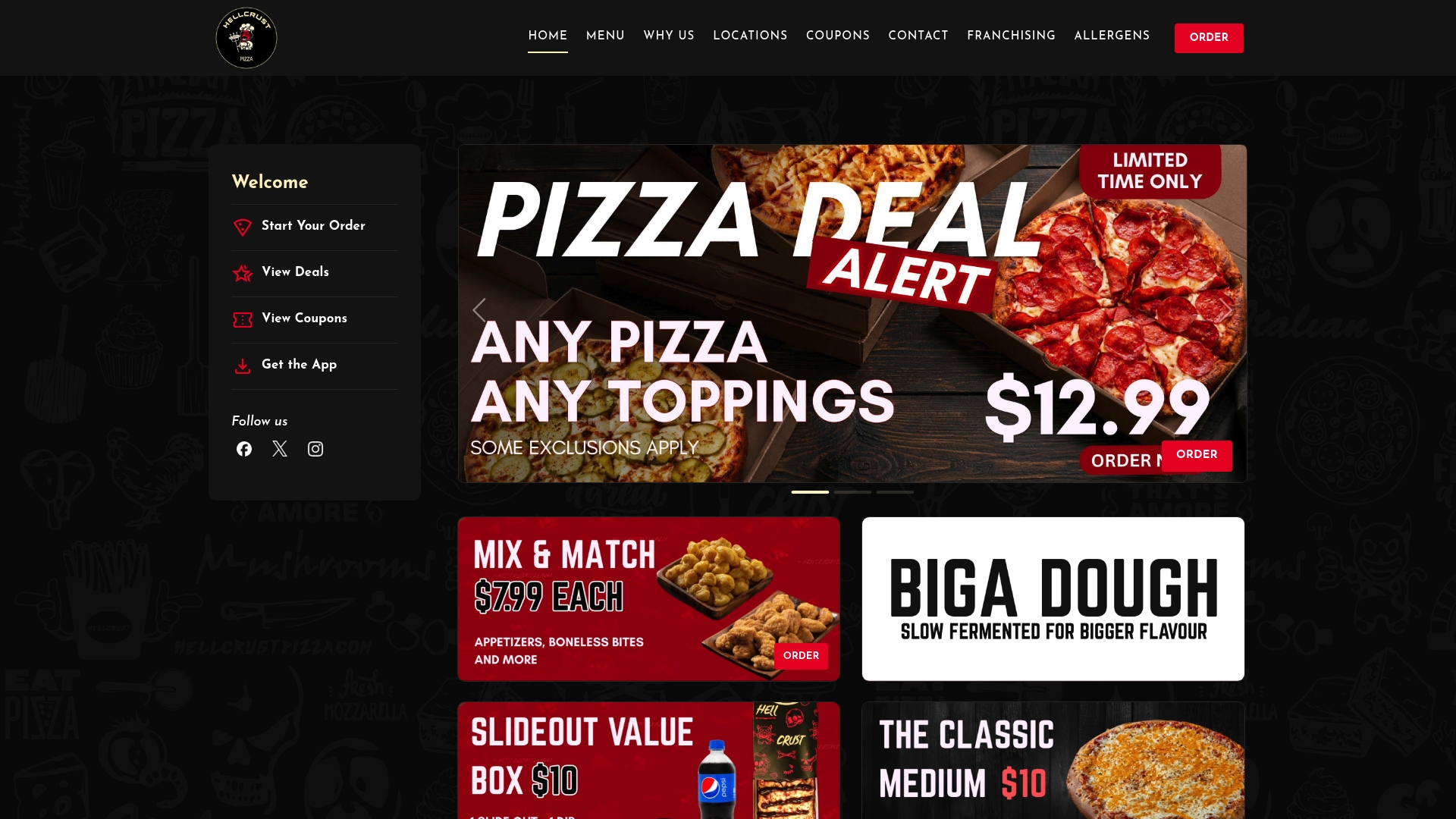
If you're ready to look closer, visit the HellCrust franchising page to see current opportunities and requirements. Before you reach out, gather your last two years of personal financials, a summary of your management experience, and any existing food-service P&L statements. Having those ready speeds up the conversation considerably.
Sources
- FTC: Consumers guide to buying a franchise
- Franchise
- Scaling your franchise in 2026: the strategic playbook for multi-unit growth — Restaurant Finance Advisors
- Multi-unit franchising from franchisor and franchisee perspectives — ScienceDirect
- Multi-unit franchises — SmallBizTrends