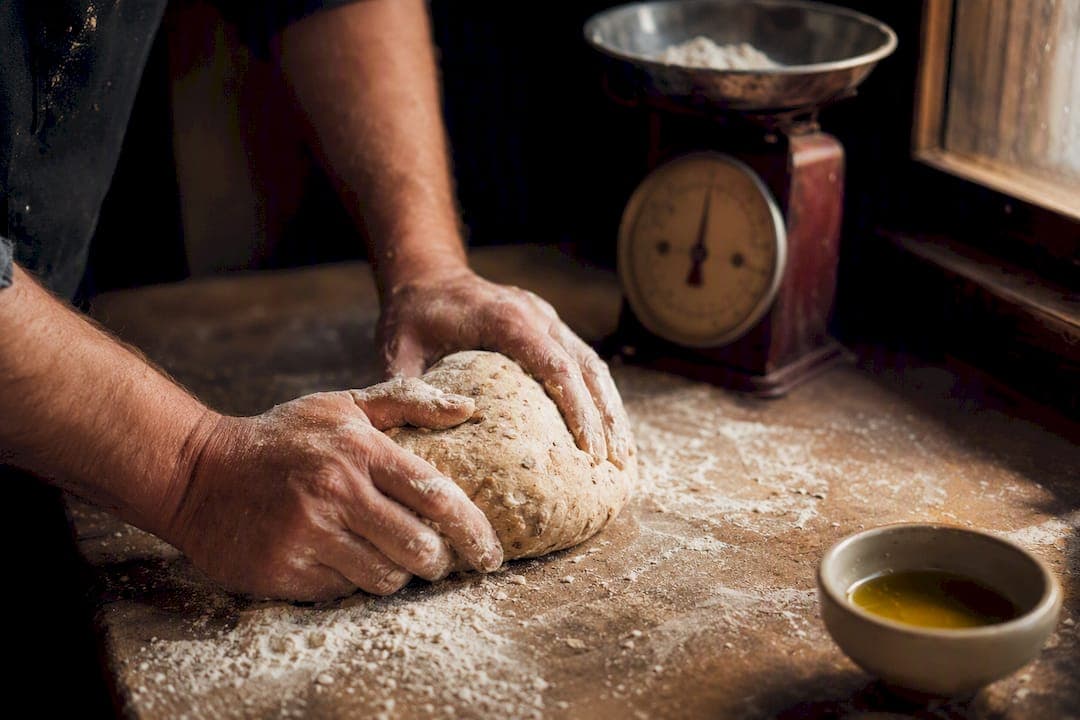
Fermentation is the single biggest lever you have over how your pizza dough tastes, stretches, and bakes. Slow, cold fermentation, held anywhere from 24 to 72 hours, builds the complex flavour and easy extensibility that separates a memorable crust from a forgettable one. Same-day dough gets you fed fast, but it will taste flat and fight you at the stretch.
Here's the practical version, no lab coat required:
- Same-day (2 to 4 hours at room temperature): fast, mild flavour, dough that resists stretching.
- 24 to 48 hours cold: noticeably better flavour and easier handling, the sweet spot for most weeknight cooks.
- 48 to 72 hours cold: the most complex, bakery-style flavour with visible blistering and a deeply extensible dough.
Pro Tip: If you're stretching your ferment past 24 hours, cut your yeast by roughly half. Less yeast means less gas produced too early, leaving room for the flavour-building work to finish properly.
Key Takeaways
Slow, cold fermentation between 24 and 72 hours produces measurably better flavour, browning, and extensibility than same-day dough by letting enzymes mature the flour while yeast activity slows.
| Point | Details |
|---|---|
| Rising and maturation differ | Rising builds crumb structure fast; maturation builds flavour and extensibility over hours or days. |
| Cold ferment 24 to 72 hours | This window balances flavour complexity with the risk of over-acidification past 72 hours. |
| Scale yeast to your timeline | Cut yeast roughly in half for ferments past 24 hours to avoid overproofing before flavour develops. |
| Hydration amplifies enzyme access | Doughs above 65% hydration let enzymes work more freely, producing bigger bubbles and better oven spring. |
| Bench rest before shaping | Warm cold dough 30 to 60 minutes before stretching to avoid tearing. |
Table of Contents
- What is the role of fermentation in pizza dough?
- How does temperature affect fermentation timing?
- Instant yeast, biga, or sourdough: which suits your dough?
- What does fermentation actually change in the finished crust?
- Does hydration level change how fermentation works?
- Why is my dough too sour, slack, or dense?
- Can you actually taste the difference between ferment times?
- Why we lean on slow biga fermentation at HellCrust
- Frequently asked questions about pizza dough fermentation
- Sources
What is the role of fermentation in pizza dough?
Fermentation does two separate jobs, and conflating them is the single biggest mistake home bakers make. The first job is rising: yeast consumes sugars and produces carbon dioxide, which inflates the gluten network and gives your crust its open, airy crumb. The second job is maturation: enzymes already present in the flour, mainly amylase, protease, and lipase, quietly break down starches and proteins over hours or days, independent of how much the dough has risen.
White Labs explains this distinction clearly: rising builds structure, maturation builds character. Amylase converts starch into simple sugars. Protease breaks proteins into free amino acids. Lipase releases fatty acids from flour's natural fats. Together, these compounds feed the Maillard reaction in your oven, the same browning chemistry that gives a seared steak its crust. That's why a dough matured for 48 hours browns and blisters in ways a two-hour dough simply cannot replicate, even at the same oven temperature.
Acids matter here too. Lactic acid bacteria and wild yeast produce two main organic acids during fermentation: lactic acid, which reads as a round, yogurt-like tang, and acetic acid, which reads as sharper vinegar notes. Cold temperatures tend to favour the acetic pathway, which is part of why fridge-retarded dough often tastes sharper than a warm-fermented one.
"At refrigerator temperatures, yeast activity drops substantially, but flour enzymes keep working," according to JayArr Pizza's technical breakdown of cold fermentation. That gap between a sluggish yeast and an active enzyme is exactly where great pizza dough gets made.
One overlooked signal: dough leavening research shows the growth phase concentrates in roughly 8 to 30 hours under many conditions, after which structural changes continue but rising slows. Rise and readiness are not the same clock.
How does temperature affect fermentation timing?
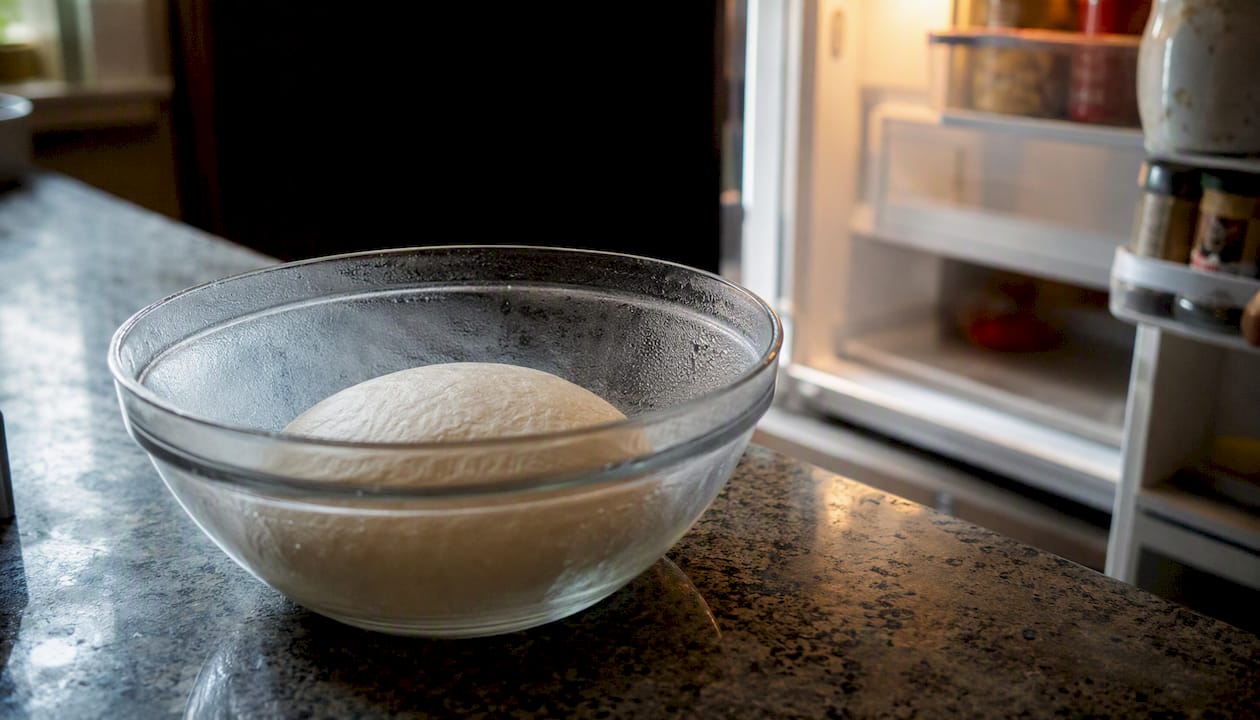
Temperature and time trade off in a way that isn't linear. A roughly 8°C (15°F) increase meaningfully speeds up fermentation, which is why a dough left on a warm countertop in July behaves nothing like the same dough in a 4°C fridge. At typical fridge temperatures, somewhere between 3°C and 6°C, yeast activity slows to a crawl while enzymes keep chugging along, which is precisely the decoupling that produces better-tasting, more workable dough.
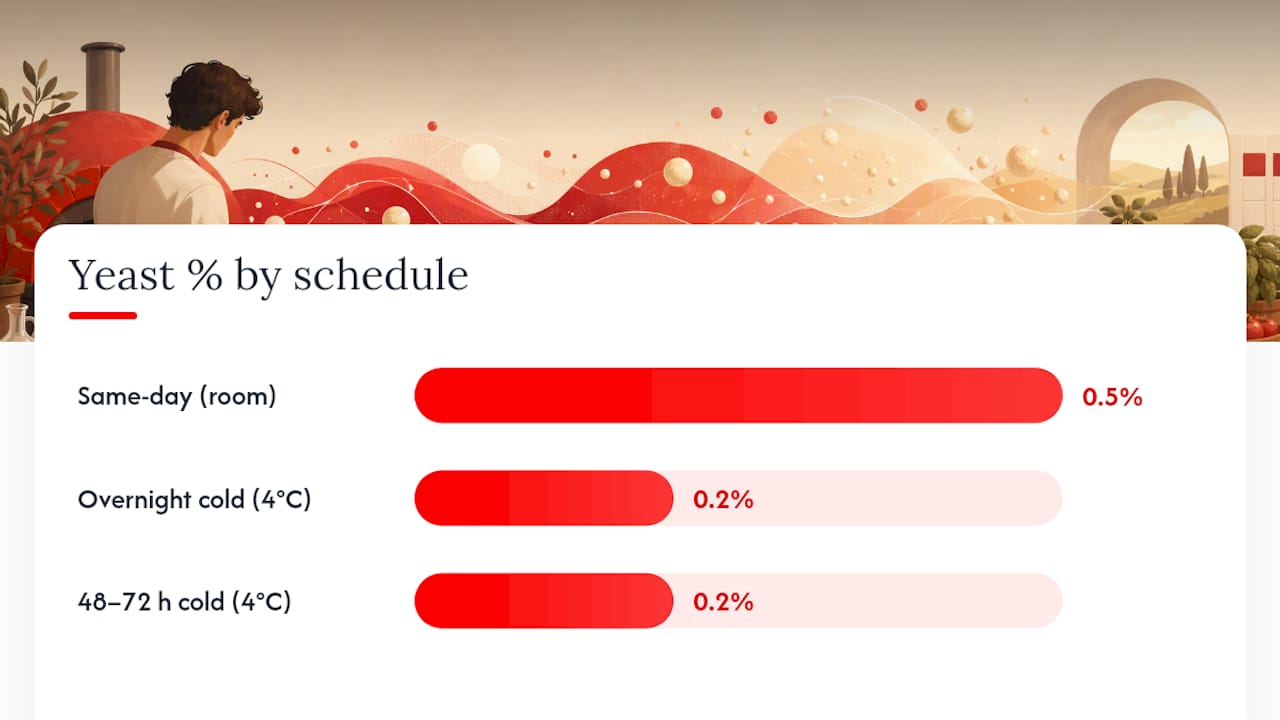
| Schedule | Temperature | Yeast (% of flour weight) | Outcome | Best for |
|---|---|---|---|---|
| Same-day | Room temp | 0.5% | Mild flavour, tighter crumb | Weeknight dinner |
| Overnight cold | Fridge (~4°C) | 0.2% | Balanced flavour, easier stretch | Next-day lunch or dinner |
| 48 to 72 hour cold | Fridge (~4°C) | 0.2% | Complex flavour, visible blistering | Weekend or entertaining |
Here's the planning sequence that actually works: mix your dough, let it bulk ferment briefly at room temperature until it shows life, divide into balls, move straight to the fridge, then bench-rest before shaping and baking. For anything past 24 hours, a gentle degas-and-reshape on day two renews yeast activity and keeps the structure from going slack over a longer hold.
Pro Tip: Scale your yeast down as your ferment stretches longer. A dough meant for 72 hours cold needs far less yeast than one meant for same-day use, or it will overproof before day three even arrives.
Instant yeast, biga, or sourdough: which suits your dough?
Every leavening method changes your timeline and your flavour ceiling.
- Instant yeast (direct method): fast, predictable, mild flavour. Lowest complexity, lowest risk. For a hands-on experience learning more about complex sourdough techniques, consider a sourdough pizza making with professional chef workshop.
- Biga or poolish (preferment): a portion of flour, water, and a whisper of yeast fermented for 12 to 16 hours before mixing into the main dough. Builds real depth without the tang management sourdough demands.
- Sourdough (wild culture): the most complex flavour and the most demanding to manage. Higher risk of over-acidification if left too long, especially in a warm kitchen.
A basic biga runs roughly 100% flour, 45% water, and 0.2% yeast by weight, fermented at room temperature for 12 to 16 hours before folding into your final dough.
When switching from a same-day recipe to a multi-day one, cut your yeast first, then expect noticeable acidity to show up starting around hour 36 to 48. Preferments like biga are worth the extra bowl when you have a spare evening. That 12-hour head start buys flavour depth a same-day yeast dough can't match.
Pro Tip: If you only have one evening to spare before baking, a biga started the night before beats a same-day dough every time, without the sourness risk of a sourdough starter.
What does fermentation actually change in the finished crust?
Fermentation choices show up on the plate in ways you can taste and see. Longer, cooler ferments build tangier acidity, aromatic esters that read as faintly fruity or wine-like, and a deeper umami note from free glutamates released during protein breakdown. Structurally, the same variables control an open, bubbly crumb versus a dense, tight one, and a blistered, leopard-spotted crust versus a pale, uniform one.
- Acidity and aroma: driven by fermentation time and whether lactic or acetic pathways dominate.
- Umami depth: driven by protease activity breaking proteins into free amino acids over time.
- Open crumb and blistering: driven by hydration, gas retention, and how much sugar and free amino acid the dough has built up for Maillard browning.
Picture two doughs side by side straight from the oven: the 72-hour ferment shows irregular, dark leopard-spotting across the rim with an airy, hole-punched crumb, while the same-day dough looks pale and even, with a tighter, more uniform crumb.
Pro Tip: For better blistering at home, push your oven as hot as it will go, use a preheated stone or steel, and don't skip the cold-ferment step. Sugars built during maturation are what caramelize into those dark spots.
Does hydration level change how fermentation works?
Hydration and fermentation time work together, not separately. Higher hydration doughs, generally above 65%, give enzymes easier access to starch and protein because the additional water lets molecules move and interact more freely. That's part of why high-hydration, long-fermented doughs often show bigger, more irregular bubbles and better oven spring than stiff, low-hydration ones.
Autolyse, a rest period of flour and water before adding yeast and salt, jumpstarts enzyme activity early and matters more the longer your total fermentation runs. Stretch-and-folds during bulk fermentation build gluten strength gently, which becomes important once a long cold hold has relaxed the dough considerably.
One detail most recipes skip: a degas-and-reshape step on day two exposes fresh nutrients to the yeast and renews activity, producing a more balanced multi-day ferment than one long, uninterrupted cold hold.
After pulling dough from the fridge, give it 30 to 60 minutes to warm on the counter before shaping. Cold, tight gluten tears easily; warmed, relaxed gluten stretches into a round without a fight.
Pro Tip: Never shape straight from the fridge. That short bench rest is the difference between a dough that stretches into a thin, even round and one that rips at the edges.
Why is my dough too sour, slack, or dense?
Most dough problems trace back to one of three causes: too much time, too little time, or the wrong temperature for how long it sat out.
- Dough tastes overly sour or vinegary → over-matured, likely past 72 hours or fermented too warm → shorten your next ferment or bake a thinner base to mask the sharpness.
- Dough is dense with poor oven spring → underfermented, yeast never got going → give it more time at room temperature before shaping, or check your yeast is still active.
- Dough is slack, tears easily, spreads flat → overproofed, gluten has relaxed too far → handle gently, bake immediately, and cut fermentation time next round.
- Crust browns pale even at high heat → insufficient maturation, not enough free sugar built up → extend cold fermentation by 24 hours next time.
Before you launch a pizza, run three quick checks: poke the dough gently and watch it spring back slowly (ready) or not at all (overproofed); stretch a small piece to see if it extends smoothly without tearing; and smell it, a balanced tang is good, a sharp, boozy smell means it's gone too far.
| Point | Details |
|---|---|
| Rise vs. maturation | A fully risen dough isn't necessarily ready; extensibility and smell matter more than visual size. |
| Fix sourness fast | Bake a thinner base to mask over-fermented tang, then shorten your next ferment. |
| Fix density fast | Give underfermented dough more room-temperature time before shaping. |
Can you actually taste the difference between ferment times?
Run this over one weekend with a single dough formula, split three ways, and you'll taste the entire argument for slow fermentation in one sitting.
- Mix one batch of dough, roughly 65% hydration, and divide it into three equal balls.
- Bake ball one same-day, after a short 3-hour room-temperature rise.
- Refrigerate ball two for 24 hours, then bake.
- Refrigerate ball three for 72 hours, with a gentle reshape on day two, then bake.
Track a simple checklist for each: crumb openness, blistering pattern, crust colour, smell before baking, and how easily the dough stretched when shaping. You'll likely notice the 72-hour ball stretches with almost no resistance while the same-day ball springs back stubbornly.
- Weigh each ball before and after fermentation to see gas loss over time.
- Time how long each takes to stretch to size, longer ferments usually go faster.
- Note colour differences straight out of the oven.
This mirrors published findings that extended fermentation with selected lactic acid bacteria can meaningfully reduce fructan content after 24 to 48 hours, one reason longer-fermented dough sometimes sits easier for sensitive eaters.
Why we lean on slow biga fermentation at HellCrust
We build every HellCrust pizza on a multigrain biga, fermented slowly and left additive-free, because the science backs what our kitchen already knew: time builds flavour that shortcuts never will. That patience translates directly into a crust that's easier to digest and simply tastes like more effort went into it, because it did. You can taste the difference the first time you order from HellCrust Pizza.
Frequently asked questions about pizza dough fermentation
What is the ideal fermentation time for pizza dough? Most home cooks get the best balance of flavour and convenience from 24 to 48 hours cold. Serious hobbyists chasing maximum complexity push to 72 hours, though quality can decline past that window in some fridges.
Does the role of yeast in pizza change with longer fermentation? Yes. At room temperature, yeast drives fast rising. In the cold, its activity drops sharply while flour enzymes keep working, so yeast contributes less to flavour and more to structure over long ferments.
How does fermentation affect pizza dough hydration needs? Higher hydration doughs ferment more evenly because water gives enzymes better access to starch and protein, which is part of why many long-ferment recipes run at 65% hydration or higher.
What's the difference between biga and sourdough for pizza? Biga uses a small amount of commercial yeast fermented for 12 to 16 hours, giving depth without much sourness. Sourdough uses wild culture and takes longer, with more risk of excess acidity if mistimed.
Can you over-ferment pizza dough? Yes. Past roughly 72 hours, or at too warm a temperature, dough can turn overly sour, slack, and prone to tearing, with poor oven spring once baked.
Sources
A few sources are worth reading directly if you want to go deeper than this guide:
- MDPI Foods — sourdough, LAB and fructan degradation (2025)
- White Labs — fermentation controls: temperature
- JayArr Pizza — cold fermentation technical guide
Run the 3-day experiment above using these same methods to check the results against your own oven and flour.