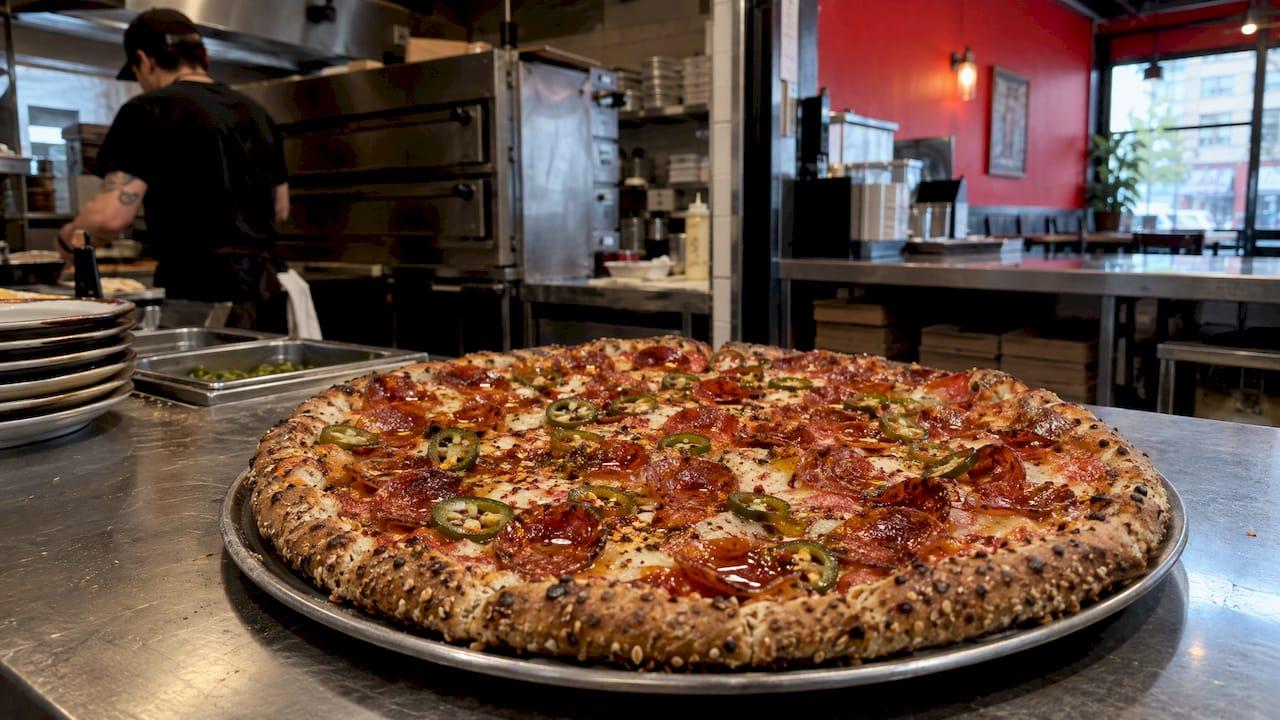
What makes a spicy pizza memorable? It is rarely the amount of heat. It is the balance: one clear source of heat, something sweet or creamy to soften it, something sharp to wake it up, and a crust with enough character to carry all of it. Jalapeños, hot sausage, chili oil and hot honey all work when they are chosen and timed well. At HellCrust we build our pizzas on a Biga multigrain, artificial additive-free dough, and our menu lets you customize toppings so the heat lands exactly where you want it.
TL;DR
- Pick one main heat source per pizza (jalapeño, hot salami, Calabrian chili or chili oil) and balance it with cheese, sweetness or acidity.
- Fresh jalapeño rounds baked on the pizza soften and mellow. Added after the bake, they stay crisp, greener and hotter.
- Chili oil, chili crisp and hot honey belong on after the bake, so their aroma and sweetness survive.
- Remove jalapeño seeds and white ribs, or choose banana peppers, for a gentler pie that suits kids.
- A little honey on a hot pizza is a classic spicy-sweet fix, not a gimmick.
Table of Contents
- The spicy toppings worth knowing
- Jalapeño pizza toppings: how much heat, and when to add them
- Chili oil on pizza: when to add it
- Spicy topping combinations that work
- Balancing heat: sweet, creamy and fresh
- Setting the heat for kids and mixed tables
- What to drink with a spicy pizza
- Perspective
- Order your spicy pizza the way you like it
- FAQ
- Sources
The spicy toppings worth knowing
The list of hot toppings is longer than pepperoni and jalapeño. A roundup of hot pizza toppings names 'nduja (a spreadable spicy sausage), hot coppa, cupping pepperoni, Calabrian chili peppers, hot cherry peppers, fresh jalapeños, red pepper flakes, Aleppo pepper, chili oil, chili crisp and hot honey. It also suggests ricotta dollops to cool things down.
It helps to sort them by the kind of heat they bring, because that decides what they pair with.
| Style of heat | Toppings | What it does for the pizza |
|---|---|---|
| Bright and green | Fresh jalapeño, serrano, Fresno | Fresh, grassy heat that cuts through cheese |
| Tangy and sharp | Pickled jalapeños, banana peppers, cherry peppers, pepperoncini | Acid and brine that lighten rich toppings |
| Fruity and concentrated | Calabrian chili, Aleppo pepper, chili paste | Deep, slightly sweet heat |
| Smoky | Chipotle, smoked paprika, roasted poblano | Warmth with a campfire edge |
| Rich and slow-building | Hot sausage, spicy salami, soppressata, pepperoni, 'nduja | Fat-carried heat that lingers |
This grouping comes from a guide to spicy pizza flavour pairings. Use it as a map: choose one row for your main heat and let a second row play a supporting role.
Cured meats and sausages
Pepperoni is the everyday heat. One Ontario producer describes its dry-cured pepperoni salami as smoky with a subtle anise note, and notes that it crisps and cups when baked. Those crisp little cups of rendered fat are exactly why pepperoni tastes so good on a hot pizza. Spicy chorizo is another option: the same producer calls its fresh pork chorizo boldly seasoned and savoury.
If you want to go further, hot soppressata and honey is a pairing worth trying. A Serious Eats recipe calls honey and spicy dry-cured sausage a combination 'just meant to be', finishing a pie of mozzarella, Parmesan, thin serrano slices and basil with honey after broiling.
Peppers, fresh and pickled
Peppers give you the most control. Fresh ones are crunchy and vegetal, pickled ones are tangy and salty. Pickled jalapeños are sweet, salty and briny, which is why they sit so well on a cheesy pie. Hot cherry peppers and pepperoncini bring the same tang, with banana peppers on the mild end.
Chili oils, crisps and honey
These are finishing touches rather than baked toppings. Chili crisp is a coppery-red oil infused with garlic, chilies and spices whose umami flavour perks up everything from noodles to pizza. Hot honey has become the most popular spicy drizzle, according to Tasting Table's 2026 trend report, which also recommends pepperoni, jalapeño and hot honey together as a spicy-sweet-savoury trio.
Jalapeño pizza toppings: how much heat, and when to add them
Jalapeño is the most searched spicy topping for a reason: it is easy to find, easy to prepare and moderate in heat. A Canadian LCBO food and drink feature puts jalapeños at 2,500 to 8,000 Scoville heat units (SHU), the scale used to measure chili heat. That is a range, not a promise: heat varies with the plant's genetics and growing conditions, so one jalapeño can be noticeably hotter than the next.
Before or after the oven
Timing changes the character of the pepper. Fresh jalapeño rounds added before baking soften and blister slightly. Added after baking, they stay crisp, greener and taste hotter. The same logic holds for serrano, according to a pepper guide for pizza: thin slices baked into the cheese lose some bite and leave a green, citrusy warmth, while raw rings added after the bake keep their punch and crunch.
A simple rule: bake peppers in when you want the heat spread through every bite, and scatter them on afterwards when you want sharp, distinct hits.
Taming a jalapeño
Most of the heat sits in the white ribs, not only the seeds. The USDA's jalapeño fact sheet says capsaicin concentrates in those white ribs and recommends removing ribs and seeds to reduce the heat. Do that and you are left with grassy flesh and a mild background warmth, which suits kids and spice-sensitive guests. Red jalapeños are sweeter and fruitier, but slightly hotter than green ones.

Candied jalapeños
Candied jalapeños, often called cowboy candy, bring sweet, spicy and tangy notes in one bite. The LCBO feature specifically recommends them over pepperoni or Hawaiian pizza. The syrup they sit in can also be drizzled over a finished pie.
Chili oil on pizza: when to add it
Chili oil is the easiest upgrade to any slice, and the question people ask is when to add it. The answer: after the bake. Chili oil, chili crisp and hot honey go on once the pizza is out of the oven, since their aroma fades in the heat and honey can scorch.
A basic oil of chili peppers, garlic and olive oil is a subtle topping that adds tartness and garlic with only a little heat, so it will not overwhelm the other ingredients. Chili crisp is crunchier and more savoury. If you make your own, one home chili crisp recipe uses red pepper flakes, dried garlic, toasted onion, salt and smoked paprika in neutral oil, and the jar keeps for six months without refrigeration.
A few habits make oil work harder:
- Drizzle in a thin zigzag, not a pool. Oil spreads quickly on hot cheese.
- Spoon the crisp and the oil separately if you want crunch without too much grease.
- Add the oil to the crust edge too. A dipped crust is half the pleasure.
- Add a tablespoon of honey or a dollop of ricotta on the side if the heat builds faster than you expected.
Crushed red pepper flakes are the most forgiving option of all. They typically blend cayenne, jalapeño and serrano, and sprinkled before baking they give gentle, spread-out heat, while after baking they give a bolder punch.
Spicy topping combinations that work
The best hot pizzas follow one principle: a single main heat source, balanced with something creamy, sweet, acidic or herbal. Here are combinations drawn from working recipes.
For meat lovers
- Pepperoni, jalapeño and honey. Salty, hot, sweet. Pineapple works here too, as one set of pairings points out, adding sweet and acidic contrast.
- Hot sausage, pickled cherry peppers and onion. Tangy richness, with the pickle cutting through the fat.
- 'Nduja, ricotta and red onion on a light tomato base. The ricotta tempers a very hot, spreadable sausage.
- Diavola. A margherita base topped with spicy salami, where black olives add bitterness against the salami's sweetness, with chili flakes or sliced Calabrian chilis to turn up the heat.
For more ideas on loading up a pie, see our guide to topping pairings for meat lovers.
For vegetarians and vegans
Heat does not need meat. Roasted poblano with corn, Monterey Jack and scallions is one vegetarian framework, and so is Fresno chile with mushrooms, fontina and parsley, which gives fresh heat with earthy depth. A seasoning blend of paprika, fennel seed and chili flakes can even give a sausage-like spicy flavour without meat when sprinkled on a vegetable pie.
A Canadian example of layered heat
Hamilton chef Salar Madadi's Mala Honey Pie won Best Pizza Recipe at the Canadian Pizza Summit. In the published recipe, it combines mala spice, chili crisp, pickled chilies, Thai basil, Asiago and a hot honey drizzle on a Detroit-style crust. He explains it works because each layer has a job: crisp from the cheese, acid from pickled chili, heat from chili crisp and honey, salt and umami from Asiago, and a touch of bitterness from the basil. That is a good checklist for any spicy pizza you design.

Smaller Canadian ideas travel well too. A hot sauce maker from Thunder Bay suggests spicy takes on classics such as a spicy Hawaiian or spicy meat lover, and hot-sauce-marinated mushrooms.
Want to experiment at home? We have a guide to spicy topping combos to try.
Balancing heat: sweet, creamy and fresh
The reason honey and spicy toppings get along is physiological. Sweet ingredients reduce the sensitivity of the heat sensors on the tongue, so fat and sweetness mellow spice. Honey pairs with creamy mozzarella, Asiago and Manchego, while maple syrup pairs with feta, Gorgonzola, Gruyère and walnuts, and suits habanero, Thai and ancho chilies.
A Canadian example of the same idea: an Ontario importer's Calabrian chili and artichoke spread can be sweetened with lavender honey, which takes some of the heat off the first bite.
Other easy balancers:
- Cheese. Mozzarella, ricotta and Asiago soak up heat. Our guide to cheese varieties on gourmet pizzas covers more.
- Acid. Pickled peppers and a squeeze of lemon keep rich pies from feeling heavy.
- Fresh herbs. Basil, parsley or cilantro added after baking lift everything. See fresh herbs on finished pizza.
Setting the heat for kids and mixed tables
Family orders, birthday parties and casual date nights usually mean different tolerances at one table. Instead of making the whole pizza hot, put the heat where it can be adjusted.
- Mild base, hot finish. Keep the baked pizza gentle and add chili oil, flakes or sliced peppers by the slice.
- Choose mild peppers. Banana peppers and pickled pepperoncini both sit under 5,000 SHU. Serrano runs 10,000 to 23,000 SHU and cayenne flakes around 30,000 to 50,000 SHU, so quantity matters much more with those.
- De-rib the jalapeños. Seeds and white ribs out means gentle warmth for younger eaters.
- Go half and half. Split a large pizza so one side is mild and the other is hot.
If you are not sure how to ask for the right heat when ordering, our guide to five simple requests to get pizza spice right walks through it.
What to drink with a spicy pizza
Heat calls for something cold, a little sweet or a little bitter. Beer is a classic partner, and what to drink with spicy food like curry and wings applies just as well to a hot pizza. If you prefer wine, our wine pairings for every pizza topping can help. For something with a bit more fun, which cocktail goes with which pizza is a good place to start.
Perspective
A good spicy pizza starts with the crust, not the chili. Heat sits on top of the dough, and it needs a base with enough flavour to hold its own.
That is why we make our dough the slow way. Our Biga is a preferment, prepared in advance, so the multigrain dough has time to develop a rich, mature flavour. It is artificial additive-free, and we think that matters when a bold topping like jalapeño, chili oil or hot honey meets it. A wholesome crust lets the toppings taste like themselves.
We also believe heat should be personal. A family at the table, a student on a budget and a couple on a casual date night do not all want the same pizza. Customizable toppings mean you decide where the heat goes, and our vegan pizzas show that a bold, satisfying pie does not need meat.
You get what you pay for, and a pizza made with care shows in every bite.
jaskirat Singh
Order your spicy pizza the way you like it
If you are craving heat, start with a base you can trust. Our menu includes Create Your Own Pizza, Signature Pizzas and Vegan Pizzas, all on our Biga multigrain, artificial additive-free dough, along with wings and bites, dips and baked pasta for a full table.

Order for delivery or pickup in North Vancouver, Vancouver or West Vancouver, and use the app for exclusive deals. Our Mix & Match options and family-sized specials make it easy to feed a group without overspending.
FAQ
What are the best spicy toppings for pizza?
Pepperoni, hot sausage, jalapeños, pickled peppers, red pepper flakes, chili oil and hot honey are the most popular. For something more adventurous, try 'nduja or Calabrian chilies. Choose one main heat source and balance it with cheese, sweetness or herbs.
Should chili oil go on before or after baking?
After. The aroma of chili oil fades in a hot oven, and honey can scorch. Drizzle it on the finished pizza so the flavour stays bright and the heat stays under your control.
How spicy are jalapeños on pizza?
Jalapeños are moderately hot, at about 2,500 to 8,000 SHU, and individual peppers vary. Baked jalapeños soften and mellow, while jalapeños added after baking stay crisper and taste hotter. Removing the seeds and white ribs lowers the heat further.
How do I make a spicy pizza that kids will eat?
Keep the baked pizza mild and add heat separately. De-ribbed jalapeños or banana peppers give gentle warmth, and chili oil or flakes can be added to adult slices only. A sweet touch like honey also softens the heat.
Can a vegan pizza be spicy?
Yes. Roasted poblano, Fresno chile, jalapeño, pickled peppers and chili oil all bring heat without meat. Pair them with earthy vegetables such as mushrooms and fresh herbs for depth.
Sources
- Spicy Pizza: Hot Toppings and How to Balance the Heat
- Spicy Pizza Toppings and Flavor Pairings
- Products | Seed to Sausage
- Pizza With Hot Soppressata, Mozzarella, Chiles, and Honey
- How to Make Pickled Jalapeños
- What is chili crisp, and how is it used? The Globe and Mail
- The Hot Pizza Trend That's Still On The Rise In 2026
- LCBO Food & Drink Summer 2024
- Capsicum annuum (Jalapeño Pepper)
- Jalapeño | PizzaHQ
- Best Peppers for Pizza, From Calabrian Chili to Habanero
- Jalapeno Peppers, Fresh Household Food Fact Sheet (USDA)
- How to Use Jalapenos in Cooking
- How Do You Spice Up Your Pizza? Spicy Food Reviews
- 50+ Pizza Toppings and Pairings
- Attilio Bachetti's Diavola Pizza
- Pepperoni Seasoning, TheCookful
- Bakers Formula: Mala Honey Pie Pizza, Bakers Journal
- Feelin' Hot, Hot, Hot, Canadian Pizza Magazine
- Sweet & Spicy Pizzas: Hang Fire!, Pizza Today