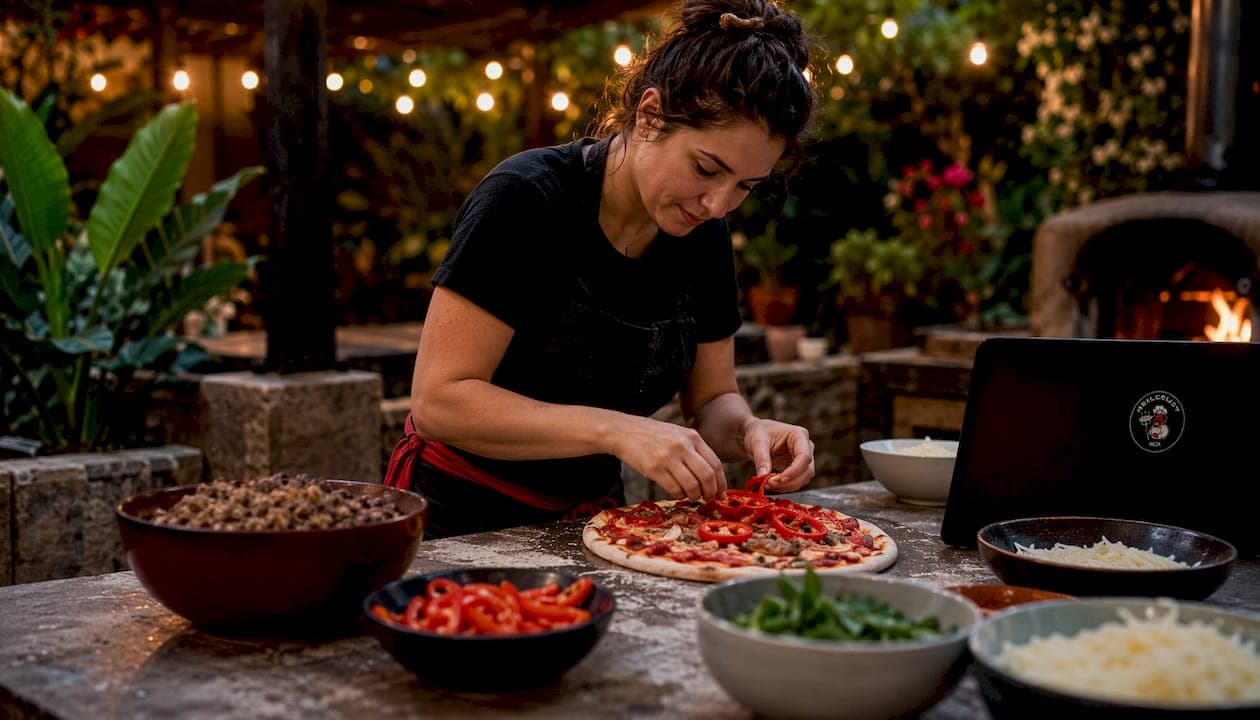
Ready to make something memorable tonight? Here are six spicy pizza topping combos you can pull together in about a short time, each with a heat label and one cook tip so you can pick your level and get straight to it.
-
Hot Honey Pepperoni (Medium) — Classic pepperoni finished with a drizzle of hot honey after baking so the sweetness clings to the crispy cups without burning.
-
Calabrian Chilli and Burrata (Hot) — A thin smear of Calabrian chilli paste under fresh burrata; start with half a teaspoon of paste and scale up from there.
-
Spicy Sausage and Fresno Pepper (Medium) — Sliced Fresno peppers laid over crumbled hot Italian sausage; bake together so the fat from the sausage tempers the pepper's bite.
-
Jalapeño Honey Cheese (Mild–Medium) — Fresh jalapeño slices on a cheese-forward base, finished with a light honey drizzle for that sweet-and-spicy contrast.
-
Nduja and Roasted Garlic (Hot) — Spread nduja directly onto the sauce before baking; it melts into the base and seasons every bite with smoky, spreadable heat.
-
Sriracha Chicken and Ricotta (Mild) — Drizzle sriracha post-bake over shredded chicken and dollops of ricotta; the creaminess softens the vinegary heat beautifully.
These six combos are your starting point. The rest of this guide gives you the pantry, the flavour rules, and the cook timing to iterate with confidence.
Table of Contents
- Which spicy toppings should you stock for experimenting?
- 20 creative spicy topping combinations to try
- Why do these pairings actually work?
- Which cheeses and sauces pair best with spicy toppings?
- Practical cook tips so your spicy toppings taste their best
- Global flavour prompts to spark your next experiment
- Three Hellcrustpizza-tested spicy combos worth trying
- Key takeaways
- The real reward of spicy pizza experimentation
- Taste a pro-crafted spicy pie from Hellcrustpizza
- Useful sources and Canadian sourcing notes
Which spicy toppings should you stock for experimenting?
A compact, well-chosen pantry unlocks far more combinations than a crowded fridge. Here is what earns a permanent spot.
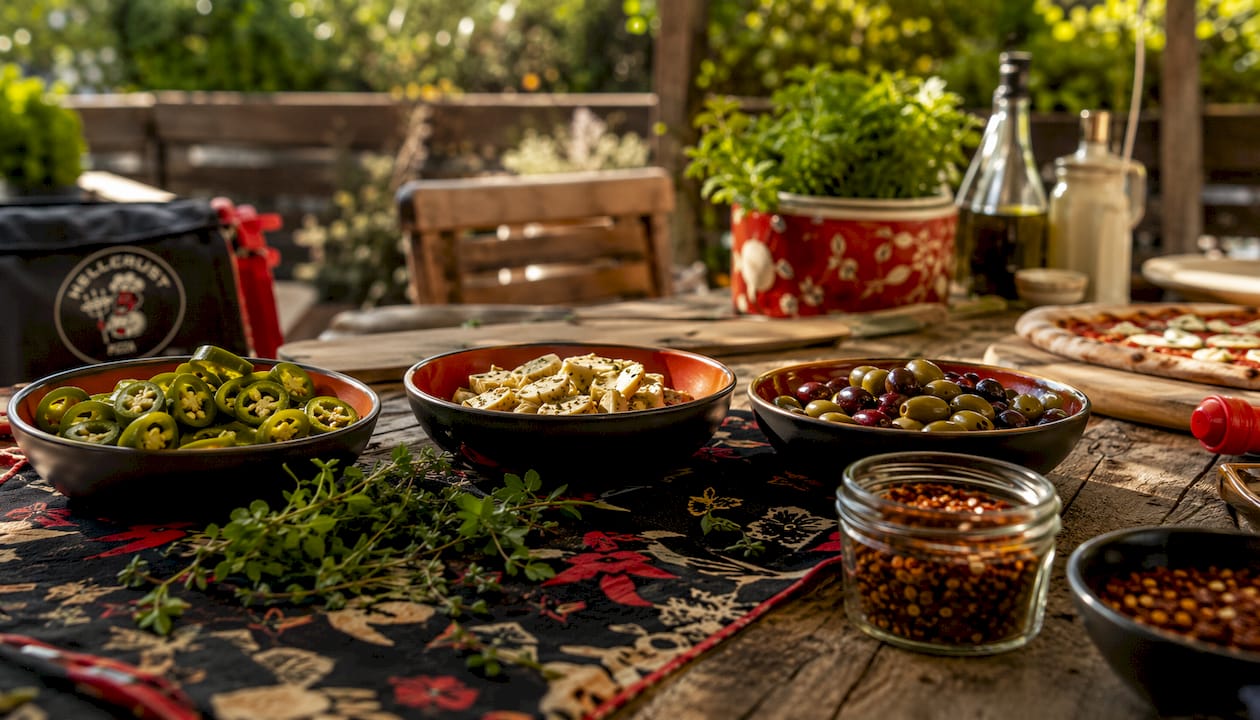
Peppers
| Pepper | Heat Level | Best Use | Canadian Sourcing Note |
|---|---|---|---|
| Jalapeño | Mild–Medium | Fresh slices, pickled, or roasted | Fresh at most major grocers year-round |
| Fresno / Hot Cherry | Medium | Sliced raw or roasted onto the pie | Fresh in summer; jarred in brine at Italian delis |
| Calabrian Chilli | Hot (a high-heat level) | Paste or oil stirred into sauce | Jarred paste at Italian specialty shops or online |
| Dried Chilli Flakes | Variable | Finishing sprinkle | Every grocery store; Calabrian flakes at specialty shops |
Cured meats and spicy sausages
- Nduja — A spreadable, fermented Calabrian pork sausage that melts directly into the sauce base, releasing smoky fat and deep heat. Worth seeking out at Italian delis or online.
- Hot Italian sausage — Crumbled before baking, it renders fat that seasons the whole pie. Widely available across Canada.
- Soppressata piccante — Sliced thin, it crisps at the edges and delivers a drier, more concentrated heat than pepperoni.
- Spicy salami — A reliable everyday option; the fat and salt balance heat without overpowering milder toppings.
Hot sauces, pastes, and finishing drizzles
- Hot honey — Drizzle post-bake. Works with pepperoni, sausage, and any cheese-forward pie.
- Chilli oil — A finishing drizzle that adds fragrance and heat without altering the bake.
- Gochujang — Korean fermented chilli paste; use sparingly as a sauce base or a post-bake smear.
- Sambal oelek — Bright, fresh chilli paste; stir into tomato sauce or add a small spoonful after baking.
- Sriracha — Vinegary and garlicky; best added post-bake to preserve its bright, sharp notes.
Pro Tip: Always wear food-safe gloves when handling fresh Calabrian chillies, Fresno peppers, or nduja. Capsaicin transfers easily to skin and eyes. Store leftover chilli paste in a sealed jar in the fridge, covered with a thin layer of olive oil to prevent oxidation.
20 creative spicy topping combinations to try
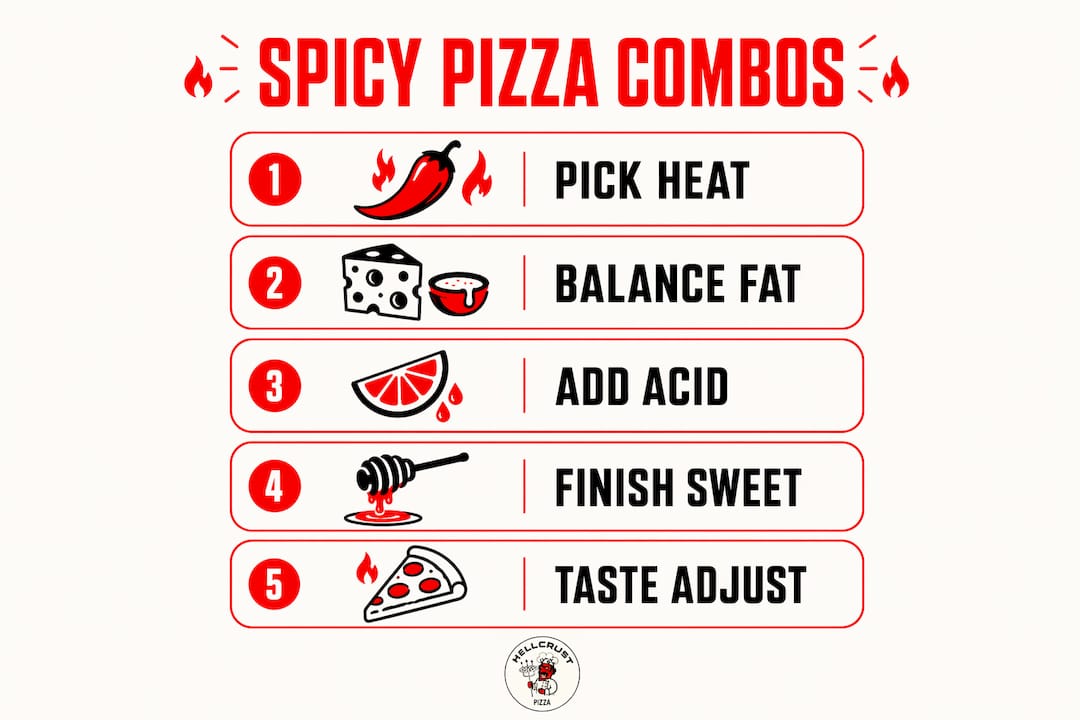
These are grouped by heat and style so you can pick a direction and start experimenting. Each entry includes the key toppings, why the pairing works, and a quick cook note. Stick to 2–5 toppings per pizza; more wet ingredients than that and the crust will struggle to crisp properly.
Pro Tip: Wet toppings like fresh tomatoes, roasted peppers in oil, or burrata should be patted dry or added post-bake. Even one very wet topping can prevent the base from setting.
Mild warming
| # | Name | Key Toppings | Why It Works | Cook Note |
|---|---|---|---|---|
| 1 | Honey Jalapeño Cheese | Jalapeño, mozzarella, honey | Sweet cuts the mild heat; cheese cushions the bite | Drizzle honey after baking |
| 2 | Sriracha Chicken Ricotta | Chicken, ricotta, sriracha, scallions | Creamy ricotta softens vinegary sriracha | Add sriracha and scallions post-bake |
| 3 | Spicy Arrabbiata Margherita | Arrabbiata sauce, mozzarella, fresh basil | Chilli-forward sauce with a clean, classic finish | Add basil after baking |
| 4 | Chilli Oil White Pizza | Olive oil base, garlic, mozzarella, chilli oil | Fat carries heat evenly; no competing acidity | Drizzle chilli oil after baking |
| 5 | Buffalo Chicken | Buffalo sauce, chicken, mozzarella, blue cheese | Tangy, buttery heat baked right in | Bake buffalo sauce into the base |
Balanced medium
| # | Name | Key Toppings | Why It Works | Cook Note |
|---|---|---|---|---|
| — | Spicy Sausage and Fresno | Hot Italian sausage, Fresno pepper, mozzarella | Sausage fat tempers pepper heat; textures contrast well | Bake both together from the start |
| — | Hot Honey Pepperoni | Pepperoni, mozzarella, hot honey | Sweet amplifies spice without muting it | Post-bake honey drizzle only |
| — | Soppressata and Roasted Red Pepper | Soppressata, roasted red pepper, provolone | Smoky-sweet pepper balances dry sausage heat | Pat peppers dry before topping |
| — | Spicy Salami and Olive | Spicy salami, kalamata olives, mozzarella | Briny olives cut through fatty salami heat | Standard bake; no post-bake additions needed |
| 10 | Chorizo and Corn | Chorizo, corn, cotija, green Tabasco | Vinegary sauce lifts sweet corn and fatty chorizo | Add Tabasco post-bake |
Bold hot
| # | Name | Key Toppings | Why It Works | Cook Note |
|---|---|---|---|---|
| — | Nduja and Burrata | Nduja, burrata, honey | Creamy burrata soothes spreadable chilli heat | Add burrata and honey after baking |
| — | Calabrian Chilli Soppressata | Calabrian paste, soppressata, stracciatella | Fruity-smoky heat paired with cool, milky cheese | Spread paste under sauce; add stracciatella post-bake |
| 13 | Double Pepper Meat | Hot sausage, jalapeño, Fresno, mozzarella | Layered heat from two pepper types with fat to balance | Keep toppings to four max; bake together |
| 14 | Habanero Pineapple Bacon | Habanero hot sauce, pineapple, bacon, mozzarella | Tropical sweetness and fat tame fierce habanero heat | Add habanero sauce post-bake; use lightly |
| 15 | Spicy Nduja Honey | Nduja, hot honey, fresh chilli, pecorino | Three heat sources balanced by sweet and sharp salt | Drizzle honey last; use pecorino sparingly |
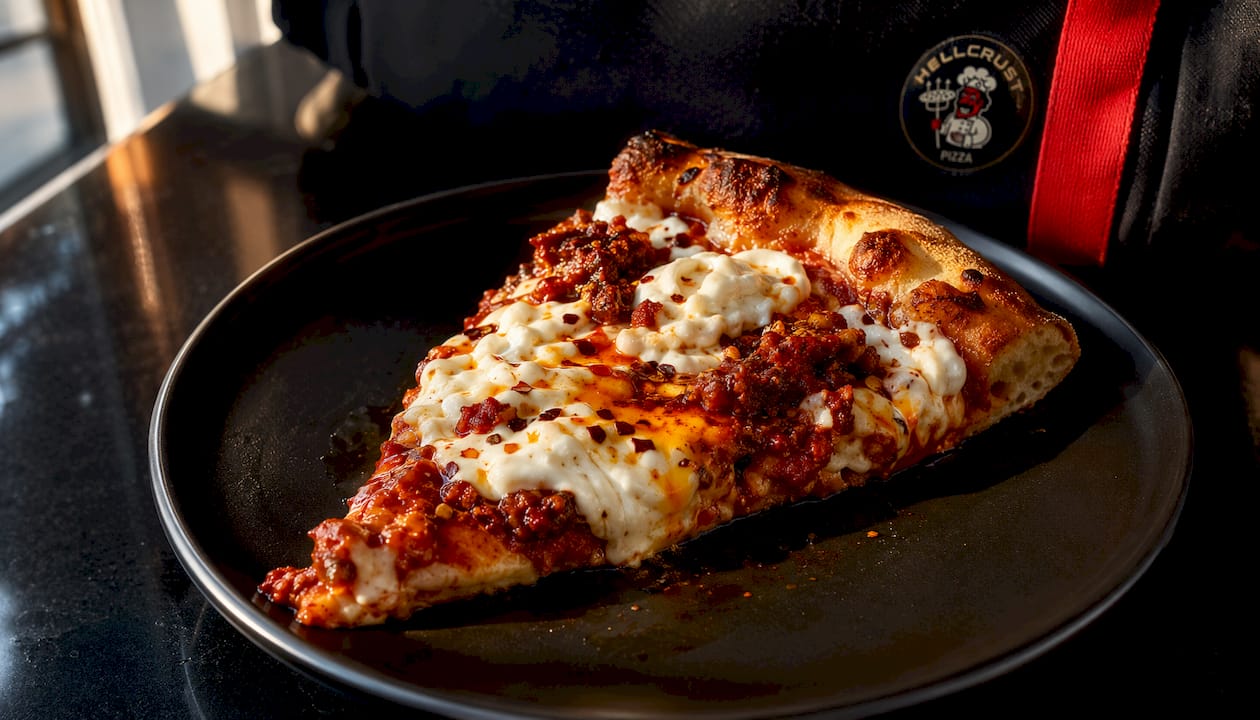
Global-inspired
| # | Name | Key Toppings | Why It Works | Cook Note |
|---|---|---|---|---|
| — | Korean Gochujang Beef | Gochujang base, ground beef, sesame oil, scallions | Fermented umami depth behind the heat | Drizzle sesame oil and add scallions post-bake |
| — | Thai Chilli Basil | Chilli-infused honey, mozzarella, Thai basil | Floral heat with a cooling herbal finish | Add Thai basil after baking |
| — | Mexican Street Style | Tapatio, cotija, lime zest, avocado | Bright, smooth heat with citrus lift and creamy fat | Add all toppings post-bake |
| — | Calabrian Meets Korean | Calabrian paste, gochujang, mozzarella, sesame seeds | Two distinct heat profiles create layered complexity | Use half the usual amount of each paste |
| 20 | Sambal Prawn | Sambal oelek, tiger prawns, mozzarella, lime | Bright chilli heat with sweet seafood and acid | Add sambal sparingly; finish with lime zest |
For more ideas on building balanced pizza flavour profiles, the approach is always the same: pick one heat source, then build around it.
Why do these pairings actually work?
The secret to making heat pleasurable rather than punishing is balance. Fat, acid, sweetness, and texture each play a distinct role, and understanding them means you can fix or invent a combo on the fly.
Fat is the most effective neutraliser of excess heat. Adding more cheese, a fatty protein, or a drizzle of cream directly soothes capsaicin on the palate. Burrata with Calabrian chilli is the clearest example: the milky fat wraps around the fruity heat and slows it down without erasing it. If a pie comes out too hot, fat soothes heat faster than any other fix.
Acid cuts through richness and lifts flavour. A vinegar-forward sauce like Tabasco or Frank's RedHot works brilliantly with fatty cured meats because the tang slices through the grease and keeps each bite tasting fresh. Citrus zest does the same job on post-bake finishes. For very fatty toppings, acid often works better than sugar because it refreshes rather than adds weight.
Sweetness softens heat without neutralising it. Hot honey on pepperoni is the textbook example: the sweetness amplifies the spice rather than cancelling it, making the whole slice more interesting. Use sweetness when the heat is medium and the fat is already present.
Texture is the underrated fourth element. A crispy soppressata edge against soft stracciatella, or crunchy corn against creamy gochujang, gives the palate something to do between heat spikes. Without textural contrast, spicy pizzas can feel relentless.
How to rescue an overly spicy pizza
- Add a generous layer of fresh mozzarella or burrata on top and return to the oven for two minutes.
- Drizzle cold crème fraîche or sour cream post-bake.
- Lay slices of fatty prosciutto or bresaola over the hot pie; the fat absorbs heat quickly.
- Squeeze fresh lemon or lime over the slice to redirect the palate with acid.
Pro Tip: Acid often outperforms sugar when a pie is both fatty and very hot. A squeeze of lemon or a splash of white wine vinegar post-bake refreshes the palate more cleanly than honey. Save the honey for medium-heat pies where you want amplification, not rescue.
Which cheeses and sauces pair best with spicy toppings?
Cheese choice shapes how heat lands on the palate. The right one softens, complements, or amplifies spice; the wrong one just gets lost.
Cheeses that work with heat
- Burrata and stracciatella — The highest-fat fresh cheeses; they cushion intense heat most effectively. Add post-bake so the cream stays fluid.
- Ricotta — Mild and creamy; pairs well with vinegary sauces like sriracha or Frank's RedHot. Dollop on after baking.
- Fresh mozzarella — Neutral and melty; the reliable base for almost any spicy combo. Bake from the start.
- Cotija — Dry, salty, and crumbly; does not melt, so use it as a post-bake finish on Mexican-inspired pies. Adds sharpness rather than creaminess.
- Provolone — Slightly smoky and firmer than mozzarella; holds up well next to bold cured meats and roasted peppers.
For a deeper look at how each cheese behaves in the oven, the cheese varieties guide covers the full spectrum from fresh to aged.
Sauce choices and how they interact with spice
A tomato base adds acidity that brightens heat and keeps the pie from feeling heavy. It is the most forgiving foundation for spicy toppings. A white sauce (béchamel or olive oil) adds fat upfront, which means the heat from toppings lands more gently. No-sauce pies with just olive oil let the toppings speak clearly, which works well for bold, single-note heat sources like nduja or Calabrian paste.
Bake vs post-bake: when to add hot sauces
Chef John True's guidance is clear: add hot sauce post-bake as a drizzle or dip to keep heat and flavour vibrant. The oven dulls the bright, volatile notes in most hot sauces. Buffalo sauce is the main exception: its buttery, tangy profile integrates better when baked directly into the base. Chilli oils, sriracha, Tapatio, and hot honey all belong after the oven.
Dairy-free note: Swap burrata or ricotta for cashew cream or a good-quality coconut-based mozzarella. The fat content is lower, so lean on extra olive oil or avocado to compensate.
Practical cook tips so your spicy toppings taste their best
Good placement and timing make the difference between a crispy, flavour-forward pie and a soggy, muddled one.
A simple 30–40 minute pizza session
- Prep (0–10 min) — Slice fresh peppers, crumble sausage, pat wet toppings dry, and measure out any pastes or sauces. Preheat your oven to its highest setting (usually 260°C / 500°F) with a pizza stone or steel inside.
- Assemble (10–15 min) — Spread sauce thinly, add cheese, then layer proteins and peppers. Keep toppings to 2–5 items for a properly crisped crust.
- Bake (15–25 min) — Slide the pizza onto the hot stone. Most home ovens need 10 to 14 minutes at full heat. Watch for bubbling cheese and a golden crust edge.
- Finish (25–30 min) — Remove from the oven and immediately add post-bake toppings: fresh herbs, burrata, hot honey, chilli oil, cotija, or any bright hot sauce.
Placement rules for spicy components
- Bake into the sauce: nduja, Calabrian paste, buffalo sauce, gochujang base. These integrate with the pie and mellow slightly.
- Bake on top: sliced fresh peppers, cured meats, soppressata, jalapeño. They crisp at the edges and render fat into the cheese.
- Add post-bake: burrata, stracciatella, ricotta, hot honey, chilli oil, sriracha, Tapatio, fresh herbs, cotija, lime zest. These keep their freshness and aroma.
Dealing with watery toppings
Roasted peppers packed in oil, fresh tomatoes, and marinated artichokes all carry excess moisture. Pat them dry with paper towel before placing them on the pie. Alternatively, roast fresh chillies in a dry pan for five minutes first; this concentrates their flavour and removes surface moisture.
Pro Tip: Before committing a strong chilli to a full pizza, test it on a small piece of flatbread or toast first. This lets you gauge heat without wasting a whole pie. When handling fresh Calabrian chillies or habaneros, avoid touching your face and wash hands thoroughly with soap and cold water immediately after prep.
Global flavour prompts to spark your next experiment
These templates are reliable starting points. Each one has a one-line variation and a sourcing note for Canadian cooks. For broader inspiration from regional pizza traditions, the global pantry is genuinely vast.
-
Korean — Gochujang base, ground beef or pulled pork, sesame oil drizzle, scallions, sesame seeds. Variation: swap beef for mushrooms and add kimchi post-bake for a veg-forward version. Gochujang is widely available at T&T Supermarket, H-Mart, and most Asian grocery stores across Canada.
-
Thai — Chilli-infused honey, mozzarella, Thai basil, crushed peanuts. Variation: add thinly sliced lemongrass chicken for a more substantial pie. Thai basil is sold fresh at Asian grocers; dried is a reasonable swap in winter.
-
Mexican — Tapatio or Valentina post-bake, cotija, lime zest, avocado, fresh cilantro. Variation: add black beans and corn for a heartier, veg-forward street-style pie. Tapatio and Valentina are stocked at most Canadian grocery chains in the international aisle.
-
Calabrian — Calabrian paste stirred into tomato sauce, nduja, hot honey, fresh basil. Variation: replace nduja with soppressata for a drier, less spreadable heat. Calabrian paste and nduja are available at Italian specialty shops like Fiesta Farms (Toronto), Mercato (Calgary), or through online retailers like Nella Cucina.
-
Cross-pollination idea — Try Calabrian paste as the sauce base with a Korean sesame oil and scallion finish. The fruity-smoky Italian heat and the nutty, umami-forward Korean finish create a genuinely surprising hybrid that works because neither element competes for the same flavour note.
Three Hellcrustpizza-tested spicy combos worth trying
These three combos reflect the kind of flavour-forward thinking that Hellcrustpizza brings to every pie: chef-tested pairings, additive-free Biga multigrain dough, and toppings chosen because they work together, not just because they sound bold.
Pro Tip: Each of these combos can be dialled back by halving the spicy element and doubling the cheese. That single adjustment drops the heat level by roughly one full tier without changing the character of the pie.
-
The Calabrian Classic Toppings: Calabrian chilli paste, soppressata piccante, fresh mozzarella, hot honey drizzle, fresh basil. Cook time: about a dozen minutes at 260°C. Difficulty: Easy. Why it works: The fruity-smoky chilli paste builds heat from the base up, the soppressata adds dry, cured depth, and the hot honey ties it together post-bake. The basil keeps it from feeling heavy. Tweak: Replace soppressata with thinly sliced prosciutto for a milder, more delicate version.
-
The Nduja Honey Bomb Toppings: Nduja, burrata, hot honey, fresh chilli slices, pecorino. Cook time: about 10 minutes at 260°C (add burrata in the last 2 minutes). Difficulty: Easy–Medium. Why it works: Nduja melts into the sauce and seasons every bite; burrata cools the heat on landing; hot honey amplifies rather than soothes. Three heat sources, one creamy anchor. Tweak: Skip the fresh chilli slices if you want a medium rather than hot result.
-
The Spicy Sausage and Fresno Toppings: Hot Italian sausage, Fresno pepper, mozzarella, roasted garlic, chilli oil drizzle. Cook time: about 13 to 15 minutes at 260°C. Difficulty: Easy. Why it works: Sausage fat renders into the cheese and tempers the Fresno's clean, bright heat. Roasted garlic adds sweetness without sugar. The chilli oil finish keeps the aroma vivid. Tweak: Swap Fresno for jalapeño if Fresno peppers are out of season or unavailable locally.
These combos are also a useful benchmark if you want to taste what customisable pizza toppings look like when they are built with intention rather than impulse.
Key takeaways
Spicy pizza experiments succeed when you balance heat with fat, acid, or sweetness and keep toppings to a few items per pie.
| Point | Details |
|---|---|
| Start with one heat source | Pick a single spicy element and build around it before layering multiple chillies or sauces. |
| Balance heat with fat, acid, or sweet | Fat soothes, acid refreshes, sweetness amplifies — choose based on the heat level and other toppings. |
| Limit toppings to 2–5 items | More wet toppings than that prevent the crust from crisping and muddle the flavours. |
| Add most hot sauces post-bake | Drizzling after the oven keeps heat and aroma vibrant; buffalo sauce is the main exception. |
| Hellcrustpizza as your reference point | Try a Hellcrustpizza spicy pie on additive-free Biga dough to taste what chef-tested combos feel like before iterating at home. |
The real reward of spicy pizza experimentation
There is something genuinely satisfying about pulling a pizza out of the oven and knowing you built it from scratch, heat level and all. What I find most compelling about spicy pizza experiments is that they teach you flavour instincts faster than almost any other cooking project. A pizza is small, fast, and forgiving: if the heat is too much, you add cheese. If it is flat, you add acid. You get the feedback loop in under 20 minutes.
The conventional wisdom says to start mild and work up. That is sensible advice, but it undersells the value of going too far once. A pie that is genuinely too hot tells you exactly what is missing, and that lesson sticks. Hellcrustpizza's approach, using additive-free Biga dough and thoughtfully chosen toppings, is worth tasting as a reference point before you iterate. Not because you need to copy it, but because a well-crafted pie gives you a clear flavour benchmark to push against.
Taste a pro-crafted spicy pie from Hellcrustpizza
If you want a reliable flavour benchmark before committing to a full home experiment, Hellcrustpizza is worth ordering from. Their pies are built on additive-free Biga multigrain dough, which means the crust has genuine character rather than just acting as a vehicle for toppings. The spicy combinations are chef-tested, and the Mix & Match options let you try more than one flavour direction in a single order.

It is an honest way to taste what a balanced, heat-forward pizza feels like when the dough, sauce, and toppings are all working together. Then you take that reference point home and make it your own. Order from Hellcrustpizza to taste the benchmark, or keep experimenting with the combos above. Either way, you are eating well tonight.
Useful sources and Canadian sourcing notes
These are the sources that informed this guide, each worth reading for a different reason.
- That Pizza Kitchen — The most thorough breakdown of Calabrian chilli on pizza: heat levels, pairing logic, and why this pepper has become a staple in serious pizza kitchens.
- Tasting Table — Clear, tested recipe for hot honey pepperoni with good notes on infusing honey with different chillies for varied regional profiles.
- Hearth Fire Sauce — Practical mapping of hot sauce styles to topping categories; useful for anyone building a sauce-forward spicy pie.
- Chowhound — Expert guidance from chefs Mike Fadem and John True on bake-in vs post-bake timing for hot sauces.
- Gozney — Solid practical advice on topping limits and why 2–5 toppings is the right ceiling for crust integrity.
- Butternut and Sage — The honey-jalapeño template done well, with good notes on cheese-forward bases.
- The Candid Cooks — Spicy sausage and Fresno pepper pizza with a realistic 30-minute weeknight timeline.
Canadian sourcing notes: Calabrian paste and nduja are available at Italian specialty grocers (Fiesta Farms in Toronto, Mercato in Calgary, Bosa Foods in Vancouver) and through online retailers like Nella Cucina. Gochujang and sambal oelek are stocked at T&T Supermarket and H-Mart locations across Canada. Hot honey is carried by most Whole Foods and specialty food shops, or you can infuse your own with dried Calabrian flakes from any bulk food store. For weeknight meal planning that fits pizza nights into a regular rotation, a little prep goes a long way.