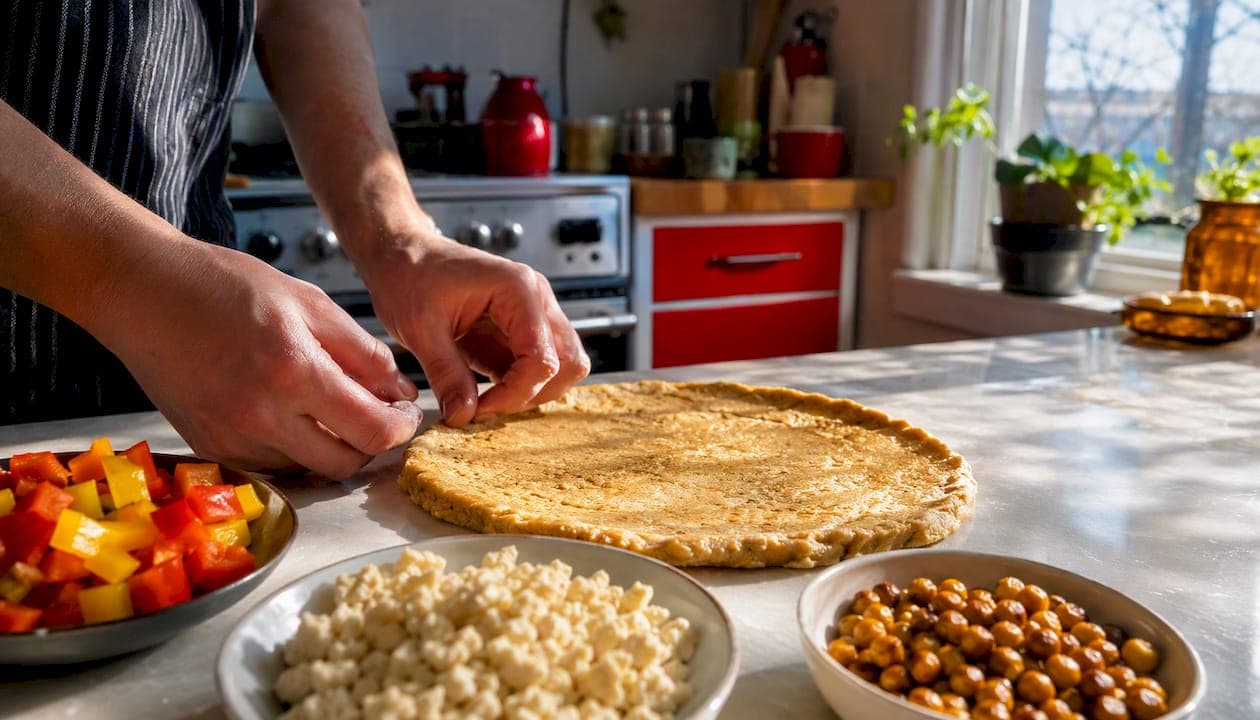
You can reach 25–40 g of plant protein in a single serving of homemade pizza by pairing a protein-dense crust with two concentrated protein toppings. That is the whole strategy. A seitan crust built on vital wheat gluten delivers roughly 40 g protein per serving when topped with pressed tofu and roasted chickpeas. A chickpea-flour crust, the gluten-free route, lands closer to 25–35 g when you layer on BBQ tofu, sautéed tempeh, and a generous dusting of nutritional yeast. Both are practical weeknight builds, not weekend projects.
- Seitan/vital wheat gluten crust + tofu + chickpeas: 35–40 g protein per serving, 25–30 min total
- Chickpea-flour crust + tempeh + BBQ tofu: 25–35 g protein per serving, 30–35 min total
- Serving size: one 10-inch personal pizza or two generous slices of a 12-inch
- Timing: both recipes par-bake the crust first (8–10 min) before adding toppings
Combining a protein-dense crust with fibre-rich toppings increases satiety and supports weight management more reliably than refined white-flour bases. Protein and fibre working together slow digestion and keep energy steady, which is exactly what you want from a recovery or training meal.
Key takeaways
A seitan crust paired with two protein toppings is the fastest, most reliable way to reach 25–40 g plant protein in a single homemade pizza serving.
| Point | Details |
|---|---|
| Choose your crust by protein goal | Seitan/vital wheat gluten crust delivers ~38 g protein per pizza; chickpea crust yields 25–30 g per serving. |
| Par-bake every time | 8–10 min for seitan, 12–15 min for chickpea crust prevents soggy bases and is non-negotiable. |
| Press tofu for 15–30 minutes | Removing excess moisture is what allows tofu to crisp rather than steam on the pizza. |
| Balance protein with fibre | Pair your pizza with fibre-rich vegetables or a legume side to support satiety and recovery. |
| Hellcrustpizza for no-cook nights | Order a customisable, additive-free multigrain pizza from Hellcrustpizza when you prefer not to cook. |
Table of Contents
- What should you buy first to prioritise protein on your pizza?
- Recipe A: vital wheat gluten (seitan) high-protein pizza
- Recipe B: chickpea-flour crust (gluten-free) with protein-forward toppings
- How do you prep protein toppings so they actually taste great?
- How do you calculate protein per slice and balance your macros?
- Where can you find high-protein vegan ingredients in Canada?
- Hellcrustpizza: a plant-forward pizza worth ordering
- Sources
What should you buy first to prioritise protein on your pizza?
A well-stocked shopping list is the difference between a pizza that hits your targets and one that falls short by 15 g. Here is the priority order before you shop or prep.
Your protein-first shopping checklist:
- Vital wheat gluten (Bob's Red Mill is widely available at Loblaws, Sobeys, and most health-food stores across Canada)
- Chickpea flour (also labelled gram flour or besan — find it at bulk stores, South Asian grocery shops, or online)
- Extra-firm tofu (pressed, not silken — look for water-packed blocks)
- Tempeh (refrigerated section; Lightlife and Tofurky brands are common in Canada)
- Canned chickpeas (no-salt-added preferred for topping control)
- Nutritional yeast (adds a savoury, cheesy note and a meaningful protein bump per tablespoon)
- High-protein vegan cheese (Violife or Daiya blocks grated fresh melt better than pre-shredded)
Simple swap rules: If gluten is a concern, go straight to the chickpea crust and use a flax egg (1 tbsp ground flaxseed + 3 tbsp water) as a binder. If you prefer to avoid processed plant crumbles, pressed tofu and tempeh give you full control over seasoning and texture without additives.
Whole-food proteins like seitan, tofu, tempeh, and chickpeas consistently outperform protein powders for pizza texture and flavour. As recipe developers note, focusing on these whole-food sources gives you better control than relying on powders alone.
Pro Tip: Par-bake your crust for 8–10 minutes before adding any toppings. This single step prevents moisture from wet toppings soaking into the base and is the most reliable way to get a crisp, sturdy slice.
Recipe A: vital wheat gluten (seitan) high-protein pizza
This is the workhorse recipe for anyone without gluten concerns. Vital wheat gluten creates a chewy, bread-like crust that holds toppings firmly and contributes the lion's share of protein before a single topping is added. A no-yeast vital wheat gluten recipe can deliver roughly 40 g protein per serving when combined with protein-forward toppings.
Ingredients
Crust (one 10-inch personal pizza):
- 120 g (1 cup) vital wheat gluten
- 2 tbsp nutritional yeast
- 1 tsp garlic powder
- 1 tsp dried oregano
- 120 ml (½ cup) warm water or low-sodium vegetable broth
- 1 tbsp olive oil
Toppings:
- 100 g extra-firm tofu, pressed and cubed
- 60 g (¼ cup) canned chickpeas, drained and patted dry
- 3 tbsp tomato sauce (no added sugar)
- 30 g high-protein vegan cheese, grated
- 2 tbsp nutritional yeast
- Fresh basil and chilli flakes to finish
Equipment
- Mixing bowl and fork
- Parchment-lined baking sheet or pizza stone
- Tofu press or two plates and a heavy book
- Oven (conventional or convection)
Step-by-step instructions
- Preheat your oven to 220°C (425°F), convection setting if available.
- Combine vital wheat gluten, nutritional yeast, garlic powder, and oregano in a bowl. Add warm water and olive oil, then mix until a dough forms. Knead for 2 minutes until smooth and elastic.
- Press the dough onto parchment paper into a 10-inch round, roughly 5 mm thick. Thinner edges crisp better.
- Par-bake: Slide the crust onto the middle rack and bake for 8–10 minutes until the surface is set and lightly golden.
- Remove from the oven. Spread tomato sauce evenly, leaving a 1 cm border.
- Scatter tofu cubes, chickpeas, and grated vegan cheese across the surface.
- Return to the oven for 10–12 minutes until the cheese is melted and the tofu edges are golden.
- Finish with nutritional yeast, fresh basil, and chilli flakes. Rest for 2 minutes before slicing.
Total time: approximately 25–30 minutes (10 min prep, 18–22 min bake)
Nutrition per serving (whole 10-inch pizza)
Note: figures are estimates based on standard ingredient weights. Vital wheat gluten contributes approximately 23 g protein per 120 g serving on its own.
Gluten note: This crust is not suitable for anyone with celiac disease or a wheat allergy. For a gluten-free build, see Recipe B below.
Recipe B: chickpea-flour crust (gluten-free) with protein-forward toppings
The chickpea-flour crust is a genuinely satisfying alternative, not a consolation prize. It is fibre-rich, gluten-free, and high in protein and minerals, and it requires no rising time. The batter comes together in five minutes. The key is getting the consistency right and par-baking long enough to drive out moisture before toppings go on.
Ingredients
Crust (one 12-inch pizza, serves 2):
- 120 g (1 cup) chickpea flour
- 180 ml (¾ cup) water
- 2 tbsp olive oil
- ½ tsp salt
- ½ tsp cumin (optional, adds warmth)
Toppings:
- 120 g extra-firm tofu, pressed, cubed, and tossed in 1 tbsp BBQ sauce
- 80 g tempeh, sliced thin and pan-fried for 3 minutes per side
- 60 g (¼ cup) canned chickpeas, roasted (see Section 5)
- 3 tbsp tomato or BBQ sauce base
- 30 g high-protein vegan cheese, grated
- 2 tbsp nutritional yeast
- Sliced red onion and fresh coriander to finish
Step-by-step instructions
- Preheat oven to 230°C (450°F). Line a baking sheet with parchment and brush lightly with olive oil.
- Whisk chickpea flour, water, olive oil, salt, and cumin until completely smooth. The batter should be pourable but not watery — similar to thick pancake batter. Let it rest for 5 minutes.
- Pour batter onto the prepared sheet and spread into a 12-inch round, about 4 mm thick.
- Par-bake: Bake for 12–15 minutes until the edges are set and the surface is dry to the touch. Do not rush this step; an under-baked chickpea crust will crack when you add toppings.
- Spread sauce, then layer tofu, tempeh, roasted chickpeas, and vegan cheese.
- Return to the oven for 8–10 minutes until toppings are heated through and the cheese is melted.
- Finish with nutritional yeast, red onion, and coriander.
Total time: approximately 30–35 minutes (10 min prep including rest, 20–25 min bake)
A chickpea-flour crust pairs especially well with bold, smoky toppings. BBQ tofu builds and roasted broccoli are a natural match because the assertive sauce compensates for the crust's mild, nutty flavour.
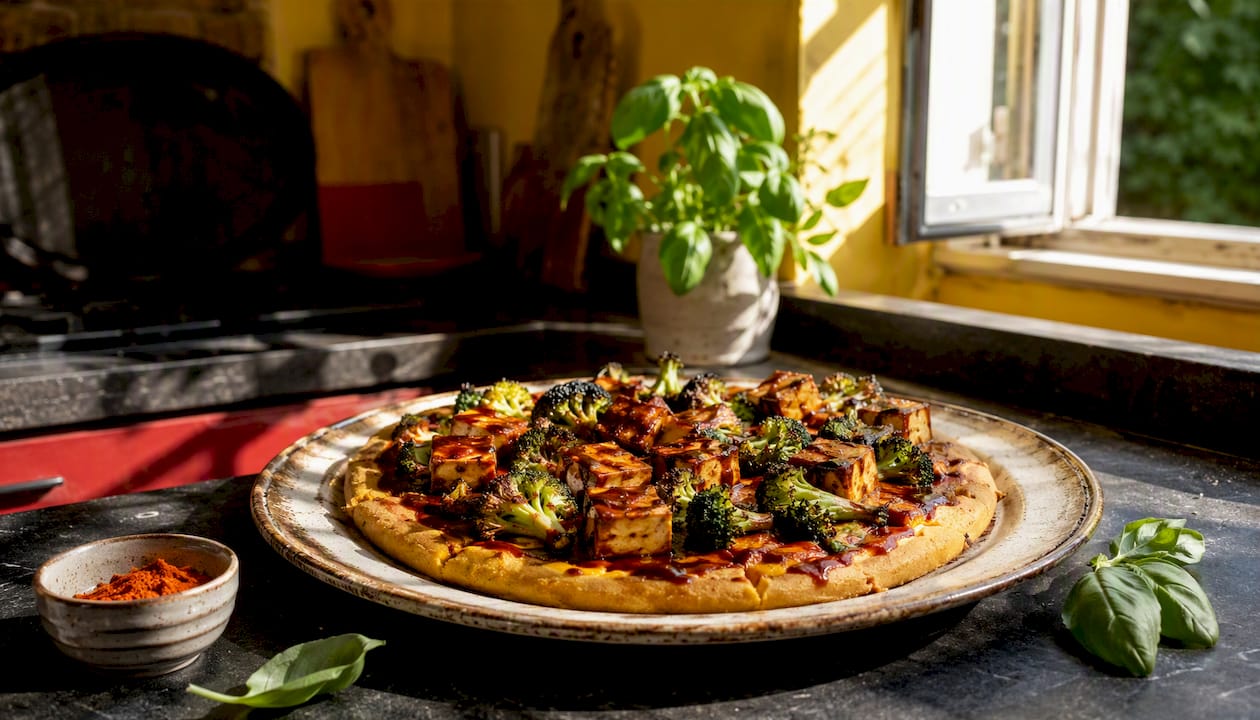
Nutrition per serving (half of 12-inch pizza)
| Nutrient | Whole pizza | Per serving (½ pizza) |
|---|---|---|
| Protein | 40 g | 25–30 g |
| Carbohydrates | 35–40 g | ~24 g |
| Fibre | ~10 g | ~5 g |
| Fat | ~18 g | ~9 g |
Figures are estimates. Chickpea flour contributes approximately 10 g protein per 120 g; tempeh adds roughly 15 g per 80 g serving.
Make-ahead note: Par-bake the chickpea crust up to 24 hours ahead, wrap tightly, and refrigerate. Add toppings and finish-bake when ready. This is the single most useful meal-prep step for this recipe.
How do you prep protein toppings so they actually taste great?
The difference between a bland, soggy topping and one that holds its own on a hot pizza comes down almost entirely to preparation. Here is how to handle each key protein source.
Tofu: press, marinate, crisp
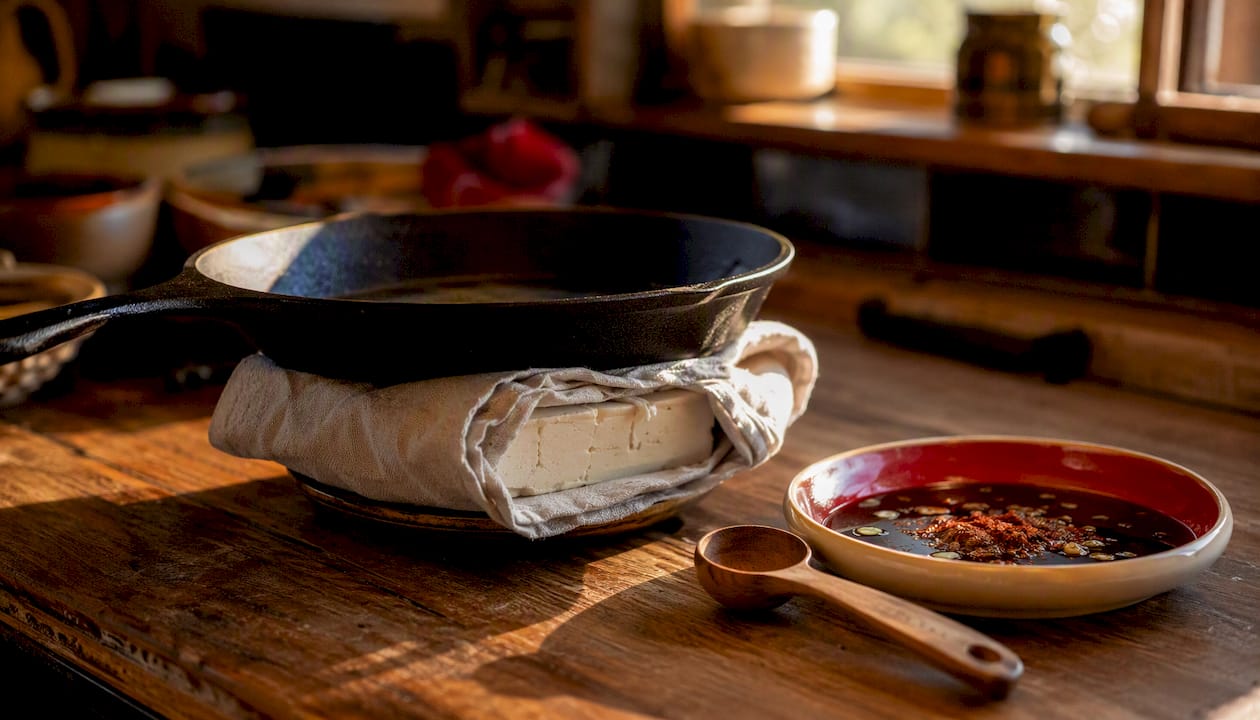
Pressing extra-firm tofu for 15–30 minutes removes the excess moisture that prevents crisping and makes crusts soggy. Wrap the block in a clean towel, set a heavy pan on top, and let it sit. After pressing, cube or crumble the tofu and toss it in a marinade of soy sauce, garlic, smoked paprika, and a touch of maple syrup. For pizza, a light coating of cornstarch before oven-roasting at 200°C (400°F) for 20–25 minutes gives you golden, chewy cubes that hold their texture through the final bake.
Tofu can also be blended with lemon juice, garlic, and nutritional yeast into a tofu ricotta that spreads like dairy ricotta and adds a creamy protein layer beneath other toppings.
Tempeh: steam first, then flavour
Raw tempeh has a faint bitterness that puts some people off. Steam it for 10 minutes before marinating and it absorbs flavour far more readily. Slice thin, pan-fry in a little oil with tamari and garlic for 3–4 minutes per side until caramelised, then lay directly onto the pizza before the final bake.
Roasted chickpeas: the crunch topping
- Drain and rinse one can of chickpeas. Pat completely dry with paper towels — this is non-negotiable for crunch.
- Toss with 1 tbsp olive oil, smoked paprika, cumin, and a pinch of salt.
- Spread in a single layer on a baking sheet.
- Roast at 200°C (400°F) for 25–30 minutes, shaking the pan halfway through.
Add roasted chickpeas in the last 5 minutes of the pizza's final bake so they stay crisp rather than steaming under the cheese.
Nutritional yeast and vegan cheese
Nutritional yeast delivers roughly 8 g protein per 30 g serving and a savoury, umami depth that no other plant ingredient quite replicates. Sprinkle it both under the cheese (mixed into the sauce) and over the finished pizza. For vegan cheese, grating a block yourself rather than using pre-shredded gives better melt and fewer stabilisers.
Pro Tip: Layer toppings in this order for the best result: sauce → nutritional yeast → cheese → protein toppings (tofu, tempeh, seitan) → roasted chickpeas added in the last 5 minutes. This keeps the crust dry and the chickpeas crunchy.
For seasonal plant-forward topping inspiration, rotating your vegetables by season keeps the pizza feeling fresh without adding complexity to the protein strategy.
How do you calculate protein per slice and balance your macros?
The math is straightforward once you know the protein values of your core ingredients. Here is a worked example using Recipe A.
Step-by-step protein calculation:
- List every protein-contributing ingredient and its weight.
- Look up protein per 100 g for each (or use the label).
- Calculate each ingredient's protein contribution: (weight in grams ÷ 100) × protein per 100 g.
- Sum all contributions for the whole pizza total.
- Divide by the number of slices.
Example — Recipe A (10-inch seitan pizza):
Divided across four slices, that is roughly 9.5 g protein per slice. To hit 25 g in a single sitting, eat two to three slices and pair with a side of edamame or a lentil salad.
Macro comparison: Recipe A vs Recipe B
Recipe B's chickpea crust contributes more fibre per serving, which matters for satiety. A protein-dense crust combined with fibre-rich ingredients supports fullness and weight management more effectively than a refined white-flour base.
One caution worth stating plainly: if you are considering adding unflavoured pea protein isolate to your dough, choose a finely milled formula. Coarse or flavoured powders produce a gritty, off-tasting crust that no amount of toppings will rescue. Whole-food proteins are the more reliable path for most home cooks.
For broader guidance on balancing nutrition in a pizza meal, pairing your pizza with fibre-rich vegetables and watching added oils keeps the overall macro profile clean.
Equipment, oven settings, timing, and storage
Essential equipment
- Pizza stone or heavy baking sheet: A preheated stone gives the crispest bottom crust. A heavy sheet pan is a reliable substitute.
- Parchment paper: Non-negotiable for chickpea crust, which sticks without it.
- Tofu press or weighted plates: Needed for any tofu topping.
- Oven thermometer: Home ovens often run 10–15°C cooler than the dial suggests. An accurate temperature is critical for both crust types.
Oven temperatures and timing
- Seitan crust: 220°C (425°F), par-bake 8–10 min, final bake 10–12 min
- Chickpea crust: 230°C (450°F), par-bake 12–15 min, final bake 8–10 min
- Rack position: Middle rack for even heat; move to the lower third in the last 3 minutes if the bottom needs more colour.
- Convection vs. conventional: Convection reduces bake time by roughly 10–15% and produces a crispier result. If using conventional, add 2–3 minutes to par-bake.
Par-baking is the single most important step for preventing sogginess, particularly with wet toppings. Recipe developers consistently recommend it for protein-dense crusts.
Make-ahead, freezing, and reheating
- Make-ahead: Par-bake either crust, cool completely, wrap in parchment and cling wrap, and refrigerate for up to 2 days. Add toppings and finish-bake when ready.
- Freezing: Par-baked crusts freeze well for up to 4 weeks. Freeze flat, then stack with parchment between layers. Bake from frozen at 220°C (425°F) for 5 minutes before adding toppings.
- Reheating slices: A dry skillet over medium heat for 3–4 minutes restores crust crispness far better than a microwave, which makes both crust types limp.
Where can you find high-protein vegan ingredients in Canada?
Canada's grocery landscape has improved considerably for plant-based cooks. Most of what you need is now available nationally, though prices and selection vary by region.
Vital wheat gluten is stocked at Loblaws (PC brand and Bob's Red Mill), Whole Foods Market, and most independent health-food stores. Bulk Barn carries it by weight, which is the most cost-effective option if you bake regularly. Online, Amazon.ca and well.ca both carry Bob's Red Mill reliably.
Chickpea flour is available at nearly every South Asian grocery store across Canada at a fraction of the price charged at specialty health-food shops. It is also sold at Bulk Barn and online through Thrive Market Canada.
Extra-firm tofu is a staple at every major grocer. Sunrise Tofu (a Canadian brand) and Nori-Pak are widely distributed. Buying in multi-packs at Costco or T&T Supermarket significantly reduces the per-unit cost.
Tempeh is the ingredient most likely to require a specialty trip. Whole Foods, Farm Boy, and many independent health-food stores carry Lightlife and Tofurky tempeh. In cities with large plant-based communities (Toronto, Vancouver, Montreal), it is increasingly available at standard grocers.
Reading labels: Look for tempeh and tofu with no added stabilisers or gums. For nutritional yeast, choose a brand that is fortified with B12 (Bragg and Bob's Red Mill both are). When buying canned chickpeas, no-salt-added versions give you full control over seasoning.
Pro Tip: Freeze your tofu. Buying extra-firm tofu and freezing it overnight, then thawing and pressing it, creates a spongier, chewier texture that absorbs marinades far more deeply than fresh tofu. It is a free upgrade that most home cooks overlook.
For affordable pizza topping choices that stretch your grocery budget, canned chickpeas and bulk vital wheat gluten are consistently the best value per gram of protein. Seasonal vegetables from farmers' markets round out the topping build without adding cost.
You can also find plant-based menu ideas for delivery if you want inspiration for topping combinations beyond the two core recipes here.
Common problems and how to fix them
Soggy chickpea crust
- Cause: Batter too thin, par-bake too short, or wet toppings added without draining.
- Fix: Rest the batter for at least 5 minutes before pouring. Par-bake at 230°C (450°F) for a full 12–15 minutes until the surface is completely dry. Drain canned chickpeas and pat tofu dry before adding.
- If it still happens: Move the rack to the lower third of the oven for the last 5 minutes of the final bake.
Bland tofu
- Cause: Insufficient pressing, weak marinade, or too short a marination time.
- Fix: Press for at least 20 minutes. Marinate for a minimum of 30 minutes, or overnight in the fridge. Use bold flavours: tamari, smoked paprika, garlic, and a touch of liquid smoke.
Crumbly seitan dough
- Cause: Too little water, over-kneading, or vital wheat gluten that has absorbed moisture from the air (common in humid climates).
- Fix: Add water one tablespoon at a time until the dough holds together without cracking. Knead for no more than 2–3 minutes; over-working makes seitan tough and dry. If the dough tears when you press it, let it rest for 5 minutes before trying again.
Limp reheated toppings
- Cause: Microwave reheating traps steam and softens everything.
- Fix: Reheat in a dry skillet or a 200°C (400°F) oven for 5–7 minutes. The direct heat restores crispness to both the crust and the tofu.
Why high-protein vegan pizza is worth making at home
Writing about pizza and nutrition for Hellcrustpizza has reinforced one conviction above all others: the biggest barrier to hitting plant-protein targets is not ingredient availability or cooking skill. It is the assumption that high-protein eating requires either expensive supplements or complicated recipes.
A seitan crust takes less than 5 minutes to mix. Pressed tofu and roasted chickpeas are genuinely simple preparations. The protein math, once you do it once, becomes second nature. What surprises most people is how satisfying a well-built vegan protein pizza actually is — not just nutritionally, but as a meal you look forward to. The growing appetite for protein-rich vegetarian toppings reflects exactly this shift: people are realising that plant-forward eating does not mean compromising on substance or flavour.
For anyone balancing fitness goals with everyday meal planning, a 38 g protein pizza that takes 30 minutes to make is a genuinely practical tool, not a niche experiment.
Hellcrustpizza: a plant-forward pizza worth ordering
Not every night calls for making dough from scratch. When you want a wholesome, satisfying pizza without the prep, Hellcrustpizza is built for exactly that moment.

What sets Hellcrustpizza apart is the foundation: a Biga multigrain dough crafted without artificial additives, slow-fermented for a rich, mature flavour that you simply cannot replicate with a quick-mix base. The customisable toppings mean you can build a plant-forward pizza that reflects your protein priorities, whether that is loading up on chickpeas and roasted vegetables or keeping it simple with a clean, wholesome base. Mix & Match deals and family-sized specials make it easy to order for one or feed a group without compromise.
Ready to savour a plant-forward pizza without the prep? Order from Hellcrustpizza through the app for exclusive deals and fresh, made-to-order options delivered to your door.
Sources
The recipes and nutrition guidance in this article draw on the following sources. Each is worth bookmarking if you want to go deeper on any single technique.
- Vegan white pizza with artichoke, tofu ricotta and roasted garlic | The Washington Post
- High Protein Pizza Recipe {40g Protein}
- Tofu pizza (Japanese tofu pizza) | Just One Cookbook