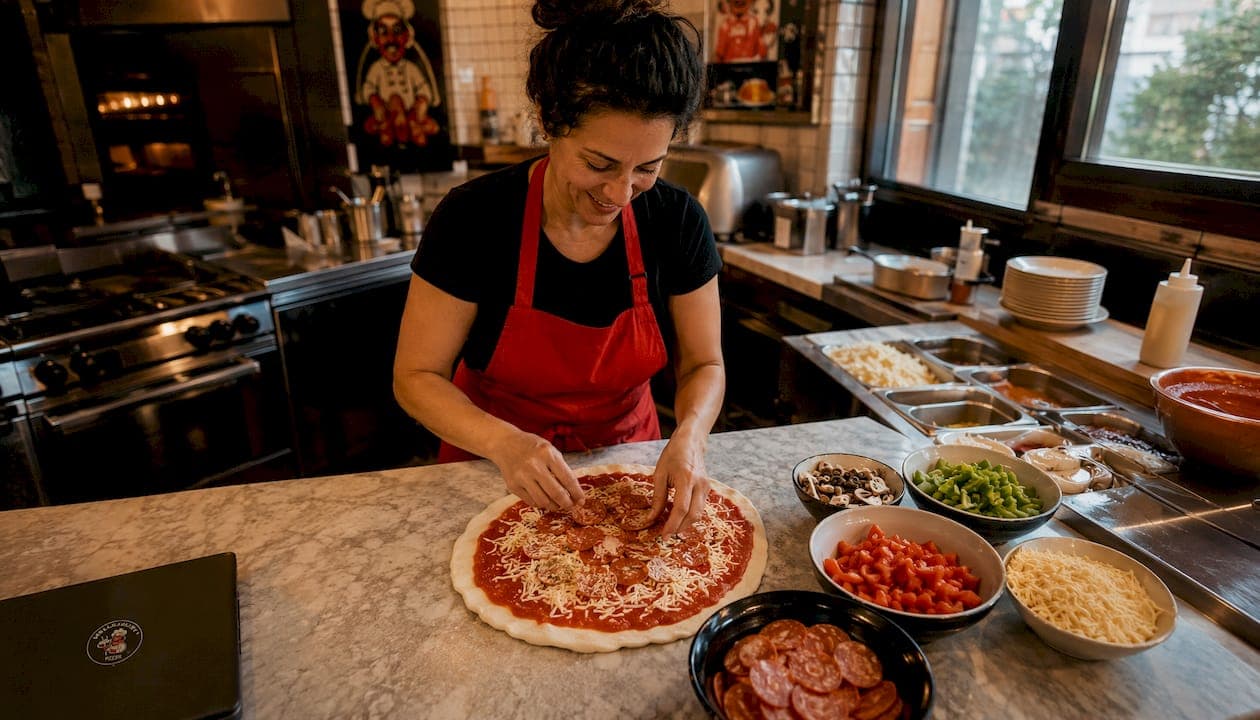
The best affordable pizza topping choices are pepperoni, onions, frozen peppers, canned mushrooms (pre-cooked), black olives, and canned pineapple. These six carry the most flavour per dollar at any Canadian grocery store, and they behave predictably in a hot oven. Pepperoni is the most-ordered pizza topping among consumers, with about 65% usually choosing it, and onions are featured on roughly 77% of pizzeria menus because they are inexpensive, store well, and enhance flavor when cooked. A homemade 10" pizza can cost roughly $4–$5 when you use economical ingredients and smart technique.
The one rule that ties everything together: build a dry, solid base (good dough, low-moisture cheese, light sauce) and add 2–3 well-treated toppings for thin-crust and 3–5 for standard NY-style pies. That single habit saves money and prevents the soggy crust that ruins an otherwise honest pie.
- Best budget proteins: economy pepperoni, sliced salami, canned tuna, deli chicken
- Best budget vegetables: onions, frozen peppers, canned mushrooms, black olives, roasted garlic
- Best pantry/canned additions: canned pineapple, canned artichokes, jarred roasted red peppers
- Cheese anchor: block mozzarella, shredded part-skim blend
Table of Contents
- What are affordable pizza topping choices, sorted by category?
- How to save on cheese without losing that satisfying melt
- Inexpensive protein toppings and how to prep them properly
- Low-cost vegetable and fruit toppings that actually work in the oven
- Affordable sauces, spreads, and seasonings that punch above their cost
- How to use leftovers and stretch toppings across more pizzas
- Prep and cooking steps that prevent soggy pizza with cheap toppings
- Ten budget pizza combinations you can make tonight
- Pro-level rules for saving money and controlling moisture
- Key takeaways
- The case for restraint (and why cheap pizza can be the best pizza)
- When ordering beats cooking: Hellcrustpizza has you covered
- Useful sources
What are affordable pizza topping choices, sorted by category?
Knowing which category a topping belongs to tells you how to handle it and what to expect from it in the oven. The table below maps each category to its cost profile, moisture behaviour, and the one handling step that matters most.
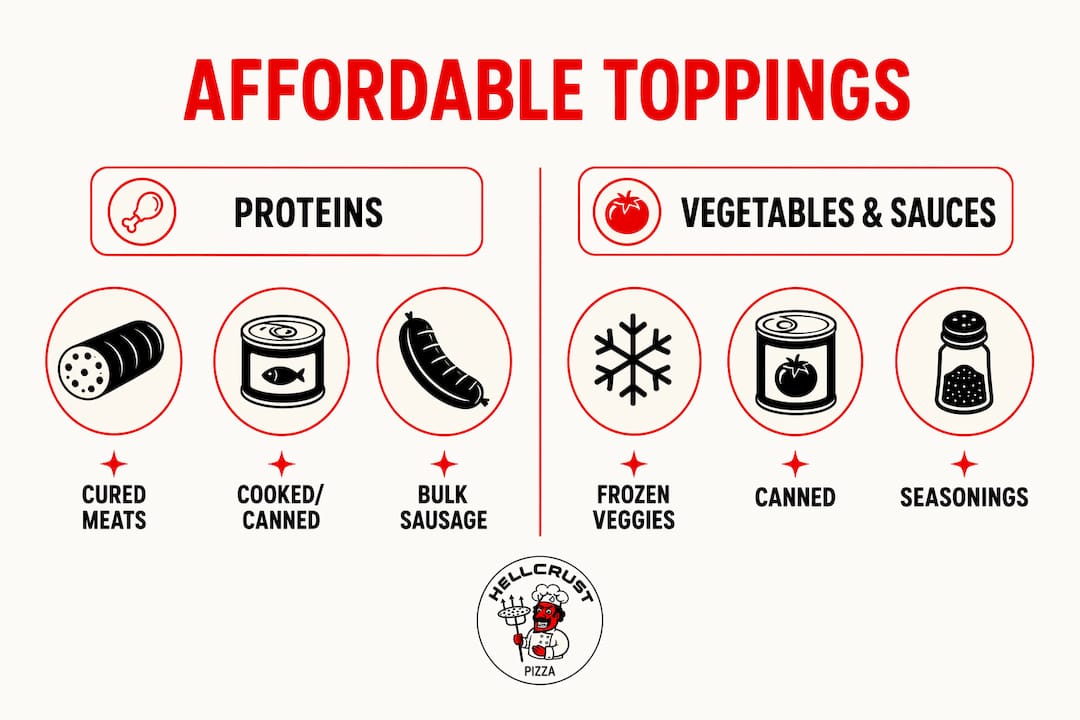
| Category | Cost profile | Moisture behaviour | Key handling step |
|---|---|---|---|
| Cured/ready meats (pepperoni, salami) | Low | Renders fat, dries out | Crisp edges in a dry pan first |
| Bulk cooked proteins (deli chicken, canned tuna) | Low–medium | Low when drained | Blot dry, flake or dice small |
| Cheeses (block mozzarella, part-skim blend) | Medium (lower when bought as block) | Melts cleanly | Grate fine; pat fresh mozzarella dry |
| Fresh vegetables (onions, peppers, garlic) | Very low | Medium–high | Slice thin or sauté briefly |
| Frozen/canned veg (frozen peppers, canned mushrooms, artichokes) | Very low | High if undrained | Drain, pat dry, pre-cook if needed |
| Pantry/condiments (olives, pineapple, jarred peppers) | Low | Medium | Drain and pat before placing |
| Seasonings (dried oregano, chilli flakes, garlic powder) | Near-zero | None | Add after bake for brightness |
Cured meats are the easiest budget protein because they arrive pre-seasoned and pre-cooked. Onions and frozen peppers are the workhorses of the vegetable column: inexpensive year-round, and they caramelise beautifully when sliced thin. Pantry items like black olives and jarred roasted peppers add depth without adding moisture, provided you drain them well. Seasonings cost almost nothing and do more flavour work than most people give them credit for.
How to save on cheese without losing that satisfying melt
Cheese is often the single biggest ingredient cost on a homemade pizza, and buying block mozzarella and grating it yourself is the most reliable way to stretch that cost. Pre-shredded bags contain anti-caking agents that dull the melt; a block grated on the coarse side of a box grater melts cleaner and goes further because you control the portion.
A few low-cost cheese options worth keeping on hand:
- Block mozzarella (part-skim): the most economical choice; grate finely so a small amount covers the whole pie
- Shredded Italian blend: useful as a base layer when you want to stretch a smaller amount of mozzarella
- Aged cheddar (small amount): adds sharpness without needing much; mix 20% cheddar with 80% mozzarella for a richer flavour at no extra cost
- Ricotta (dolloped, not spread): a few small spoonfuls go a long way and add creaminess to veggie builds
- Fresh mozzarella (budget use): slice thin, pat thoroughly dry with paper towel, and use sparingly as a finishing touch rather than a full layer
Pro Tip: Freeze a block of mozzarella for 20 minutes before grating. It firms up and shreds more evenly, which means less clumping and a more consistent melt across the whole pizza.
For fresh mozzarella specifically, moisture is the enemy. Slice it, lay the pieces on a clean kitchen towel, and press gently before placing on the pie. That one step prevents the watery puddles that make a budget pizza look sloppy.
Inexpensive protein toppings and how to prep them properly
Cured meats: the reliable starting point
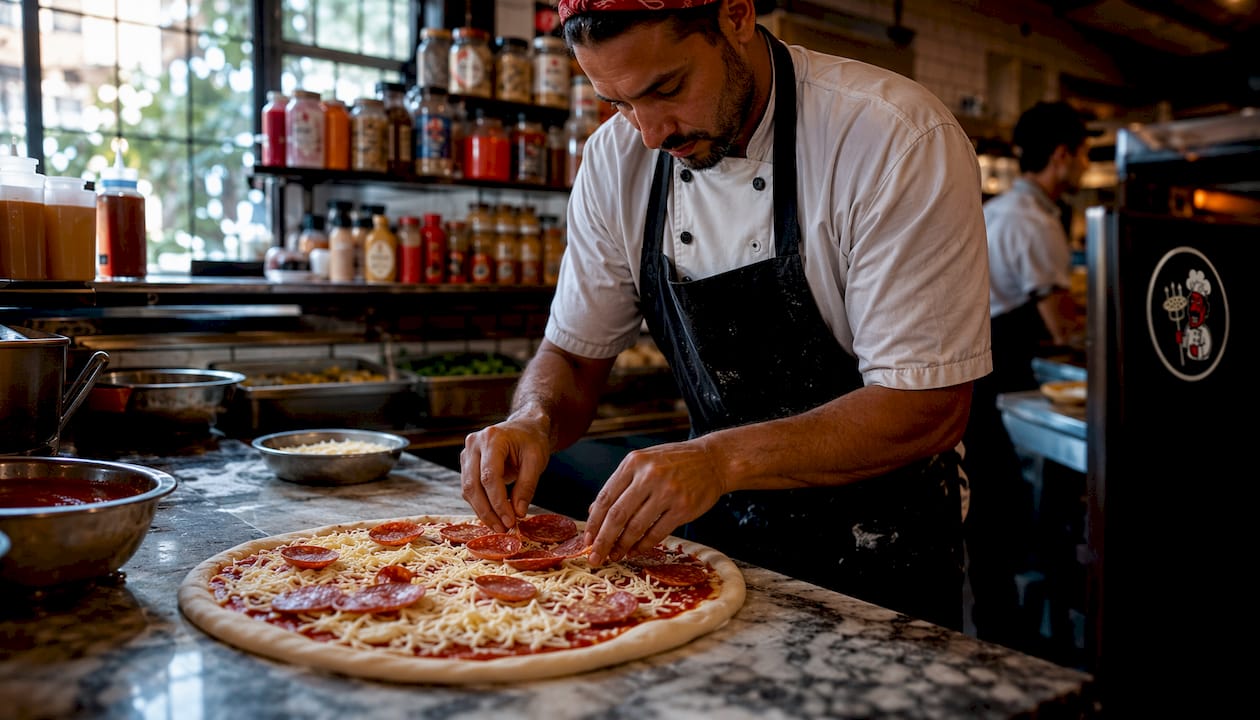
Economy pepperoni and sliced salami are the most dependable budget proteins because they are already cooked, already seasoned, and already portioned. Crisp the edges of pepperoni in a dry skillet for 60 seconds before placing them on the pie; the fat renders out, the edges curl, and you get that satisfying bite without excess grease pooling under the cheese. For a 12" pizza, 20–24 slices of standard pepperoni is a generous but not wasteful amount.
Cooked and canned proteins
Deli chicken (sliced thin or pulled apart) and canned tuna are genuinely underrated on pizza. Both arrive pre-cooked, both are inexpensive at any Canadian grocery store, and both stay tender through a short bake when you keep the oven hot. Blot canned tuna with paper towel and flake it into small pieces; it pairs surprisingly well with capers, olives, and a light tomato base. For deli chicken, dice it small so it distributes evenly and does not create thick, undercooked patches.
Bulk sausage: the stretch play
Bulk breakfast sausage browned and crumbled is one of the best value moves in budget pizza cooking. Brown it in a skillet, drain the fat thoroughly, and scatter it across the pie in small pieces. A single 500g package of breakfast sausage at a Canadian grocery store can top three or four 12" pizzas. That is real economy. The key is draining well: undrained sausage releases fat and water during the bake, which softens the crust and muddies the flavour.
Low-cost vegetable and fruit toppings that actually work in the oven
The biggest mistake with budget vegetables is putting them on raw when they hold a lot of water. Mushrooms are roughly 90% water and will steam the dough from underneath if you skip the pre-cook step. The same logic applies to frozen peppers, cherry tomatoes, and leafy greens. A quick sauté or a thorough drain-and-pat solves the problem every time.
Affordable vegetables and fruits worth keeping in your pizza rotation:
- Onions: slice thin and sauté 3–4 minutes before topping; they sweeten and lose moisture
- Frozen peppers: thaw, squeeze out excess water, and pat dry before using
- Canned mushrooms: drain and dry-sauté briefly; far cheaper than fresh and already partially cooked
- Black olives (canned): drain well and slice; add near the end of the bake to preserve their texture
- Canned pineapple: drain thoroughly and pat dry; use tidbits rather than rings for even distribution
- Canned or jarred artichokes: drain, pat, and quarter; they add a meaty texture at a fraction of the cost of premium toppings
- Cherry tomatoes: halve them, squeeze out the seeds and juice, and place cut-side up so moisture evaporates upward
- Leftover wilted greens (spinach, kale): squeeze out all moisture, chop roughly, and scatter sparingly
Frozen peppers and canned artichokes are budget-friendly year-round options in Canada, where fresh bell peppers can spike in price during winter months. Buying fresh when seasonal sales hit and freezing your own is another solid approach, though the convenience of a frozen bag is hard to argue with on a weeknight.
Affordable sauces, spreads, and seasonings that punch above their cost
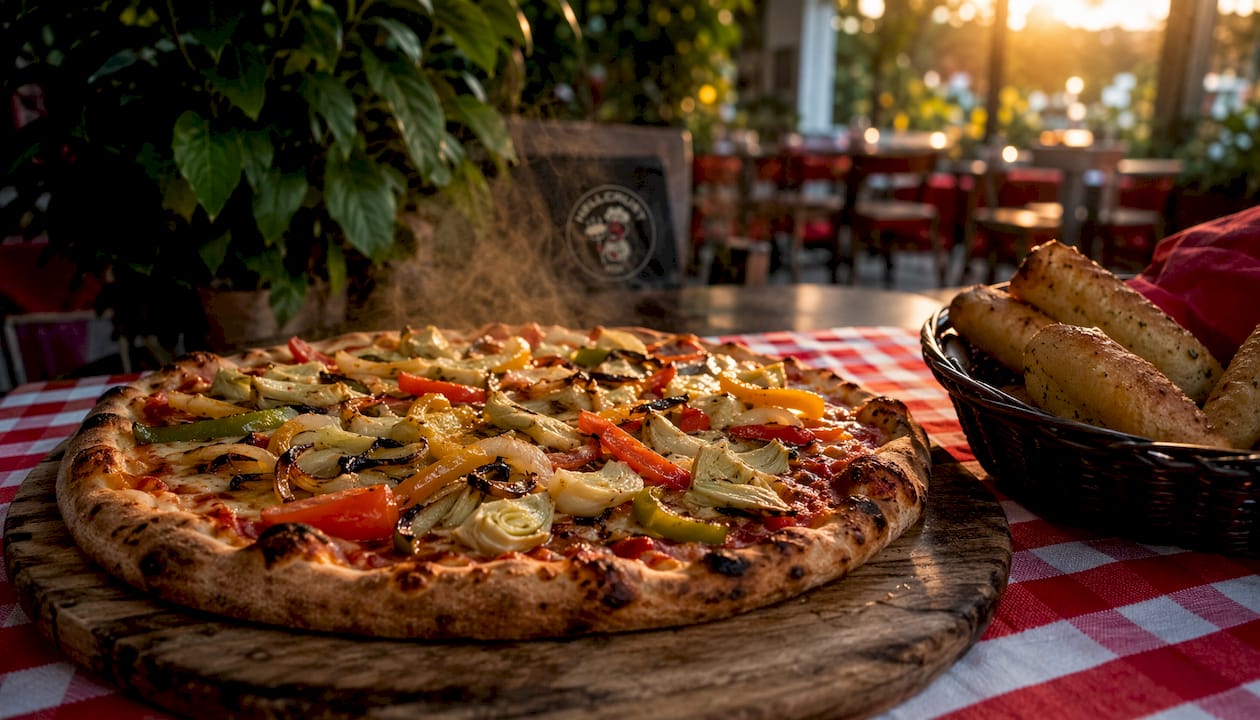
The sauce layer is where a lot of home cooks overspend without realising it. A simple canned tomato sauce seasoned with dried oregano, garlic powder, and a pinch of chilli flakes costs almost nothing and tastes genuinely good. Resist the urge to spread it thick; a light, even layer keeps the base crisp and lets the toppings carry the flavour.
Two quick DIY flavour upgrades worth knowing:
Crushed red pepper oil: warm a few tablespoons of olive oil in a small pan with a generous pinch of chilli flakes for two minutes, then let it cool. Drizzle over the finished pizza instead of using a separate sauce. It costs almost nothing and adds real heat and depth.
Garlic-infused olive oil: simmer two smashed garlic cloves in olive oil on low heat for five minutes, then remove the garlic. Use this as the base for a bianco pizza instead of tomato sauce. Paired with mozzarella, onions, and a sprinkle of dried thyme, it is one of the most satisfying low-cost combinations you can make.
For herb-forward builds, a small spoonful of pesto made from leftover basil, olive oil, and a handful of whatever nuts you have on hand goes a long way. Spread it thinly as a sauce substitute, and the flavour is far more interesting than a jarred alternative.
How to use leftovers and stretch toppings across more pizzas
The most underused budget strategy in home pizza cooking is the leftover repurpose. Using last night's steamed broccoli, a handful of spinach, or small quantities of pesto adds variety at almost no extra cost. The trick is treating those leftovers as accents, not the main event.
Practical ways to stretch toppings and reduce waste:
- Mix a small premium with a cheap base: two or three thin slices of prosciutto spread across a whole pie with plenty of caramelised onions gives you the flavour hit of a premium topping at a fraction of the cost
- Redistribute small amounts: a tablespoon of pesto per quarter pizza, or a handful of leftover roast chicken scattered across two pies, goes further than you think
- Freeze cooked toppings in portions: browned sausage, sautéed peppers, and caramelised onions all freeze well in small zip bags; pull one out on a busy night and the pizza is half-built already
- Repurpose steamed or roasted veg: leftover roasted sweet potato, broccoli, or zucchini all work well when chopped small and patted dry
For splitting toppings across a family pizza, the half-and-half approach is the most economical: one side uses a small amount of a pricier ingredient, the other uses a cheaper base topping, and everyone gets what they want without doubling the cost.
Prep and cooking steps that prevent soggy pizza with cheap toppings
Pre-cook or drain anything wet, limit toppings to 2–4 per pizza, and use a hot bake surface. Those three habits do more for a budget pizza than any ingredient upgrade.
The reason wet toppings ruin cheap pizzas is straightforward: during a short home oven bake (typically 10–14 minutes at 230–260°C), there is not enough time for excess moisture to evaporate before it soaks into the dough. Pre-cooking removes that moisture before it becomes a problem. Limiting toppings to 2–3 for thin-crust and 3–5 for a standard NY-style pie keeps the load manageable and allows even heat distribution.
Pro Tip: Preheat a cast-iron skillet or pizza steel in the oven for at least 45 minutes before baking. Slide the pizza directly onto the hot surface and lift one edge after 8 minutes to check for browning. A golden-brown underside means the crust is crisping properly; a pale, soft base means the surface was not hot enough.
Thin-slicing vegetables also helps. A thick chunk of onion or pepper holds more water and takes longer to cook through than a thin slice, which releases moisture quickly and caramelises at the edges. The same logic applies to customising your toppings for a crisp result: thin, dry, pre-treated ingredients always outperform thick, wet ones, regardless of price.
Ten budget pizza combinations you can make tonight
- Classic pepperoni and onion: economy pepperoni crisped in a dry pan, thinly sliced onion sautéed 3 minutes; scatter both on a light tomato base.
- Mushroom and olive bianco: canned mushrooms dry-sautéed, sliced black olives drained; use garlic-infused olive oil as the base instead of tomato sauce.
- Frozen pepper and sausage: bulk breakfast sausage browned and drained, frozen peppers thawed and patted dry; classic tomato base, part-skim mozzarella.
- Tuna and caper: canned tuna blotted and flaked, a small handful of capers rinsed; light tomato base, finish with chilli flakes after baking.
- Leftover roast chicken and onion: diced deli or leftover roast chicken, caramelised onions; a thin layer of pesto as the base.
- Hawaiian budget build: canned pineapple tidbits thoroughly drained and patted, economy ham slices torn small; standard tomato base.
- Veggie leftover special: leftover roasted zucchini and sweet potato, wilted spinach squeezed dry; ricotta dolloped over a light tomato base.
- Breakfast pizza: crumbled browned sausage, a few thin bacon strips pre-cooked, sliced onion; olive oil base, finish with a sprinkle of dried thyme.
- Artichoke and olive: canned artichokes quartered and patted dry, sliced black olives; garlic olive oil base, aged cheddar and mozzarella blend.
- Broccoli and sausage: roasted Brussels sprouts or broccoli florets with crumbled browned sausage; light tomato base, finish with chilli flakes.
Pro-level rules for saving money and controlling moisture
The most consistent advice from professional pizza kitchens is also the simplest: restrain yourself. Professionals recommend 2–3 toppings for thin-crust and 3–5 for standard NY-style pies to avoid sogginess and uneven cooking. That restraint is not a compromise; it is what makes a pizza taste intentional rather than thrown together.
Alliums (onions, garlic, shallots) are the ingredient professionals reach for first because they are cheap, store for weeks, and add complexity that more expensive toppings often cannot match. Pre-cooking mushrooms is non-negotiable in any professional setting: the moisture they release on a raw application is enough to prevent the crust from crisping at all.
Matching topping quantity to pizza style is another habit worth borrowing from professional kitchens. A thin Neapolitan-style pie tolerates very little weight; a Detroit or pan-style build can carry more. Choosing the right style for the toppings you have on hand, rather than forcing a heavy load onto a thin crust, is a small decision that changes the result significantly. For more on how ingredient choices affect the final bake, Hellcrustpizza's guide to fresh ingredients is worth a read.
Key takeaways
The single most important rule for affordable homemade pizza: build a dry, well-treated base with 2–4 inexpensive toppings, and the result will consistently outperform a loaded, wet pie that costs twice as much.
| Point | Details |
|---|---|
| Pre-treat wet toppings | Drain, pat dry, or sauté anything high in moisture before it goes on the pie. |
| Limit topping count | Use 2–3 toppings for thin-crust and 3–5 for NY-style to prevent sogginess and uneven baking. |
| Buy block cheese | Grate block mozzarella yourself to reduce per-pizza cheese cost and improve melt quality. |
| Repurpose leftovers | Steamed veg, cooked sausage, and small amounts of pesto add variety at near-zero extra cost. |
| Hellcrustpizza for groups | When cooking for a crowd feels like too much effort, Hellcrustpizza's Mix & Match deals offer affordable, customisable options without the prep. |
The case for restraint (and why cheap pizza can be the best pizza)
There is a tendency to equate generosity with quality when it comes to pizza toppings. More cheese, more meat, more of everything. But the pizzas that actually taste the best, the ones you remember, are almost always the ones where someone made a deliberate choice about what belonged on the pie and what did not.
Budget cooking forces that discipline in a way that an unlimited grocery budget never does. When you are working with onions, a handful of pepperoni, and whatever frozen peppers are left in the bag, you are not distracted by options. You make the most of what you have, and more often than not, the result is cleaner and more satisfying than a pizza buried under six competing toppings.
What I find genuinely compelling about Hellcrustpizza's approach is that same commitment to purposeful ingredients. The Biga multigrain dough, crafted without artificial additives, is the kind of base that makes a simple topping combination shine rather than disappear. You get what you pay for, yes, but you also get what you put in. A wholesome base with two or three well-chosen toppings is not a compromise. It is the whole point.
When ordering beats cooking: Hellcrustpizza has you covered
Homemade pizza is the most economical choice for a quiet weeknight, but there are moments when ordering simply makes more sense. Feeding a group of six or more, for instance, often costs less per person through a well-structured deal than buying ingredients for multiple pies.

Hellcrustpizza is built for exactly those moments. The Mix & Match options and family-sized specials are designed to give you real variety at a price that does not punish you for feeding a crowd. The Biga multigrain, additive-free dough means you are not trading quality for convenience, and the app makes it straightforward to find the best deal before you check out. For anyone who wants the satisfaction of a thoughtfully made pizza without the prep, ordering through Hellcrustpizza is a genuinely smart call. Check the current deals on the app and see what a family-sized order actually costs before you decide.
Useful sources
| Source | What it contributes |
|---|---|
| King Arthur Baking | Homemade pizza cost estimates, block cheese guidance, and leftover topping strategies |
| That Pizza Kitchen — Best Toppings Ranked | Pepperoni ordering share, onion menu frequency, mushroom moisture data |
| The Pizza Craft — Style Guide | Topping count recommendations by pizza style (Neapolitan, NY, Detroit) |
| Curry Pizza House — Topping Combinations | Creative low-cost combination ideas including broccoli and sausage builds |
| Hellcrustpizza Blog | Practical topping and crust customisation guidance for home cooks |