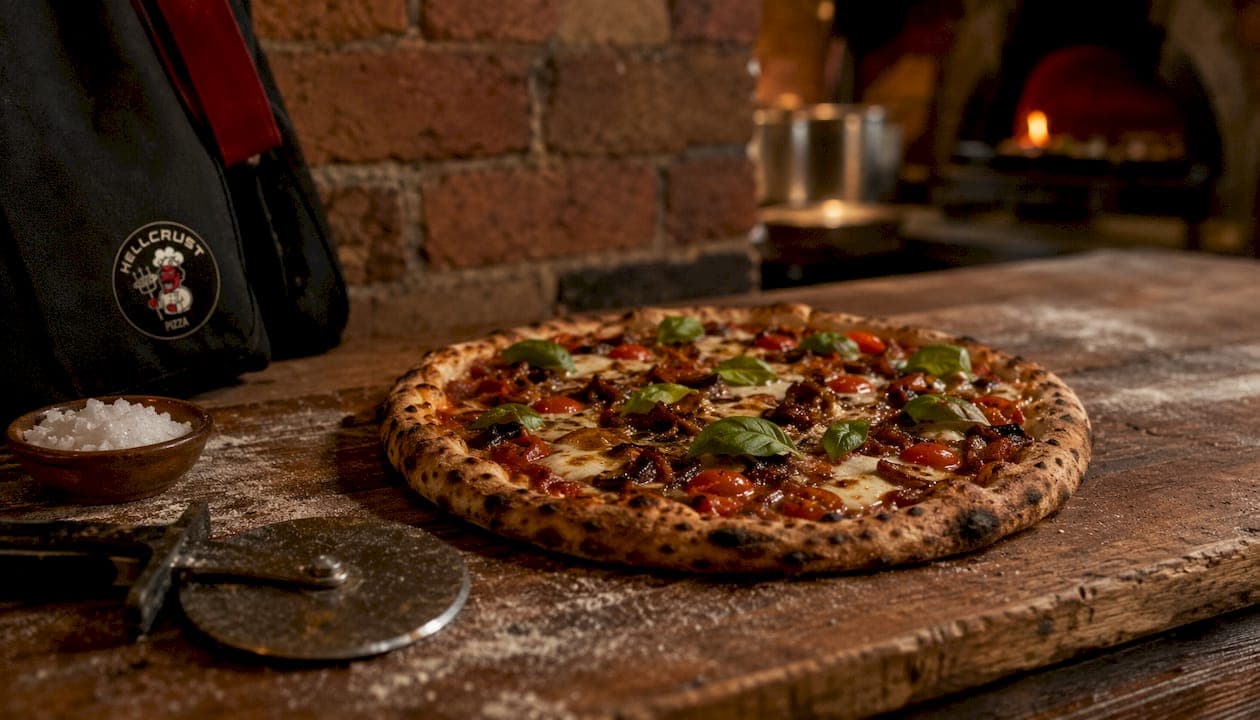
What do gourmet pizza flavour profiles actually look like?
The best gourmet pizzas don't just taste good. They hit multiple taste dimensions at once, sweet, sour, salty, bitter, and umami, in a way that feels deliberate and alive. Great pizzas balance several of the five fundamental tastes in every bite, and that's precisely what separates a thoughtfully crafted pie from an ordinary one.
Here are ten examples of gourmet pizza flavour profiles worth knowing, each built around a clear taste strategy:
- Bitter + Sweet: Radicchio, pear, and honey drizzle. The bitterness cuts richness; the sweetness rounds the edge.
- Fatty + Sour: Sausage, pickled red onions, and arugula on a white base. Acidity refreshes the palate after every bite.
- Umami + Salt: Anchovies, aged Parmesan, and roasted mushrooms. High-umami toppings amplify salt perception, so you need less of it.
- Creamy + Crunchy: Burrata, crushed toasted hazelnuts, and fresh basil. Texture keeps the eating experience engaging.
- Sweet + Spicy: Fig, prosciutto, and hot honey. A classic offensive contrast that rewards the adventurous palate.
- Smoky + Bright: Smoked mozzarella, roasted tomatoes, and lemon zest. Shared aroma compounds between the smoke and the tomato make this pairing feel natural.
- Earthy + Tangy: Wild mushrooms, Gorgonzola, and balsamic glaze. Earthy depth meets sharp, fermented brightness.
- Herbaceous + Rich: Pesto base, fresh ricotta, and pine nuts. Volatile herb aromatics lift an otherwise heavy profile.
- Oceanic + Acidic: Smoked salmon, capers, crème fraîche, and dill. A nod to Portuguese seafood traditions and global culinary inspiration.
- Savoury + Floral: Truffle oil, wild arugula, and shaved Pecorino. Finishing oil applied post-bake preserves the delicate aroma compounds that baking would otherwise destroy.
Table of Contents
- Creative gourmet topping ideas grouped by flavour category
- How do you actually balance flavours on a gourmet pizza?
- What Hellcrustpizza's approach teaches home cooks about flavour
- Hellcrustpizza: gourmet flavour crafted for every craving
- Key takeaways
Creative gourmet topping ideas grouped by flavour category
Understanding what makes gourmet pizza toppings work means thinking in categories, not just individual ingredients. When you approach toppings this way, building a cohesive flavour profile becomes far more intuitive.
Vegetables and produce
- Caramelized onions, roasted peppers, and charred broccolini bring sweetness and depth.
- Pickled vegetables (red onions, jalapeños, banana peppers) add acidity that cuts through fat.
- Arugula, radicchio, and fresh basil contribute bitterness and herbaceous brightness, best added after baking.
Meats and proteins
- Artisan options like prosciutto, 'nduja, chorizo, and cotto salami deliver upscale savoury complexity beyond standard pepperoni.
- Smoked salmon and crabmeat open the door to oceanic umami profiles.
- Wood-roasted chicken pairs beautifully with pesto or white sauce bases.
Cheeses
- Smoked Gouda, Mascarpone, Brie, and Gorgonzola each bring a distinct flavour register. A full guide to gourmet cheese varieties can help you match the right cheese to your intended profile.
- Aged Parmesan and Pecorino punch above their weight on umami without overwhelming.
- Fresh burrata or ricotta adds creaminess that contrasts beautifully with crisp crust edges.
Sauces
- San Marzano tomato sauce remains the gold standard for a reason: its low acidity and natural sweetness create a clean flavour foundation.
- White bases (olive oil, garlic, and mozzarella) let toppings speak without competition.
- Pesto, pepperonata, and spicy buffalo sauces each anchor a completely different flavour world.
Herbs, oils, and finishing touches
- Fresh basil, flat-leaf parsley, and dill applied post-bake preserve their volatile aromatics.
- Cold-pressed olive oil and white truffle oil drizzled at the table add aroma complexity that baking cannot replicate.
- Lemon zest, edible flowers, and hot honey are small additions with outsized flavour impact.
Regional inspiration broadens the palette considerably. Japanese-influenced pizzas use kimchi and sesame for fermented umami depth. Cajun-inspired profiles bring smoked andouille and spicy heat. Closer to home, Canadian home cooks are drawing on regional pizza topping styles worldwide to craft genuinely original combinations.
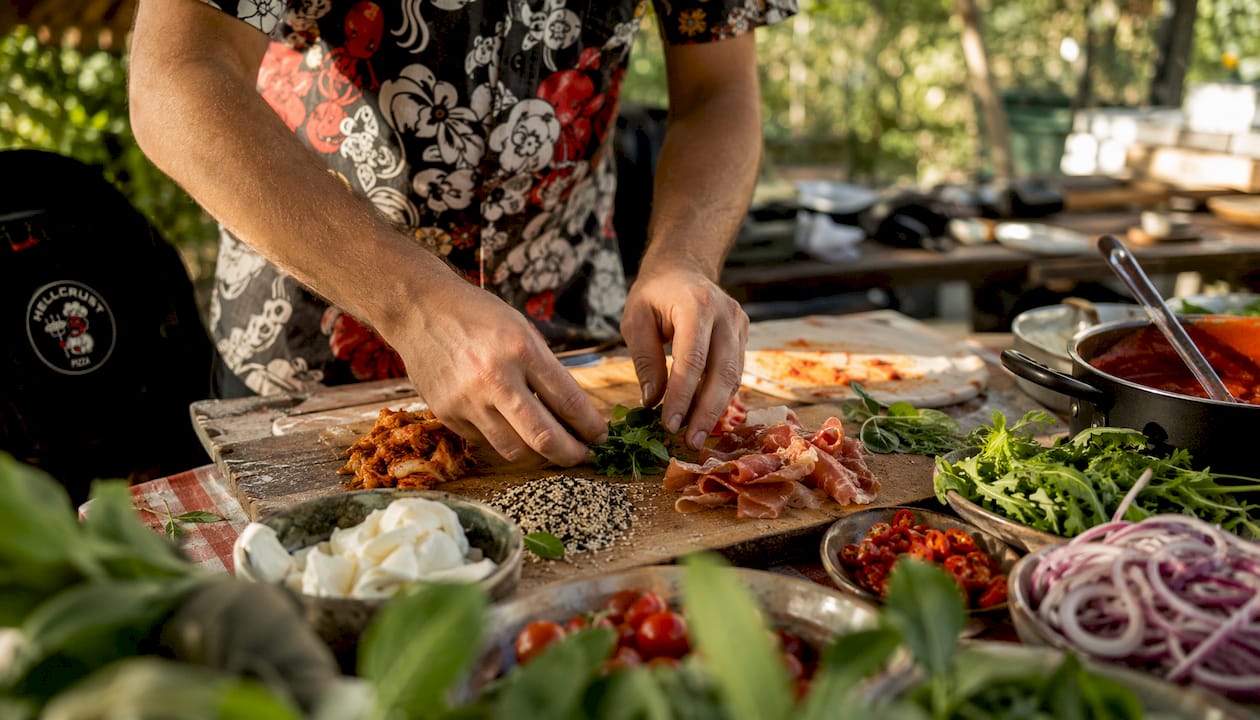
How do you actually balance flavours on a gourmet pizza?
Flavour balance on a gourmet pizza is less about following rules and more about understanding how tastes interact. Your tongue detects five primary tastes: sweet, sour, salty, bitter, and umami. Each one plays a role, and the most memorable pizzas use at least three of them in every bite.
Two strategies guide most professional pizza chefs. The first is defensive offsetting: using acidity to cut through richness, or bitterness to contrast a fatty topping. Sausage paired with pickled onions is the textbook example. The second is offensive contrasting: deliberately pairing opposites for a flavour surprise, like hot honey on pepperoni, where sweetness and heat amplify each other rather than cancel out.
Aroma accounts for 80–90% of the flavour experience. This is why finishing touches matter so much. Cold-pressed olive oil and fresh herbs added immediately after baking preserve volatile aroma compounds that the oven's heat would otherwise drive off.
Texture is the other half of the equation. Creamy against crunchy, soft dough against crisp charred edges, these contrasts keep your brain engaged and make each bite feel rewarding. Mushrooms with toasted pine nuts, or burrata with crushed hazelnuts, are tried-and-tested examples of how texture combinations elevate a pizza beyond its individual ingredients.
The Maillard reaction during baking also contributes deeply to gourmet flavour. Those golden-brown crust edges and caramelized topping surfaces produce savoury aroma compounds that no amount of seasoning can replicate. It's one reason why dough quality and baking temperature matter as much as the toppings themselves.
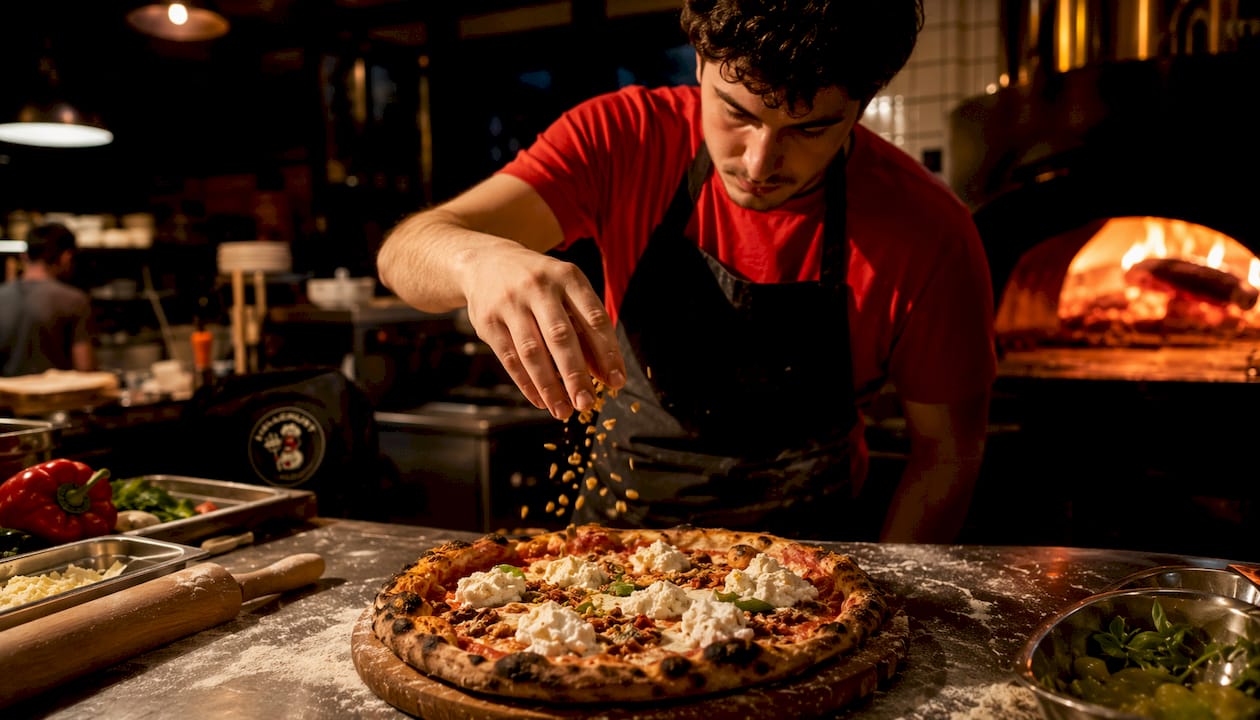
Pro Tip: Limit yourself to 2–3 hero ingredients per pizza. Overcrowding dilutes every flavour and muddies the texture. Choose one starring ingredient, one supporting contrast, and one finishing touch. That's the formula.
What Hellcrustpizza's approach teaches home cooks about flavour
At Hellcrustpizza, the philosophy starts before the toppings even enter the picture. The foundation is a Biga multigrain dough, a long-fermented preferment that develops tanginess, aroma complexity, and a depth of flavour that fast-rise doughs simply cannot match. Understanding how Biga dough elevates pizza is genuinely useful for any home cook who wants to understand why the crust tastes the way it does. The dough is the canvas, and a well-fermented one makes every topping taste better.
From there, Hellcrustpizza's approach reflects a few principles that translate directly to home cooking:
- Ingredient quality over quantity. Fresh, high-quality ingredients like San Marzano tomatoes and artisanal cheeses define the flavour ceiling. You cannot compensate for a mediocre ingredient by adding more of it.
- Flavour harmony, not chaos. Curated topping combinations that reflect balance principles, fatty with acidic, creamy with crunchy, produce a more satisfying result than a crowded, everything-on-it approach.
- Finishing with intention. A drizzle of cold-pressed olive oil, a handful of fresh herbs, or a touch of citrus zest applied at the table can transform a good pizza into something genuinely memorable.
- Simplicity as a creative discipline. Limiting toppings to a few premium choices forces you to think carefully about what each one contributes. That constraint is where creativity actually lives.
For home cooks, Hellcrustpizza's curated combinations serve as a benchmark worth studying. Think of their pairings not as recipes to copy, but as flavour profiles to translate into your own kitchen, the same way a great chef extracts the essence of a dish they love and rebuilds it in their own voice.
Hellcrustpizza: gourmet flavour crafted for every craving

If reading through these flavour profiles has you craving the real thing, Hellcrustpizza delivers exactly that. Built on an additive-free Biga multigrain dough and topped with fresh, thoughtfully chosen ingredients, every pizza on the menu reflects the same flavour-balancing principles covered in this article. This isn't a compromise between quality and convenience. It's both, at a price that makes sense for families and food lovers alike.
Mix & Match options and family-sized specials mean you can explore multiple flavour profiles in a single order, which is genuinely the best way to understand what resonates with your palate. Order through the Hellcrustpizza app for exclusive deals and a seamless experience from selection to delivery.
Key takeaways
Gourmet pizza flavour profiles are built by balancing at least three of the five fundamental tastes, sweet, sour, salty, bitter, and umami, with complementary textures and aroma-preserving finishing touches.
| Point | Details |
|---|---|
| Taste balance is the foundation | Great gourmet pizzas hit at least three of the five fundamental tastes in every bite. |
| Aroma drives most of the experience | Aroma accounts for 80–90% of flavour perception; finishing touches preserve it. |
| Texture contrast matters | Pairing creamy with crunchy keeps each bite engaging and memorable. |
| Fewer ingredients, more impact | Limiting toppings to 2–3 hero ingredients produces clearer, more satisfying flavour. |
| Hellcrustpizza as a benchmark | Hellcrustpizza's Biga dough and curated toppings model the flavour-balance principles home cooks can apply directly. |