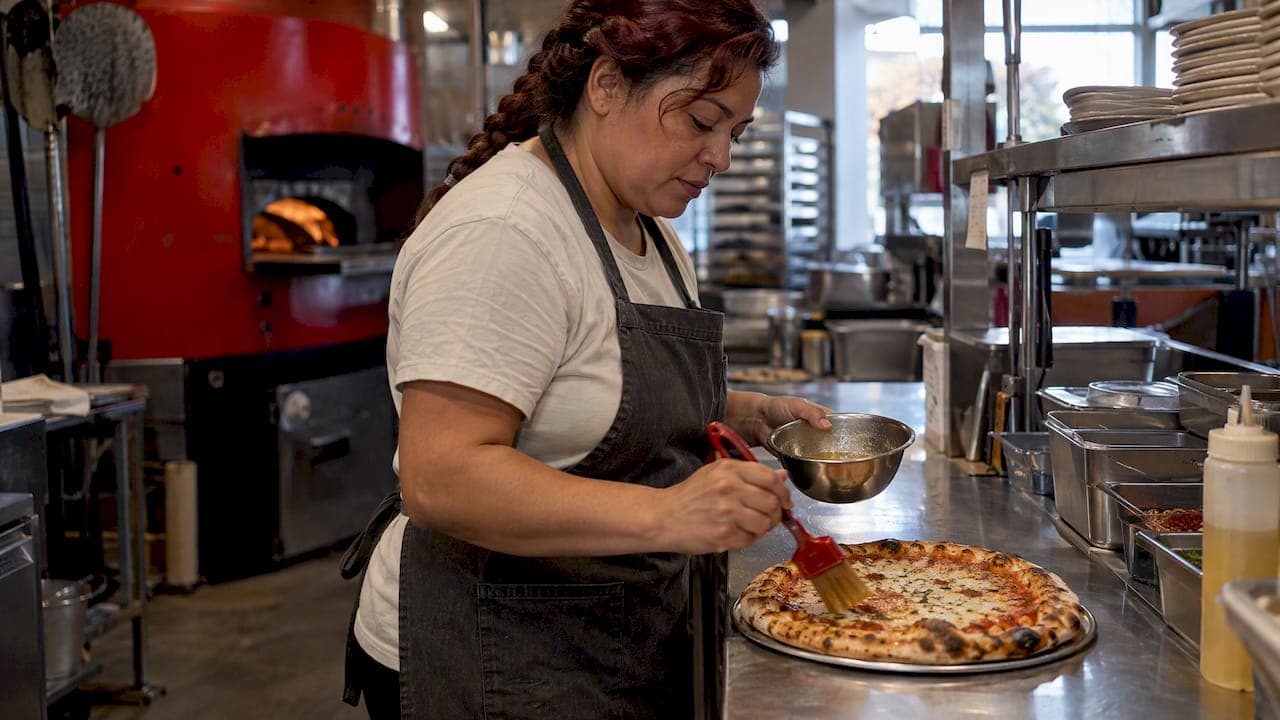
Do you remember the last slice you finished, the one where the topping was long gone and you were still chewing on the edge because it tasted of warm butter and garlic? That edge is a garlic butter crust, and it is one of the easiest upgrades you can give a pizza. Mix butter with garlic, put it on the rim, and decide whether it goes on before the oven, after, or both. For a soft, glossy, fully garlicky rim, brush it on hot, straight out of the oven. For garlic flavour baked into the bread itself, put a little on the raw edge too.
Below we walk through the ingredients, the three main methods home cooks use, the timings and temperatures published by recipe kitchens, and how to keep the garlic sweet instead of bitter. We also share how we think about crust at HellCrust, because a garlic butter crust is only ever as good as the dough underneath it.
TL;DR
- A garlic butter crust is melted butter mixed with fresh or roasted garlic (and often Parmesan or herbs) brushed onto the outer rim of a pizza.
- Brushing it on after baking gives the freshest garlic flavour and the least risk of burning; brushing a little on before baking builds flavour into the bread.
- Garlic scorches fast in a very hot oven, so cook chopped garlic gently in butter first, or use roasted garlic or garlic powder.
- A mature, well-fermented dough soaks up garlic butter beautifully, which is why the crust matters as much as the butter.
- Prefer to skip the kitchen? Browse our menu and pair your pizza with the dips and sides you like.
Table of Contents
- What a garlic butter crust actually is
- The ingredients, and what each one does
- Before or after baking: the question everyone asks
- Three tested methods, side by side
- Making the dough: the ParentsCanada approach
- How to keep garlic from burning
- Troubleshooting a garlic butter crust
- Our view: the crust is the whole point
- Ways to use your garlic butter
- When you would rather not cook
- A quick plan for your first garlic butter crust
- FAQ
- Sources
What a garlic butter crust actually is
There are really two ideas hiding under one name, and it helps to separate them.
The first is garlic butter brushed on the crust. The dough is plain or lightly seasoned, and the garlic comes from a butter mixture applied to the rim, before or after baking. This is what most people picture, and it is the simplest route.
The second is garlic built into the dough. Garlic powder and dried herbs are kneaded in, so the bread itself tastes of garlic even before any butter touches it. One Canadian family recipe from ParentsCanada does both: garlic powder and dried basil go into the dough, garlic butter goes on the edges before the toppings, and the baked edges get a last brush of Parmesan butter.
Neither is more correct. If you want a gentle hint, brush at the end. If you want a rim that tastes like garlic bread all the way through, use both layers.
The ingredients, and what each one does
Garlic butter is a short list, which is exactly why quality shows.
Butter. Most recipes use unsalted butter, which lets you control the salt, especially if you add Parmesan, which brings its own. The ParentsCanada recipe combines unsalted butter with pressed or finely minced garlic and Parmesan. If you only have salted butter, simply go lighter on any extra salt.
Garlic. You have three practical choices:
- Fresh garlic, pressed or finely minced. Sharp, bright and the most garlicky. It is also the one most likely to scorch if it sits on a hot crust in the oven.
- Roasted garlic. Mellow, sweet and creamy, and it blends smoothly into butter. Pillsbury's garlic butter Margherita lists garlic powder as a substitute for roasted garlic, so you are not stuck if you have no time to roast a bulb.
- Garlic powder. Convenient and forgiving, since it is less likely to burn. It lacks the fresh bite, so many cooks use it in the dough and fresh garlic in the butter.
Cheese. Grated Parmesan adds a savoury, salty edge and helps the butter cling to the crust.
Herbs. Dried basil or Italian seasoning can go into the butter or the dough. Fresh herbs are better saved for the finish, and we have written about the timing and technique of fresh herbs on finished pizza if you want to take it further.
A simple starting ratio
We do not want to hand you a number that nobody has tested, so think in proportions rather than exact measures. For one large pizza, a few tablespoons of softened or melted unsalted butter, two or three cloves of garlic, and a spoonful of grated Parmesan is plenty to cover the rim. Taste the butter before it goes anywhere near the dough. If it tastes good on a spoon, it will taste good on a crust.

Before or after baking: the question everyone asks
This is the question that comes up most often, and the honest answer is that good kitchens do it both ways, for different reasons.
Brushing after baking
This is the method we would point a beginner towards. Ooni Canada's herbed garlic butter recipe recommends brushing the butter onto the crust after the pizza has finished baking. The logic is simple. A pizza oven, or a home oven turned up high, can burn garlic in minutes. Put the butter on once the pizza is out and the heat of the crust gently warms the garlic, releasing the aroma without browning it.
The results: a glossy, fragrant rim, a clean garlic flavour, and no bitter specks. The trade-off is that the butter sits on the surface rather than baking in, so the effect is closer to a garlic glaze than garlic bread.
Brushing before baking
Applied to the raw rim, butter soaks into the dough and the edge bakes up golden and rich, almost like the crust of a garlic loaf. The ParentsCanada recipe takes this route, brushing garlic butter on the outside edges before the toppings go on. The risk is the garlic itself: tiny pieces of raw garlic on the exposed rim face the full heat of the oven. That is why a moderate oven temperature, finely minced garlic or a smoother roasted garlic paste all help.
Doing both
If you want maximum garlic flavour, use both. A light brush before baking, then a final coat of Parmesan butter on the hot crust. That is exactly the two-stage approach in the ParentsCanada recipe, and it is the one we find most satisfying for a weekend pizza.
Three tested methods, side by side
Recipe kitchens publish quite different timings, and the differences are instructive. They are not contradictions; they reflect different doughs and ovens.
| Method | Where the garlic butter goes | Oven and timing |
|---|---|---|
| Family recipe from ParentsCanada | On the outer edges before toppings, then Parmesan butter on the baked rim | 375°F for about 23 to 25 minutes |
| Pillsbury's garlic butter Margherita | Spread on the dough, which is baked bare first | 7 minutes bare, then 7 to 9 minutes with toppings |
| BakeGood.ca garlic and herb crust | Garlic and herbs in the dough, with a formed rim | 425°F on the lowest rack for 12 to 15 minutes |
Notice the pattern. A lower oven with a longer bake (375°F) is gentle on garlic that has been brushed on early. A hotter oven (425°F) works when the garlic is already inside the dough, or when the butter goes on after. And the par-bake approach protects the garlic by keeping the toppings and the butter on for a shorter time in the heat.
Making the dough: the ParentsCanada approach
If you want to build the whole thing from scratch, the ParentsCanada recipe is a good template for a family dinner. For one pizza it uses 1 1/8 cups warm water, 3 teaspoons of active dry yeast, honey, olive oil, 3 cups of all-purpose flour, salt, garlic powder and dried basil. The butter topping is butter, fresh garlic and Parmesan.
The steps, as the recipe lays them out:
- Stir the yeast into the warm water with the honey and wait until it turns foamy, about 10 minutes.
- Add the oil, flour, salt, garlic powder and basil, then knead into a smooth dough.
- Let the dough rise for about 1 1/2 hours.
- Mix melted butter with pressed or finely minced garlic and Parmesan, and brush it over the outer edges of the shaped dough.
- Add sauce and toppings, then bake at 375°F for about 23 to 25 minutes.
- Brush the hot crust with the remaining Parmesan butter and serve straight away.
A kneading note from BakeGood.ca: its garlic and herb crust calls for about 4 minutes of kneading, which is shorter than many people expect. You are after a smooth, springy dough, not an exhausted one.
How to keep garlic from burning
Burnt garlic is the one thing that can ruin a garlic butter crust, because the bitterness spreads through the whole butter. A few habits make it a non-issue.
Cook it gently first. If you use chopped fresh garlic, warm it in the butter on low to medium-low heat just until it smells fragrant, a few minutes, rather than letting it sizzle and brown. Pull it off the heat as soon as the aroma blooms.
Mince very fine, or press it. Large pieces catch on the edge of the crust and blacken. A press or a fine mince spreads the garlic through the butter so no single piece sits exposed.
Pick a lower oven or a later brush. The 375°F recipe above is gentle on early-applied garlic. If you are baking hot, save the garlic butter for after.
Use roasted garlic or garlic powder for pre-bake coats. Roasted garlic is already soft and sweet. Garlic powder is dry and tends to toast rather than turn acrid, though it will not match fresh garlic for punch.

Par-bake the crust. Pillsbury's method bakes the buttered dough bare for 7 minutes, then adds toppings and finishes for another 7 to 9 minutes. The rim goes golden before the toppings cook, and the garlic spends less time exposed.
Troubleshooting a garlic butter crust
| Problem | Likely cause | Fix |
|---|---|---|
| Bitter, dark specks on the rim | Raw garlic baked at high heat | Mince finer, switch to roasted garlic, or brush on after baking |
| Crust tastes flat | Garlic only in the butter, butter very light | Add garlic powder to the dough and a final brush after baking |
| Soggy rim | Too much butter brushed on | Use a thin, even coat and let the crust rest a minute |
| Butter slides off | Butter too hot and thin | Let melted butter cool slightly, or use soft butter paste |
| Too salty | Salted butter plus Parmesan | Use unsalted butter and taste before adding salt |
If your crust is also not crisp enough, the fix is usually in the oven setup rather than the butter, and our guide to the fastest route to an extra crispy pizza at home covers that.
Our view: the crust is the whole point
We make pizza for a living, and we will say it plainly: garlic butter is wonderful, but it is a finishing touch, not a rescue. You get what you pay for with dough. A pale, quickly made crust will taste of butter and not much else. A crust that has had time to mature carries its own flavour, and the garlic simply sings alongside it.
That is why our dough starts as a Biga, an Italian-style preferment made in advance. We build it with multigrain flour and without artificial additives, and we let it develop slowly. The result is a rich, mature flavour, a crust with more fibre, and a dough we find easier to digest. When you brush something buttery over a crust like that, each bite is a small testament to the hours it was given.
At home, you can borrow the idea. Mix your dough earlier in the day, or the night before, and keep it covered in the fridge. You are not chasing perfection; you are giving the yeast and flour time to do their quiet work. Then keep the garlic butter simple and fresh. Do not hide good bread under heavy seasoning.
There is also something communal about a garlic butter crust. It is the part of the pizza that kids fight over, the part people dip into sauce, the last bite saved for the end. Families who make pizza together tend to remember the edge as much as the middle. If you are planning a gathering, our notes on kids pizza party ideas include make-your-own approaches where a brush of garlic butter is a job even the youngest can do.
— jaskirat Singh
Ways to use your garlic butter
Make a little extra. Garlic butter does not belong only on the crust.
- As a dip. Keep a small bowl warm at the table and dunk the crust in it. Melted butter and garlic is a natural partner for a plain, chewy rim.
- On garlic knots. A garlic herb butter over soft knots made from pizza dough is a classic way to use up leftover dough.
- On vegetables. Toss it with roasted broccoli or green beans to round out the meal.
- With pasta. A spoonful stirred through hot pasta makes a fast side. If you are planning a full evening, look at our pasta with pizza night plans.
- Beside a salad. Rich crusts love something sharp and green. Our list of salads that go with pizza will help you balance the table.
Toppings that suit a garlic crust
A garlic-forward rim works best when the toppings do not fight it. Mushrooms, roasted peppers, spinach, tomatoes, and mild cheeses all sit comfortably beside garlic. Very strong toppings such as heavily spiced meats can compete. If you are building something special, our gourmet topping guide has ideas, and our piece on extra cheese versus extra toppings explains how the crust decides which one will work.
Dietary notes
Butter is a dairy product, so a classic garlic butter crust is not vegan. If you are cooking for someone who avoids dairy, a plant-based spread or olive oil with garlic will give you the same fragrant rim, and the technique above is unchanged. For gluten-free guests, a sturdy dough is the key; our walkthrough of a reliably crisp gluten free pizza crust with psyllium takes about an hour and a half and takes a garlic brush well.
When you would rather not cook
Some nights there is no time to proof dough, press garlic and wash up afterwards. That is what we are here for. We deliver in North Vancouver, Vancouver and West Vancouver, and our menu includes Create Your Own Pizza, Signature Pizzas, Vegan Pizzas, Baked Pasta, Appetizers, Wings and Bites, Dips and more, all built on our Biga multigrain dough made without artificial additives.
You can build a pizza your way, choose your toppings and add sides to suit the table. Our app also gives you access to exclusive offers. Have a look at the full HellCrust menu and order for delivery or pickup.

If you are feeding a crowd, our pizza party menu ideas show how to choose two or three sides and size the order, and our meal plan using pizza delivery shows how to fit a pizza night into a balanced week.
A quick plan for your first garlic butter crust
If you want a no-fuss approach this week, here is how we would do it.
- Choose your dough. Homemade, or a ready-made ball brought to room temperature. Either is fine.
- Make the butter. Melt unsalted butter gently with finely minced or pressed garlic until fragrant, off the heat before it colours. Stir in grated Parmesan and a pinch of dried basil.
- Brush a little on the raw rim. A thin coat, not a puddle. Keep half of the butter back.
- Bake at a moderate temperature. Something near the 375°F of the ParentsCanada recipe is forgiving. If your oven runs hotter, add the butter after.
- Finish hot. The moment the pizza comes out, brush the rest of the butter over the rim.
- Rest for a minute, then slice. Letting the butter settle keeps the crust from going soggy.
Taste, adjust, and write down what you changed. Your second garlic butter crust will be better than your first, and your fifth will be the one friends ask about.
FAQ
How do you make a garlic butter crust?
Mix melted butter with pressed or finely minced garlic and a little grated Parmesan. Brush it over the outer edge of the dough before the toppings go on, bake the pizza, then brush the hot crust again with the remaining butter. The ParentsCanada recipe bakes at 375°F for about 23 to 25 minutes using this approach.
Do I put garlic butter on pizza crust before or after baking?
Both work, and the best choice depends on your oven. Brushing it on after baking, as Ooni Canada recommends, keeps the garlic fresh and avoids burning in a very hot oven. If you bake at a moderate temperature, a light coat before baking adds flavour to the bread, and a second coat afterwards finishes it.
What should I put in garlic butter for pizza crust?
Start with unsalted butter and garlic, either fresh and finely minced, roasted, or powdered. Grated Parmesan and dried basil or Italian seasoning are the most common additions. Pillsbury notes that garlic powder can stand in for roasted garlic if you are short on time.
How do I stop the garlic from burning?
Cook chopped garlic in butter over low heat only until it smells fragrant, and mince it very fine so no large pieces sit on the rim. Use a moderate oven, par-bake the crust before adding toppings, or brush the butter on after baking. Roasted garlic and garlic powder are also less prone to bitterness than raw pieces.
Can I make a garlic butter crust without butter?
Yes. Olive oil or a plant-based spread mixed with garlic gives you the same fragrant, glossy rim, and you can follow the same before-and-after timing. The flavour will be slightly less rich, so add a pinch of salt and herbs to compensate.
Sources
- Garlic bread pizza crust, ParentsCanada
- Garlic Butter Crusted Margherita Pizza Recipe, Pillsbury
- Garlic and Herb Pizza Crust with Bread Booster, Bake Good
- Garlic Butter for Pizza Crust Recipe, Ooni Canada