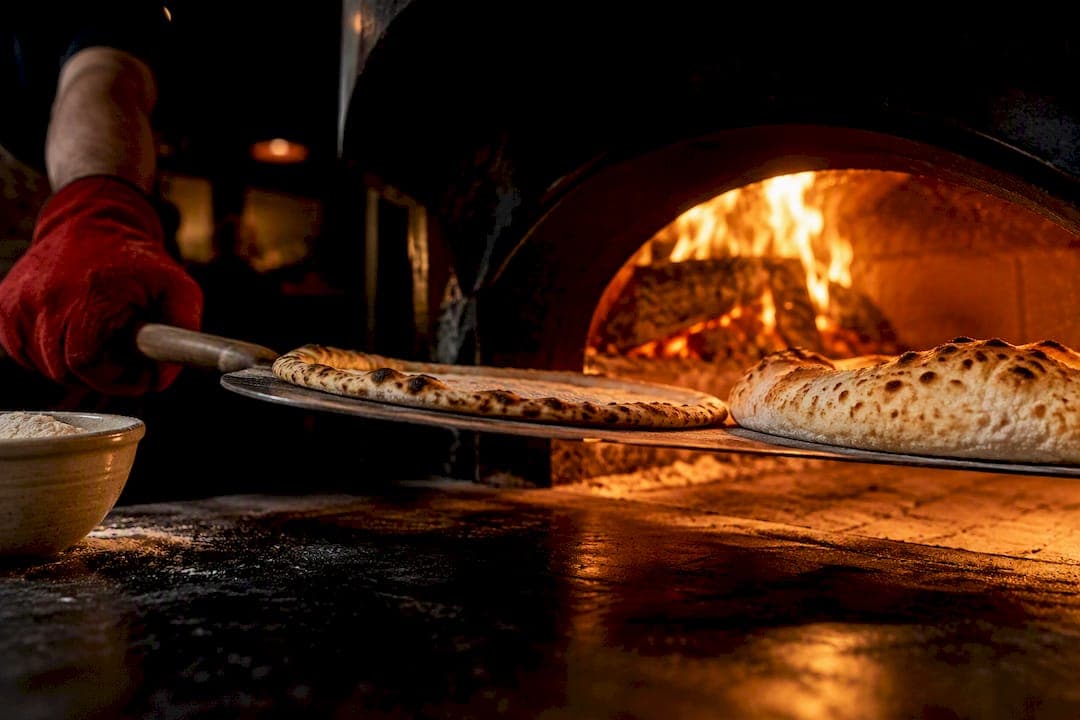
Choose thin crust when you want a crisp, foldable, topping-forward slice you can eat standing up. Choose thick or pan crust when you want a hearty, sauce-heavy pie that feeds a crowd and eats more like a meal than a snack. The catch is nutrition: toppings and slice size usually swing the calorie count more than crust thickness ever does. The sections below break down texture, styles, dough science, and how to pick with confidence.
TL;DR:
- Thin crust generally supports fewer heavy toppings and is better suited for portable, foldable slices, while thick crust can carry more toppings and serve as a filling meal.
- Bake profiles differ significantly: thin styles are baked rapidly at over 800°F, whereas thick styles bake at moderate temperatures for 20 minutes or more, affecting texture and handling.
- Crust calorie differences are minimal; toppings and portion size have a much larger impact on health than crust thickness alone.
- Dough hydration and flour type are crucial: high-hydration doughs produce airy crusts, while low-hydration results in crisper textures, with fermentation time also influencing digestibility and flavor.
- Choosing the style should depend on hunger, topping weight, portability needs, and oven capabilities, not just crust type.
Table of Contents
- Thin crust vs thick crust: the side-by-side differences
- Named crust styles across the thin to thick spectrum
- Does crust thickness actually decide how healthy your pizza is?
- What dough hydration and oven heat do to your crust
- How to choose between thin and thick crust
- How Hellcrustpizza's dough approach fits both preferences
- A cook's honest take on picking your crust
- Order the crust that actually matches your craving
- Sources
- FAQ
Thin crust vs thick crust: the side-by-side differences
The two styles diverge in almost every way that matters at the table, starting with what happens the moment your teeth hit the edge.
Thin crust snaps or shatters at the rim and stays thin enough to fold in half without a mess. Thick and pan styles behave differently. Their interior stays soft, almost bread-like, with a chewy or airy crumb that holds its shape under a fork. That structural difference decides how each style handles a heavy topping load, too. A cracker-thin Roman-style base will bow and crack under three meats and extra cheese, while a Detroit-style pan crust can carry a thick layer of pepperoni cups and cheese all the way to the crisped edge without collapsing.
Bake profiles tell the same story from the oven's side. Very thin, high-hydration styles like Neapolitan need blistering heat, often 800°F or hotter, for 60 to 90 seconds. Thick, pan-baked styles need the opposite: a moderate oven around 450 to 500°F for 20 to 30 minutes, giving the centre time to set without scorching the bottom.
Here's how the two extremes stack up on the details that actually change your meal:
- Texture: thin styles run crisp to cracker-like at the edge; thick styles run chewy, doughy, or airy through the middle.
- Handling: thin slices fold and travel well; thick and pan slices generally need a plate and a fork.
- Bake time: thin, high-heat styles finish in under two minutes; thick, pan-style bakes run 20 minutes or more.
- Topping tolerance: thin crust favours a light hand; thick crust can carry stacked meats and extra cheese without going soggy.
- Perceived fullness: thick slices fill you up faster because there's simply more bread per bite, so two slices of pan pizza often satisfy where three thin slices might not.
Consumer trend data backs up why this choice matters so much at the ordering stage. Pizza Hut's 2024 trend reporting named thin crust the top crust preference in the US market, though preference still shifts by region and by what's piled on top.
Named crust styles across the thin to thick spectrum
Pizza names carry more meaning than most menus let on, and knowing the spectrum helps you order or bake exactly what you're craving.
- Neapolitan. Thin through the middle but famous for its puffy, blistered rim, this style bakes in under two minutes at extreme heat and stays soft enough to eat with a fork in the centre.
- New York. Thinner overall than Neapolitan and built specifically to fold, with a slightly chewier bite that holds up to a walk down the street.
- Roman tonda and cracker-style. These sit at the crispest end of the thin category, rolled thin enough to shatter on the first bite with almost no chew.
- Detroit-style. A rectangular pan pizza with a thick, airy crumb and a caramelized cheese edge that crisps against the pan's sides.
- Sicilian. A close cousin to Detroit, thick and spongy, usually cut into hearty squares meant for a fork.
- Chicago deep-dish. The thickest common style, baked in a deep pan with sauce layered on top of the cheese, closer to a pie than a flatbread.
- Grandma-style. A regional variation that sits between New York and Sicilian, thinner than a true pan pizza but still baked in a pan rather than directly on a stone.
As Serious Eats' pizza lab points out, "thin crust" is really an umbrella term. A Neapolitan and a New York slice are both technically thin, yet they deliver completely different eating experiences.
Does crust thickness actually decide how healthy your pizza is?
Crust alone rarely decides how many calories land on your plate. A University of Rochester nutrition comparison found a Thin 'N Crispy cheese slice at roughly 225 calories against a thick-crust pepperoni slice at roughly 253 calories, a gap of under 30 calories. That's a smaller difference than most people assume, and the pepperoni slice's extra sodium and fat come mostly from its topping, not its dough.
By the numbers: the same Rochester data set puts sodium at 595 mg for the thin cheese slice and 568 mg for the thick pepperoni slice, meaning the thinner slice actually carried more sodium once the topping load was accounted for.
Broader guidance puts most pizza slices somewhere between 200 and 400 calories depending on size, crust, and toppings, with thin Margherita-style slices near the bottom and meat-heavy thick slices near the top. Yale's food guidance reinforces the same point from a different angle: a thick crust isn't automatically the higher-calorie choice, since stuffed edges, extra cheese, and larger slice sizes on a "thin" pizza can outweigh what a modest thick slice delivers.
If you're watching calories or sodium, the crust is the wrong lever to pull. Try these instead:
- Ask for half the usual cheese rather than switching crusts entirely.
- Load up on vegetables instead of processed meats, which drive most of the sodium spike.
- Cut a thick pie into smaller slices so portions stay in check without sacrificing the style you want.
- Split a larger pie across more people rather than ordering two smaller ones.
- Request sauce on the side if you're sensitive to sodium, since protein toppings and sauce together carry most of the salt.
What dough hydration and oven heat do to your crust
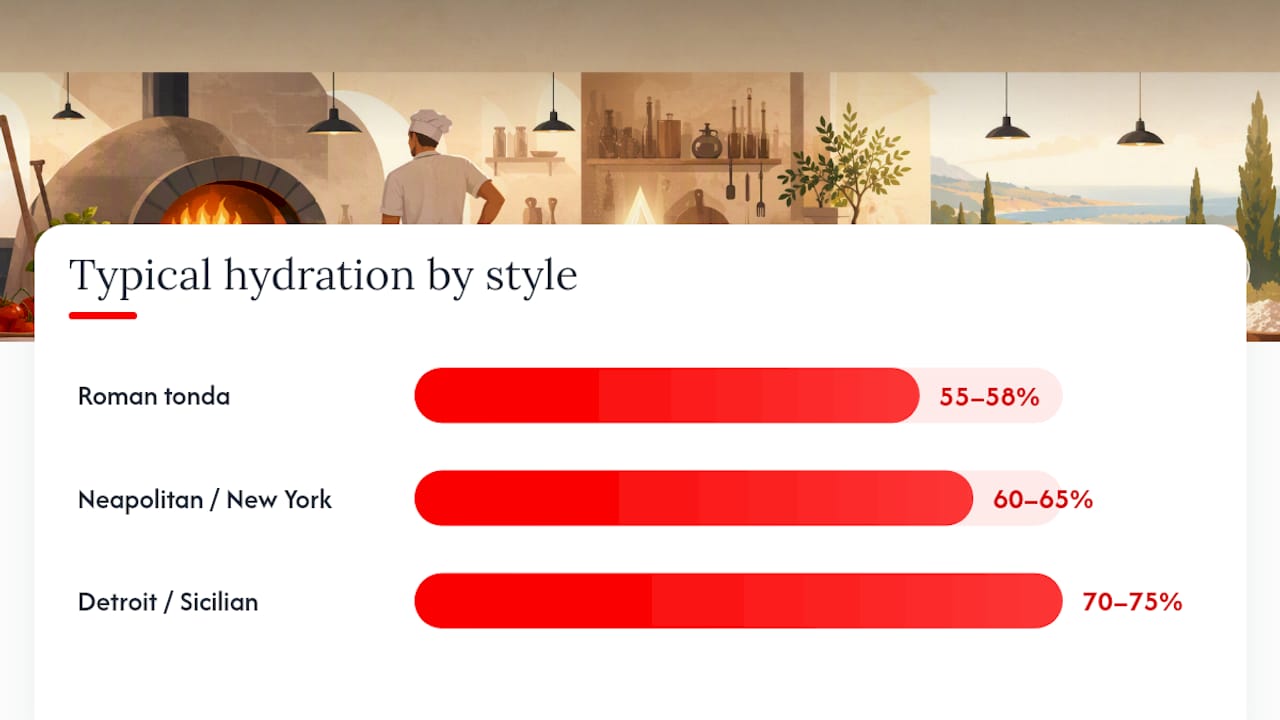
Hydration, expressed as the percentage of water relative to flour weight, is the single biggest lever for texture. Low hydration produces a tight, cracker-like crumb; high hydration produces an open, airy structure that needs a hotter oven and more careful handling to keep from tearing.
| Style | Typical hydration | Flour type | Bake temperature |
|---|---|---|---|
| Roman tonda | 55–58% | Tipo 00 | Very hot, wood-fired |
| Neapolitan / New York | 60–65% | Tipo 00 or bread flour | 800°F+ (Neapolitan); 500 to 550°F (New York) |
| Detroit / Sicilian | 70–75% | Bread flour | 450 to 500°F |
| Roman al taglio | 80%+ | Bread flour | 450 to 500°F, longer bake |
That table comes from Jordo's Pizza Calculator hydration reference, and it explains why a 62% hydration New York dough behaves nothing like a 60% Neapolitan dough despite both technically counting as "thin."
Flour protein matters almost as much as water. Tipo 00 flour is milled fine and low in protein, which suits the blistering heat of a wood-fired oven. Bread flour carries more protein and gluten strength, giving thicker, pan-baked doughs the chew and browning they need at moderate oven temperatures. Fermentation time changes the story again. Longer, cold fermentation, often 24 to 72 hours, softens gluten elasticity slightly while improving flavour and digestibility. Research on dough leavening found volume can double after roughly 16 hours and triple after 24, which is part of why a well-fermented thick crust can feel lighter in the stomach than a rushed thin one.
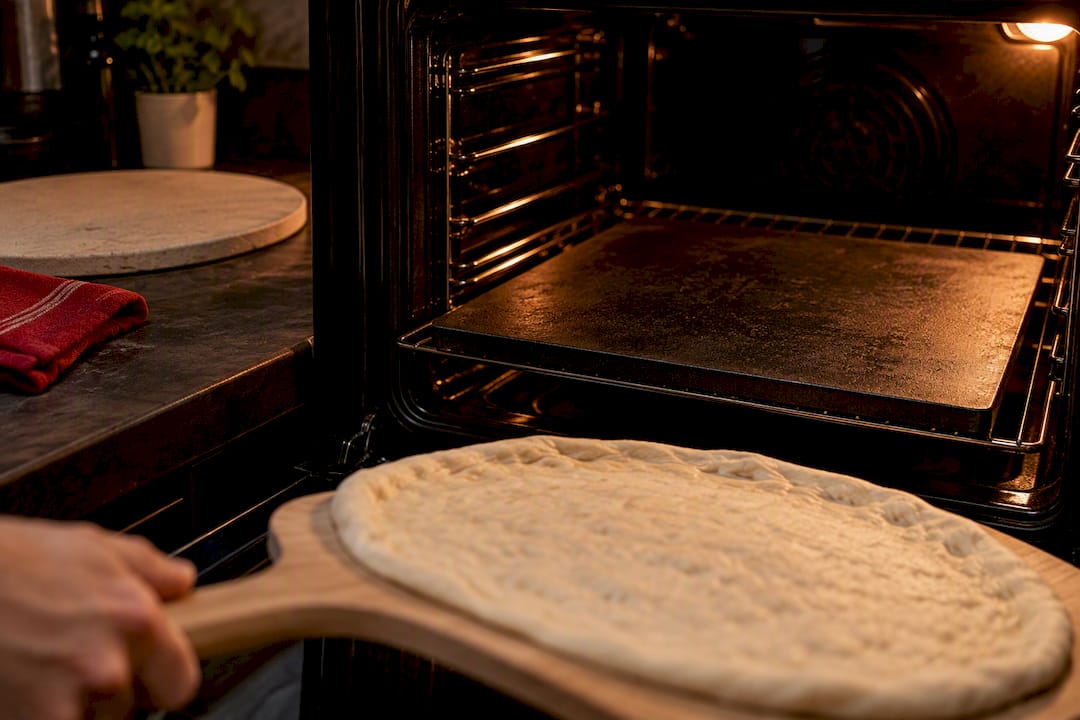
Pro Tip: If you're baking at home without a wood-fired oven, a steel or stone preheated for a full hour gets you closer to pizzeria results than cranking the oven temperature alone ever will.
How to choose between thin and thick crust
A few quick questions settle most crust debates before the order even goes in.
- How many people are eating, and how hungry is everyone? Thick crust fills people up faster per slice.
- How heavy are the toppings you want? Save the triple-meat combo for a pan crust that can support the weight.
- Do you need to eat on the go? Thin, foldable styles win for portability.
- Does the kitchen or pizzeria have the oven heat to do a style justice?
If you're asking a pizzeria directly, three questions tell you what you're really getting: what kind of oven do they use, what temperature do they bake at, and what slice size do they recommend for the style. Watch for red flags on arrival, too: an oily or soggy centre, dough that still tastes raw in the middle, or a crust that tastes unusually sweet, which often signals a rushed or lower-quality dough.
Pro Tip: When topping load is your main worry, ask whether the crust is par-baked before toppings go on. A par-baked base almost always tolerates more weight without turning soggy.
How Hellcrustpizza's dough approach fits both preferences
We build every crust from a Biga multigrain, artificial additive-free dough that ferments slowly, giving it the digestibility and flavour depth this article's dough science points toward. Customizable crusts and a psyllium-based gluten-free crust mean thin-crust purists and thick-crust loyalists both get a version worth ordering. For the full technique breakdown, our artisan dough guide goes deeper.
A cook's honest take on picking your crust
My rule of thumb: thin for a casual, solo slice; thick when the meal is the whole event. Hosting a crowd? Balance one heavily topped thick pie against a couple of simpler thin ones so nobody's stuck choosing between full and light.
— jaskirat Singh
Order the crust that actually matches your craving
Some pizzerias offer dough prepared slowly and additive-free for both thin and thick crusts, so the choice comes down to what you're craving tonight, not which kitchen does thin crust better. A multigrain base can hold up under a loaded signature-style pizza as well as crisp up on a lighter create-your-own build; vegan pizzas and gluten-free crust options can help address various dietary needs.

Browse Create Your Own Pizza, Signature Pizzas, Vegan Pizzas, and the rest of the lineup, including Baked Pasta, Wings & Bites, Appetizers, Dips, Desserts, and Beverages, on our full menu. Check the app for Mix & Match deals and family-sized specials before you order, then pick your crust and get it delivered.
Sources
- PIZZA HUT 14" Pepperoni Pizza, Thick Crust, 1 slice / URochester health encyclopedia
- The Pizza Lab: Three Doughs to Know — Serious Eats
- Pizza dough hydration reference — Jordo's Pizza Calculator
- Flourwise pizza calculator and flour guidance
FAQ
Is thin crust healthier than regular crust?
Not automatically. The University of Rochester's comparison found only a small calorie gap between a thin cheese slice and a thick pepperoni slice, with the thin slice actually carrying more sodium. Toppings and portion size usually matter more than crust thickness.
Why do people order thin crust pizza?
Thin crust delivers a crisp, topping-forward bite that folds easily for eating on the go. It's also currently the top crust preference in US trend reporting, though preference still varies by region and topping choice.
What is the healthiest crust for pizza?
There isn't one universally healthiest crust. What matters more is topping choice, cheese quantity, and slice size, along with dough quality. Hellcrustpizza's Biga multigrain, additive-free dough and gluten-free crust option give you a way to control quality regardless of thickness.
Which type of crust is best for pizza?
It depends on the occasion. Pick thin for foldable, casual eating and topping-forward flavour; pick thick or pan-style for a filling, shareable meal that holds heavier toppings without going soggy.