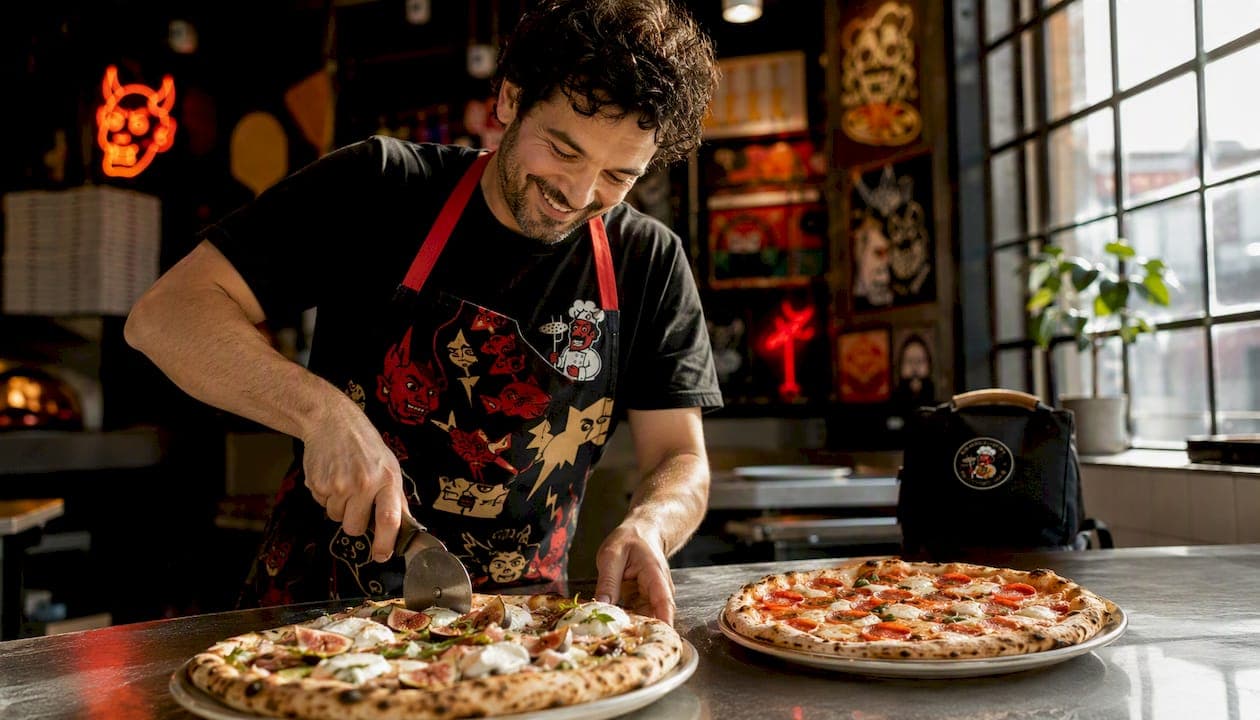
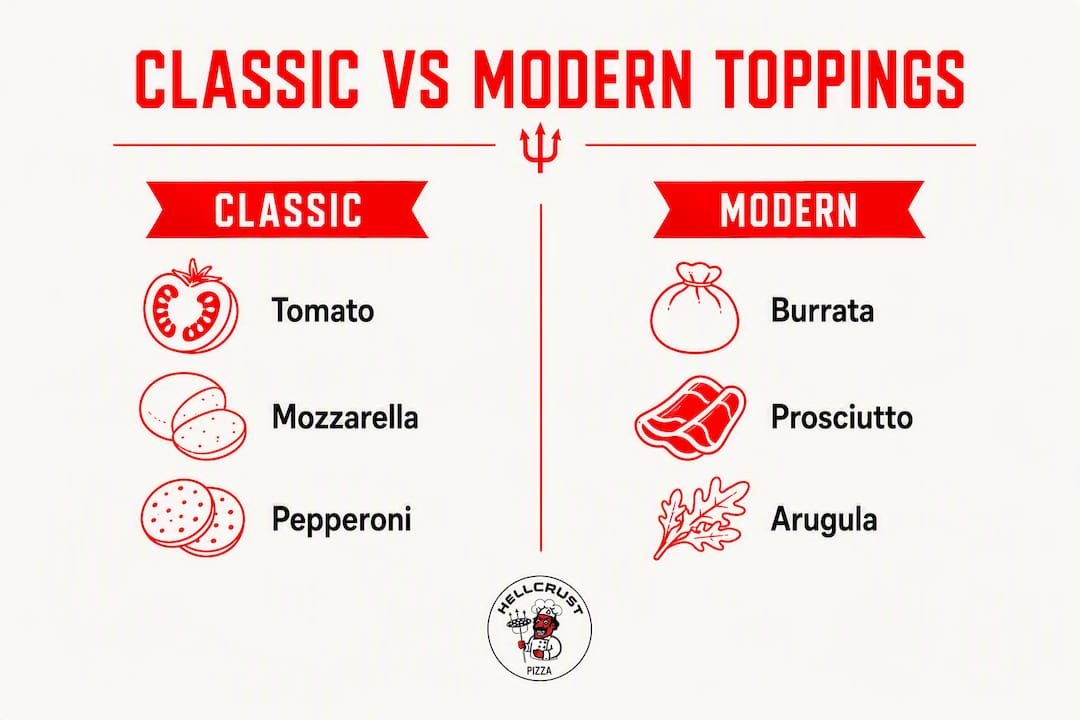
Classic toppings are foundational, oven-tested ingredients built around flavour harmony — think tomato, mozzarella, pepperoni, mushrooms, and fresh basil. Modern toppings are trend-driven, often global or gourmet, and emphasise contrast, visual impact, and finishing flair. Understanding what are classic versus modern toppings comes down to one core idea: classic builds the architecture; modern decorates it.
Quick examples at a glance:
- Classic: Margherita (San Marzano tomato, fior di latte, basil), pepperoni and mozzarella, quattro formaggi
- Modern: Burrata with prosciutto and honey, arugula with shaved parmesan, truffle oil with wild mushrooms
Hellcrustpizza applies both approaches across its menu, grounding every pie in its Biga multigrain, artificial additive-free dough before layering on either time-honoured classics or carefully chosen modern finishes.
Table of Contents
- What separates classic and modern topping philosophy?
- Why classic toppings still anchor every great pizza
- Modern toppings that chefs are reaching for right now
- How to combine classic and modern toppings without wrecking the pie
- Six build templates you can use tonight
- How Hellcrustpizza puts these principles to work
- Key takeaways
- The case for honouring both traditions
- Try a classic and a modern topping on your next Hellcrustpizza order
- Useful sources and further reading
What separates classic and modern topping philosophy?
The split between classic and modern toppings is a design philosophy, not a timeline. Classic toppings prioritise harmony: each ingredient reinforces the others, and the whole pie tastes coherent from first bite to last. Modern toppings chase contrast — sweet against savoury, peppery against creamy, crunchy against soft — and often serve as much visual purpose as flavour purpose.
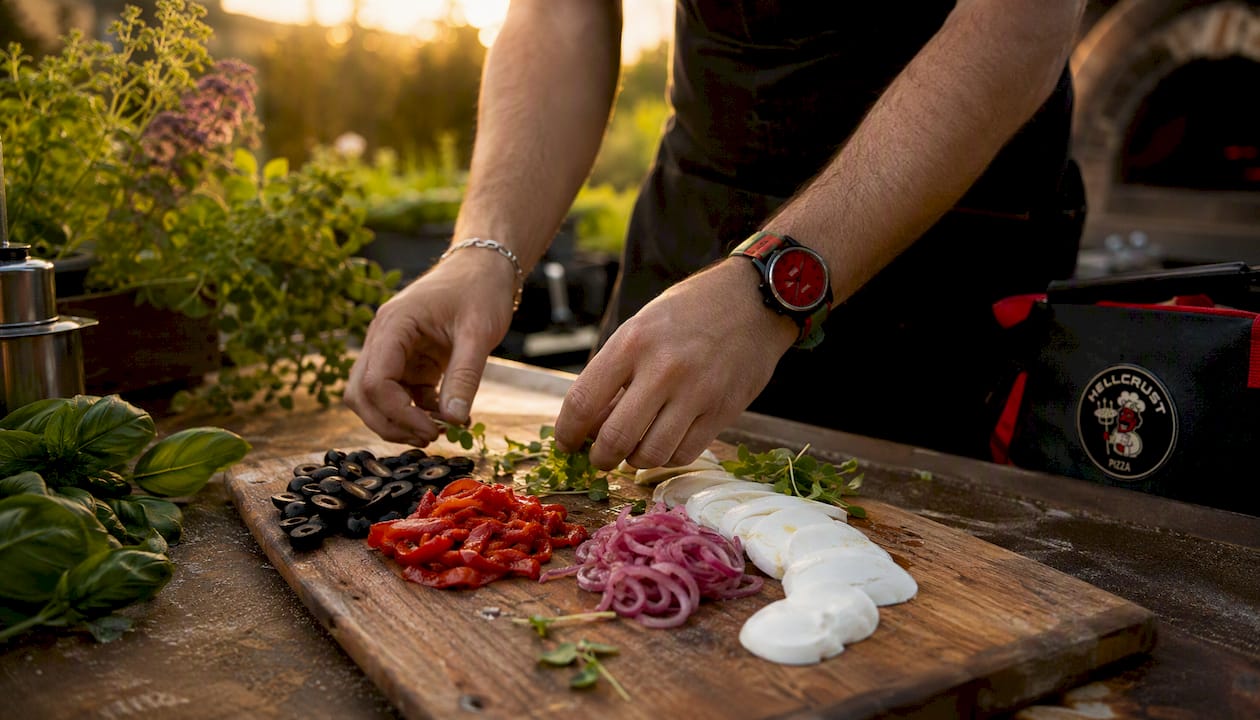
Both approaches share one non-negotiable constraint: the rules of the oven. Fat, salt, acid, and moisture must stay in balance. A pizza loaded with high-water vegetables and a pool of burrata baked at full heat will steam its own crust into mush, regardless of how photogenic it looked raw.
What skilled modern pizza creators understand is that they are not rejecting classic technique. They are borrowing it. The classic base — well-seasoned sauce, low-moisture cheese, a restrained hand with toppings — goes into the oven unchanged. The modern flourish lands after the bake: a drizzle of hot honey, a handful of fresh arugula, a torn piece of burrata. Tradition and creativity work together rather than against each other.
Pro Tip: When you want to try a modern topping, keep the base entirely classic. One bold finishing element on a well-executed Margherita is far more effective than three experimental toppings competing for attention.
Why classic toppings still anchor every great pizza
The core roster of classic toppings includes tomato sauce, mozzarella, pepperoni, Italian sausage, mushrooms, onions, olives, and fresh basil. Their staying power is technical as much as cultural.
Cured meats like pepperoni render fat during baking without releasing excess water, which keeps the crust crisp rather than soggy. Onions soften and sweeten in the oven's heat, adding depth without competing with the cheese. Mushrooms are the one classic that needs attention: with high water content, they should be dry-sautéed or pre-roasted before they go on the pie, or they will steam the dough from below.
Three canonical combos that hold up every time:
- Margherita — San Marzano tomato, fior di latte mozzarella, fresh basil added post-bake. The acid in the tomato, fat in the cheese, and brightness of the basil form a complete flavour triangle.
- Pepperoni and mozzarella — The rendered fat from the pepperoni bastes the cheese as it bakes, creating those iconic crispy-edged cups. No extra salt needed.
- Quattro formaggi — Four cheeses (mozzarella, gorgonzola, fontina, parmesan) at controlled portions. Fat-rich and deeply savoury; skip the tomato sauce to let the cheese speak.
Pepperoni's dominance among classic choices is well-documented: it ranks as the most popular pizza topping in surveys, with approximately 64% citing it as their favourite. That popularity is earned through consistent technical performance, not just habit.
Style-dependent topping ceilings matter here. The AVPN (Vera Pizza Napoletana) standard limits a Neapolitan pie to 2–3 toppings and mandates San Marzano tomatoes and buffalo mozzarella. New York-style tolerates 4–5 toppings comfortably. Detroit and Sicilian styles, with their thicker, sturdier bases, can carry more without structural compromise. Knowing your style before you build saves a lot of disappointment.
Modern toppings that chefs are reaching for right now
Modern toppings favour contrast and finish over bake-time presence. The most common choices include burrata, arugula, truffle oil, figs, prosciutto, hot honey, BBQ chicken, avocado, and pickled chillies. These ingredients emphasise sweetness, heat, or peppery textures alongside savoury bases, and many of them are deliberately added after the oven rather than before it.
Three modern combos worth trying:
- Fig, goat cheese, and prosciutto — Spread a thin layer of honey or fig jam as the base, add crumbled goat cheese before baking, then drape prosciutto and fresh figs on the hot pie straight from the oven. Sweet, salty, and visually striking.
- Burrata, cherry tomato, and basil — Bake with a simple tomato base and low-moisture mozzarella, then place torn burrata in the centre post-bake. The residual heat softens it without destroying its creamy core.
- Hot honey and spicy salami — A classic pepperoni base finished with a controlled drizzle of hot honey. The heat of the honey amplifies the spice in the salami without overwhelming the cheese.
Premium and gourmet toppings used this way can raise the cost per pizza by roughly 20–50% over standard ingredients, so use them sparingly. Fewer, higher-quality ingredients almost always outperform a generous handful of mediocre ones. For a deeper look at regional topping styles that have shaped these modern trends, the Hellcrustpizza blog is worth a read.
Pro Tip: Burrata, fresh arugula, thin-sliced prosciutto, and most fresh herbs must go on after baking. The oven wilts delicate greens and melts burrata into a puddle. Pull the pizza out, let it rest 60 seconds, then add your finishing elements.
How to combine classic and modern toppings without wrecking the pie
Three rules govern every successful hybrid pizza: manage moisture, respect weight limits, and sequence toppings correctly.
- Build your classic base first. Sauce, low-moisture cheese, and any sturdy bake-time toppings (cured meats, pre-cooked vegetables, olives) go on before the oven.
- Pre-treat high-moisture ingredients. Dry-sauté mushrooms, roast peppers, and squeeze excess water from fresh tomatoes before they touch the dough.
- Add delicate modern finishes after baking. Arugula, burrata, prosciutto, fresh herbs, and drizzles (hot honey, truffle oil, aged balsamic) all belong on the hot pie, not in the oven.
- Keep total toppings to 2–5 depending on style. More than five on a thin crust is a structural problem, not just a flavour one.
- Account for bake temperature. A high-temp Neapolitan oven (450°C+) cooks in 90 seconds; toppings that need time to render or caramelise will not get it. A moderate home oven at 230–260°C gives toppings more time to develop.
- For flavour-pairing logic that supports the fat-salt-acid balance, the Hellcrustpizza gourmet guide offers tested combinations.
Pro Tip: A finishing acid — a squeeze of lemon, a splash of aged red wine vinegar, or a few drops of good olive oil — lifts modern toppings and makes the whole pie taste brighter without adding weight.
Six build templates you can use tonight
A short answer before the templates: comfort, gourmet, vegetarian, spicy, sweet-salty, and shareable each call for a slightly different approach to sequencing and portioning.
| Pizza Style | Typical Oven Temp | Approximate Bake Time |
|---|---|---|
| Neapolitan | 450°C+ | 60–90 seconds |
| New York | 230–260°C | — |
| Detroit / Sicilian | 230–260°C | — |
| Home oven adaptation | 230–260°C | — |
- Comfort — Tomato base, mozzarella, pepperoni, Italian sausage. Bake fully. No post-bake additions needed. Classic architecture at its most reliable.
- Gourmet — White base (olive oil, garlic), mozzarella, wild mushrooms (pre-sautéed), caramelised onions. Finish with shaved parmesan and a drizzle of truffle oil post-bake.
- Vegetarian — Tomato base, mozzarella, roasted red peppers, artichoke hearts, olives. Finish with fresh basil. Vegetarian toppings are among the fastest-growing choices in 2026.
- Spicy — Tomato base, mozzarella, spicy salami, pickled chillies (added last 3 minutes of bake). Finish with a drizzle of hot honey.
- Sweet-salty — Fig jam base, mozzarella, goat cheese. Bake, then finish with prosciutto, fresh figs, and a light honey drizzle. Limit to 4 toppings total.
- Shareable — Tomato base, mozzarella, pepperoni on half, roasted vegetables on the other half. Post-bake: arugula on the veggie side, chilli flakes on the meat side. Converts a classic into a crowd-pleaser with one modern finishing touch per half.
To convert any classic template into a modern variant, add one finishing element after the bake: hot honey on comfort, truffle oil on gourmet, or a torn burrata on vegetarian.
How Hellcrustpizza puts these principles to work
Hellcrustpizza builds every pizza on its Biga multigrain, artificial additive-free dough — a preferment process that develops a rich, mature flavour in the base before a single topping is chosen. That foundation matters because a well-developed crust can carry both classic and modern toppings without losing structural integrity.
On the classic side, the Margherita follows the same architectural logic the AVPN has always championed: quality tomato, fresh mozzarella, basil added after the bake. On the modern side, a gourmet burrata pizza gets its classic mozzarella base baked first, with torn burrata and a controlled honey drizzle applied to the hot pie. A spicy-honey special layers pepperoni and spicy salami during the bake, then finishes with hot honey and fresh chilli for contrast.
- The Hellcrustpizza gourmet guide covers premium finishing techniques in detail.
- For readers who want to customise their own order, the customisable toppings guide walks through portioning and pairing options.
Pro Tip: Post-bake arugula, a portioned piece of burrata, and a measured honey drizzle are the three finishing moves Hellcrustpizza uses most. Each one takes under 30 seconds to apply and transforms a solid classic pie into something that photographs beautifully and tastes even better.
Key takeaways
Classic toppings build the structural and flavour foundation of a great pizza; modern toppings work best as high-impact finishing elements applied after the bake, not during it.
| Point | Details |
|---|---|
| Design philosophy | Classic = flavour harmony and oven reliability; modern = contrast, finish, and visual impact. |
| Respect oven rules | Balance fat, salt, and acid; pre-treat high-moisture vegetables to protect the crust. |
| Sequence matters | Bake sturdy classics first; add delicate modern finishes (burrata, arugula, hot honey) after the oven. |
| Topping ceilings by style | Neapolitan: 2–3 toppings; New York: 4–5; Detroit/Sicilian: more is structurally possible. |
| Hellcrustpizza approach | Biga multigrain dough as the foundation, with classic or modern toppings layered and finished to order. |
The case for honouring both traditions
There is a tendency in food writing to frame classic and modern as opposing camps, as though choosing burrata over pepperoni is a statement of culinary identity. It is not. The most satisfying pizzas we have ever eaten were built on an unwavering classic foundation with one or two thoughtfully chosen modern flourishes on top.
What gets lost in the classic-versus-modern debate is the shared technical discipline both require. A modern pizza with poor moisture management is just as disappointing as a classic pizza with low-quality cheese. The oven does not care about trends. It rewards preparation, balance, and restraint every single time.
Our view at Hellcrustpizza is this: start with the classics, learn why they work, and then experiment with modern finishes from a position of confidence rather than novelty. The Biga dough we craft gives you a base worthy of both approaches. The gastronomic trends shaping 2026 are genuinely exciting, but they are most rewarding when the fundamentals are already solid.
Try a classic and a modern topping on your next Hellcrustpizza order
The most practical way to experience the classic-versus-modern difference is to order one pie that does both. Start with a pepperoni and mozzarella base — your classic comfort foundation — then ask for a hot honey drizzle and a handful of arugula as post-bake finishes. That single order covers everything this guide has covered: a reliable classic architecture, a modern finishing contrast, and the fat-salt-acid balance that makes both approaches work.

Hellcrustpizza's app makes this kind of customisation straightforward, with options to build your own combination and access app-exclusive deals on every order. Check the current pizza coupons and deals to find a Mix & Match or family-sized special that lets you try a classic and a modern build side by side without paying full price for both. Order through the app, customise your toppings, and taste the difference a well-sequenced pie makes.
Useful sources and further reading
The claims in this article draw on style standards, culinary guides, and trend research. The Hellcrustpizza blog contains hands-on recipes, local deals, and technical dough notes for readers who want to go deeper.
- The Ultimate Guide to Pizza Toppings — That Pizza Kitchen