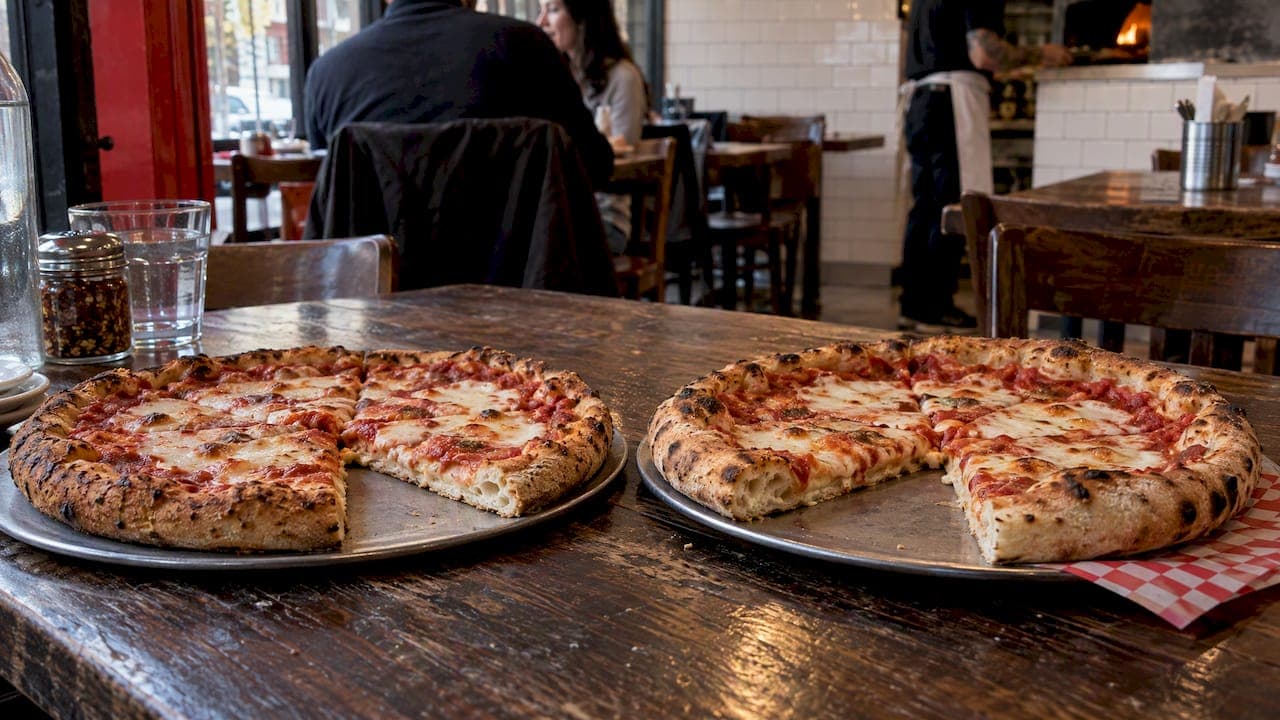
Gluten-free pizza and regular pizza differ most in the crust: wheat flour gives regular dough its stretch and chew, while gluten-free crusts rely on other flours and binders to imitate it. Gluten-free is not automatically the healthier pick. It is essential for people with celiac disease, and for everyone else it is a matter of taste, tolerance and what sits on top.
We make pizza every day, so we get this question a lot. Below we cover what changes in the dough, what the research says about nutrition and price, how Canada defines "gluten-free", and how to order safely if you need to.
TL;DR
- Gluten-free pizza is not inherently healthier. Canadian packaged-food research found gluten-free versions often carry more calories and sodium and cost more.
- The crust recipe matters more than the label: a crust built on diverse flours such as chickpea, flax or psyllium can deliver fibre and minerals, while a starch-heavy one may not.
- For celiac disease, cross-contamination is the real issue. In Canada, "gluten-free" means a food meets Health Canada's rules, with gluten kept below 20 ppm.
- If you can eat gluten, a well-fermented, fibre-rich crust is a very good choice. Our Biga multigrain dough is one, but it is not a gluten-free dough.
Table of Contents
- What actually separates the two crusts
- Is gluten-free pizza healthier than regular?
- When gluten-free is the right choice
- What "gluten-free" means in Canada
- Ordering gluten-free pizza safely
- Taste and texture: what to expect
- Cost: why gluten-free usually costs more
- Our perspective: a crust we are proud of
- How to choose: a quick decision guide
- Order from HellCrust
- FAQ
- Sources
What actually separates the two crusts
Gluten is the protein network that forms when wheat flour meets water and is kneaded or left to rest. It traps gas from fermentation, which is why a regular pizza crust stretches thin, puffs at the edge and chews. Take it away and you have to rebuild that structure.
Gluten-free crusts typically use a blend of rice flour, potato starch, tapioca, sorghum and xanthan gum to make up for the missing elasticity. Others use almond, corn or bean flours. That is why so many gluten-free pizzas come out thin and crisp: a thin crust is simply easier to get right without gluten. If you have ever wondered why almost every gluten-free option seems to be a cracker-style base, this is the answer.
| Regular wheat crust | Gluten-free crust | |
|---|---|---|
| Structure from | Gluten network | Starches, gums, psyllium or egg |
| Typical texture | Chewy, airy, can be thick or thin | Often thin and crisp, can turn dense or crumbly |
| Flavour | Develops with fermentation | Depends heavily on the flour blend |
| Usual price | Baseline | Often higher |
| Safe for celiac disease | No | Only if made and handled to a gluten-free standard |
Is gluten-free pizza healthier than regular?
Not by default. A study of Canadian packaged foods compared products with and without gluten-free claims. It found gluten-free items were more expensive in 10 food categories, and 17% of the ultra-processed foods carried a gluten-free claim. The same research reports that median calories were higher in gluten-free products (300 kcal against 255 kcal per 100 g).

The wording in a CMAJ piece on the gluten-free industry is blunt: nutritionists warn that gluten-free pizza is not necessarily the healthier choice. Dietitian Alexandra Anca adds in the same article that a common misconception is that going gluten-free leads to weight loss. Many people compensate with products higher in fat, sugar and calories, or absorb nutrients better as the gut heals.
The picture is not all bad, though. The Canadian nutrient data in this analysis of gluten-free foods shows gluten-free pizza crust can be a real source of fibre and minerals when it is formulated with ingredients like chickpea flour, flax and psyllium. Some commercial crusts, by contrast, are high in carbohydrate and low in fibre. Read the ingredient list, not the front of the box.
What matters more than gluten
For most people the nutrition of a pizza comes down to four things:
- The flour and how it is fermented. Whole and multigrain flours bring fibre. Long fermentation develops flavour and makes dough easier to digest.
- Additives. Short ingredient lists are easier to judge. We explain what that means in practice in our guide to what makes pizza dough additive free.
- Toppings. Vegetables and lean proteins change a pizza far more than a swap of crust. Extra cheese and processed meats change it the other way.
- Portion. Two slices with a salad is a different meal from half a large pie.
One gluten-free advocate writing on a Canadian celiac-focused site makes a similar point: real, whole foods do not need a gluten-free claim, and highly processed gluten-free substitutes are often treats rather than nutritional upgrades.
When gluten-free is the right choice
Gluten-free is not a fad for the people who need it. If you have celiac disease, even small amounts of gluten matter, and a strictly gluten-free diet is the way you stay well. If a doctor has told you that you have celiac disease or a wheat allergy, that decision is not about taste or trends, and it is worth asking your doctor or a registered dietitian what applies to you.
If you feel unwell after wheat but have not been tested, speak to your doctor before cutting gluten out. Testing for celiac disease generally needs gluten to be in your diet, so changing what you eat first can muddy the result.
What "gluten-free" means in Canada
A food can only be represented as gluten-free if it complies with section B.24.018 of the Food and Drug Regulations. Health Canada treats gluten levels below 20 parts per million as protective for most people with celiac disease, and products above that may be subject to recall. Gluten that gets in through cross-contamination must be kept as low as reasonably achievable and not exceed 20 ppm.
Two practical consequences follow:
- A "gluten-free" label on a packaged crust is regulated. A casual menu note at a restaurant is a different thing.
- Terms such as "gluten-friendly" are not regulated, and the Canadian Celiac Association warns they can mislead.
If you want the detail on thresholds and toppings, our write-up on 20 ppm and gluten-free pizza toppings in Canada goes through it.
Ordering gluten-free pizza safely
Pizzerias are a harder place to avoid gluten than most kitchens. Flour goes airborne, and particles can settle on gluten-free preparation surfaces even when they are some distance from the main dough station. Celiac Canada's guidance is that dedicated gluten-free facilities, or those with third-party verified cross-contamination protocols, are the safest options when dining out, because standard restaurant kitchens often lack the segregation.
If you have celiac disease, do this before you order:
- Say it plainly. Tell the restaurant you have celiac disease and need a strictly gluten-free meal, then ask what steps they take.
- Ask about the process, not only the crust. Shared ovens, shared cutters, shared sauce ladles and flour on the bench all matter.
- Check the toppings and sauces. Ingredients and suppliers change, so ask each time.
- Trust the answer, not the menu icon. If staff cannot explain their procedure, choose something else.
Our own take on the conditions that make an order safe is in Gluten Free Pizza Safety in Canada: 2 Conditions for Celiac Safe Orders. To be straightforward with you: our signature Biga multigrain dough is a gluten-containing dough. If you have celiac disease, ask us about our gluten-free option and how it is handled before you place an order, rather than assuming.
Taste and texture: what to expect
Gluten-free baking is trial and error. Some products taste like cardboard and others are genuinely delicious, and one bakery or brand is not a guide to another. That fits what pizza lovers say too: the gluten-free pizza on offer is usually thin and crackery, and many people miss a soft, warm dough under the cheese.
If you bake at home, you can do a lot better than a packet mix. A psyllium-based crust gives gluten-free dough some of the stretch it lacks, and our 1.5-hour crisp gluten-free crust with psyllium walks through it. If you are cooking for someone with allergies, our two tested allergy-friendly doughs include one that takes under 30 minutes. And if you are weighing alternatives to wheat, cauliflower against standard gluten-free crusts is worth a read.
Cost: why gluten-free usually costs more
Specialty flours, smaller production runs and stricter handling all add up. The Canadian study cited above found higher prices for gluten-free products in 10 food categories against their regular equivalents. A review in the same research literature notes gluten-free products can run five to six times the price of wheat-based ones. A pizza is a smaller purchase, so the gap is smaller, but expect to pay a premium for a gluten-free base almost everywhere. Check current prices on our menu before you order.
Our perspective: a crust we are proud of
We started HellCrust around the dough. Our Biga is a preferment: a portion of the dough is mixed and left to mature in advance, so the finished crust gets a rich, mature flavour and a lighter, more digestible bite. We use multigrain flour, which brings fibre, and we keep the dough free of artificial additives. That is the kind of real-food approach that the nutrition research above keeps pointing back to.

We also believe in being honest about what that means. If you can eat gluten and want a crust with character, a slow-fermented multigrain dough is a deeply satisfying choice, and you can savour it without any fuss. If you cannot eat gluten, our wheat-based Biga dough is not for you, and you deserve a clear answer about the alternatives rather than a marketing line. We would much rather you ask how a gluten-free order is prepared than guess. You get what you pay for, and with food safety that includes the care that goes into the process.
For families we find that the most useful move is to get the toppings right: lots of vegetables, sensible cheese, and a crust with some fibre. Our guide to multigrain pizza for kids covers that, and the thin versus thick crust choice is a good place to start if you are not sure which style suits your table.
— jaskirat Singh
How to choose: a quick decision guide
| Your situation | A sensible choice |
|---|---|
| Celiac disease or diagnosed wheat allergy | Strictly gluten-free, from a kitchen that can explain and verify its handling |
| Non-celiac, curious about gluten-free for health | Look at the whole pizza: fibre, toppings, portion. Speak to a doctor or dietitian first |
| No gluten issue, want more fibre and flavour | A fermented multigrain crust with vegetable toppings |
| Dairy-free or plant-based | A vegan pizza, then check the crust for your gluten needs |
| Cooking for a mixed group | Order a separate gluten-free option and tell the kitchen who it is for |
Crust style also changes the experience. If you are comparing pan and hand-tossed shapes, our piece on how Biga multigrain changes hand-tossed and pan pizza shows what each does to the bite, and how extras behave on different crusts helps you build the pizza.
Order from HellCrust
Our menu includes Create Your Own Pizza, Signature Pizzas, Vegan Pizzas, baked pasta, sides, wings and bites, desserts and more, with vegan and gluten-free options and app-exclusive deals. Build your own with the toppings you want, and ask us anything about ingredients before you order. See the full HellCrust menu and choose delivery or pickup in North Vancouver, Vancouver or West Vancouver.
FAQ
Is gluten-free pizza healthier than regular pizza?
Not necessarily. Canadian research found that gluten-free packaged foods often had more calories and sodium than regular versions, and cost more. A gluten-free crust made with chickpea, flax or psyllium can offer good fibre, but a starch-heavy one may not. Toppings and portion size usually matter more than the label.
Does gluten-free pizza help you lose weight?
No, not on its own. Dietitians quoted in CMAJ say many people do not lose weight after going gluten-free, and some gain it. If you want a lighter meal, choose vegetable toppings, go easy on extra cheese and watch the portion.
Is gluten-free pizza safe for people with celiac disease?
Only if it is made to a gluten-free standard and protected from cross-contamination. In Canada the benchmark is below 20 ppm, and Celiac Canada points to dedicated facilities or third-party verified protocols as the safest choices. Tell the restaurant you have celiac disease and ask how they prepare the order.
Why does gluten-free pizza taste different?
Gluten gives wheat dough its stretch and chew, so gluten-free crusts use starches, gums or psyllium to imitate it. The result is often thinner, crisper or more crumbly, and quality varies a lot from one maker to the next. Home recipes with psyllium can get noticeably closer to a regular crust.
Sources
- Compliance and enforcement of gluten-free claims, Canadian Food Inspection Agency
- The Level of Processing, Nutritional Composition and Prices of Canadian Packaged Foods and Beverages with and without Gluten-Free Claims, PMC
- Nutrient analysis of gluten-free foods in a Canadian database, PMC
- Gluten-free industry is healthy, but is the food? CMAJ
- Dining Out with Celiac Disease: Navigating Challenges and Enjoying Meals Safely, Celiac Canada
- Gluten Free Dining, Dining Safely, Celiac Canada
- A decade of celiac disease, Gluten Free Garage