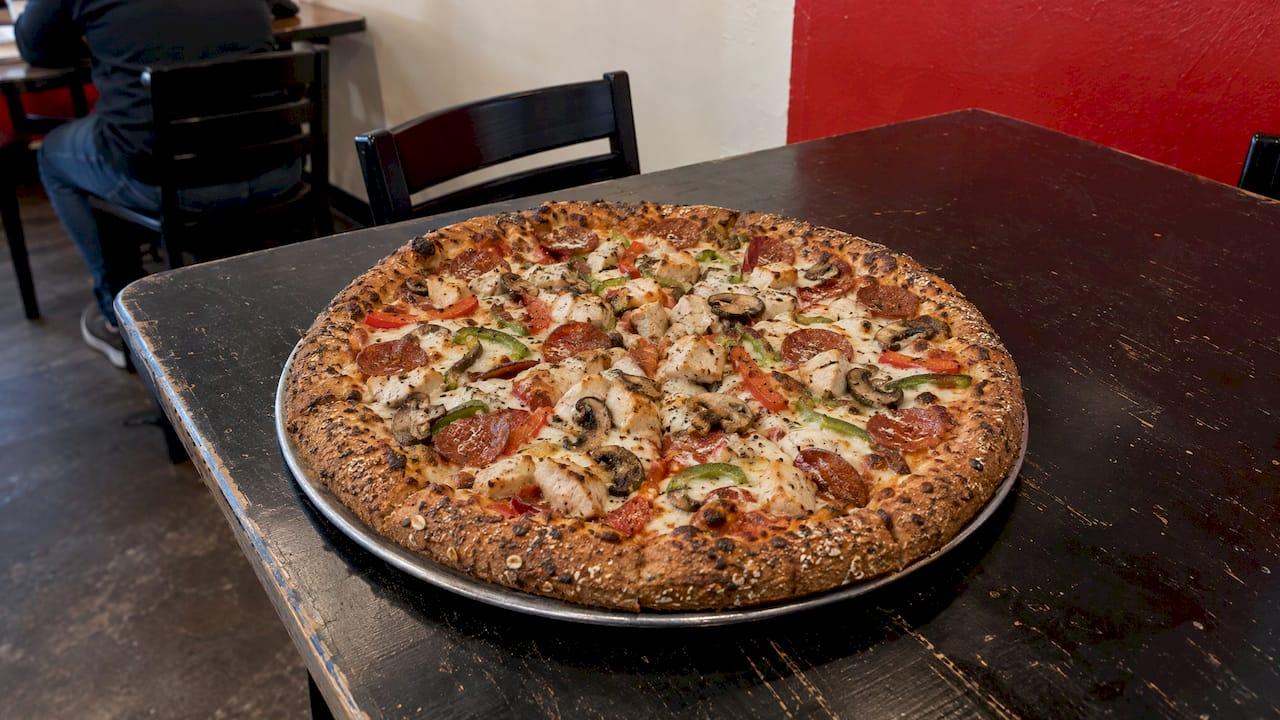
What makes a pizza feel like a proper meal instead of a snack? Usually it is protein. The best protein toppings are chicken, turkey pepperoni, ham, prawns, egg and good cheese, and on the plant side tofu, tempeh, chickpeas and lentils. Pile two or three of them onto a sturdy crust, add vegetables for fibre and volume, and one pizza can carry a real share of your day's protein.
Below we go through how much protein each topping gives, which combinations work, what to build at home and what to ask for when you order. We bake on a Biga multigrain dough, so we think a lot about what sits on top of it.
TL;DR
- Lean meats lead the list: chicken is about 27 g of protein per 100 g and turkey about 29 g, while regular pepperoni is about 19 g per 100 g.
- Cheese counts too: parmesan and mozzarella both sit around 26 to 33 g per 100 g, so a hard cheese goes a long way.
- Vegetarian and vegan pizzas can be filling with eggs, cottage cheese, tofu, tempeh, chickpeas and lentils.
- Pick two or three proteins, not seven, and balance them with vegetables so the pizza stays crisp and not soggy.
- Want it ready-made? Build your own or pick a signature pizza from our menu.
Table of Contents
- Which toppings give you the most protein
- Vegetarian and vegan protein toppings
- Combinations that work
- How to make a high-protein pizza at home
- What we think about protein on pizza
- Ordering a high-protein pizza for delivery
- Build your protein pizza with us
- FAQ
- Sources
Which toppings give you the most protein
Amounts below are per 100 g unless noted, and they are rough guides, since brands and cuts differ. Use them to compare, not to count to the gram.
| Topping | Protein | Good to know |
|---|---|---|
| Turkey | about 29 g per 100 g | Lean and mild, pairs with almost anything |
| Chicken | about 27 g per 100 g | The most popular lean choice |
| Prawns | about 24 g per 100 g | Cook briefly so they stay tender |
| Ham | about 21 g per 100 g | Salty, so go lighter on extra cheese |
| Egg | about 13 g per 100 g | One large egg adds about 6 g |
| Turkey pepperoni | about 31 g per 100 g | Leaner than regular pepperoni |
| Regular pepperoni | about 19 g per 100 g | Flavour first, protein second |
The per-100 g figures for chicken, turkey, ham, prawns and egg come from a topping-by-topping protein list, and the pepperoni comparison from a review of pepperoni nutrition. The egg figure of 6 g per large egg comes from WW's pizza guide.
Meat toppings
Chicken is the all-rounder. It is lean, it takes on spice well, and it plays nicely with peppers, mushrooms and onions. If you like it saucy, a buffalo or barbecue glaze works, but keep the sauce thin so the crust holds.
Turkey is just as strong. Turkey pepperoni is the easy swap if you love the look and spice of pepperoni and want more protein per bite. Canadian bacon is another quick option: one Canadian bacon product lists 10 g of protein per 56 g serving. A Canadian-made pizza pepperoni lists 16 g per serving, which shows how much the brand and serving size matter, so read the label on whatever you buy.
Ham and prawns round out the seafood and deli side. Prawns suit a garlicky, tomato-led pizza. If you enjoy salty, savoury toppings, anchovies are worth a look too, and this piece on anchovies on pizza explains why they belong and how to order them.
Meat lovers who want to stack several toppings without the pizza turning heavy can read our guide to topping pairings for meat lovers.
Cheese is a protein topping too
It is easy to forget that the cheese is doing work. Mozzarella lands around 26 g per 100 g and parmesan around 33 g per 100 g, according to the same list. Because parmesan is so concentrated in flavour, a light shower over the finished pizza adds both taste and protein without a heavy layer of melted cheese.
Ricotta and cottage cheese are softer and lower per gram, but they add creaminess. In one Dutch set of topping portions, 100 g of cottage cheese comes to about 11 g of protein. Dollop it on after baking, or spread it under the sauce as a base.

Eggs and seafood
An egg cracked onto a pizza for the last few minutes of baking gives you a rich yolk and a few extra grams. Tuna is another good one: 100 g of drained tuna is listed at roughly 24 g of protein. Pair it with red onion and capers and skip heavy sauces.
Vegetarian and vegan protein toppings
You do not need meat for a filling pizza. Vegetarian choices include cottage cheese, ricotta, paneer, eggs and Greek-style yogurt sauces, and vegan options include tofu, tempeh, chickpeas, lentils, beans, peas and edamame, plus plant-based meat alternatives and nutritional yeast.
Here is how to use them so they taste like they belong:
- Tofu: press it, crumble it, season with Italian herbs and garlic, and bake it on the pizza so the edges brown.
- Tempeh: slice thin and toss with barbecue sauce, then pair with onions and peppers.
- Chickpeas: roast or toss them with a spicy sauce. A buffalo chickpea pizza with spinach, mozzarella and a whole-grain crust is listed at 25 g of protein and 8.7 g of fibre per serving.
- Lentils: blend them into the pizza sauce so you add protein without changing the look of the pizza.
- Edamame: scatter on at the end for colour and a bit of bite.
Vegetables do not carry much protein on their own. Spinach is about 2.9 g per 100 g and broccoli about 2.8 g, per the same topping list. Their job is fibre, colour and volume, which helps a pizza feel like a full meal.
A vegetarian pizza built on Canadian mozzarella with artichokes, mushrooms, olives, onion and peppers is listed by Dairy Farmers of Canada at 18 g of protein per serving, which shows a meatless pizza can hold its own.
For more on the plant-based side, see our guides to vegan pizza toppings and vegan protein pizza, and our piece on why vegetarian toppings are growing.
Combinations that work
The trick is a plan. One main protein, one supporting protein, a vegetable or two and a sauce that fits. These pairings come up again and again in recipe collections, for good reason:
- Chicken, mushrooms, peppers and spinach. The classic. Cook the mushrooms and spinach first so they release their water before they hit the crust.
- Prawns, garlic, spinach and tomato. Light and bright, with a little chili if you like heat.
- Tofu, mushrooms, peppers and chili. A hearty vegan build.
- Tempeh, barbecue sauce, onion and peppers. Smoky and sweet.
- Chickpeas, tomatoes, olives and herbs. Mediterranean in feel.
- Paneer, peppers, onion, spinach and herbs. A vegetarian take with a bit of spice.
These ideas follow a list of high-protein topping combinations from recipe sites. Treat them as starting points and adjust to your taste.
A rough protein budget
If you like numbers, a Dutch fitness site gives sample builds. A cottage cheese base with tomato sauce, 80 g of chicken, peppers and 60 g of mozzarella is estimated at 45 to 55 g of protein for the whole pizza. A Greek yogurt base with tuna, onion, capers and a little cheese comes in at 42 to 50 g by the same source. Those are estimates for a protein-focused crust, so a regular pizza will land differently. The principle holds: two protein sources plus cheese get you most of the way.
How to make a high-protein pizza at home
If you want to try the protein-crust route in your own kitchen, Greek yogurt dough is the usual shortcut. It needs no yeast and no rising time. One recipe combines bread flour, baking powder and plain Greek yogurt, is rolled to about a quarter inch thick, and lists 10 g of protein per slice of dough.
A quick version:
- Preheat the oven to 180°C (360°F), following this 40 g protein recipe.
- Mix whole-wheat flour, baking powder and Greek yogurt, knead briefly and shape into a small round with slightly thicker edges.
- Spread on pizza sauce, add shredded chicken and mozzarella.
- Bake 15 to 20 minutes until the cheese melts and the crust is golden, then let it cool 5 to 10 minutes.
That recipe uses about 140 g of shredded chicken and 40 g of mozzarella for a stated 40 g of protein. Another home version uses turkey pepperoni, mushrooms, green pepper and mozzarella for a listed 33 g per serving.
Keep it crisp
Protein toppings carry moisture, and moisture is the enemy of a crisp base. A few habits help:
- Sauté mushrooms and spinach first. One chicken-crust recipe makes the same point and notes that part-skim mozzarella releases little liquid.
- Pre-cook raw meats such as chicken and prawns, so they finish on the pizza and do not steam it.
- Drain tuna, chickpeas and tofu well, and pat them dry.
- Do not overload. Three or four toppings are plenty.
What we think about protein on pizza
We have been making pizza long enough to know that the crust is where the story starts. Our Biga multigrain dough is prepared in advance, left to mature, and made without artificial additives. We design it to be a fibre-rich, more digestible base, and that matters when you are building a pizza meant to fill you up.
A strong crust earns its keep with protein on top. We like chicken, ham and good cheese for people who want something hearty, and tofu, chickpeas and vegetables for those who choose our vegan pizzas. The aim is never to pile on everything. It is to pick two or three toppings that suit each other, so every bite tastes of something and the pizza still has room for vegetables.
You get what you pay for, and a pizza built on a wholesome dough with fresh toppings is a meal you can savour without second-guessing it. If you want to customize, our create-your-own option lets you decide exactly what goes on.
jaskirat Singh
Ordering a high-protein pizza for delivery
You do not need a home kitchen to eat well. When you order, a few choices shift the balance:
- Go lean on the main topping. Ask for chicken or ham as your anchor, and add one more protein, not four.
- Choose a hearty crust. A multigrain base adds fibre that helps the meal feel more substantial.
- Add vegetables. They add volume and fibre. WW's guide suggests colourful toppings like broccoli, tomato and peppers for exactly that.
- Add a side. A WW nutrition manager suggests ordering veggie sides such as sautéed spinach or roasted broccoli and eating them first. Our salad pairing guide has ideas.
- Share the plan. For family nights, our guide to balancing nutrition in a pizza family meal covers how to mix toppings so everyone gets something they like.
Training day? See our guide to ordering healthy pizza after the gym. To understand the trend itself, read why protein toppings are so popular. And if you want to match toppings to the crust, we explain how to pair toppings on a multigrain base.
Pizza night with kids
Kids often eat more when they build their own. One WW nutrition expert suggests a toppings bar at home with fresh vegetables and lean protein such as peppers, eggplant and lean turkey meatballs, as a way to encourage the family to try new foods. Put out shredded chicken, mozzarella, mushrooms and peppers, and let everyone assemble their own. If you would rather skip the cleanup, we also host kids' pizza-making events in store.
Build your protein pizza with us
We deliver and offer pickup in North Vancouver, Vancouver and West Vancouver. Our menu includes Create Your Own Pizza, Signature Pizzas, Vegan Pizzas, Baked Pasta, Wings & Bites, Appetizers, Desserts, Dips and Beverages. Start with a Biga multigrain crust, choose your toppings, and add a side if you want a bigger spread. Prices are listed at checkout, and our app carries exclusive offers.

Ready to order? Browse the HellCrust Pizza menu and build the pizza you have been picturing, or visit our home page to see how ordering works.
FAQ
What is the best high-protein pizza topping?
Chicken and turkey are the usual winners, at about 27 g and 29 g per 100 g respectively. Turkey pepperoni is a close, flavourful swap for regular pepperoni. Pair either with cheese for an even bigger protein boost.
What are good vegetarian protein toppings for pizza?
Eggs, cottage cheese, ricotta, paneer, tofu, tempeh, chickpeas, lentils and edamame all add protein. Parmesan, cheddar and mozzarella contribute too. Roast or sauté them first so they keep their texture on the crust.
Can a pizza really be high in protein?
Yes, with the right build. Home recipes using Greek yogurt dough, chicken and mozzarella list around 40 g per pizza, and turkey pepperoni versions list 33 g per serving. The numbers depend on crust, portion and toppings, so treat them as guides.
How do I stop protein toppings from making the pizza soggy?
Cook watery ingredients like mushrooms and spinach beforehand, drain tuna, chickpeas and tofu, and pre-cook raw meats. Keep sauce thin and limit yourself to three or four toppings.
Should I add protein powder to pizza dough?
Some home recipes swap about 70 g of the flour for unflavoured protein powder such as pea, whey or casein. It is optional and works best in a home-made dough. If you have a health condition or dietary restriction, talk to a registered dietitian or your doctor before changing how you eat.
Sources
- 10 High Protein Pizza Toppings
- Is Pepperoni Healthy?
- WW's Ultimate Guide to Pizza
- Canadian Bacon, HORMEL
- Pizza Pepperoni, Grimm's Fine Foods
- Eiwitrijke pizza, FitnessKompas
- High-Protein Pizza Toppings: 20 Tasty Ideas
- Buffalo Chickpea Pizza with Garlic Sauce, Healthline
- Grated Mozzarella Vegetarian Pizza, Dairy Farmers of Canada
- Easy Greek Yogurt Pizza Dough
- High Protein Pizza Recipe, Matt's Fit Chef
- High Protein Pizza, The Girl on Bloor
- Chicken Crust Pizza, Skinnytaste
- Anchovies on Pizza: Why They Belong and How to Order