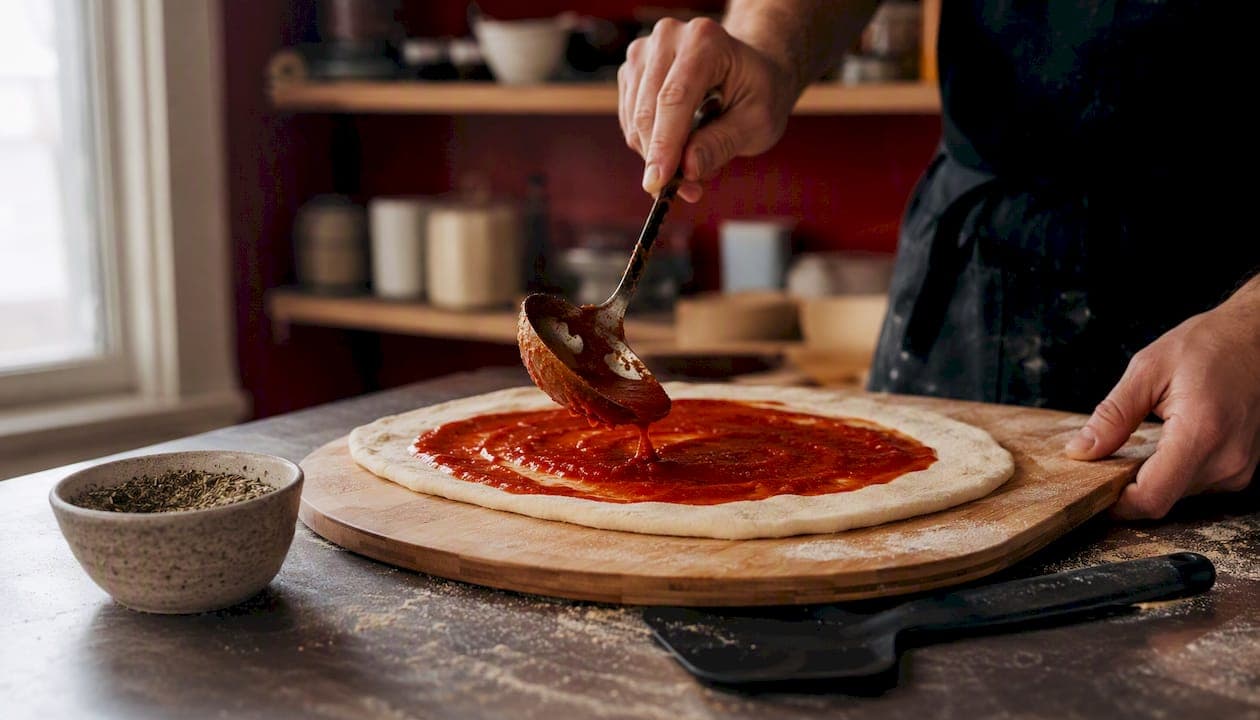
Sauce is what makes a pizza taste like something, not just crust with hot cheese on it. It's the flavour carrier, the moisture regulator that decides whether your crust crisps or turns gummy in the middle, and the peacemaker that keeps salty cheese and rich toppings from fighting each other on the way down. If you've ever wondered why two pizzas with identical crusts can taste worlds apart, the answer is usually sitting right there in the sauce.
Three things sauce does, every single time:
- Carries the dominant flavour. Its acidity and umami register before the cheese even gets noticed.
- Acts as a heat sink. Water content slows the bake and protects toppings from scorching.
- Balances fat and salt. It cuts through cheese and cured meats so nothing tastes one-note.
If your pizza tastes flat, off-balance, or oddly soggy, the sauce is where we'd start looking first.
Key Takeaways
Sauce drives the largest share of a pizza's flavour and its water content controls how the crust and toppings bake, so tuning the sauce first solves more problems than any other single change.
| Point | Details |
|---|---|
| Sauce leads flavour | Sauce contributes roughly 41% of overall taste, ahead of toppings, cheese, and crust. |
| Match method to oven | Use raw sauce for high-heat ovens; simmer briefly for home ovens and heartier styles. |
| Balance the four axes | Adjust acidity, sweetness, salt, and umami together, since each shifts how the others taste. |
| Control water content | Thicker sauce prevents gum lines and supports crisping, especially on thin crust. |
| Season with restraint | A high-quality tomato with light seasoning beats a heavily spiced sauce from weak tomatoes. |
Table of Contents
- What is the role of sauce in pizza flavour profile compared to crust and cheese?
- Should you use raw or cooked pizza sauce for better flavour?
- How do acidity, sweetness, salt and umami balance a sauce?
- How does sauce consistency affect the bake?
- Which herbs, aromatics and umami boosters improve pizza sauce?
- What are the best pizza sauce recipes to try at home?
- Which sauce style suits Neapolitan, New York, Detroit and other pizzas?
- A pizza maker's take on sauce restraint
- Frequently asked questions
- Sources
What is the role of sauce in pizza flavour profile compared to crust and cheese?
Sauce carries more of a pizza's flavour identity than most people give it credit for. A sauce manufacturer study reported that sauce contributes roughly 41% of a pizza's overall taste, against 21% for cheese, 32% for toppings, and about 6% for crust.
Sauce contributes an estimated 41% of overall pizza flavour, more than cheese and crust combined, according to that industry study. Toppings still matter, at 32%, but sauce sets the tone everything else has to work around.
Why does a simple tomato mixture punch above its weight? Tomatoes carry natural glutamic acid, the compound responsible for umami, the savoury depth that makes a sauce linger on the palate long after the slice is gone. Tomato products cost far less per pizza than premium cheese or specialty meats, which means a $2 upgrade in tomatoes often moves the needle further than a $6 upgrade in toppings.
Should you use raw or cooked pizza sauce for better flavour?
Raw, or "fresh pack," sauce keeps the bright, almost garden-fresh character of ripe tomatoes intact. Cooking a sauce caramelizes its natural sugars and deepens the flavour, but that heat also drives off some of the volatile aromatics that give raw sauce its lift. Neither method is universally correct; the right choice depends on your oven and the style you're chasing.
- High-heat ovens (Neapolitan-style): raw sauce wins, since the pizza only needs a minute or two in the oven and the intense heat cooks the sauce just once, preserving brightness.
- Home ovens and heartier styles: a short simmer melds dried herbs and garlic more evenly, avoiding the raw, gritty bite dried oregano can leave behind.
- Pantry practicality: cooked sauce keeps a few extra days refrigerated and reheats cleanly; raw sauce is best made close to bake time.
Pro Tip: If you're using dried herbs in a raw sauce, simmer the mixture for about five minutes first. That's long enough to soften the seasoning without tipping the flavour into stewed, pasta-sauce territory.
How do acidity, sweetness, salt and umami balance a sauce?
Every sauce is really four flavour axes working together, and adjusting one always shifts how the others read on your tongue. Acidity brightens and cuts fat, sweetness rounds out sharp edges, salt amplifies everything else, and umami adds the savoury weight that makes a sauce taste "finished" rather than thin.
- Too acidic: the sauce tastes sharp or sour against melted cheese; a pinch of sugar or a splash of good olive oil softens it.
- Too flat: low acid sauce reads as dull; a squeeze of tomato paste or a touch of vinegar wakes it back up.
- Under-seasoned: salt isn't optional here, it's what makes tomato taste like tomato instead of watered-down juice.
- Missing depth: umami boosters like Parmesan rind, mushroom, or a thread of anchovy paste round out thin-tasting sauce without making it taste fishy or strange.
| Flavour axis | Raises it | Lowers it |
|---|---|---|
| Acidity | Fresh lemon juice, less sugar | Sugar, longer simmer, baking soda pinch |
| Sweetness | Sugar, honey, sweeter tomato variety | Extra acid, longer cook without sugar |
| Salt | Kosher salt, Parmesan, anchovy | Diluting with more tomato or water |
| Umami | Anchovy paste, aged cheese, mushroom, tomato paste | Using only fresh tomato with no aged additions |
Getting these axes right also affects how the sauce plays with cheese: a very acidic sauce under mozzarella can taste sour once the fat mellows it, so tasting the sauce cold before it hits the dough is worth the thirty seconds it takes.
How does sauce consistency affect the bake?
Sauce doesn't just sit on the dough, it changes how the whole pizza cooks. Water content in sauce acts as a heat sink, holding the surface near the boiling point until enough moisture evaporates, which is exactly why a wetter sauce slows browning and buys your toppings more time to cook through without burning.
That same water content causes trouble if you're not careful. Too much sauce, or a sauce that's too thin, saturates the dough underneath and creates what pizza makers call a gum line, a dense, undercooked band right where sauce meets crust.
- Thin crust: use a thicker, more concentrated sauce and go light on the layer.
- Medium or pan crust: a moderate consistency works, since the extra bake time helps evaporate excess water anyway.
- Deep-dish or Detroit-style: thicker sauce is essential, since these styles bake longer and a watery sauce would never catch up.
Pro Tip: Cold sauce straight from the fridge lowers the dough's surface temperature and can cause uneven rising right at the gum line. Let your sauce sit at room temperature for twenty minutes before spreading.
Which herbs, aromatics and umami boosters improve pizza sauce?
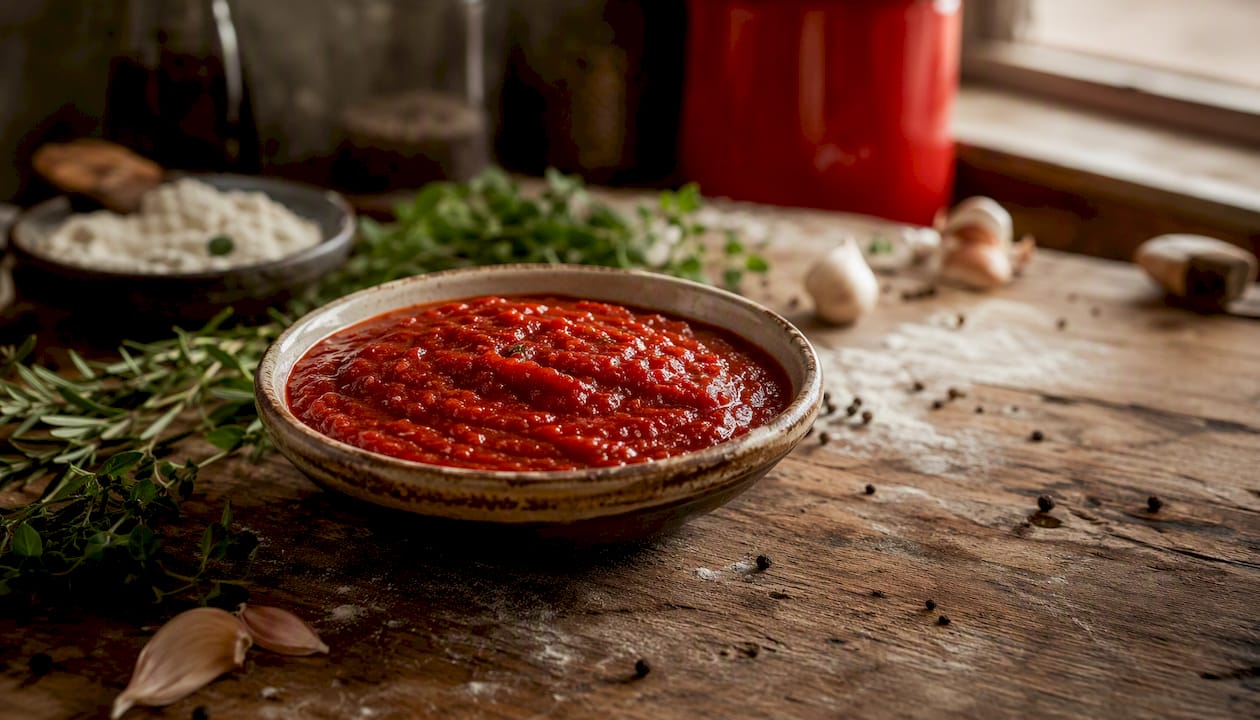
Salt, olive oil, garlic, basil, and oregano are the backbone of nearly every pizza sauce, and each should support the tomato rather than fight it. Salt sharpens flavour, olive oil rounds it out, garlic adds warmth, and basil and oregano bring the herbal note most people associate with Italian cooking.
Beyond the basics, a few additions push sauce toward genuine complexity:
- Anchovy paste or aged Parmesan for umami without a fishy or cheesy dominance, used in half-teaspoon increments.
- Fennel seed for a subtle sweetness reminiscent of Italian sausage, even in a vegetarian sauce.
- Chilli flakes or black pepper for background heat that doesn't overwhelm the tomato.
- Mushroom powder or a spoon of tomato paste for body when a sauce tastes thin after simmering.
Pro Tip: Add dried herbs early so they rehydrate in the sauce's moisture; save fresh basil for the last thirty seconds off heat, since prolonged cooking dulls its aroma fast.
What are the best pizza sauce recipes to try at home?
Two templates cover most home kitchens: a raw fresh-pack sauce for high-heat bakes, and a short-simmer sauce for everything else.
- Raw fresh-pack sauce: blend whole peeled tomatoes with 1.5% salt by weight and a tablespoon of olive oil per 500 grams of tomato. No cooking required.
- Short-simmer sauce: crush tomatoes, add garlic and dried oregano, and simmer 10 to 15 minutes to concentrate flavour without stewing it into a pasta sauce.
- Jarred sauce upgrade: stir in a spoon of tomato paste for body, finish with a drizzle of olive oil and a pinch of salt, and add an umami booster if the sauce tastes flat.
"Let the tomatoes speak for themselves." That's the line chef Vitangelo Recchia uses to describe restraint in pizza sauce, and it holds up: a plain, high-quality tomato with light seasoning consistently beats an over-spiced sauce made from mediocre tomatoes.
For a 500°C Neapolitan-style oven, skip the simmer entirely. For a home oven at 260°C, the short simmer helps seasoning integrate during the longer bake. Pair either sauce with the right dough, since Biga-style crusts hold up differently to moisture than a straight-dough base.
Which sauce style suits Neapolitan, New York, Detroit and other pizzas?
Regional styles aren't just about crust thickness, they each demand a different sauce approach to hit the flavour readers expect.
- Neapolitan: raw, thin, minimally seasoned, tomato-forward.
- New York: lightly cooked, moderate thickness, balanced seasoning.
- Detroit: thicker, more seasoned sauce that can stand up against the caramelized cheese edges.
- Deep-dish: thick, well-reduced sauce, often applied on top of the cheese to prevent sogginess.
| Style | Sauce type | Consistency | Oven type |
|---|---|---|---|
| Neapolitan | Raw, fresh-pack | Thin | Very high heat (450 to 500°C) |
| New York | Light simmer | Medium | Standard deck oven or home oven |
| Detroit | Short simmer | Thick | Steel pan, moderate heat |
| Deep-dish | Reduced, cooked | Thick | Extended bake, moderate heat |
Explore how these differences carry through toppings and regional pizza styles worldwide if you're planning to build out a themed pizza night.
A pizza maker's take on sauce restraint
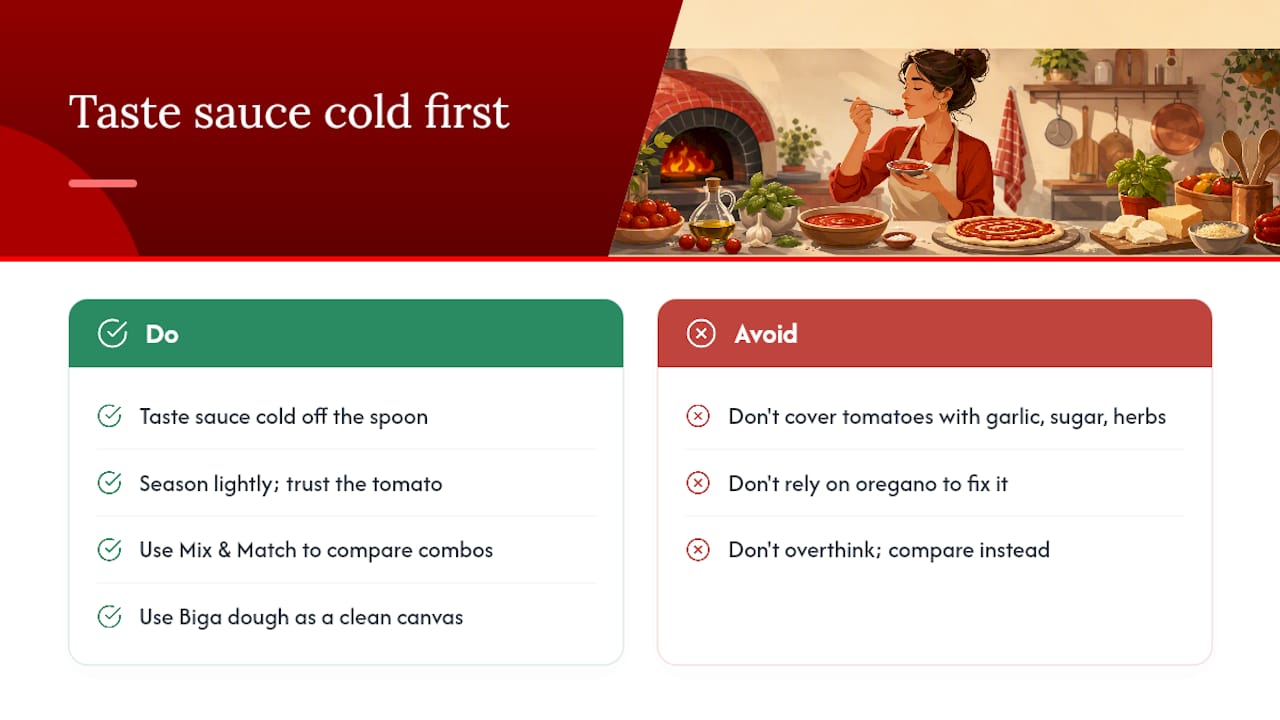
Every mediocre pizza I've ever eaten had one thing in common: a sauce trying too hard. Heavy garlic, sugar, and dried herbs almost always mean the tomato underneath wasn't good enough to trust on its own.
Try this next bake: taste your sauce cold, straight off the spoon, before it touches dough. If it doesn't taste good enough to eat with a spoon, no amount of oregano will fix it once it's baked.
Better sauce is also the easiest upgrade Hellcrustpizza builds into every order. Our Biga multigrain dough, made without artificial additives, gives the sauce a clean canvas to shine on, and our Mix & Match deals let you compare a few sauce and topping combinations in one order without overthinking it. If you're testing your own theories about acidity, umami, or sauce thickness, ordering a side-by-side from Hellcrustpizza is a solid way to calibrate your palate before your next home bake.
Frequently asked questions
What is the role of sauce in pizza flavour profile overall? Sauce is the primary flavour carrier on most pizzas, delivering acidity and umami before cheese or toppings register, while also regulating moisture during baking.
Does pizza sauce need sugar? Only if the tomatoes taste sharp or under-ripe. A pinch balances acidity, but too much sugar masks the natural tomato sweetness the sauce should showcase.
Why is my pizza soggy in the middle? Excess sauce or high water content creates a gum line where the dough can't crisp. Thicken the sauce or use less of it, especially on thin crust.
Can I skip cooking the sauce entirely? Yes, for high-heat ovens. Raw fresh-pack sauce works well above roughly 450°C, where the short bake time cooks the sauce just enough.
Sources
- Pizza tomato sauce masterclass: an in-depth, technical guide
- Pizza sauce recipe: Neapolitan no-cook vs American cooked
- How to make a better‑tasting pizza sauce - PMQ Pizza
- Improving pizza sauce (Modernist Cuisine)