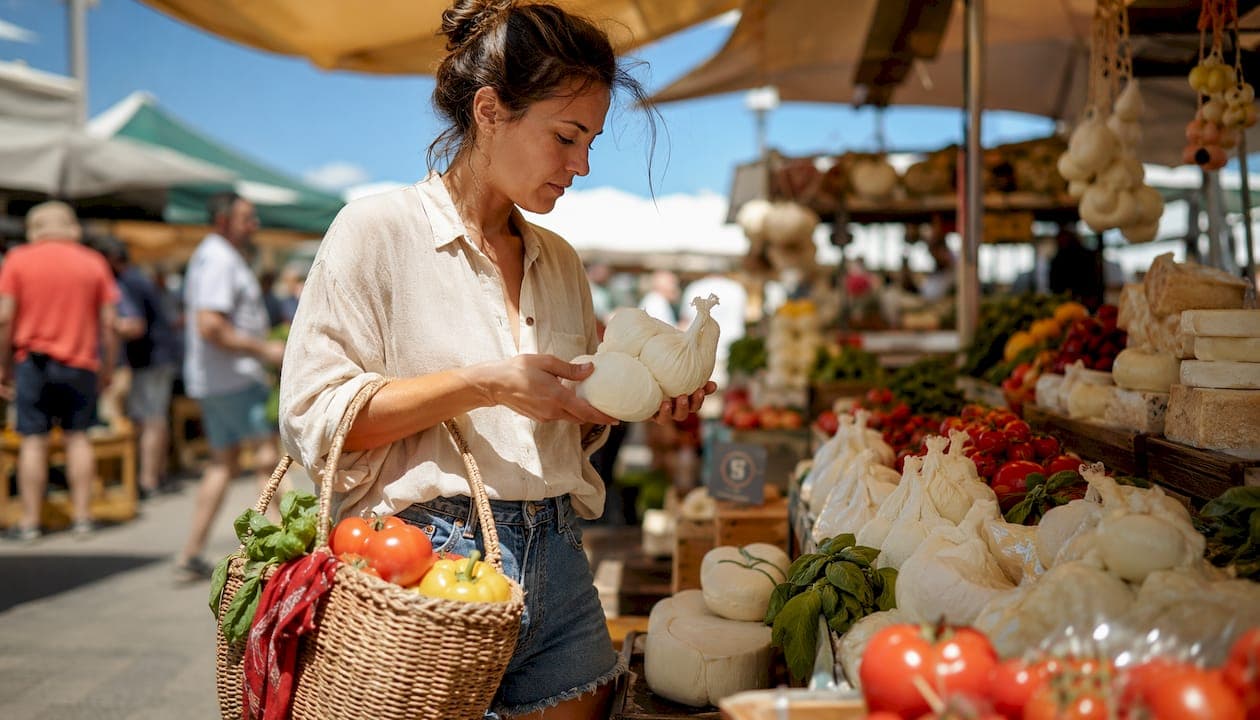
Pasta is usually cheaper than pizza because its core ingredients and serving model cost less to produce and sell. Mozzarella is the largest cost driver in most pizzas, making up a majority of a margherita's ingredient cost, while a simple pasta al pomodoro uses little more than dried pasta, tomatoes, and olive oil. Layer in dough fermentation time, specialised equipment, and pizza's shared-plate pricing model, and the gap widens further.
The main drivers at a glance:
- Ingredient cost: Mozzarella and premium toppings push pizza ingredient costs well above a basic pasta dish.
- Portioning: Pizza is priced as a shared item; pasta is priced per person, keeping individual menu prices lower.
- Labour and prep: Dough proofing, stretching, and oven management add time and overhead that pasta largely avoids.
- Retail economies: Dried pasta is mass-produced from two cheap inputs — wheat and water — making it one of the lowest-cost-per-serving staples you can buy.
Table of Contents
- Why pasta costs less than pizza: the ingredient story
- How serving style shapes what you pay per person
- Labour, prep time, and equipment add to pizza's cost
- How restaurants set pasta and pizza prices
- Why pizzerias add pasta: shared ingredients and lower waste
- Dried pasta at retail: economies of scale in your grocery cart
- How Hellcrustpizza prices pasta alongside pizza
- Practical tips for saving money on pasta and pizza
- Key takeaways
- Why pricing transparency matters to us
- Useful sources
Why pasta costs less than pizza: the ingredient story
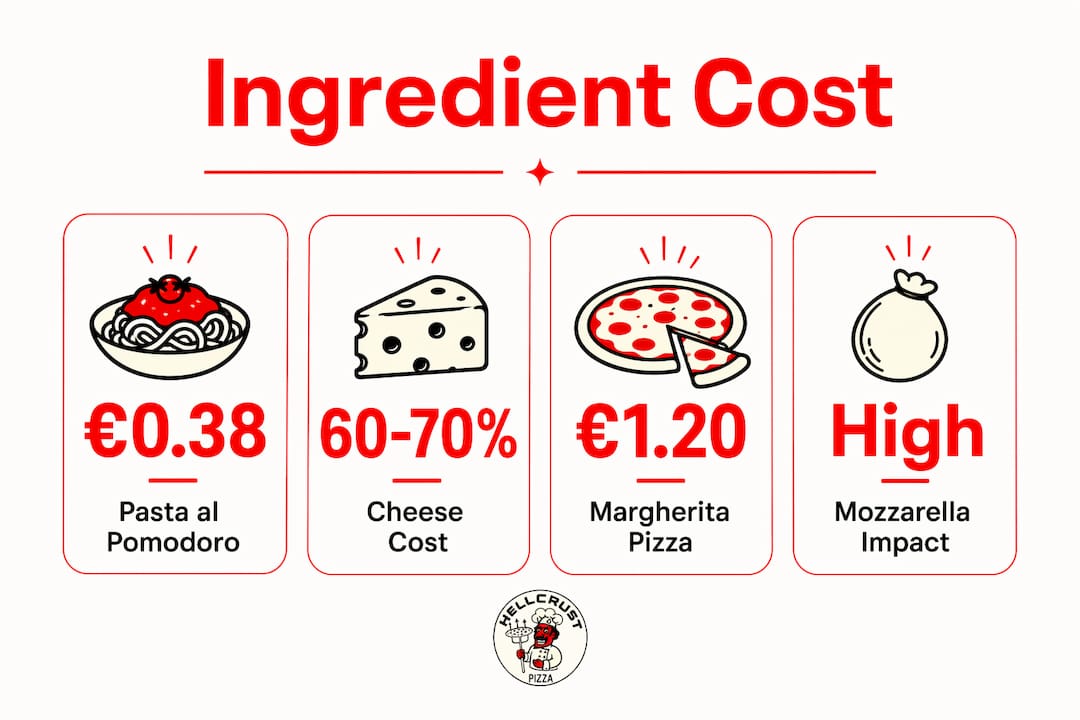
The cost gap starts at the ingredient level, and cheese is the clearest culprit. Eats Logic's per-serving analysis shows pasta al pomodoro costing less per serving than pizza marinara and pizza margherita, with the increase mostly due to mozzarella.
| Dish | Approx. ingredient cost per serving | Primary cost driver |
|---|---|---|
| Pasta al pomodoro | ≈ €0.38 | Dried pasta, canned tomato |
| Pizza marinara | ≈ €0.47 | Dough, tomato sauce |
| Pizza margherita | €1.00–1.20 | Mozzarella is the major contributor to total ingredient cost |
Fresh mozzarella costs noticeably more per pound at Canadian grocery stores, and a single margherita uses a generous portion of it. Dried pasta, by contrast, costs well under $2 per pound and yields multiple servings. Tomato sauce is shared by both dishes, so it contributes little to the gap.
Pro Tip: Order pizza marinara when you want pizza on a budget. Removing the cheese brings ingredient cost close to pasta territory, though you still pay for the dough's time and labour overhead.
A few other ingredient realities worth knowing:
- Specialty toppings (prosciutto, smoked salmon, truffle) compound the cheese effect dramatically.
- Homemade pizza dough requires yeast, which is inexpensive, but the proofing time is a hidden cost when you factor in kitchen overhead.
- Pasta's ingredient list is genuinely minimal: durum wheat semolina and water for dried pasta, with eggs added only for fresh varieties.
How serving style shapes what you pay per person
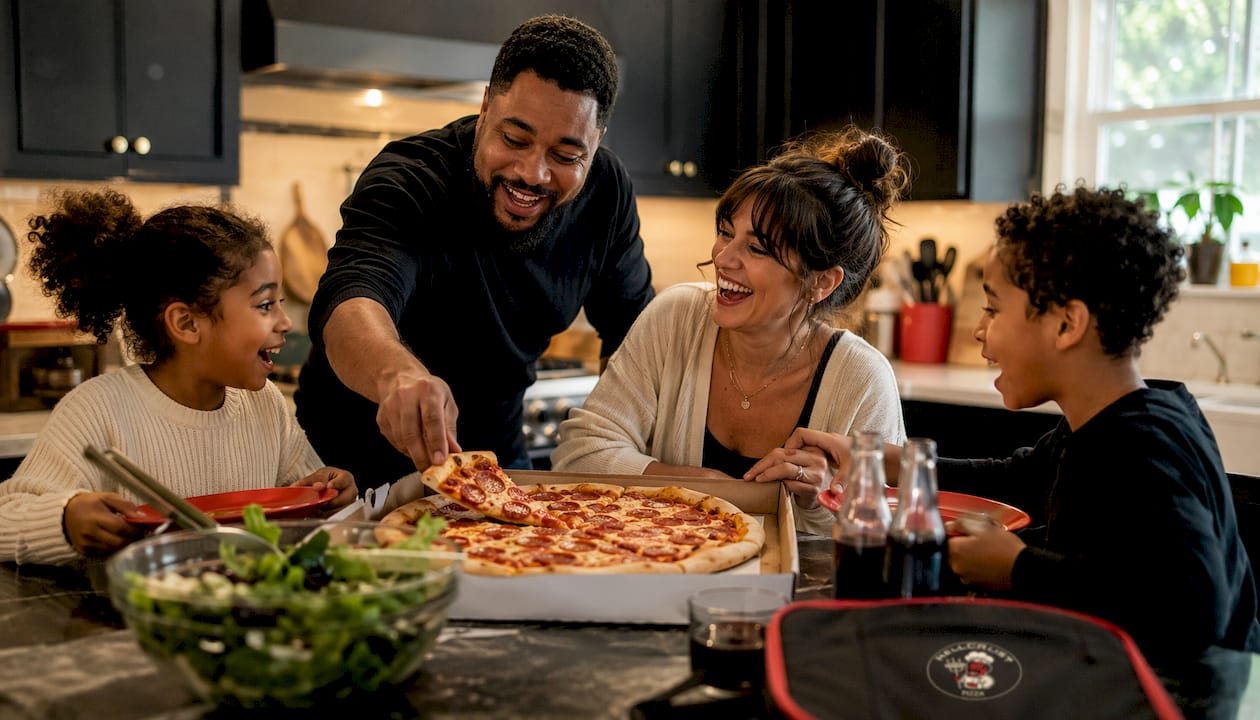
Pasta and pizza occupy different roles at the table, and that difference shapes pricing as much as ingredients do. Pasta arrives as a single plate for one person. Pizza arrives as a shared item, sliced and passed around, with the full price sitting on one line of the bill.
A family of four ordering two large pizzas might spend a certain total cost, which works out to a moderate per-person amount. The same family ordering four pasta plates at a somewhat higher per-person menu price spends roughly the same total — yet the pasta price looks lower on individual menus. — yet the pasta price looks lower because each person sees only their own plate.
This perception gap is real. Restaurants price pizza to reflect its group-feeding role: a larger item, a higher ticket, a shared experience. Pasta is priced as an individual course, so the number on the menu is naturally smaller. Neither is necessarily the better deal per calorie or per gram of food, but the framing changes what feels affordable.
A few ways this plays out practically:
- Sharing one pizza among three people can be excellent value; ordering one pizza per person is not.
- Shareable pizza options and family-size formats shift the per-person math considerably.
- Pasta's single-plate format also means portion control is built in — you get what you ordered, nothing more.
Labour, prep time, and equipment add to pizza's cost
Raw ingredients tell only part of the story. The workflow behind a pizza is genuinely more demanding than the workflow behind most pasta dishes, and that time translates directly into menu price.
- Dough mixing and bulk fermentation. A proper pizza dough needs at least 2 hours of proofing, often longer for artisan styles. Artisan dough types like Biga require an overnight preferment, adding skilled labour and refrigeration overhead.
- Portioning and stretching. Each dough ball must be weighed, balled, rested, and hand-stretched or pressed — steps that require trained hands and bench time.
- Oven management. Pizza ovens run at high temperatures and need consistent monitoring. Throughput is limited by deck space, so a busy kitchen can only fire so many pizzas at once.
- Cheese and topping assembly. Applying toppings evenly, managing moisture from fresh mozzarella, and timing the bake all require attention.
Pasta's workflow is comparatively lean: boil water, cook pasta to order, finish in a pan with sauce. A skilled line cook can turn a pasta dish in under ten minutes with no specialised equipment beyond a pot and a sauté pan. That speed advantage reduces labour cost per plate.
Fresh or house-made pasta and chef-crafted sauces close this gap considerably. A restaurant making fresh pappardelle daily and simmering a bolognese for hours is investing real labour — which is exactly why those dishes command $22–28 on a dine-in menu, even though dried pasta at retail costs almost nothing.
How restaurants set pasta and pizza prices
Menu pricing is not simply "ingredient cost plus a bit extra." The common industry heuristic, as St. Louis Magazine notes, is to price menu items at roughly 3–4 times raw ingredient cost. That rule explains why a pasta dish with $3 in ingredients becomes a $12–18 menu item — the markup covers labour, utilities, rent, and the dining experience itself.
Pasta plays a specific role in menu strategy: it is a profit centre. Because ingredient costs are low, even a modest menu price generates a healthy margin. Restaurants use that margin to balance higher-cost proteins and seafood dishes elsewhere on the menu.
- Perceived value matters. Diners willingly pay a premium for a chef-made sauce, a warm room, and attentive service — none of which show up in the raw ingredient cost.
- Pizza's markup is complicated by shareability. A pizza priced at $22 feeds two or three people, so the per-person margin is different from a $16 pasta plate feeding one.
- Specials and combos shift the math. Family deals, lunch specials, and bundled offers can bring the effective per-person cost of pizza well below its à la carte price.
Pro Tip: Family meal deals and combo offers are where pizza often beats pasta on per-person value. A four-person pizza bundle at $45 can undercut four individual pasta plates at $16 each.
Why pizzerias add pasta: shared ingredients and lower waste
Adding pasta to a pizza-focused menu is one of the most efficient moves a restaurant can make. Pizzerias add pasta because the ingredient overlap is substantial: tomato sauce, flour, olive oil, garlic, and some cheeses are already in the kitchen. Buying those inputs in larger quantities lowers the per-unit cost for every dish that uses them.
- Tomato sauce made in bulk serves both pizza and pasta with no extra prep.
- Flour stocks support both dough and fresh pasta production.
- Shared mise en place (pre-chopped herbs, garlic, aromatics) reduces daily prep time across the whole menu.
The marginal cost of adding a pasta dish to an existing pizza operation is genuinely low. A pizzeria that already stocks tomatoes and semolina can offer a penne arrabbiata or a spaghetti marinara with minimal additional investment. That efficiency is part of why pasta dishes at pizza-focused restaurants are often priced attractively — the kitchen is already set up for most of the work.
Dried pasta at retail: economies of scale in your grocery cart
At the grocery level, the pasta price comparison is even more striking. A standard 500g box of dried spaghetti at a Canadian supermarket typically costs $1.50–2.50 and yields roughly four to six servings. That works out to well under $0.50 per serving before sauce. Mass production and automation drive those prices: large pasta factories process durum wheat semolina at enormous throughput, spreading fixed costs across millions of units.
| Item | Typical retail cost (Canada) | Approx. servings | Cost per serving |
|---|---|---|---|
| 500g dried pasta | $1.50–2.50 | 4–6 | under $0.50 per serving |
| Canned crushed tomatoes | $1.50–2.50 | 4–5 | — |
| Fresh mozzarella | $4–6 | 3–4 | $1.00–1.20 per serving |
Pizza's home-cook cost rises sharply the moment fresh mozzarella enters the cart. You can make a passable pizza marinara cheaply, but a proper margherita at home costs noticeably more per serving than a pasta dish with tomato sauce.
- Store-brand dried pasta and bulk packs push the per-serving cost even lower.
- Government wheat subsidies in Canada and the U.S. keep durum wheat prices stable, which flows through to retail pasta prices.
- Pasta's long shelf life (1–2 years for dried) means bulk buying carries almost no waste risk.
How Hellcrustpizza prices pasta alongside pizza
At Hellcrustpizza, we think about pasta and pizza pricing from the inside out — because we make both. Our menu reflects the real cost differences: pasta dishes benefit from shared tomato sauce, shared flour stocks, and shorter cook times, which lets us offer them at prices that are genuinely accessible for families and students. Pizza, with its Biga multigrain, artificial additive-free dough and customisable toppings, carries more prep overhead — and we believe that overhead is worth it for the flavour and quality you get.
At Hellcrustpizza, we focus on wholesome ingredients and transparent pricing, crafting our dough carefully and pricing pasta to reflect operational efficiencies.
Pro Tip: Check the Hellcrustpizza coupons page before you order. Family deals and Mix & Match options regularly bring the per-person cost of a pizza-and-pasta combo below what you'd pay for individual plates.
A few things that shape how we price our menu:
- Shared tomato sauce across pasta and pizza dishes reduces waste and keeps costs honest.
- Family-size specials and bundle deals are designed to make pizza accessible for groups without sacrificing quality.
- Vegan and gluten-free options carry slightly different cost structures, which we reflect transparently in pricing.
Practical tips for saving money on pasta and pizza
Knowing why pasta is cheaper than pizza is useful. Knowing how to act on that knowledge saves you real money.
- Choose pasta for weeknight value. A pasta dish at a restaurant or a box of dried pasta at home is almost always the lower-cost option per person.
- Pick pizza marinara for a budget pizza night. Without cheese, the ingredient cost drops close to pasta territory, and you still get the satisfaction of a proper pizza.
- Share a pizza strategically. A large pizza split among three or four people often costs less per person than individual pasta plates, especially with a family deal.
- Use affordable topping choices to keep pizza costs down. Vegetables and simple proteins cost far less than premium toppings.
- Buy dried pasta in bulk at the grocery store. A 900g or larger bag from a store brand cuts per-serving cost significantly compared to small boxes.
- Watch for coupons and combo deals. At Hellcrustpizza, family deals and Mix & Match offers regularly shift the per-person cost in pizza's favour.
- Make homemade pizza marinara rather than margherita when cooking at home on a tight budget — skip the mozzarella and the savings are immediate.
Key takeaways
Pasta is cheaper than pizza primarily because of mozzarella's outsized ingredient cost, pasta's single-plate serving model, and dried pasta's mass-production economics at retail.
| Point | Details |
|---|---|
| Mozzarella drives pizza cost | Cheese accounts for 60–70% of a margherita's ingredient cost, the single largest gap between pizza and pasta. |
| Serving model affects perceived price | Pasta is priced per person; pizza is priced as a shared item, making individual menu prices look different even when total spend is similar. |
| Labour adds to pizza's overhead | Dough proofing, stretching, and oven management add time and skill costs that a simple pasta dish avoids. |
| Retail pasta is exceptionally cheap | A 500g box of dried pasta typically costs $1.50–2.50 and yields 4–6 servings at under $0.50 each, driven by automated mass production and stable wheat prices. |
| Hellcrustpizza offers both | Hellcrustpizza's shared-kitchen model and family deals make both pasta and pizza accessible, with coupons that shift the per-person cost further. |
Why pricing transparency matters to us
Pricing food honestly is something we feel strongly about at Hellcrustpizza. Families deserve to know why a pasta dish costs what it does, and why a pizza with premium toppings costs more — not because one is "better," but because the ingredients and craft behind each are genuinely different. We built our menu around that transparency: Biga multigrain dough that takes time to develop properly, fresh ingredients without artificial additives, and deals designed to make a quality meal accessible for everyone at the table. Understanding the economics behind your plate is the first step toward ordering smarter and eating well without compromise.
Useful sources
- Pasta vs Pizza: Which Costs Less? | Eats Logic — Per-serving ingredient cost breakdowns for pasta al pomodoro, pizza marinara, and pizza margherita; the source for the mozzarella cost-driver figures used throughout this article.
- Homemade pizza on a budget | Eats Logic — Analysis of mozzarella as 60–70% of margherita ingredient cost; useful for home cooks comparing pizza and pasta costs.
- Ask George: Why does restaurant pasta cost so much? | St. Louis Magazine — Explains the 3–4× markup heuristic and how perceived value and ambiance justify restaurant pasta prices.
- Why pizza joints are adding pasta to their menus | CyPasta — Covers menu diversification, shared ingredients, and the profit-margin logic behind pizzerias adding pasta.
- How is pasta so cheap? | CyPasta — Explains economies of scale, automation, and simple ingredient lists that keep retail pasta prices low.
- Hellcrustpizza — Publisher landing page; Hellcrustpizza's full menu, family deals, and ordering options.