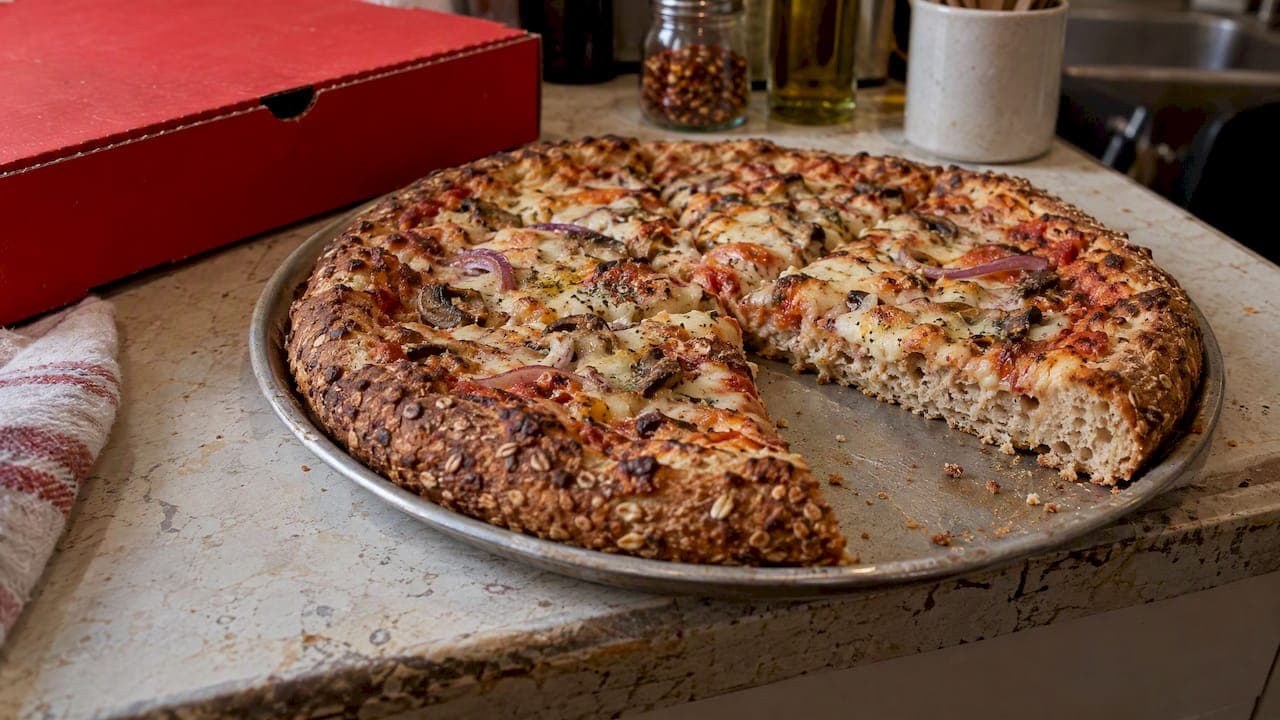
A whole grain crust gives you more fibre, vitamins and minerals than a refined white crust, and it keeps you feeling full longer. That is the short answer. The longer answer is that the benefits depend on what is really in the dough, how finely it is milled and how the dough is made. This guide walks through each of those, using Canadian health sources, and explains how our Biga multigrain dough at HellCrust Pizza fits into the picture.
TL;DR
- Whole grains keep the bran, germ and endosperm, so a whole grain crust carries more fibre, vitamins and minerals than a refined one.
- Most Canadians eat about 14 g of fibre a day against a recommended 25 to 38 g, so swapping the crust is an easy place to close the gap.
- "Multigrain" does not automatically mean "whole grain". Check the ingredient list, not the front of the box.
- Go gradually if you are new to high-fibre eating, and drink water with it.
- Our Biga dough is multigrain, free of artificial additives and prepared in advance for a mature flavour and a more digestible bite.
Table of Contents
- What makes a crust "whole grain"?
- The main benefits of a whole grain crust
- Whole grain, whole wheat, multigrain: reading the label
- Why the dough process matters as much as the flour
- Our perspective: crafted dough, honest labels
- Making a whole grain pizza work for your whole meal
- Who benefits most
- Go gradually
- Order a crust you can feel good about
- FAQ
- Sources
What makes a crust "whole grain"?
A grain kernel has three parts: the bran (the fibre-rich outer layer), the germ (the nutrient-dense core) and the endosperm (the starchy middle). HealthLink BC describes whole grains as intact, ground, cracked or flaked kernels that keep the germ, bran and endosperm in the same proportions as the original grain.

Refining strips away the bran and germ to leave mostly endosperm. That gives a softer, whiter, longer-lasting flour, but the fibre and many of the vitamins and minerals go with what was removed. Health Canada's food guidance puts it plainly: whole grain foods supply fibre, vitamins and minerals, and they are a healthier choice than refined grains.
On pizza, the crust is the largest single ingredient. It is the part of the meal where a swap makes the biggest difference, which is why the crust deserves more attention than the toppings when you are thinking about nutrition.
The main benefits of a whole grain crust
More fibre, in a country that needs it
Fibre is a non-digestible carbohydrate found in plant foods. Health Canada says it may help with bowel regularity, lower blood cholesterol and help you feel full. The gap between what we eat and what we should eat is wide: Heart & Stroke notes that a healthy adult needs 25 to 38 grams a day, while the average Canadian takes in about 14.
That is less than half. You do not need a dramatic diet change to narrow it. Swapping a refined crust for a whole grain or multigrain one is the kind of small, repeatable change that adds up over a year of Friday nights.
Heart health
Whole grains are not only about digestion. Heart & Stroke reports that studies show whole grains, which are high in fibre, are more cardio-protective than refined grains. The same organization explains that the protective effect comes from a combination of vitamins, minerals, fibre and antioxidants working together, not from one magic nutrient.
That does not turn a pizza into a health food, and we would never say it does. It does mean that the base you choose pulls in the right direction rather than the wrong one.
Fullness that lasts
Foods made with the entire grain provide fibre, protein and nutrients that help you stay healthier and fuller longer, according to Heart & Stroke. Anyone who has finished two slices of a thin white crust and been hungry an hour later will know the difference. A heartier crust means you tend to be satisfied with a sensible portion.
Blood sugar: a more nuanced story
This is where honesty matters. Many people with diabetes assume grains are off the table. Registered dietitian Joanne Lewis, writing for Diabetes Canada, calls that a fallacy/impact-stories/the-whole-truth-about-whole-grains): the real distinction is between highly processed refined grains and intact whole grains, whose fibre slows digestion.
But not all whole grains behave alike. The Diabetes Canada clinical practice guidelines report that grains rich in viscous soluble fibre, such as oats and barley, have improved glucose and A1C in studies, while the same benefit has not been consistently seen with whole wheat or wheat bran in people with type 2 diabetes. In other words, "whole wheat" is better than refined white, but it is not a guarantee of steady blood sugar.
If you manage diabetes, treat any pizza, whole grain or not, as a meal to fit into your plan with your doctor, dietitian or certified diabetes educator, and check how your own readings respond.
Whole grain, whole wheat, multigrain: reading the label
This is where most shoppers and diners get tripped up. The words sound interchangeable. They are not.
| Label | What it actually tells you |
|---|---|
| Whole grain | The bran, germ and endosperm are all present, in the proportions of the original kernel |
| 100% whole wheat | All the flour is whole wheat, but some products can have the germ removed, so check the ingredients |
| Multigrain | Several grains are used, but they may be refined. It describes variety, not wholeness |
| Stone-ground | Describes how the grain was milled, not whether it is whole |
Heart & Stroke's whole grain secrets article is a good primer, and it makes the same point we make here: a front-of-pack claim is marketing, and the ingredient list is the truth. Look for the word "whole" before the grain name, and for that ingredient near the top of the list.
If you bake at home, understanding how different flours behave helps too. A short guide to swapping flours in the kitchen shows how much a change of flour alters texture and moisture, which is exactly what you notice when you move from white to whole grain dough.
Why the dough process matters as much as the flour
Two crusts can start with the same flour and end up very different. Fine milling can make even a whole grain flour digest faster, and Diabetes Canada's dietitian notes that less processed grain forms/impact-stories/the-whole-truth-about-whole-grains) are generally the better choice for steady energy. How a dough is built matters in the same way.
That is the reason we make our dough with a Biga, an Italian preferment. A portion of the flour, water and a little yeast is mixed ahead of time and left to mature before it goes into the final dough. Over those hours the dough develops flavour and structure on its own, with no shortcuts or artificial additives needed.
There is a practical baking reason too. Bran absorbs more water than refined flour and can cut through gluten, which is why home-made whole grain pizza often turns out dry, dense or gritty. Giving the dough more water and more time to rest softens the bran. A preferment does a lot of that work for you. If you want the science of why time changes taste, we wrote about it in why dough fermentation affects flavour.

Our perspective: crafted dough, honest labels
We started with a simple question: why should a pizza you order on a Tuesday night be the thing you feel slightly guilty about on Wednesday morning? Our answer was to start with the base.
Our dough is a Biga multigrain dough, prepared in advance and made without artificial additives. We chose it for three reasons. First, fibre: grain-rich crusts bring more of it to the table than a plain white base. Second, digestibility: a slow, matured dough is gentler, and we notice it in how people describe the next hour after dinner. Third, flavour. A well-matured dough has a rich, mature taste, slightly nutty and savoury, that makes every bite worth savouring and not just a vehicle for cheese.
We also want to be straight with you. "Multigrain" on its own is not a synonym for "whole grain", and we would rather you learn to read labels than take any pizza shop's word for it, ours included. Ask us what is in the dough. We are happy to talk about it. And a good crust is only part of a balanced meal: load it with vegetables, add a protein you enjoy, and pair it with a salad or a side.
You get what you pay for, and we believe a wholesome crust is worth the care it takes to make.
— jaskirat Singh
Making a whole grain pizza work for your whole meal
The crust sets the foundation. The rest of the plate decides how the meal lands. A few practical moves:
- Add vegetables first. Peppers, mushrooms, spinach, onions and tomatoes bring more fibre and volume. Our guide to pairing toppings on a multigrain base shows which combinations work with a nuttier crust.
- Watch the heavy extras. Takeout and restaurant meals can run high in sodium and saturated fat, so go easy on cured meats and double cheese if you eat pizza often.
- Mind the portion. A fibre-rich crust fills you up faster. Start with fewer slices, and add a side if you are still hungry.
- Add protein you like. Plant-based options work well, and our vegan protein pizza guide shows how to build one.
- Plan the week, not the meal. A pizza night sits comfortably in a balanced week. See how in our meal plan using pizza delivery.
For more detail on what to look for when you order out, read nutrition in takeout pizza.
Who benefits most
Families. Children need fibre too, and a hearty crust is an easy place to slip it in without a fight at the table. Our parent's guide to multigrain pizza for kids goes through it, and how to balance nutrition in a family pizza meal covers the whole table.
Active people. After a workout you want carbohydrate, protein and something your stomach will accept. See our take on ordering healthy pizza after the gym.
Anyone trying to eat more fibre. If you sit near that 14 g national average, a whole grain or multigrain crust helps. HealthLink BC notes that a fibre-rich diet may lower blood pressure, improve cholesterol and help control blood sugar.
Go gradually
More fibre is good news, but not overnight. A sudden jump can cause bloating and stomach discomfort. The same HealthLink BC page on getting enough fibre advises increasing slowly and drinking plenty of fluids.
At home, that can mean a 50/50 blend of whole wheat and white flour in your dough before you go fully whole grain. When ordering, it means adding a multigrain pizza to your routine once a week and seeing how you feel. If you have a digestive condition or have been told to follow a low fibre eating pattern, speak with your doctor or a registered dietitian before changing how much fibre you eat. HealthLink BC notes that a low fibre pattern is used for specific medical reasons and amounts can vary by condition.
Order a crust you can feel good about
If you are in North Vancouver, Vancouver or West Vancouver and want to try the dough for yourself, our menu has Create Your Own Pizza, Signature Pizzas, Vegan Pizzas, Baked Pasta, Wings & Bites and more. Build your own with the toppings you love, or pick a signature. The app gives you access to exclusive offers, and our Mix & Match and family deals keep it easy on the budget. Start at hellcrustpizza.com.
FAQ
Is a whole grain pizza crust really healthier than a white crust?
Generally yes. Whole grains keep the bran and germ, so they supply more fibre, vitamins and minerals, and Health Canada calls them a healthier choice than refined grains. The toppings and portion size still shape the overall meal, so a whole grain crust with extra vegetables is the best combination.
Is multigrain the same as whole grain?
No. Multigrain means more than one grain is used, but those grains can be refined. A product is whole grain when it keeps the bran, germ and endosperm. Check that the ingredient list names a whole grain, and ask the restaurant what is in its dough.
Does a whole grain crust affect blood sugar?
It can help, because fibre slows digestion, but the effect varies. Diabetes Canada's guidelines show clearer glucose benefits for oats and barley than for whole wheat or wheat bran in type 2 diabetes. If you have diabetes, talk to your care team about how pizza fits your plan.
Why does whole grain dough sometimes taste dry or gritty?
Bran soaks up more water than white flour, so the dough needs more hydration and more rest time. A preferment such as a Biga improves flavour and texture, which is why we use one. Many home bakers find that a 50/50 blend of whole wheat and white flour is a gentler start.
Sources
- Ideas to increase nutrition, HealthLink BC
- Eat whole grain foods, Canada.ca
- Fibre, Canada.ca
- Fibre and whole grains, Heart & Stroke
- An all-Canadian healthy diet, Heart & Stroke
- 10 whole grain secrets, Heart & Stroke
- The whole truth about whole grains, Diabetes Canada/impact-stories/the-whole-truth-about-whole-grains)
- Diabetes Canada clinical practice guidelines, chapter 11
- Getting enough fibre, HealthLink BC
- A low fibre eating pattern, HealthLink BC