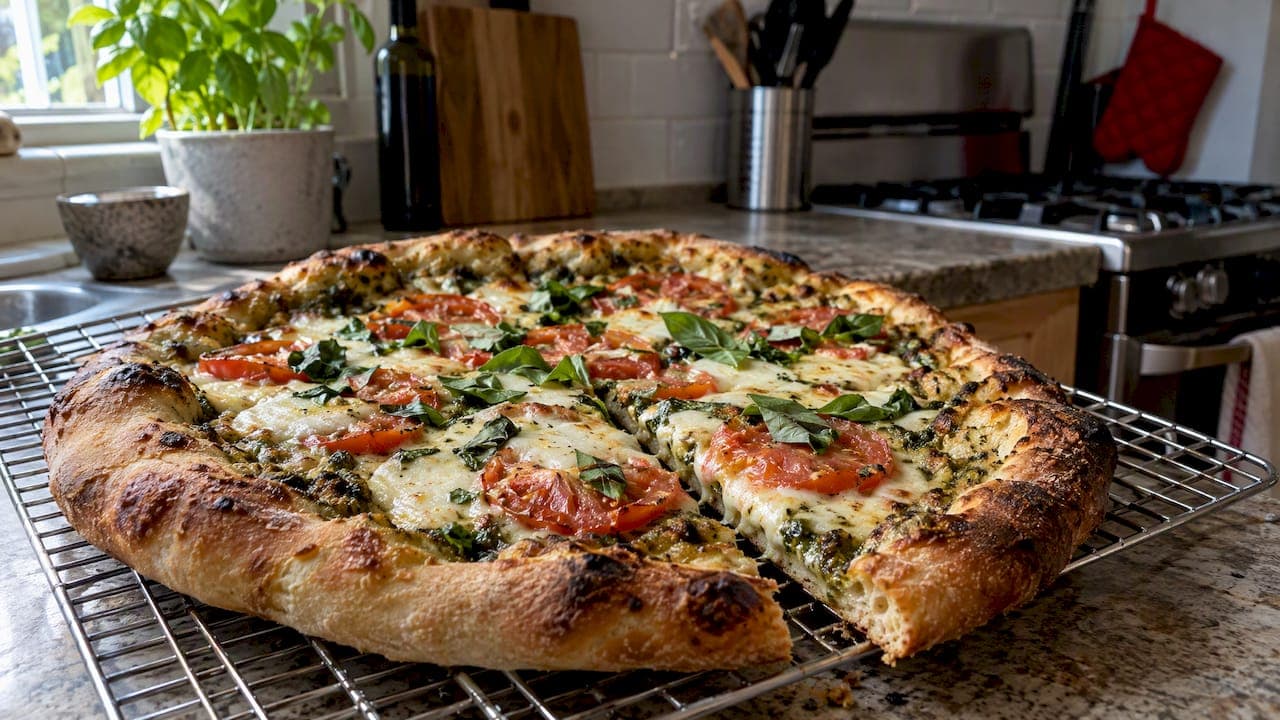
Pesto makes a very good pizza sauce if you treat it like what it is: a strong, herby paste that needs a light hand, a few well-chosen toppings and the right moment in the bake. Spread it thin, pair it with mozzarella and something fresh, and hold a little back to dollop on once the pizza is out of the oven. Below you will find ten combinations, the timing rules behind them, and how pesto stacks up against Alfredo and marinara.
TL;DR
- Use pesto as a thin base layer, as a post-bake drizzle, or both. Thinning it with a little oil or water makes it easier to spread.
- Mozzarella, ricotta and Parmesan are the safest cheeses. Tomatoes, mushrooms, chicken, olives and sun-dried tomatoes are the best partners.
- Par-bake the crust briefly when pesto is the sauce, and finish with fresh pesto or basil to keep the colour and flavour bright.
- Pesto is herby and less acidic than marinara, and lighter in feel than a cream-based Alfredo. Pick by the toppings you plan to use.
Table of Contents
- Three ways to use pesto on a pizza
- Timing and technique that keep pesto pizza from going wrong
- What toppings go with basil pesto
- Ten pesto pizza ideas to try
- Pesto white pizza
- Pesto vs Alfredo on pizza
- Pesto vs marinara on pizza
- Making your own pesto for pizza
- Does the crust matter with pesto?
- Our perspective
- Build your own pizza with us
- FAQ
- Sources
Three ways to use pesto on a pizza
There is no single correct method. Professional guidance from Pizza Today says pesto can work as a base, as a drizzle or dollop before baking, or as an addition after baking, and that thinning it with oil or water helps it spread. Each approach gives a different pizza.

Pesto as the sauce. This is the most common idea and the one most home cooks start with. You spread a thin layer edge to edge, leaving the usual rim, and build on top of it. The pesto toasts slightly in the oven, which deepens the garlic and nutty notes but dulls the bright green.
Pesto dolloped before baking. Small spoonfuls scattered over cheese give you pockets of intense flavour with plain mozzarella in between. It is a good option if you find a full layer of pesto too much.
Pesto after baking. DeLallo's guide notes that pesto generally tastes best added after cooking, because heat dulls the freshness of the herbs and garlic. Pizza Today's perspective agrees that post-bake pesto keeps a more vibrant colour. If you want a pizza that looks as green as it tastes, this is the route.
The compromise many recipe writers settle on is both: a thin layer under the cheese, then extra on top. Once Upon a Chef spreads pesto on the dough, par-bakes it for 4 minutes, adds cheese and drained tomatoes, bakes another 6 to 8 minutes at 500°F (260°C), then drizzles the remaining pesto over the top.
Timing and technique that keep pesto pizza from going wrong
Pesto is mostly oil, herbs and cheese, so it behaves differently from a tomato sauce. A few habits make a real difference.
Par-bake the crust. DeLallo points out that par-baking the dough first helps when pesto is the sauce. Love & Lemons bakes the bare crust for 5 minutes at 500°F (260°C), adds pesto, cheese and tomatoes, and bakes about 6 minutes more, with extra pesto added after baking.
Go lighter than you think. Serious Eats recommends applying pesto sparingly, since it is strongly flavoured. Its pesto, ricotta and mozzarella pizza bakes at 500 to 550°F (260 to 290°C) for 4 to 8 minutes. A thick layer turns oily and can overpower everything else.
Stop the dough from bubbling. Sally's Baking Addiction suggests pressing dents into the dough and brushing it with olive oil before topping. Its 12-inch pizza uses ½ cup of pesto and bakes at 475°F (246°C) for 14 to 15 minutes.
Drain wet toppings. Fresh tomato slices release water. Draining them first, as Once Upon a Chef does, prevents a soggy centre. If sogginess is a regular problem in your kitchen, our piece on stopping soggy crusts with topping combos goes through it in detail.
Mind the heat. Home ovens rarely reach pizzeria temperatures, so use the hottest setting you have and a preheated stone or steel if possible. Our guide to getting an extra crispy pizza at home covers the fastest route.
What toppings go with basil pesto
Pesto is pungent, so the best pizzas pair it with ingredients that either soften it or stand up to it.
Softening partners: mozzarella, ricotta and Parmesan. Creamy cheese tames the garlic and gives the pesto something to cling to.
Bold partners: Serious Eats lists sun-dried tomatoes, anchovies, capers and olives as accents that hold their own.
Vegetables and proteins: Pizza Today recommends pairing pesto with vegetables or meats such as chicken, pork, onions, kale, white fish or shrimp. DeLallo suggests grilled chicken, charred cherry tomatoes, sautéed mushrooms, pepperoncini and Calabrian chili peppers.
A useful rule: pick one or two supporting toppings, not six. Pesto is the star, and a crowded pizza hides it.
Ten pesto pizza ideas to try
1. Tomato and mozzarella
The classic. Thin pesto base, fresh mozzarella, tomato slices that have been drained, a drizzle of pesto after baking and torn basil. Once Upon a Chef's version adds Parmigiano-Reggiano and is a good template.
2. Roasted tomato and basil
Love & Lemons uses roasted tomatoes, mozzarella, pesto, fresh basil and red-pepper flakes. Roasting the tomatoes ahead concentrates their sweetness and removes excess water, and oil-packed sun-dried tomatoes are a legitimate shortcut on a weeknight.
3. Chicken pesto
Cooked shredded chicken, mozzarella and cherry tomatoes on a pesto base. Jessica Gavin's version bakes at 500°F (260°C) for about 10 to 12 minutes. Leftover roast chicken works well here.
4. Garden vegetable
Taste of Home's veggie pizza piles pesto on a prebaked 12-inch thin crust with spinach, portobello mushrooms, yellow pepper, seeded plum tomatoes, basil, mozzarella, Parmesan and oregano. It is colourful and easy to make vegetarian.
5. Pesto, ricotta and mozzarella
Three cheeses with pesto, the Serious Eats combination. Spoon the ricotta on in small mounds rather than spreading it, so you get creamy pockets against the herb sauce.
6. Mushroom and sausage
Earthy mushrooms and savoury sausage balance the sharpness of garlic and basil. Add a few olives or a scatter of feta for salt.
7. Potato and green bean
A northern Italian idea: Eataly Canada suggests pairing pesto with green beans, thinly sliced potatoes and a soft fresh cheese such as mozzarella or stracchino. Slice the potatoes paper thin and cook them lightly first so they finish with the crust.
8. Shrimp and lemon
Pizza Today names shrimp and white fish as partners. Keep the pesto light, add shrimp near the end of the bake so it stays tender, and squeeze lemon over the top when it comes out.
9. Olive, caper and anchovy
For people who like a salty, punchy pie. Use a thin pesto layer and mozzarella, and let the briny toppings do the talking.
10. Kale and onion
Thinly sliced onion and kale crisp at the edges in a hot oven, and pesto ties them together. Toss the kale in a little oil first so it does not dry out.
Pesto white pizza
People searching for a pesto white pizza usually mean one of two things: a pizza with no tomato sauce at all, using pesto as the base, or a classic white pizza finished with pesto. A traditional white pizza skips tomato entirely. The New York Times' white pizza recipe uses cream, mozzarella, Taleggio, black pepper and Parmesan added after baking.
To bring pesto into that style, use a light cream or ricotta layer on the dough, add mozzarella, and finish with spoonfuls of pesto after baking. Added at the end, it gives you the herb flavour without the oil slick that can happen when a lot of pesto bakes under melted cheese.
Pesto vs Alfredo on pizza
Both are "white" in the sense that they replace tomato, but they feel nothing alike.
Nonna Pia's describes pesto as fresh and aromatic, pairing well with mushrooms, blistered cherry tomatoes, sausage, feta and olives. Alfredo is rich and creamy, and cubed chicken is its classic partner, with spinach, tomatoes or red-pepper flakes adding colour. Farm Boy's guide likewise calls its Alfredo creamy, cheesy and garlicky and suggests it as a white-pizza base in place of tomato sauce.
In practice:
| Pesto | Alfredo | |
|---|---|---|
| Flavour | Herby, garlicky, nutty | Creamy, cheesy, mellow |
| Texture | Thick paste | Smooth, more pourable |
| Best toppings | Tomatoes, mushrooms, olives, feta, sausage | Chicken, spinach, mushrooms |
| Feel | Bright and fresh | Rich and filling |
Choose Alfredo when you want comfort and richness. Choose pesto when you want a pizza that tastes lively. Jessica Gavin also notes that pesto is a thick paste suited to spreading on dough, unlike the pourable cream-based and tomato-based sauces.
Pesto vs marinara on pizza
Marinara is bright, sharp and acidic, and it is what most people think of as pizza sauce. Pesto is herbaceous and savoury, with less acidity. A comparison of pizza sauces from a pizza-focused site says pesto works best in a light layer on a focused specialty pizza, while marinara suits Margherita-style, cheese or vegetable pizzas where you want clear tomato flavour.
A simple way to decide:
- Want the tang of tomato? Go marinara.
- Want a green, garlicky pie with fewer toppings? Go pesto.
- Want both? Use pesto as the base and add fresh or roasted tomatoes on top. That is why tomato and mozzarella is the most popular pesto pizza of all.
We go deeper on this question in how sauce shapes pizza flavour.
Making your own pesto for pizza
Store-bought pesto is fine, but a small homemade batch lets you control the salt, garlic and texture. Food & Wine's guide says classic pesto alla Genovese is basil, garlic, pine nuts, olive oil and Parmigiano-Reggiano, and that a food processor or blender is a practical way to make it.

Taste of Home notes the usual variations: walnuts or almonds in place of pine nuts, other greens alongside the basil, and lemon juice or red-pepper flakes for a lift. If you plan to cook a pasta night around the same batch, these simple sauces ready in minutes give you more ways to use the same ingredients.
For pizza, make the pesto a little looser than you would for pasta, with a splash of olive oil, so it spreads without tearing the dough. Fresh herbs added at the end also help: our guide to fresh herbs on finished pizza explains how timing changes the flavour.
Does the crust matter with pesto?
It does. Pesto has no water to speak of, so it will not make a crust soggy the way tomato sauce can, but its oil will soak into a weak dough. A sturdy, flavourful crust holds up. Thin crusts give you crisp edges and let the pesto shine, while thicker doughs soften the intensity and carry heavier toppings. If you are deciding, our comparison of thin crust vs thick helps you choose by taste.
We make our own dough with a Biga multigrain preferment, free of artificial additives, and the long maturing gives it a nutty, slightly sweet depth that sits well next to basil and Parmesan. For more on how that dough behaves, see hand-tossed vs pan with Biga multigrain. Cooking gluten-free? Our psyllium gluten-free crust is a reliable base for any of the ideas above.
Our perspective
We believe a pizza is only as good as what goes under the toppings. Pesto is a perfect example: it has nowhere to hide. A pale, flavourless crust makes it taste oily and one-note, while a properly matured dough gives it something to lean against.
That is why we put so much care into our Biga multigrain dough. A preferment is prepared in advance, and that patience gives the crust a rich, mature flavour, more fibre and a more digestible bite. Without artificial additives, what you taste is wheat, herbs, cheese and vegetables, which is exactly what a good pesto pizza needs.
Our advice is simple: keep the toppings focused, go light on the sauce, and finish with something fresh. You get what you pay for, and fresh ingredients on a well-made crust always show. If you want to explore the idea, build your own with the toppings you love, and bring the family along. Everyone has a different idea of the perfect pie, and that is the joy of it.
jaskirat Singh
Build your own pizza with us
If you want a pizza made your way without turning on the oven, our menu lets you build your own with customizable toppings, or choose from signature and vegan pizzas, alongside baked pastas, sides and desserts. Mozzarella, mushrooms, tomatoes, olives and chicken are the kind of toppings that make a pizza like the ones above. Check the menu for what is available right now, and order through the app for exclusive offers.

See the full HellCrust menu or visit hellcrustpizza.com to order for delivery or pickup.
If you would rather start with a classic, our post on why fresh ingredients matter shows what to look for when you choose toppings, and the one on reheating pizza in the oven helps with leftovers.
FAQ
Should pesto go on before or after baking?
Both work, and the best answer is often both. A thin layer under the cheese seasons the whole pizza, while pesto added after baking keeps its colour and fresh herb flavour. Pizza Today and DeLallo both favour post-bake pesto when freshness matters.
Can I use pesto instead of tomato sauce?
Yes. Spread a thin layer on a par-baked crust, top with mozzarella and a few supporting ingredients, and bake. Thin the pesto with a little oil or water if it is too thick to spread, and use less than you would of tomato sauce.
What cheese goes best with pesto pizza?
Mozzarella is the standard, with ricotta and Parmesan close behind. Ricotta adds creaminess that softens the garlic, and Parmesan adds salt and nuttiness. Stronger cheeses such as feta work in small amounts with olives or sausage.
Are basil and pesto the same thing?
No. Basil is the herb. Pesto is a sauce, and in its classic Genovese form it combines basil with garlic, pine nuts, olive oil and Parmigiano-Reggiano, according to Food & Wine. Fresh basil leaves added after baking are a good partner to pesto on the pizza.
Can I make a vegan or nut-free pesto pizza?
Yes, with the right ingredients. Taste of Home notes that walnuts or almonds can replace pine nuts, and many cooks skip the Parmesan in favour of a plant-based substitute. If anyone eating has a nut allergy, check every label or leave the nuts out entirely.
Sources
- Pizza Today: The versatile pesto sauce
- DeLallo: The Best Pesto Pizza Recipe
- Love & Lemons: Pesto Pizza Recipe
- Once Upon a Chef: Pesto Pizza with Fresh Tomatoes & Mozzarella
- Serious Eats: Pizza with Pesto, Ricotta, and Mozzarella
- Sally's Baking Addiction: Easy Pesto Pizza Recipe
- Jessica Gavin: Chicken Pesto Pizza Recipe
- Taste of Home: Pesto Veggie Pizza Recipe
- Eataly Canada: Five Fresh Ways to Use Pesto
- New York Times Cooking: White Pizza Recipe
- Nonna Pia's: 5 Pizza Sauce Alternatives
- Farm Boy: Guide to Fresh Pestos & Pasta Sauces
- Best Sauce for Pizza: 5 Popular Options Compared
- Food & Wine: How to Make Pesto