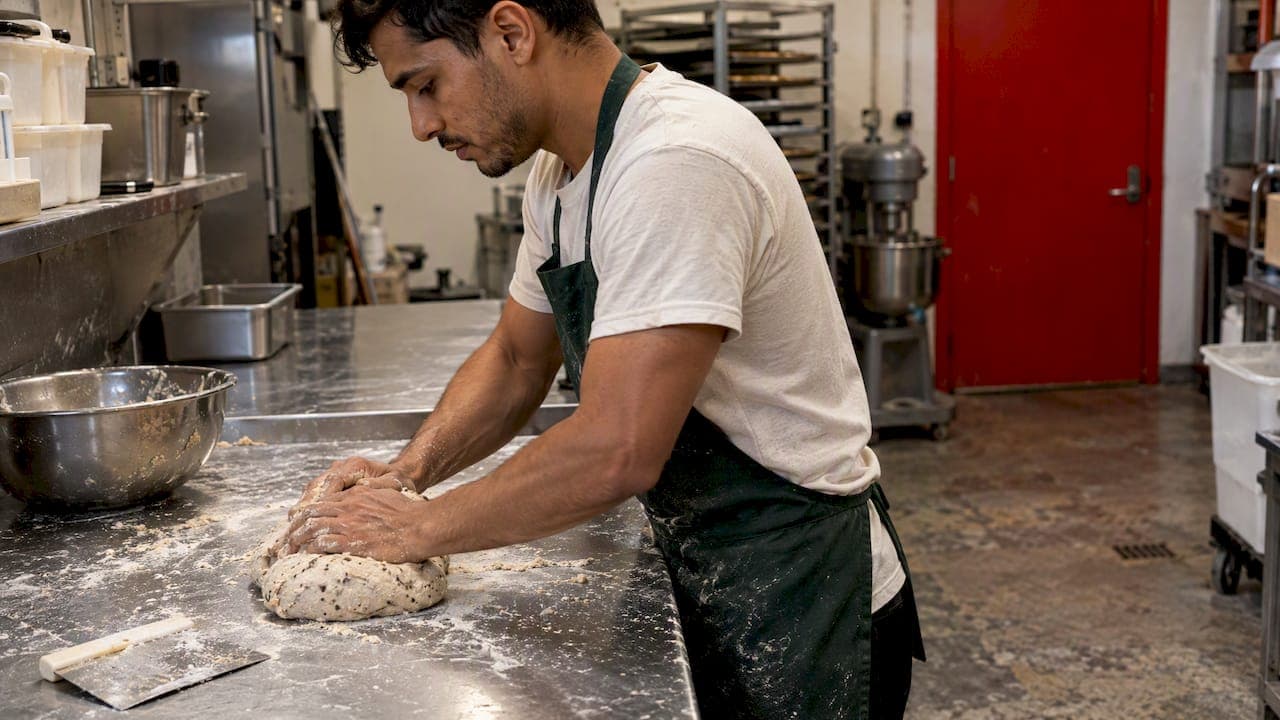
Multigrain pizza dough is dough made with more than one type of grain or seed, such as oats, millet, flax or buckwheat, mixed in with the main flour. It is not automatically whole grain, and it is not the same thing as whole wheat. Below, we explain the difference in plain words, share a home recipe built on a Canadian baker's method, and show you how to rise, shape and bake it so the crust turns out chewy and flavourful instead of dense.
TL;DR
- Multigrain means several grains are in the dough. Whole grain means the bran, germ and endosperm are all there. A dough can be one without the other.
- In Canada, "whole wheat" on a label does not guarantee a whole grain flour, so read the ingredient list rather than the front of the bag.
- A reliable home dough pairs whole wheat flour and oats with a small handful of seeds and grains, rests before salting, and rises for about an hour.
- Bake hot, at 500°F (260°C), on a preheated stone or inverted tray, for 5 to 10 minutes.
- Kids can measure, stir, knead and top the dough. The oven is a job for adults.
Table of Contents
- What "multigrain" actually means
- Multigrain vs whole wheat vs white: a quick comparison
- A multigrain pizza dough recipe for home
- Rising, shaping and baking
- Softer or crispier: how to adjust the crust
- Making dough ahead of time
- Making multigrain pizza with kids
- Our perspective on multigrain dough
- Order a HellCrust multigrain pizza
- Common questions about multigrain pizza dough
- Sources
What "multigrain" actually means
Walk down any bread aisle and the word "multigrain" looks like a promise of health. It is really a description of variety. Multigrain products may contain whole wheat, but they also contain other grains and seeds: caraway, sunflower seeds, oats, cornmeal, flax and so on. That is the plain definition used in the top-ranking explainers on this topic, and it is a good starting point.
The catch is what those grains are sitting in. A whole grain contains all three parts of the kernel: the bran, the germ and the endosperm. A Canadian dietitian writing for Healthing points out that multigrain bread is not necessarily whole grain, and that in Canada multigrain bread is not necessarily 100 per cent whole grain. Diabetes Québec puts it more bluntly: multigrain breads may contain white flour only, with added grains that are usually not in whole-grain form.
That is not a reason to avoid multigrain dough. It is a reason to know what you are buying or baking. A crust built on white flour with a sprinkle of seeds will taste nutty and look rustic. A crust built on whole grain flour and a seed blend will also bring more of the kernel along with it. Both can be delicious. They are just different doughs.
Reading the label
When you shop for flour or a ready-made base, look past the front of the package. Check the ingredient list: is the first ingredient a whole grain flour, or is it enriched white flour followed by a list of seeds? The same healthing.ca article notes that in Canada, whole wheat flour may have much of the germ removed, so "whole wheat" does not necessarily mean whole grain either. If you want the full kernel, look for wording that says whole grain specifically, and compare ingredient lists between brands.
Multigrain vs whole wheat vs white: a quick comparison
People often type these comparisons into search, so here they are side by side. The table describes what each term tells you about the dough, not a nutrition ranking.
| Dough type | What it tells you | What it does not tell you |
|---|---|---|
| Multigrain | Several grains or seeds are in the dough | Whether any of them are whole grain |
| Whole wheat | The main flour is wheat | Whether the germ was left in, as some Canadian whole wheat flour has much of it removed |
| Whole grain | Bran, germ and endosperm are all present | Whether it contains one grain or many |
| White | Made from refined flour | Nothing about added seeds, which can still be mixed in |
The best of both worlds is a dough that is both: whole grain flour as the base, with a blend of other grains and seeds on top. That is the idea behind the recipe below.
Multigrain vs white pizza dough
Compared with a plain white crust, a multigrain crust usually has a deeper, nuttier flavour, a slightly denser and more rustic crumb, and visible flecks of seeds. White dough stretches thin and bakes up lighter and crisper with less effort. Multigrain dough asks for a bit more patience: it absorbs more water, it needs a rest, and it rewards a longer rise. If you like a hearty crust that holds up under generous toppings, it is worth the extra care.
A multigrain pizza dough recipe for home
We like starting from a recipe that has been tested by a professional. Anna Olson's wholegrain pizza dough, from her Baking Day series (2020), is a good model because it layers whole wheat flour, oats and a blend of ancient grains.
Ingredients
Her recipe calls for:
- 2 2/3 cups (400 g) whole wheat flour
- 1 cup (100 g) regular rolled oats
- 2 1/4 teaspoons instant dry yeast
- 1 1/2 cups (375 mL) warm water
- 1/4 cup (60 mL) extra-virgin olive oil
- 6 tablespoons (40 g) ancient grains mix
- 1 teaspoon coarse salt
The ancient grains mix in her recipe is a pre-blended combination of buckwheat, millet, flaxseed, chia seeds, hemp seeds and amaranth seeds. If you cannot find a blend, you can assemble your own from those seeds in small amounts.
Method
- Mix the base. Combine the flour, oats, yeast, water and oil in a stand mixer or by hand until a shaggy dough forms.
- Rest it. Let the dough sit for 10 minutes before adding the salt and the grains. This rest lets the flour and oats hydrate, which makes whole grain dough easier to knead and less crumbly.
- Add the salt and grains. Work them in until the dough is cohesive and slightly tacky.
- Rise. Cover and let the dough rise for about an hour, until doubled in size.
- Shape and bake. See the next section.
This makes enough for pizzas to feed a small group, and the dough can be divided before shaping. Weigh your flour if you can. Whole grain flours pack differently from cup to cup, and a scale removes the guesswork.
A second formula to compare
If you like to see another approach, a high-fibre pizza dough from a Canadian dietitian team uses 750 mL (1 1/2 cups) warm water, 15 mL sugar, 10 mL active dry yeast, 60 mL spent grain flour, 10 mL olive oil, 2.5 mL salt, 500 mL white flour and 425 mL whole wheat flour. It leans on a blend of white and whole wheat flour, which gives a lighter result. Notice how different the two formulas are: one is almost entirely whole grain, the other is a blend. That flexibility is why multigrain dough is so forgiving.
Rising, shaping and baking
Whole grain doughs rise more slowly than white ones because the bran and germ cut through the gluten network. Do not rush it. Give the dough about an hour in a warm spot, and judge it by size, not by the clock: it should look roughly doubled and feel airy when you press a floured finger into it.

For the oven, the method we trust is a very hot surface. Preheat a pizza stone or an inverted baking tray in a 500°F (260°C) oven. Build the pizza on parchment, slide it onto the hot surface, and bake for 5 to 10 minutes, per the same Anna Olson recipe. The parchment takes the stress out of transferring a loaded pizza. If you love the idea of a dedicated, high-heat setup, a gas pizza oven is the sort of equipment professional kitchens use to get that blistered, quick bake, though a stone in a home oven does the job well.
Shaping tips for denser dough
- Let it relax. If the dough springs back when you stretch it, cover it and wait five minutes. The gluten loosens.
- Use your hands, not a rolling pin. Pressing from the centre outward keeps air in the crust edge.
- Flour lightly, or use a little cornmeal. Our guide to cornmeal on pizza crust covers peel tips and oven safety.
- Keep toppings measured. A dense crust can still turn soggy under a heavy load. For ideas, read how to pair toppings on a multigrain pizza base.
Softer or crispier: how to adjust the crust
Once you have a first batch under your belt, you can steer the crust.
For a softer, chewier crust: use a little more water. Wetter dough bakes up more open and tender. Our piece on the 60 to 70% hydration range is a good place to start tuning. Brush the rim with olive oil before baking, and bake on the middle rack so the top does not set too soon.
For a crispier crust: roll or press the dough thinner, pre-bake the base for a couple of minutes before topping, and make sure your stone or tray has been heating for the full preheat. The hot surface does most of the work.

For different grains: swap the seed blend freely, but watch the proportions. One extension guide on baking ingredients recommends at least 1 cup of wheat flour for every 1 cup of non-wheat flour so the product does not become too heavy. Gluten comes from the wheat, so the more you replace it, the denser the crust.
For easier digestion of flax: Food Network Kitchen's whole multigrain dough grinds the flaxseeds first, which makes them easier to digest and more nutritionally available. A coffee grinder reserved for spices and seeds does the job in seconds.
If you avoid gluten, multigrain wheat dough is not the route. Try our gluten free pizza crust with psyllium instead.
Making dough ahead of time
A multigrain dough that has had time to mature tastes better. Anna Olson's slow-rise pizza dough uses less yeast and more salt for fermentation in the refrigerator: the yeast feeds slowly on the flour, and the salt tempers fermentation. The practical result is that you can mix dough the day before, leave it in the fridge, and bake when you are ready, with a rounder, more developed flavour.
This is the same principle behind the preferment approach we use. A preferment is a portion of dough made in advance, so the flour has time to ripen before the final mix. If you want to go deeper, our guides explain the role of fermentation in pizza dough and why fermentation affects flavour.
A simple make-ahead plan:
- Mix the dough in the evening and let it rest as described above.
- Shape it into balls, place each in a lightly oiled container, and refrigerate overnight.
- Take the dough out about an hour before baking so it loosens up.
- Shape, top and bake as usual.
Leftover pizza keeps well too. We wrote a short guide to reheating pizza in the oven so the crust comes back crisp.
Making multigrain pizza with kids
Multigrain dough is a great family project, because it is tactile and forgiving. These steps tend to work best with younger helpers:
- Measuring and pouring. Let kids scoop the oats and seeds into a bowl. Spills are part of the fun, so use a tray.
- Stirring and kneading. Whole grain dough is a bit sturdier than white dough and handles small hands well. Ten minutes of pressing and folding is plenty.
- Watching it rise. Mark the bowl with a piece of tape at the dough's starting level and ask them to spot when it has doubled.
- Pressing and topping. Little fingers can dimple the dough and decorate it with sauce, cheese and vegetables. A mini pizza per child keeps everyone happy.
- Baking. This is for an adult. A 500°F (260°C) oven and a hot stone are not kid territory, so have children hand over the pizza on parchment and step back.
Wash hands before and after handling dough, and keep raw dough from being tasted, as raw flour is not meant to be eaten uncooked. If you would like some context for why parents choose this crust, read our parent's guide to multigrain pizza benefits for kids, and our look at whole grain crust benefits.
Our perspective on multigrain dough
Why do we make our dough the slow way? Because you get what you pay for, and flavour cannot be hurried.
At HellCrust, our crust is a Biga multigrain dough, prepared in advance and made without artificial additives. A Biga is a preferment: part of the dough is mixed ahead of time and allowed to mature, and we think you can taste it. Our aim is a crust with a rich, mature flavour that is fibre-rich and more digestible, in our own view, than a quick white base.
We do not believe wholesome food has to be expensive or complicated. That is why we build our menu around deals, Mix & Match options and family-sized specials, so a crafted crust is within reach on a weeknight. Whether you bake at home with our tips or order from us, we want every bite to be a testament to patience and care.
Bake it yourself on a Sunday, savour it, and if you would rather have the work done for you, we are happy to deliver.
jaskirat Singh
Order a HellCrust multigrain pizza
Not every night is a dough night. If you would like the Biga multigrain crust without the mixing, our menu covers build-your-own pizzas, signature pizzas, vegan pizzas, baked pasta, wings, sides and desserts, for delivery or pickup in North Vancouver, Vancouver and West Vancouver. Order through the app to see exclusive offers, or browse our full menu and pick your toppings.

We also host kids' pizza-making experiences in store, which is a fun way to bring the dough-shaping steps above into a party. Visit HellCrust Pizza to ask about booking.
Common questions about multigrain pizza dough
Is multigrain pizza dough healthier than whole wheat?
Not automatically. Multigrain only tells you that several grains are present, and those grains may be added to white flour. Whole grain means the bran, germ and endosperm are all there, and in Canada even a "whole wheat" label does not guarantee that. Check the ingredient list, and look for whole grain flour as the first ingredient if that is what you want.
How long should multigrain pizza dough rise?
A same-day dough rises for about an hour, until doubled in size, following Anna Olson's method. For more flavour, a slow rise in the refrigerator overnight with a little less yeast and a touch more salt works well. Judge by how the dough looks and feels rather than strictly by time.
Can I make multigrain dough with white flour?
Yes. Many recipes combine white and whole wheat flour, such as the high-fibre formula above with 500 mL white flour and 425 mL whole wheat flour. The crust will be lighter and easier to stretch, though it will contain less whole grain than an all-whole-wheat dough.
What temperature should I bake multigrain pizza at?
Preheat a pizza stone or inverted baking tray in a 500°F (260°C) oven, slide the pizza on using parchment, and bake for 5 to 10 minutes. Check your oven's maximum, and let the surface heat fully before baking.
Can kids help make the dough?
Yes. Children can measure, stir, knead, press and top the dough. Keep the hot oven and stone for adults.
Sources
- Wholegrain Pizza Dough, Anna Olson
- Slow-Rise Pizza Dough, Anna Olson
- I'm a dietitian and I love bread, Healthing.ca
- How to choose a whole-wheat bread, Diabetes Québec
- High Fibre Pizza Dough, Team Nutrition
- Whole-Multigrain Pizza Dough, Food Network Kitchen
- Functions of Baking Ingredients, NF94-186
- Gas Pizza Oven, Superior Kitchen Equipment